Category Archives: Latest Education News

A category dedicated to all education news in Kenya and other countries across the world. This is your one stop location for all news related to the education sector.

TSC Minet Latest List of all Service Providers, Hospitals in Machakos County: Their Contacts, Location and Services Offered

TSC Minet Latest List of all Service Providers, Hospitals in Machakos County: Their Contacts, Location and Services Offered

Region County Sub-county Town Name of Service Provider Access Services
NAIROBI MACHAKOS
NAIROBI MACHAKOS ATHI RIVER ATHI RIVER BLISS GVS HEALTHCARE LTD DAYSTAR DIRECT OP
NAIROBI MACHAKOS MACHAKOS MACHAKOS TOWN BLISS GVS HEALTHCARE LTD MACHAKOS DIRECT OP/DENTAL/OPTICAL
NAIROBI MACHAKOS MACHAKOS MACHAKOS TOWN BISHOP KIOKO CATHOLIC HOSPITAL DIRECT IP/OP
NAIROBI MACHAKOS MACHAKOS MACHAKOS TOWN BRISTOL PARK HOSPITAL MACHAKOS DIRECT OP/IP
NAIROBI MACHAKOS KANGUNDO KANGUNDO TOWN KANGUNDO REDEEMED MEDICAL CENTRE DIRECT OP
NAIROBI MACHAKOS ATHI RIVER ATHIRIVER MEDICROSS KENYA ATHI RIVER DIRECT OP

Moi Girls High School Eldoret High School’s CBE Subjects, Senior Secondary Pathways, Contacts, Location, Fees, Admission, Photos {Full Details}

Moi Girls High School Eldoret: Get all the Senior School’s CBE Subjects, Pathways, Contacts, Location, Fees, Admission, Photos {Full Details}

Welcome to Moi Girls High School Eldoret

Moi Girls High School Eldoret is a public secondary, Senior, school categorized by the Ministry of Education as C1 under the new Competency-Based Education (CBE) curriculum. The Schools is dedicated to empowering students through quality education, discipline, and integrity, while providing a safe and supportive environment where every child can discover their potential and thrive.

Browse through our website to learn more about the Senior School; from the academic programs and vibrant student life to achievements and community engagement. Get to know more about the school’s physical location and academic programmes.

Also read:

TABLE OF CONTENTS.

Here is a quick summary of what to get in this article:

  • School’s Physical Location
  • Key details about the school
  • School’s Fees and Payment details
  • School Profile and Information
  • Subject combinations and pathways offered at the school
  • How to get the school’s Knec Exam Results
  • Getting more information about the school
  • How to check grade 10 selection choices.
  • The School’s History and Legacy
  • Teaching Staff at the school
  • The Grade 10 Selection System
  • Important Contacts
  • CBE Careers
  • List of approved TSC Senior School Subject Combinations.
  • Details of all other Senior Schools in Kenya.

Moi Girls High School Eldoret || Physical Location 

Moi Girls High School Eldoret is a public National Level Senior School; Classified as C1. The Senior School (Secondary School) is physically located at Ainabkoi Subcounty in Uasin Gishu County of the Rift Valley Region, Kenya. Placement in the school is done by the Ministry of Education of the Republic of Kenya. To be placed to join this school, a grade 9 learner has to select the school online and placement is done based on the available grade 10 vacancies.  We have also provided the School’s Official Phone Number Contact. Reach the Principal directly on: +254- : 0721969756 

Continue reading: New list of all National Schools in Central Region {CBE Senior Schools}

This well researched article provides the latest and accurate on the school’s School Physical Location, Postal Address, Mobile Number, Telephone Number, Email Address and School Website. Also available is the school’s Category, type, level, accomodation type, Knec Code and Performance at KNEC EXAMS.

Check more details here: Senior Schools’ Subjects Combinations Guide

https://educationnewshub.co.ke/new-list-of-all-the-extra-county-secondary-schools-in-kenya-school-code-type-cluster-and-category-2/

Moi Girls High School Eldoret || Key Details 

The Senior school’s story is one of resilience, growth, and community. On this page, you’ll find a summary of the School’s mission, values, and the people who make it all happen. From humble beginnings to a vibrant learning environment, the school serves learners with pride. Whether you’re a parent, student, alumni, or visitor or any Education Stakeholder, we invite you to learn more and become part of the school’s academic journey. Here is a quick run through the school’s key details:

  • Country where found: Kenya.
  • Region: Rift Valley Region, Kenya.
  • County:  Uasin Gishu County.
  • Subcounty: Ainabkoi Subcounty.
  • School Type/ Ownership: A Public School that is owned and funded by the Government of Kenya.
  • Nature of School/ CBE Level: Senior School (SS).
  • Category: Regular School 
  • School’s Official Name: Moi Girls High School Eldoret
  • Sex: Single Sex School; Girls’ School.
  • School Cluster/ Level: National School whose Classification is C1.
  • Accomodation Type: Boarding School.
  • Knec Code:  26500001
  • Principal’s Mobile Phone Number / School’s Official Phone Number: : 0721969756  
  • Official Email Address for the School: admin@ moigirlseldoret.ac.ke
  • Postal Address:  P.O. Box 140- 30100, Eldoret, Kenya.
  •   : This is the Official Facebook Page:  
  • Total Number of Subjects Combinations Offered at the School: 46 Different Subjects’ Combinations in various Pathways. (Check all the subjects offred at the school, below; under the title: ‘Subject Combinations Offered’).
  • Get More details about the School here. See details like Location, History, Pictures, Clubs, Mission, Vision, Core Values and Knec Exams’ Performance Analysis.

Important Links with Schools’ details:

Moi Girls High School Eldoret || SCHOOL’S HISTORY 

Moi Girls’ High School – Eldoret has a long history dating back to 1928. It was first established then as a European Primary School to cater for the children of the white settlers in the then White Highlands. The primary school was later renamed Highlands Primary School.

In the 1930’s, the school was moved across the Sosiani river to what is now Hill School. A teacher training college was started later in the 1930’s but it did not successfully take off. The need for a girls’ high school for the white settlers in Eastern Africa saw the founding of the present school. It was opened in 1954 with the name New Girls’ High School. The school was later renamed The Highlands School.

Most of the school buildings were put up between 1952 and 1957. However, the oldest structures accommodating the Music and French departments were constructed in the early 1930’s.
The Highlands School triumphed both in academic and sports in the 1950’s and 1960’s.

After Kenya’s attainment of independence and self rule in 1963 and 1964 respectively, the school experienced a decline in number of students because the settlers began relocating to other countries. So In 1965, the first African students were admitted to the school through the government policy of integration. New members of the Board of Governors that were appointed included the first Africans who in turn elected Hon. D. T. arap Moi as the school board chairman. The school had him as the chairman of the board since then till 2007 when he formally retired.

In 1978, the school had its name changed from ‘The Highlands School’ to ‘Moi Girls’ High School – Eldoret’. This was done in honour of the long serving board chairman who had then risen to become the president of the Republic of Kenya that same year.

Moi Girls’ High School – Eldoret is a national girls’ boarding school managed by the school’s Board of Governors. It is a Christian non-denominational school providing the secondary cycle of the 8-4-4 system of education.

School’s Vision

To Be The Premier National School For Girls.

School’s Mission

To provide high quality education, nurture talent and innovation and to develop the moral and spiritual well-being of each student in preparation for a life of service.

School’s Address

P. O. Box 140,  30100 Eldoret.

Website: http://www.moigirlseldoret.ac.ke

https://educationnewshub.co.ke/new-list-of-all-county-schools-plus-their-contacts-and-locations/

Moi Girls High School Eldoret || Fees Payment Details

Fees paid at the school is determined by the Ministry of Education and is uniform for all Senior Schools; countrywide. Due to operations’ costs disparities National Senior schools may have the highest fees set; followed by Extra-County, County and Sub-County schools in that order.

Moi Girls High School Eldoret : School Profile & Information

Complete overview of academic programs and school details

MOI GIRLS HIGH

LocationUASIN GISHU
SexGIRLS
CategoryREGULAR
ClusterC1

23

STEM

8

Social Sciences

15

Arts & Sports

Subject Combinations Offered at Moi Girls High School Eldoret

View all available subject combinations at this school

ARTS & SPORTS SCIENCE

15
SPORTSCode: AS2009
Biology,Geography,Sports & Recreation
3 SubjectsARTS & SPORTS SCIENCE
ARTSCode: AS1021
Computer Studies,Fine Arts,Music & Dance
3 SubjectsARTS & SPORTS SCIENCE
ARTSCode: AS1027
Fine Arts,General Science,Music & Dance
3 SubjectsARTS & SPORTS SCIENCE
ARTSCode: AS1038
Business Studies,Music & Dance,Theatre & Film
3 SubjectsARTS & SPORTS SCIENCE
SPORTSCode: AS2027
General Science,Literature in English,Sports & Recreation
3 SubjectsARTS & SPORTS SCIENCE
SPORTSCode: AS2026
General Science,History & Citizenship,Sports & Recreation
3 SubjectsARTS & SPORTS SCIENCE
ARTSCode: AS1002
Biology,Fine Arts,Theatre & Film
3 SubjectsARTS & SPORTS SCIENCE
ARTSCode: AS1005
Christian Religious Education,Fine Arts,Theatre & Film
3 SubjectsARTS & SPORTS SCIENCE
ARTSCode: AS1048
History & Citizenship,Music & Dance,Theatre & Film
3 SubjectsARTS & SPORTS SCIENCE
ARTSCode: AS1012
Fine Arts,German,Theatre & Film
3 SubjectsARTS & SPORTS SCIENCE
ARTSCode: AS1043
Fasihi ya Kiswahili,Music & Dance,Theatre & Film
3 SubjectsARTS & SPORTS SCIENCE
ARTSCode: AS1032
Fine Arts,Mandarine Chinese,Music & Dance
3 SubjectsARTS & SPORTS SCIENCE
ARTSCode: AS1044
French,Music & Dance,Theatre & Film
3 SubjectsARTS & SPORTS SCIENCE
ARTSCode: AS1029
Fine Arts,German,Music & Dance
3 SubjectsARTS & SPORTS SCIENCE
ARTSCode: AS1009
Fine Arts,French,Theatre & Film
3 SubjectsARTS & SPORTS SCIENCE

STEM

23
APPLIED SCIENCESCode: ST2007
Business Studies,Computer Studies,Physics
3 SubjectsSTEM
APPLIED SCIENCESCode: ST2045
Agriculture,Building & Construction,Business Studies
3 SubjectsSTEM
TECHNICAL STUDIESCode: ST3074
Computer Studies,General Science,Media Technology
3 SubjectsSTEM
APPLIED SCIENCESCode: ST2067
Agriculture,Computer Studies,Physics
3 SubjectsSTEM
APPLIED SCIENCESCode: ST2091
Core Mathematics,Agriculture,Home Science
3 SubjectsSTEM
APPLIED SCIENCESCode: ST2075
Agriculture,Geography,Physics
3 SubjectsSTEM
PURE SCIENCESCode: ST1042
Agriculture,Biology,Chemistry
3 SubjectsSTEM
APPLIED SCIENCESCode: ST2049
Agriculture,Business Studies,General Science
3 SubjectsSTEM
APPLIED SCIENCESCode: ST2097
Biology,Business Studies,Computer Studies
3 SubjectsSTEM
APPLIED SCIENCESCode: ST2077
Core Mathematics,Business Studies,Computer Studies
3 SubjectsSTEM
PURE SCIENCESCode: ST1035
Core Mathematics,Electricity,Physics
3 SubjectsSTEM
TECHNICAL STUDIESCode: ST3068
Business Studies,Geography,Media Technology
3 SubjectsSTEM
TECHNICAL STUDIESCode: ST3065
Biology,Business Studies,Media Technology
3 SubjectsSTEM
APPLIED SCIENCESCode: ST2059
Agriculture,Chemistry,Computer Studies
3 SubjectsSTEM
PURE SCIENCESCode: ST1016
Core Mathematics,Chemistry,Geography
3 SubjectsSTEM
TECHNICAL STUDIESCode: ST3024
Core Mathematics,Electricity,Geography
3 SubjectsSTEM
APPLIED SCIENCESCode: ST2024
Chemistry,Computer Studies,Home Science
3 SubjectsSTEM
TECHNICAL STUDIESCode: ST3082
Geography,Media Technology,Physics
3 SubjectsSTEM
TECHNICAL STUDIESCode: ST3081
Core Mathematics,Geography,Media Technology
3 SubjectsSTEM
APPLIED SCIENCESCode: ST2060
Agriculture,Computer Studies,Electricity
3 SubjectsSTEM
APPLIED SCIENCESCode: ST2047
Agriculture,Business Studies,Computer Studies
3 SubjectsSTEM
PURE SCIENCESCode: ST1015
Core Mathematics,Chemistry,Electricity
3 SubjectsSTEM
PURE SCIENCESCode: ST1007
Core Mathematics,Biology,Physics
3 SubjectsSTEM

SOCIAL SCIENCES

8
HUMANITIES & BUSINESS STUDIESCode: SS2019
Christian Religious Education,Geography,History & Citizenship
3 SubjectsSOCIAL SCIENCES
HUMANITIES & BUSINESS STUDIESCode: SS2112
Business Studies,Christian Religious Education,French
3 SubjectsSOCIAL SCIENCES
HUMANITIES & BUSINESS STUDIESCode: SS2024
Computer Studies,Geography,History & Citizenship
3 SubjectsSOCIAL SCIENCES
HUMANITIES & BUSINESS STUDIESCode: SS2092
Geography,History & Citizenship,Mandarine Chinese
3 SubjectsSOCIAL SCIENCES
LANGUAGES & LITERATURECode: SS1065
German,Indigenous Language,Literature in English
3 SubjectsSOCIAL SCIENCES
HUMANITIES & BUSINESS STUDIESCode: SS2056
Core Mathematics,Business Studies,Geography
3 SubjectsSOCIAL SCIENCES
HUMANITIES & BUSINESS STUDIESCode: SS2100
Business Studies,History & Citizenship,Literature in English
3 SubjectsSOCIAL SCIENCES
HUMANITIES & BUSINESS STUDIESCode: SS2069
Christian Religious Education,Fasihi ya Kiswahili,History & Citizenship
3 SubjectsSOCIAL SCIENCES

How to get the School’s Knec Results.

To check the school’s Knec results, visit Knec Portal and search for the school by its name.

https://educationnewshub.co.ke/sub-county-schools-in-kenya-new-list-of-the-schools-and-their-contacts/

📍 How to get more Information about the School

For more information about admission requirements, facilities, and application procedures, contact the school directly. Use the official phone number indicated above to get information about the school’s fees, uniform, meals and performance.

Continue reading:

How to Check Grade 10 Selection Choices

The Grade 10 School and Career Pathway Selection System is a national digital platform developed to assist Grade 9 learners in making informed decisions as they transition to Senior School. The platform enables students to select their preferred Pathways, Subject Combinations & Senior Schools in line with Kenya’s Competency-Based Education (CBE) framework.
The goal is to empower learners to take control of their educational journey by aligning their selections with their individual talents, interests, and aspirations.


The platform is used to place learners who have completed Grade 9 into appropriate senior secondary schools based on their performance, interests, and chosen career pathways under the Competency-Based Education Curriculum (CBC/ CBE) in Kenya.

Career Pathways Available:

  • STEM (Science, Technology, Engineering, Mathematics)
  • Arts and Sports
  • Social Sciences

Grade 10 Selection Factors:

  • Academic performance or assessment results
  • Student interests and strengths
  • Available spaces in schools or institutions
  • Regional balance and accessibility

This system is tailored for the CBC/ CBE framework and focuses on talent, interest, and ability – helping students transition smoothly into senior school (Grades 10 to 12).

Learner Selection Verification

Enter your Assessment Number to view your selections

HOW TO QUICKLY GET ALL DETAILS PER SCHOOL.

The Knec Schools Portal provides details on all schools in Kenya. The portal provides all particular school’s information on: KNEC Exam Results Analysis, Contacts, Location, Admissions, History, Fees, Portal Login, Website, KNEC Code, photographs, directions and many more. To get complete information about a particular school, use these simple and quick steps:

Step 1: Visit the Knec Schools’ portal by using the link: https://Knec Schools Portal/.

You will get the window below:

Knec Schools' Portal Home page
Knec Schools’ Portal Home page

Step 2: In the Search Box, type the Name of the school; whose information you neeed (See screenshot below). Click on the search icon or enter and visit the link with the information that you need. It is as simple as that.

Knec Schools Portal Archives - Searching for information on a particular school now made easy.
Knec Schools Portal Archives – Searching for information on a particular school now made easy.

Top 100 best extra County schools in Kenya

Related Articles with Similar Information:

  1. Siakago Boys High Senior Secondary School
  2. Nyangwa Boys’ High Senior Secondary School
  3. Moi High School – Mbiruri : Senior Secondary School
  4. Kyeni Girls High Senior Secondary School
  5. Ikuu Boys High Senior Secondary School
  6. Chogoria Girls High Senior Secondary School
  7. Chogoria Boys High Senior Secondary School
  8. Kiriani Boys High Senior Secondary School
  9. Kenyatta High Senior Secondary School
  10. Bura Girls High Senior Secondary School
  11. Dr. Aggrey High Senior Secondary School
  12. Lamu Girls High Senior Secondary School
  13. Mpeketoni Boys High Senior Secondary School
  14. Ngao Girls High Senior Secondary School
  15. Hola Boys High Senior Secondary School
  16. Bahari Girls High Senior Secondary School
  17. Kombeni Girls High Senior Secondary School

The Senior School’s Quick Overview

Welcome to our senior school; where education goes beyond academics to shape character, inspire leadership, and nurture purpose. Our school’s story is one of resilience, growth, and community. On this page, you’ll find a summary of who we are—our mission, values, and the people who make it all happen. From humble beginnings to a vibrant learning environment, we continue to serve with pride. Whether you’re a parent, student, alumni, or visitor, we invite you to learn more and become part of our journey.

The School’s Legacy

The school represents a story of vision, dedication, and growth. This page brings together the moments that shaped our identity: from early founding ideals to landmark achievements and community collaborations. Scroll through an interactive timeline, view curated photo galleries, and read first‑hand reflections that connect our heritage to today’s vibrant learning community.

Also read: List of all County schools plus their contacts and locations

The School’s Teaching Staff

Our school is made up of a vibrant teaching staff that is recruited by the Teachers Service Commission, TSC.As a school, we believe that teaching is more than delivering content—it’s about inspiring minds and shaping futures. This page highlights the educators who bring our mission to life: from veteran teachers with decades of experience to innovative newcomers integrating technology and project‑based learning. Learn about their credentials, classroom innovations, and the personal stories that drive their passion for education.

https://educationnewshub.co.ke/list-of-all-senior-schools-per-county-for-all-the-47-counties/

Senior Schools in Kenya | School Profile

How to Contact the Ministry of Education, MoE- Kenya.

Contact the Ministry by using the following details;

1. State Department of Early Learning and Basic Education:

  • Postal Address: P.O Box 36260-00200 Nairobi, Kenya
  • Physical Address: Jogoo House B, Taifa Road
  • Telephone Number: +254-020-3318581
  • Email: [email protected]

2. MINISTRY OF EDUCATION’s HEAD OFFICE.

  • Physical Location: Jogoo House “B” Taifa Road
  • Postal Address: P.O. Box 300400-00100 Nairobi.
  • Email: [email protected]
  • Phone : +254(0) 3318581

How to Select Grade 10 Subjects and schools

To select Grade 10 schools and subjects under the Competency-Based Curriculum (CBC) in Kenya, Grade 9 learners should first choose a career pathway (STEM, Social Sciences, or Arts & Sports Science). Then, they’ll select three subject combinations within that pathway and finally, choose four schools for each combination, totaling 12 schools. To select preferred Grade 10 Schools and Subject Combinations, use the Ministry of Education portal selection.education.go.ke.

1. How you can Choose a Career Pathway:

  • Identify your interests and potential career aspirations.
  • Select one of the three pathways: STEM, Social Sciences, or Arts & Sports Science.
  • Confirm your choice to proceed with the pathway.

2. Select Subject Combinations:

  • The portal will provide you with a list of subject combinations available within your chosen pathway.
  • Choose three subject combinations that align with your interests and strengths.

3. Select Preferred Senior Schools:

  • For each subject combination, select four schools from the available clusters.
  • This ensures a diverse range of options and equal representation from different categories of schools.
  • A total of 12 schools will be selected: 4 for the first subject combination, 4 for the second, and 4 for the third.

About the Grade 10 Selection System

The Grade 10 School and Career Pathway Selection System is a national digital platform developed to assist Grade 9 learners in making informed decisions as they transition to Senior School. The platform enables students to select their preferred Pathways, Subject Combinations & Senior Schools in line with Kenya’s Competency-Based Education (CBE) framework.
The  goal is to empower learners to take control of their educational journey by aligning their selections with their individual talents, interests, and aspirations.

How to Contact Selection Support Team

For any queries on Grade 10 selection/ choices, contact: [email protected]

POSSIBLE CBE CAREERS EXPLORER

Here are the Career opportunities under the Competency Based Education (CBE) curriculum:
  • • Professional Musician (Instrumentalist, Vocalist)
  • • Professional Dancer
  • • Composer/Arranger
  • • Music Teacher/Instructor
  • • Dance Instructor
  • • Choreographer
  • • Performing Artist (opera, dance troupes, etc.)
  • • Music Therapist
  • • Dance Therapist
  • • Sound Engineer
  • • Music Journalist/Critic
  • • Dance Critic

Fine Arts Career Opportunities

TSC List of Approved TSC Teaching Subject Combinations for Secondary Schools

Science Combinations

  • Chemistry & Biology
  • Chemistry & Physics
  • Agriculture & Geography
  • Biology & Geography
  • Home Science & Biology
  • Physics & Computer
  • Agriculture & Biology
  • Agriculture & Chemistry

Language Combinations

  • English & Literature
  • Kiswahili & CRE (Christian Religious Education)
  • Kiswahili & History
  • Kiswahili & Geography
  • German & Geography
  • German & CRE
  • Kiswahili & IRE (Islamic Religious Education)
  • Kiswahili & Home Science
  • Kiswahili & P.E. (Physical Education)
  • French & Geography
  • French & Business Studies
  • French & CRE
  • French & History
  • Arabic & IRE
  • German & History

Mathematics Combinations

  • Mathematics & Business Studies
  • Mathematics & Geography
  • Mathematics & Computer
  • Mathematics & Chemistry
  • Mathematics & Biology
  • Mathematics & Physics

Humanities Combinations

  • Geography & CRE
  • History & CRE
  • Geography & History
  • Geography & IRE
  • History & IRE
  • History & P.E.
  • Geography & P.E.
  • Geography & Business Studies
  • Home Science & History
  • Home Science & CRE
  • SNE & P.E.
  • Music & P.E.

Technical Combinations

  • Metal Work & Mathematics
  • Metal Work & Physics
  • Woodwork & Mathematics
  • Woodwork & Physics
  • Electricity & Mathematics
  • Electricity & Physics
  • Fine Arts & History (Fine)
  • Art & Geography
  • Art & Design & History
  • Art & Design & Geography
  • Kiswahili & Home Science
  • Kiswahili & P.E.

SELECTION OF PATHWAYS AND SENIOR SCHOOLS

• Determination of pathways per senior school
• Determination of vacancies for boarding and day schooling in senior schools
• Selection of pathways, subjects’ combination and schools by grade 9 learners Selection based on pathway

The learner will select 12 schools for their chosen pathway as follows.
– Four 4 schools in first choice track and subject combination
– Four (4) schools in second choice subject combination
– Four (4) schools in third choice subject combination (Total 12 schools) Selection based on accommodation

Out of the 12 schools selected based on pathway;

  • 9 will be boarding schools; 3 from the learners’ home county, 6 from outside their home county/county of residence.
  • Three (3) day schools in their home sub county/sub county of residence. (Total 12 schools)
    Pre selection – A school that does not allow open placement can apply to be pre-select if it meets the criteria defined by the Ministry of Education.

How Placement of learners to Senior Schools (SS) at Grade 10 will be done

It will be based on:

  • Top 6 learners per gender in each STEM track per sub-county will be placed for Boarding in  schools of choice
  • Top 3 learners per gender in each Social Science track per sub-county will be placed for Boarding in schools of choice
  • Top 2 learners per gender in each Arts and Sports Science track per sub-county be placed to Boarding schools of their choice
  • Placement of Candidates with Achievement Level of averaging 7 and 8 per track to boarding schools of their choice

Admission and replacement process

  • Placement results will show where learners have been placed
  • Admission letters/joining instructions shall be accessed online using the learner’s assessment Number.
  • All schools, both public and private shall admit Grade 10 through KEMIS
  • Leaners will be entered to the KEMIS System only after reporting physically to the school.
  •  Daily online reporting shall be monitored through KEMIS

Replacements at Senior Schools

  •  Schools with vacancies will declare through their respective county directors of education
  •  Learners who wish to change schools will make requests through the heads of junior schools at least 2 weeks before the official grade 10 reporting date
  • Priority shall be given to those who had earlier selected the schools they are requesting for  Approvals by MoE shall be based on senior schools’ documented capacity
  • Upon a request’s approval, the joining instructions shall be accessed online; at no time shall a school issue printed letters for replacement cases
  • Replacement will be done once and shall be irreversible

LIST OF ALL SENIOR SCHOOLS PER COUNTY.

Senior School Subjects and Pathways selection Form.

Senior School Selection Form educationnewshub.co.ke

Senior Schools’ Subjects Combinations Guide

ALL NATIONAL SCHOOLS IN KENYA

New List of all Mixed National Schools under CBC, CBE Curriculum

ALL EXTRA COUNTY SCHOOLS IN KENYA

ALL SENIOR SCHOOLS IN KENYA.

OUR CONTACTS

You can reach out to us through Email by using these Addreses:

For Advertisements, visit: The Advertisement Information Page.

>Top 20 best high schools in Kenya
>Best international schools in Kenya
>Top 10 international schools in Kenya
>Top 10 best High schools in Kenya
> 100 Best High schools in Kenya
>Top 20 best <b>national schools in Kenya
>Best extra county boys’ schools in kenya
>Top 50 best High schools in Kenya

LIST OF ALL SENIOR SCHOOLS IN KENYA {OFFICIAL MINISTRY OF EDUCATION DETAILS}

Moi Girls High School Eldoret,

Moi girls school Nairobi,
Is Moi Girls Nairobi a national school,
Moi girls school Nairobi photos,
Moi Girls Nairobi location,
Moi Girls Nairobi direction,
Is Moi Girls Eldoret a national school,
Moi Girls High school,
Moi girls high school eldoret location,

Moi High School Mbiruri; KCSE Performance, KNEC Code, Contacts, Location, Form One Admissions, History, Fees, Portal Login, Postal Address and Photos

Moi High School Mbiruri is one of the top and best performing schools in Embu County. This article provides complete information about this school. Get to know the school’s physical location, directions, contacts, history, Form one selection criteria and analysis of its performance in the Kenya Certificate of Secondary Education, KCSE, exams. Get to see a beautiful collation of images from the school’s scenery; including structures, signage, students, teachers and many more.

 For all details about other schools in Kenya, please visit the link below;

MOI MBIRURI HIGH SCHOOL’S PHYSICAL LOCATION

Moi high school-Mbiruri is located in Embu East Sub-county, Embu County; in the Eastern Region of Kenya.

MOI MBIRURI HIGH SCHOOL’S INFO AT A GLANCE

  • SCHOOL’S NAME: Moi High School Mbiruri.
  • SCHOOL’S TYPE: Boys only boarding school
  • SCHOOL’S CATEGORY: National
  • SCHOOL’S LEVEL: Secondary
  • SCHOOL’S LOCATION: located in Embu East Sub-county, Embu County; in the Eastern Region of Kenya.
  • SCHOOL’S KNEC CODE:
  • SCHOOL’S OWNERSHIP STATUS:
  • SCHOOL’S PHONE CONTACT: 0707 082 868
  • SCHOOL’S POSTAL ADDRESS: P.O. Box 34, Runyenjes 60103
  • SCHOOL’S EMAIL ADDRESS: [email protected]
  • SCHOOL’S WEBSITE: https://moimbiruri.ac.ke/

MOI MBIRURI HIGH SCHOOL’S BRIEF HISTORY

Moi High School Mbiruri was started in June 1965 under the leadership of Mr. Alvan Njanga (headteacher).In 1987 it was renamed Moi High School Mbiruri. In 1996 it became a pure boy’s provincial secondary school.

As a result of competitive performance, a third stream was started in 2001. In May 2011, the school was upgraded to a national school with four streams. The school has grown to the current population of 760 students, 35 teachers (27 –TSC, 8- BOM) and 30 support staff. The school stands on a 20-acre piece of land.

The school started as a boy’s school. It was purely Harambee School. Since then, the school has undergone a lot of transformation as listed below.

  • 1966 it became a mixed one stream school
  • 1974 the school became government-aided.
  • 1975 the school got the second stream with one stream government-aided and the other Harambee.
  • 1987 it was renamed Moi High School Mbiruri and became a provincial school.
  • 2000 the school became purely boy’s school.
  • In May 2012 the school was upgraded to a national school; with four streams. The 1 st national class is in form 4.

The school is located in Embu East Sub-county, Embu County. It started in 1953 as a primary school. In 1965 it became a secondary school under the sponsorship of the Anglican Church. In 196 it became a mixed secondary school.

In 1987 it was renamed Moi High School Mbiruri. In 1996 it became a pure boy’s provincial secondary school. As a result of competitive performance, a third stream was started in 2001. In May 2011, the school was upgraded to a national school with four streams. The school has grown to the current population of 760 students, 35 teachers (27 –TSC, 8- BOM) and 30 support staff.

FOR A COMPLETE GUIDE TO ALL SCHOOLS IN KENYA CLICK ON THE LINK BELOW;

Here are links to the most important news portals:

MOI MBIRURI HIGH SCHOOL’S VISION

MOI MBIRURI HIGH SCHOOL’S MISSION

MOI MBIRURI HIGH SCHOOL’S CONTACTS

In need of more information about the school? Worry not. Use any of the contacts below for inquiries and/ or clarifications:

MOI MBIRURI HIGH SCHOOL’S FORM ONE SELECTION CRITERIA & ADMISSIONS

Being a public school, form one admissions are done by the Ministry of Education. Vacancies are available on competitive basis. Those seeking admissions can though directly contact the school or pay a visit for further guidelines.

MOI MBIRURI HIGH SCHOOL’S KCSE PERFORMANCE ANALYSIS

The school has maintained a good run in performance at the Kenya National Examinations Council, KNEC, exams. In the 2019 Kenya Certificate of Secondary Education, KCSE, exams the school had a mean score of 8.405 (B- minus).

Also read;

 For all details about other schools in Kenya, please visit the link below;

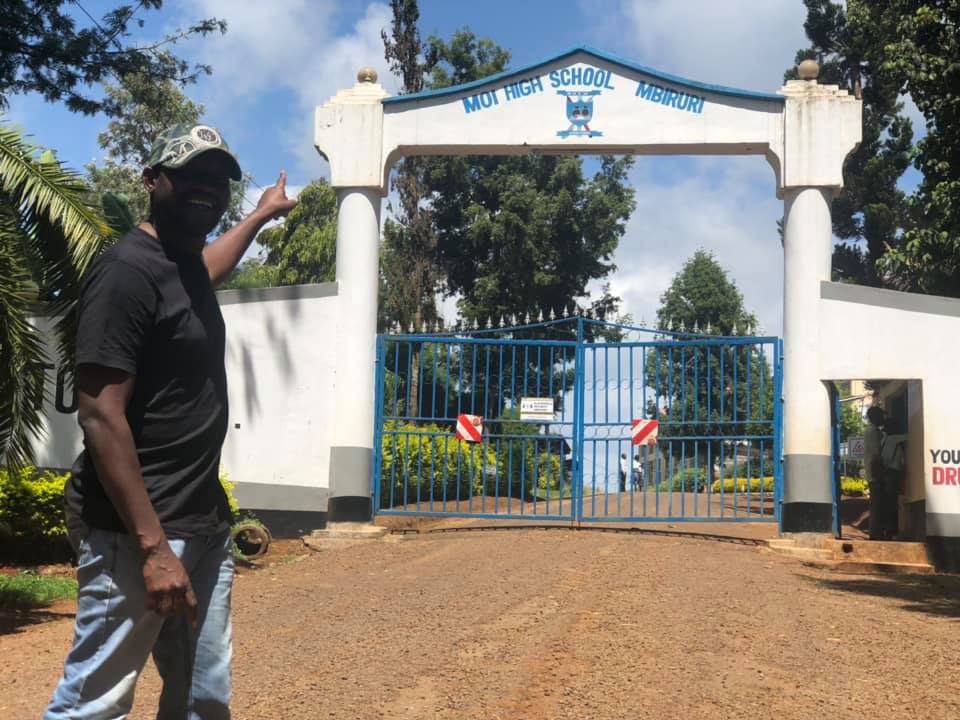
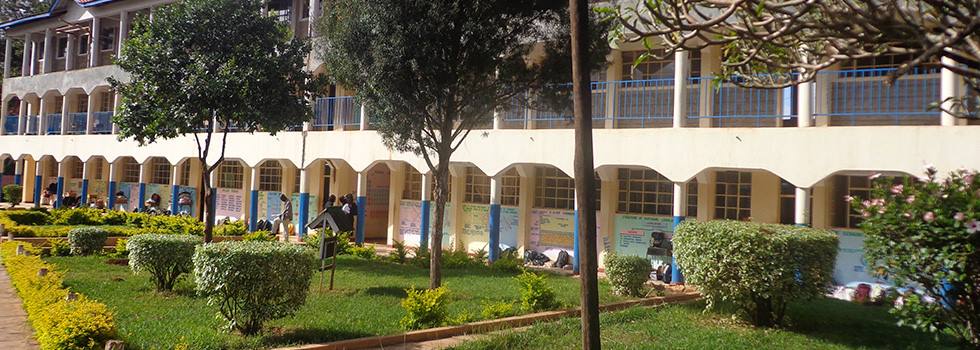
MOI MBIRURI HIGH SCHOOL’S PHOTO GALLERY

Planning to pay the school a visit? Below are some of the lovely scenes you will experience.

Mbiruri High School
Moi High School Mbiruri.

Also read:

Court Pauses Efforts to Replace TSC CEO Nancy Macharia

Court Pauses Efforts to Replace TSC CEO Nancy Macharia

The quest for a new leader at the Teachers Service Commission has encountered a significant hurdle, as the Employment and Labour Relations court has put the recruitment process on hold due to a legal challenge.

On the evening of Monday, May 26, Justice Ocharo Kebira of the Mombasa Employment and Labour Relations court issued temporary orders in response to a petition from a local resident contesting the legitimacy and fairness of the ongoing recruitment.

The petitioner claimed that the entire hiring process was tainted by constitutional breaches and biased criteria.

“The current state of affairs regarding the contested process shall remain unchanged until further notice from this court,” ruled Justice Kebira.

In her decision, the judge also mandated that the Teachers Service Commission, the National Assembly, the Attorney General, and Education Cabinet Secretary Julius Ogamba be served with the court documents, as they are named as parties in the case.

Earlier in May, the TSC announced openings for the positions of Secretary and Chief Executive Officer (CEO), signaling the impending end of Nancy Macharia’s tenure, which is set to conclude on June 30, 2025.

In the announcement, TSC encouraged individuals with backgrounds in education and management to apply by May 27.

However, the petitioner from Mombasa swiftly intervened, arguing that advertising for positions without a formal declaration of vacancy implied that the TSC was attempting to fill a role that didn’t actually exist.

The petition also contested Section 16(2), which details the qualifications for candidates vying for the CEO position.

While the TSC’s advertisement required applicants to hold a degree and have ten years of experience in the education sector, the petitioner contended that these criteria were overly restrictive, effectively shutting out qualified professionals from other fields.

Concerns were also raised regarding the commission’s stipulation for experience in public administration, human resources, and financial management, while limiting degree qualifications solely to education, which seemed illogical.

Additionally, the petitioner criticized the 21-day application period as discriminatory and insufficient, given the diverse circumstances and living conditions across the country.

COMPUTER STUDIES PAPER ONE KCSE REVISION MOCKS

COMPUTER STUDIES

PAPER ONE

  1. Identify programming language used in the following generations:-                                      (i) First generations

(ii) Second generation

  1. Give importance of having the following in computer laboratory:-

(i) Standard furniture in the laboratory

(ii) Antiglare screen/monitor

(iii) UPS

  1. (a) Explain the following terms as used in booting:-

(i) BIOS

(ii) POST

(b) Differentiate between:-

(i) Backspace and delete keys on the keyboard

(ii) Insert and type over mode

  1. Explain the functions of the following central processing unit components

(i) ALU

(ii) Control unit

(iii) Primary memory

  1. (a) Differentiate between static RAM and Dynamic RAM

(b) Distinguish between compilers and interpreters

  1. (a) List two softcopy output devices

(b) Distinguish between impact and non-impact printers citing one example in each

  1. State two merits of using the following input devices:

(i) Speech recognition

(ii) Touch screen

  1. Differentiate between freeware and open source as end-user –license softwares.
  2. (a) List four types of system software

(b) Explain the following functions of the operating system           :-

(i) Job scheduling

(ii) Interrupt handling

  1. Explain the following disk management tools:-

(i) Disk formatting

(ii) Disk defragmentation

  1. Differentiate between the following terms as applied in operating system:-

(i) Multi-user

(ii) Multi-tasking

  1. Explain the following terms as applied in word processor

(i) Text wrap

(ii) Word wrap

  1. (a) Distinguish between first line and hanging indentation

(b) Differentiate between the following combinations of terms:-

(i) Filtering and sorting

(ii) Relative and absolute cell referencing

  1. (a) Differentiate between the following combinations of terms:-

(i) Filtering and sorting

(ii) Relative and absolute cell referencing

  1. Identify the elements of a function
  2. A class teacher of form 3E in Nzambani secondary school requested a programmer to design a

simple program that would help do the following:-


(a) Enter the names of students and marks obtained in 8 subjects; maths, English, Kiswahili,

Biology, Chemistry, Business Studies, History and Computer Studies.

(b) After entering each subject mark the program should calculate for each student

(c) Depending on the average mark obtained, the program should assign the grades as follows:-

Between 80 and 100 = A

Between 70 and 79 = B

Between 60 and 69 = C

Between 50 and 59 = D

Below 50 = E

(d) The program should display each students name, total marks and the average grade. Using a

flow chart, show the design of the program


  1. (a) Define the following terms in reference to the internet:-

(i) Protocol

(ii) Website

(iii) Search engine

(iv) Spam mail

(b)List three examples of search engines

(c) Identify the functions of the following devices in data communication:-

(i) Modem

(ii) Network interface card

(iii) Brouter

(d) Describe bounded and unbounded forms of communication giving two examples

in each case

(e) Outline four advantages of using fibre optic cables

  1. (a) Define the following terms as used in data representation

(i) Amplitude

(ii) Frequency

(iii) Nibble

(iv) Byte

(b) Perform the following 11111.11112 + 100001.10102 – 1111.001112                                                

(c) Using two’s complement subtract 73 from 115 and convert the answer to decimal notation

(d) Identify the duties of the following ICT specialists

(i)Software engineer

(ii) System analyst

(e) List two types of opportunities available in the field of computer hardware

  1. (a) Describe the following computer files

(i) Logical and physical files

(ii) Master and backup files

(b) Explain the following computational errors

(i) Truncation

(ii) Overflow

(iii) Rounding errors

(c) Define data integrity and state three ways of minimizing threats to data integrity

(d) Define virtual reality and state three ways of minimizing threats to data integrity

(e) Discus how computers are used in reservation systems

  1. (a) Explain the main activity carried out in each of the following system development stages

(i) Problem recognition

(ii) Coding

(iii) Implementation

(b) Explain the following changeover methods:-

(i) Direct

(ii) Parallel

(iii) Phased

(c) Explain two advantages of modular programming

(d) Explain how the use ICT may affect the society

(e) Explain the four main areas of artificial intelligence


*MAT*

  1. Distinguish between white-collar crime and blue –collar crimes
  2. Lutomia and Naibei were arguing about computer criminal. They realized four types of criminals

namely; thieves, burglars, terrorists, hackers and cracker. Briefly explain difference between

hackers and crackers

  1. State where the cell pointer on a worksheet moves when the following key combinations
  2. a) Crl + Home
  3. b) Shift + Tab

(c) End followed by down arrow key

(d) Shift + Enter

  1. Explain the meaning of the following domains on a web address

(a) .co.ke

(b) .ac.uk

(c)  .or.ug

  1. Study the flow chart below and write down the output from the table below is entered. Show your

working.

Nambwaya 59 60
Murono 60 62
Kisiang’ani 79 46
Makhanu 41 84


  1. (a) Distinguish between a primary key and index key as used in databases

(b) Explain the relevance of foreign key in a database entity

  1. Briefly explain how the operating system uses interrupt Request (IRQ) numbers to allocate

computer resources

  1. Name an input or output device used in the following tasks

(a) Capturing still images

(b) Printing detailed architectural designs

(c) Playing flight and driving games

(d) Capture data at ATM

  1. Outline three distinctions between a super computer and microcomputer
  2. Briefly explain four features of third computer generation
  3. Define the following terms as used with the internet;

(a) Surf

(b) Compose

(c) Cookie

  1. State four reasons why you would advertise a typesetter to use MS Publisher in designing

calendar other than MS Word

  1. Briefly explain how electronic spreadsheet is used in “What if analysis”
  2. The formula = $A4*C$3 was entered in cell D4. What will be the formula if it is copied to

cell F10

  1. Design a pseudo code for a program that will compute and display the are of a triangle whose

base is not less than 10cm

  1. Study the flow chart below and attempt questions that follow

(a) Your working what will be output if the following was entered?

Lutomia          65        50        46        77        76

Naibei             60        80        55        81        10

Nambwaya      80        15        40        82        60

Makhanu         50        35        70        40        43
Kisiang’ani     30        70        55        60        44

Murono           60        45        43        77        30

(b) Write a pseudo code equivalent for the above flowchart modifying it to compute result

of 100 students.

(c) Name any two control structures used in the flowchart above

  1. (a) Explain three negative impact of ICT on Kenyan culture

(b) Perform the following arithmetic operations

  1. 7658 + 16458
  2. ABCH + D1416
  • 71128 – 7678
  1. A14616 – BCD16

(c) Name at least two areas where the following processing modes are used

  1. Real time processing
  2. Distributed processing
  • Batch processing
  1. Time sharing processing

(d)Write the alternative name of the following types of software

(a) Bespoke

(b) Vendor-off-the-shelf software

  1.  (a) Explain RAD and structured approach as methods of system development

(b) Hassan was designing in out screens for the new school database management system.

Outline three factors she MUST consider during the designing

(c)State four difference between Low-level and High-level languages to a programmer

(d) Name any four public universities that offer computer courses at degree level

  1. (a) Simplex, Half duplex and full duplex are modes o data communication. With examples

of where used, explain each of these communication modes

(b) Distinguish between “wrap text” and “shrink to fit” as used in Microsoft Excel data

formatting

(c) Safaricom has implemented broadband as their modem communication technique. Explain

the meaning of broadband communication

(d) Continuous use of computers has adverse health effects. State five ways of averting these

effects

  1. (a) Artificial intelligence is out to develop devices that emulate a human being in all aspects

as applied in expert systems. Explain three components of expert systems

(b) Distinguish between job replacement and job displacement

(c) State four ways in which threats to data integrity may be minimized

(d) Name two programming languages in each of the following:

  1. OOPe
  2. Procedural language
  • 5GLs


*KKE*

  1. Distinguish between ROM and RAM.             (2 mks)
  2. (a) Convert the octal Number 11118 to its ten equivalent.             (2 mks)

(b) Convert 11.0112 to a decimal Number.                                                                            (2 mks)

  1. (a) Define the following terms with reference to computer crime.

(i)  Cracking.                                                                                                              (1 mk)

(ii) Hacking                                                                                                                (1 mk)

(b) State any two laws governing the information.                                                               (2 mks)

  1. Distinguish between job scheduling and job sequencing.             (2 mks)
  2. List any four precautions that must be observed in a computer lab.                         (2 mks)
  3. Mention four database models that you have learnt.                         (2 mks)
  4. Differentiate between a computer operator and computer technician.             (2 mks)
  5. Define the term ‘mail merge’.             (2 mks)
  6. (a) What is the advantage of electronic spreadsheet over manual work.             (2 mks)

(b) What is cell replacing?                                                                                                     (1 mk)

  1. State two types of desktop publishing (DTP).             (2 mks)
  2. List three elements of networking.             (3 mks)
  3. Briefly explain any three application areas of ICT (Information and communication Technology).
  4. List any two types of

(a) Optical disk.                                                                                                                      (1 mk)

(b) Magnetic disk                                                                                                                   (1 mk)

  1. Distinguish between Disk formatting and disk partitioning.             (2 mks)
  2. (a) State and define any two types of computer processing file.             (1 mk)


Answer question 16 (Compulsory) and any other three questions in the spaces provided.

  1. (a) Consider the module flow charts extracts below.

(i)


(ii)


State the looping structure demonstrated in

(b) State four examples of third generation languages.

(c) Define the following terms as used in programming.

(i) Assembler

(iii) Translator

(ii) Compiler

(iv) Interpreter

(d) Jokins retailers has two categories of customers processing category. “A” obtain 10%discount

on all orders upto Kshs. 10,000. Otherwise the discount is 20% on entire order. Category “B”

obtains 30% on all orders if the debt payment records is good otherwise the discount is 15%.

Write a pseudo code for the order processing.                                                                  (9 mks)

  1. (a) Below are two tables structures of files in a database.

                        Employee                                                                   Employee                   Details

                        Field                            Data type                               Field                            Date type

Employee Name         Text                                         Employee No.             Number

Employee Number     Auto Number                          Date employed            Date / Time

DOB                            Date/ Time                              Department                 Text

Address                       Text                                         Salary                          Currency

(i) Which of the tables is likely to be the parent table?                                                        (1 mk)

(ii) It is advisable to ‘enforce referential integrity’ when creating a relationship. When creating a

relationship, what do you understand by the term referential integrity?                                   (2 mks)


(iii) The field ‘employee no’ in the employee details table is likely to be the primary key.

What is a primary key?                                                                                                  (2 mks)

(iv) Which fields in both tables is not appropriate for creating a relationship?                 (1 mk)

(v) What would make the relationship between the tables fail to work?                            (2 mks)

(b) In database, the field properties specify finer details related to the fields and the table entries

expected. State four field properties.                                                                               (4 mks)

(c) State three functions of a database.                                                                                (3 mks)

  1. (a)Consider the topologies demonstrated in the diagram below.

A

1


2


B


C


(i) Identify the network topologies.                                                                                       (3 mks)

A …………………………………………………………

B ………………………………………………………….

 C …………………………………………………………..

(ii) In topology A, identify the network device that should be at the end points 1 and 2.

(iii) Which of the above topologies is likely to be used in a wide area network?             (1 mk)

(iv) Highlight three disadvantages of topology B.                                                                       (3 mks)

(v) Identify the device labeled x in topology A.                                                                (1 mk)

(b) State two  main classes of network surface.                                                                   (2 mks)

(c) Briefly describe the following as used in networking.

(i) Repeaters.                                                                                                                          (4 mks)

(ii) Network hub

(iii) Fibre optic cables

(iv) Network Interface Card (NIC)

  1. (a) Define feasibility study as used in system.             (2 mks)

(b) State four devices under direct control of the operating system.                                               (2 mks)

(c) Briefly describe the following terms of computational error.                                        (5 mks)

(i) Truncated

(ii) Transposition

(iii) Transcription

(d) Explain three most commonly used coding schemes.                                                    (3 mks)

(e) Distinguish between online and real time processing.                                                    (2 mks)

(f) State one advantage and two disadvantages of command line interface.                                   (3 mks)

  1. (a) (i) Explain three communication services offered through internet.             (3 mks)

(ii) Describe the following terms.                                                                                    (2 mks)

Links

URL


(b) The following is a spreadsheet relating to a farmer.

            A                                 B                                 C

1                      Crop                            Amount

2                      Maize                          150

3                      Bean                            300

4                      Cashew nuts                850

5                      Cabbages                    1036

(i) A function = IF (B2<200, “Not viable”, IF (B2 > 300 “Moderate”, IF (B2> 1000, “viable”))))

Give the appropriate result returned in cell C2, C3, C4 and 5.                                        (2 mks)

(c) Text can easily be selected using a mouse in word processing. How do you select;

(i) Multiple paragraphs?                                                                                                    (2 mks)

(d) (i) Distinguish between a widow and an orphan in word processing.                             (2 mks)

(ii) Cut and copy commands.

(e) Give one purpose of drop caps on a text paragraph.                                                        (2 mks)

(f) Give two application of expert systems.                                                                          (2 mks)


*RCH*

  1. (a) Define the terms ‘Data Integrity’.             (1 mk)

(b) Give two features of data integrity.                                                                                 (1 mk)

  1. Describe how each of the following printers work.             (3 mks)

(a) Thermal ………………………………………………………………………………………….

(b) Electrostatic printer ……………………………………………………………………………….

(c) Laser printer ……………………………………………………………………………………..


  1. Nina Secondary School wanted to buy some text books for Computer Studies. The following list

show an example of a spreadsheet which was used to calculate the minimum, maximum and Total

of the total price.


  A B C D
1. BOOK UNIT PRICE COPIES TOTAL PRICE
2. Computer Studies BK 1 250 70  
3. Computers Studies BK 2 275 50  
4. Computer Studies BK 3 280 60  
5. Computer Studies BK 4 320 70  
6.        
7. Minimum      
8. Maximum      
9. Total      
  • Write down in each case the formula that can be used in:-

(i) Cell D7

(ii) Cell D8

(iii) Cell D9

(b) Format all the numeric figures to US Dollar symbol and 2 decimal places.                  (1 mk)

  1. State any two uses of personal computers in office.             (2 mks)
  2. State the difference between tracking and kerning as used in Page Maker.             (2 mks)
  3. (a) Differentiate between soft system and hard system.             (2 mks)

(b) List any four characteristics of a system.                                                                                    (2 mks)

  1. Explain the meaning of the following terms as used with operating system.

(a) Multitasking.                                                                                                                    (1 mk)

(b) Single user.                                                                                                                       (1 mk)

  1. Explain the uses of the following keys on the keyboard.

(a) Backspace Key.                                                                                                                 (½ mk)

(b) Space Bar Key.                                                                                                                 (½ mk)

(c) F1 Key.                                                                                                                              (½ mk)

(d) Insert Key.                                                                                                                        (½ mk)

  1. (a) Explain any two types of transcription error.             (2 mks)

(b) Define the term ‘Algorithm errors’ as used in object oriented programming.              (1 mk)

  1. (a) (i) What is meant by the term “Upload” as used in the internet?.             (1 mk)

(ii) Explain the term “hypertext.”                                                                                     (1 mk)

(b) Give two examples of search engines you know.                                                                        (1 mk)

  1. (a) Name any three special purpose memories found either inside and outside the microprocessor.

(b) Distinguish between an accumulator and an address register.                                        (2 mks)

  1. (a) Define the term “mail merging” as used in Word Processing Application Program. (1 mk)

(b) List any two documents that are involved in mail merging.                                           (2 mks)

  1. Explain the three components of an expert system.             (3 mks)
  2. Define the term Robot as used in Expert system.             (1 mk)
  3. Kenya Tea Packers Company pays two different rates for all the tea grades of Tea delivered to

her deports. The rates are as follows:- Grade A = Kshs. 20.00 per Kilograms and Grade B = Kshs.

10.00 per kilogram.

(a) Write an algorithm and pseudo code for the above program.                                         (5 mks)

(b) Draw a flow chart for the above program.                                                                       (5 mks)

(c) A school has two sets A and B. Write a structure algorithm to read a set and the points

awarded for winning each race in an athlete final terminated by “C”. Calculate and print the

total points gained  by each set appropriately labeled.                                                    (5 mks)

  1. (a) Define the term field properties as used in Database program.             (2 mks)

(b) (i) What do you understand by the term normalization as used in Ms Access database?          (1 mk)

(ii) What is an input mask in a database?                                                                         (1 mk)

(c)  (i) What is a query?                                                                                                         (2 mks)

(ii) Differentiate between an action query and select query?                                          (2 mks)

(d) (i) Differentiate between a Primary key and an Index key.                                             (2 mks)

(ii) What is the difference between a field name and a Caption?                                                (2 mks)

(iii) Differentiate between Columnar and Tabular form.                                                 (2 mks)

  1. (a) (i) Give one advantage of a hub on a computer network.                         (1 mk)

(ii) Define the VSAT technology.                                                                                                (1 mk)

(iii) List any four examples of network operating systems.                                             (4 mks)

(iv) State any three advantages of coaxial cables in a computer network.                      (3 mks)

(v) State any three devices used in data communications.                                              (3 mks)

(vi) Differentiate between a router and a brouter.                                                              (2 mks)

(b) Define the term “ Protocol” as used in networking.                                                       (1 mk)

  1. (a) State the uses of the following MS-DOS commands.

(i) CD.                                                                                                                                     (1 mk)

(ii) DIR/P/W                                                                                                                           (1 mk)

(iii) Input devices are classified according to how they are used to enter data. Can you list five

classifications based on this.                                                                                           (5 mks)

(b) Name and explain four types of human computer interfaces.                                        (4 mks)

  • (i) Give any two control measures you would take avoid unauthorized access to data and

information.                                                                                                                 (2 mks)

(ii) Give two examples of anti-virus software you know.                                                 (2 mks)

  1. (a) Perform the following conversions appropriately.

(i) Convert 91B16 to Octal.                                                                                                     (3 mks)

(ii) 37610 to hexadecimal.                                                                                                      (3 mks)

  • Perform the following Binary arithmetic.

(i) 1110.0111    +    1101001.011                                                                                           (3 mks)

(ii) 1001011.011 – 111.111                                                                                                    (3 mks)

(c) Convert 298.12510 to hexadecimal equivalent.


*KKE*


  1. State two reasons why personal computes are so important to small businesses and

entrepreneurs

  1. State two characteristics for each of the following;
  2. First generation computers
  3. Second generation computers
  • Third generation computers
  1. Give a reason for each of the following hardware considerations when selecting a computer

system

  1. Processor speed
  2. Warranty
  • Upgradeability and compatibility
  1. Portability
  2. (a) What is disk partitioning?

(b) Give two reasons for partitioning a disk

  1. Explain the following features as used in word processing.
  2. Word wraps
  3. Thesaurus
  4. The first column in the table below contains the formula stored in cell C10 of a spreadsheet.

Enter the formulae as they would appear when copies to cell F15 of the same spreadsheet

FORMULA IN C10 FORMULA IN F15
=A5*B5  
=4*B$6  
  1. State three functions of a database management system
  2. (a) Differentiate between signing-in and signing –up in relation to  the internet
  3.       b) Distinguish between downloading and uploading
  4. (a) Define the word expert system?

(b) List the three components that make up an expert system

  1. Using the two components, perform the following arithmetic operation in 8 bits
  2. What is a procedural language?
  3. List any four resources under the operation system control
  4. State two advantages of the Winchester disk as compared to other forms of secondary

storage media

  1. a) List the two main type of DTP software
  2. b) Differentiate between the following terms as used in DTP

Tracking

Kerning

  1. Explain the function of the following parts of the URL

http:/www.kakamega.com

  1. (a) Draw a flow chart for a program that can be used to get the sum of mark for 45 computer

studies student then get the subject mean

  1. b) Define the following;
  2. i) Source program
  3. ii) Pseudo-code

iii) Translators

  1. iv) Flowchart
  2. v) Algorithm
  3. (a) Giving an example for each, differentiate between transcription and computational errors

(b) Briefly describe the following elements of a computer file;

(i) Character

(ii) Field

(iii) Records

(c) Explain the functions of;

  1. Master files
  2. Back up files
  • reference files

(d) Differentiate between

(i)   Real-time processing mode and batch processing

(ii)    Distributed data processing mode and multiprocessing mode

  1. a) State the function of;
  2. i) Web master
  3.            ii) Database administrator

iii) Computer operator

  1. iv) Computer technician
  2. b) Explain how computers have led to the following effects of employment:
  3. i) job replacement
  4. ii) Job displacement
  5. c) State one negative impact of computers in our society
  6. (a) Describe any three physical LAN topologies

(b) Define the following terms

  1. Protocol
  2. Server
  • Gateway
  1.  iv)         Repeater
  2.  v)         Bandwidth

(c) Give two advantages of networking                                                                                   (d) Explain the line of sight principle in wireless communication

(e) What’s the work of the following in networking?

(i) Crimping tool

(ii) Network interface card

iii) Network neighbouring icon

  1. (a) Differentiate between private data and confidential data

(b) Describe three types of computer virus

(c) Explain the following terms as used in data security

i )    Eavesdropping

  1. ii) Surveillance

iii)  Industrial espionage

  1. d) Differentiate between hacking and cracking
  2. e) State two laws that govern the protection of information


*UGU*

  1. Differentiate between Access Time and Seek Time             (2mks)
  2. List four activities that can be carried out using Windows OS during disk management (4mks)
  3. Give four reasons why a firm may decide to computerize its operations             (4mks)
  4. List three functions of the Arithmetic and logic unit                         (3mks)
  5. What is the major difference between a web page and a web site             (2mks)
  6. (i) Write down all the digits in base 4 number system             (1mk)

(ii) Calculate the sum of the second and the fourth digits (i) above                                    (1mk)

  1. What is the major difference between a webpage and a web site?                         (2mks)
  2. Differentiate between physical and logical topologies             (2mks)
  3. Give the difference between tower and desktop system unit                         (2mks)
  4. Differentiate between computational errors and transcription errors                         (2mks)
  5. Using the place value method, convert 24710 into its binary equivalence             (4mks)
  6. Perform the following binary arithmetic and give your answers in decimal notation (14mks)

1010.101 + 11.011

  1. (a) Differentiate between :

(i) Primary key and foreign key                                                                                              (1mk)

(ii) What is cell referencing                                                                                                    (2mks)

  1. Define the word blocking as defined in Ms-Word             (1mk)
  2. (i) What is a server?             (1mk)

(ii) Differentiate between peer to peer and client server                                                      (2mks)

  1. Study the flow chart below and answer the questions that follow:


(a) What would the following generate as output if the value of N at input was:

(i) 6?

(ii) 1?

(b) Write a pseudo code that does the same thing as the flow chart above                                                                                            (15mks)

(c) Text can be select using a mouse processing. How do you select

(i) Multiple paragraph

(ii) Vertical text

(d) Distinguish between:

(i) A widow and an orphan in word processing

(ii) Cut and copy commands

(e) Give one purpose of drop caps on a text paragraph

(f) (i) What is an expert system?

(ii) Give two applications of expert systems

  1. A school keeps a spreadsheet of examination results in four subjects. Part of the spread sheet is

as shown below:-

  A B C D E F G H
  Name Class Maths Science IT English Av. Mark Pass/Fail
1 Allen 11A 33 24 19 44 30  
2 Dyos 11B 41 54 70 31 49  
3 Keg 11A 82 69 57 52 65  
4 Khan 11C 44 21 50 85 50  
5 Kolacz 11A 73 51 73 51 62  
6 Lenski 11B 17 41 40 34 33  
7 Peruza 11C 87 72 64 61 71  


  • Which column has been used to sort the data?
  • What formula has been entered in cell G2 to calculate the Allen’s average mark?

could be done

(iii) The IT results need to be sorted so that the highest mark is at the top. Describe how this sort

(iv) The formula IF (G5>45, “PASS”, “FAIL”) is entered in cell H5. What output appears?

(v) State the validation check that should be carried out on data entered in cells C2 to F8 to ensure

values over 100 are not input                                                                                                                                                            (15mks)

  1. (a) (i) Explain three communication services offered through internet

(ii) Describe the following internet terms:-

Links …………………………………………………………………………………………………..

URL……………………………………………………………………………………………………

(b) The following is a spreadsheet relating to a farmer

  A B C
1 Crop Amount  
2 Maize 150  
3 Bean 300  
4 Cashew nuts 850  
5 Cabbages 1036  


(i) A function  = IF(B2<200,”Not

Viable”), IF(B2>300, “Moderate”), IF(B2>1000,” Variable”))).

Give the appropriate result returned in cells C2, C3, C4, and C5

  1. (c) Text can easily be selected using a mouse in word processing. How do you select

(i) Multiple paragraph

(ii) Vertical block of text

(d) (i) Distinguish between widow and an orphan processing

(ii) Cut and copy commands

(e) Give one purpose of drop caps on a text paragraph

(f) (i) What is an expert system?

(ii) Give two applications of expert systems

  1. (a) Explain the advantage of using two’s complement over one’s complement

(b) Using two’s complement, subtract 4 from 7 and give your answer in decimal notation

(c) An organization is planning to develop a new information system to manage its operations.

(i) Explain the following characteristics of a system

Holistic thinking

System entropy

(ii) List four tools that could be used in designing the information system during the design stage

(d) Explain any three threats to data and information

(e) Explain the purpose of the following types of program documentation

(i) User manual

(ii) Reference guide

  1. (a) Define feasibility study as used in system

(b) State four devices under direct control of the operating system

(c)  Briefly describe the following types of computerized errors:

(i) Truncated

(ii) Transposition

(iii) Transcription

(d) Explain three most commonly used coding schemes

(e) Distinguish between online and real time processing

(f) State one advantage and two disadvantages of command line interface


*MUM*

  1. State two functions of the SHIFT key as used in a word processor.
  2. (a) How do registers differ from buffers.

(b) List four examples of registers.

  1. Daniel has noticed the following problems in his computer;            

(i) It is taking a longer time to start up.

(ii) It is often hanging

(iii) Applications are taking long to load.

State three possible causes of these problems and how they can be solved.

  1. List three functions of an anti-virus software.
  2. Differentiate between a virus and a logic bomb.
  3. The cells K3 to K10 of a worksheet contain remarks on students performance such as very good,

good, fair and fail depending on the average mark. Write a formula that can be used to count all

students that have the remark “very good”.

  1. The following information shows the income and expenditure for “Beba yote” matatu for five

days. The  income from Monday to Friday was Ksh.4,000, 9,000,15,000 and 20,000 respectively

while expenditure  for some period was Ksh.2000,3000, 7000, 5000 and 6000 respectively.

(a) Draw a spreadsheet that would contain the information. Indicate the rows as 1 , 2, 3 and 4 and

the column as A,B,C

(b) State the expression that would be used to obtain:

(i) Monday profit.

(ii) Total income

(iii) Highest expenditure.

  1. Describe the following terms:

(a) Software suite

(b) Shareware

(c) Groupware

(d) Integrated software

  1. (a) Subtract 01112 from 10012

(b) Using two’s compliment subtract 7 from 40 and give the answer in decimal notation.

  1. Distinguish between uploading and downloading.
  2. Distinguish between peer-to-peer Networks and client-server networks.
  3. List any two techniques used to implement information systems in various organizations.
  4. Distinguish between a word and word-length as used in data representation.
  5. Describe three types of maintenance that can be applied on information systems.
  6. (a) Study the flowchart extracts below

(b) State the looping structure demonstrated in

(c) List any four methods of detecting and correcting programming bugs.

(d) Draw a flowchart for a program that can be used to add any positive integers that can be keyed

into the computer through the keyboard. The program should count the positive numbers entered

and should be terminated when a zero is keyed in.


  1. Below are two table structures of files in a database:

                                           TABLE 1                                                                         TABLE 2

Field                                        Data type                   Field                            Data type

Employee number                  Text                             Employee number             Number

Employee Name                     Auto number               Data employed             Date/time

D.O.B                                      Date/time                    Department                 Test

Address                                   Test                             Salary                          Currency

(i) Which of the two tables is likely to be the parent table?                                                 *MUM*

(ii) It is advisable to enforce referential integrity when creating a relationship. When creating a

relationship, what do you understand by the term referential integrity?             *MUM*

(iii) The field “employee No” in Table 2 is likely to be the primary key.

What is a primary key?

  1. iv) Which fields in both tables is most appropriate for creating a relationship? *MUM*

(v) What will make the relationship between the tables fail to work?                     *MUM*

(b) In databases, the field properties specify finer details related to the fields and the entries

expected. State four field properties.                                                                    *MUM*

(c) State three functions of a database.                                                                    *MUM*

  1. (a) Explain three communication services offered through the internet.             *MUM*

(b) Describe the following internet terms.                                                                *MUM*

(i) Browsing

(ii) Web portal

(iii) Home page

(iv) Hyperlink

(v) Uniform resource locator

(c) The following spreadsheet is relating to a farmer.

  A B C
1 Crop Amount  
2 Maize 150  
3 Beans 300  
4 Cashew nuts 850  
5 cabbages 1036  

(i) A function = IF (B2< 200, “Not viable”, IF(B2>300,”moderate”, IF(B2> 1000, “VIABLE”))).

Give the appropriate result returned in cells C2, C3, C4 and C5.

(d) List any three functions of the control unit.

  1. (a) List any three differences between an interpreter and a compiler.

(b) State four characteristics of Random access memory.

(c) Describe the following data security measures

(i) Log files

(ii) Fire walls

(iii) Antispyware

(iv) Audit trial

  1. (a) What is a transmission media?

(b) List two types of transmission media

(c) Distinguish between a Hub and a switch.

(d) With help of a well labeled diagram, describe the fibre optic cable

(e) What are the functions of the following devices on a network?

(i) Repeaters

(ii) Network interface card

(iii) Router

(f) Distinguish between physical topology and logical topology as used in Networking


*KSM*

  1. Describe four electrical safety precaution rules that should be observed in a computer room.
  2. Distinguish between a compiler and an interpreter.             (2mks)
  3. (a) Describe the term keys to storage system                         (1mk)

(b) Games programs can be purchased from computer stores on CD-ROM. State two

advantages of CD-ROMS over floppy disks                                                                   (2mks)

  1. State two outputs device that are found at the point of sales terminal             (2mks)
  2. Outline any four editing features of a word processor.             (2mks)
  3. Describe briefly how a laser printer works             (2mks)
  4. (a) Identify the main stage of program development                         (4mks)

(b) Define the terms program documentation                                                                       (1mk)

(c) List program control structures giving examples                                                                        (3mks)

  1. Distinguish between high levels and low levels language giving one advantage and one disadvantages  of each of them                                                                                      (2mks)
  2. (a) Explain the difference between the following commands as used in MS-DOS (2mks)

(i) Dir/p

(ii) Dir/w

(b) Write one command that can be used to format a diskette and copy system files to it     (1mk)

  1. Differentiate between real time processing and batch processing giving examples where

each  could be used.                                                                                                              (2mks)

  1. Differentiate between computer added design and computer aided manufacture             (2mks)
  2. What is a computer network?             (1mk)
  3. Describe three difference types of computer network             (3mks)
  4. State three symbolic data representation             (3mks)
  5. State two properties that an opening system display about a file             (1mk)
  6. (a) Distinguish between Algorithm and Pseudo code.             (3mks)

(b) A company has 5000 CDs, video and books in stock each items has a unique 5 digit

code with   the first identifying the type of item i.e.

1=CD

2=DVD

3= video

4=Book

For example, for the code 15642 the 1 identifies that it is a CD, and for the code 30055 the 3 identifies these it is a video

Write an algorithm, using pseudocode or otherwise, that

-inputs the code for all 5000 items

-validates the input code                                                                                            (12mks)

  1. (a) List three differences in the computer training provided by colleges as opposed to those

offered  by the universities                                                                                            (3mks)

(b) Describe three duties of each of the following computer specialists :-                         (6mks)

(i) Database administrator

(ii) System analyst

(c) Information technology has bought about a lot of concern in people’s lives-social effects,

list three  arguments for and against information technology                                                 (3mks)

(d.) Repetitive strain injury happens when one overuses the computer keyboard or mouse.

Causing inflammation or injury on muscles or tendons .Describe three measures users

can apply to prevent or reduce RSI                                                                                  (3mks)

  1. A school computer laboratory is scheduled o undergo major renovations. The lab is schedule to

receive new computer whose specifications are given below:-

Pentium IV 2.8GHz processor

40GB HDD

31/2 FDD

256 MB RAM

568CD ROM

17” SVGA TFT monitor

The computers are gong to be networked and will be able to browse the internet.

(a) Explain what is meant by the terms:-                                                                              (2mks)

(i) FDD

(ii) HDD

(iii) SVGA

(iv)TFT

(b) The computer is to be networked, name one extra device that should be fitted on every

computer  to enable this to happen                                                                                   (1mk)


(c) The computer is to receive internet facilities through the server on a dial; up system. Name

and describe the function of a special device that needs to be connected to the server to

complete the  connection                                                                                                (1mk)

(d) (i) The school has to apply he star topology to link up the computer. List two advantages

of this  type of topology                                                                                             (1mk)

(ii) Name the central device used to connect the computers in this topology.                 (1mk)

(e) List two other types of topologies that the school could have opted for                                    (1mk)

(f) List four advantages of using a network                                                                          (2mks)

(g) (i) Data transmission via the internet is done  using a mode known as packet switching.

Describe this data transmission mode                                                                   (1mk)

(ii) Name two other modes of data transmission                                                        (1mk)

(h) (i) The school’s LAN is done using UTR cable. List two disadvantages of using this

type of cable.                                                                                                                (1mk)

(ii) List two advantages of using fibre cable in networking                                            (1mk)

(j) Data flows in the school’s LAN in a duplex manner. Discuss two other type of data

transmission in network giving examples                                                                       (2mks)

  1. (a) Differentiate between a database and a DBMS             (1mk)

(b) List four advantages of using database systems                                                              (2mks)

(c) In a data base system, data integrity ensures the correctness and completeness of the data

in the database. Differentiate the following types of integrity constraints:-

(i) Validity integrity                                                                                                           (1mk)

(ii) Entity integrity                                                                                                                         (1mk)

(iii) Referential integrity                                                                                                   (1mk)

(d) Briefly describe the three database models :-                                                                 (3mks)

(i) Hierarchical model

(ii) Network model

(iii) Relation model

(e) Using diagrams describe the following three types of relationships                              (3mks)

(i) One –on- one

(ii) One –to- many

(iii) many-to-many

(f) File organisation refers to the arrangement of records on secondary storage. Briefly

describe the  following file organization methods:-                                                         (3mks)

(i) Sequential

(ii) Random /direct

(iii) Serial

  1. (a) State and describe any two areas of Artificial intelligence             (2mks)

(b) What is virtual reality?                                                                                                   (1mk)

(c) List three component of a virtual reality gear                                                                (3mks)

(d) By giving an example define:-

(i) A smart terminal                                                                                                           (2mks)

(ii) An embedded computer                                                                                               (2mks)

(e) State three factors to consider when selecting a UPS                                                     (3mks)

(f) Give two uses of computer in stock exchanges                                                              (2mks)


*TZM*

  1. The computer processing cycle involves a four step process List them                                      (2mks)
  2. The CPU consists of control unit and arithmetic logic unit State the functions of the two units(2mks)
  3. Name and explain the two types of primary memory.                                            (3mks)
  4. State the functions of the following keys in a computer key board
  • Pause                                                                                                         (1mk)

(ii) Function keys                                                                                                                               (1mk)

(i) Explain the importance of microphones combined with speech recognition device such

as voice output.                                                                                                                            (2mks)

(ii) State the main disadvantage of the above method of data input.                                             (2mks)

  1. The most popular type of electronic data storage currently is magnetic disk storage such as

hard disk or Winchester disk. Give reason as to why they are popular                                      (2mks)

  1. Outline two advantages of hard disk over floppy disk.                            (2mks)
  2. One stage of system development is system testing. Outline the advantages of this stage

before  implementation.                                                                                                                                    (1mk)

  1. (a) Convert 111.011to a decimal notation.             (2mks)
  • State one advantage of using binary number system in computers.               (1mk)
  1. State one function of each of the following terms             (3mks)
  2. Buffer………………………………………………………………………………….…………
  3. ii) An accumulator…………………………………………………………………………………

iii)      Cache memory……………………………………………………………………………………………………………….

  1. Explain any two factors that should be put into consideration during output design.       (2mks)
  2. (i) Define the term graphic and give two examples                                                     (2mks)

(ii) List any two sources of graphic that can be used in Microsoft word.                                   (1mk)

  1. State the functions of the following logical functions as used in excel
  2. If…………………………………………………………………………………..… (1mk)
  3. Sum If ………………………………………………………………………………. (1mk)
  4. Count If………………………………………………………………………… (1mk)
  • Why would one prefer to use a form for data input rather than entering data directly into a table.                                                                                                         (2mks)
  • When using wizard to create a form, list four forms layout that you can use.    (2mks)
  1. Distinguish between the following terms as used in DTP (4mks)
  • Tracking and kerning
  • Stroke and fill
  1. (a) Define the following terms
  • Structured programming                (1mk)

Constants                                                                                                                                  (1mk)

Variable                                                                                                                                   (1mk)

(b) Distinguish between dummy data and real data as used in system testing                          (2mks)

(c)      Mr Lugeno borrowed a loan of 200,000 from Ndege chai cooperative society at a rate

of 10%payable in 2 years flat rate. Draw a flow chart that can be used to develop a

computer program that will keep track of monthly repayments                                              (5mks)

  1. (a) Define the following computer crimes
  • Piracy                                (1mk)
  1. ii) Industrial espionage                                          (1mk)

(b) Explain two ways of protecting data and information against unauthorized access         (4mks)

(c) Explain two functions of network operating system.                                                          (4mks)

(d) Differentiate between a repeater and a router as used in computer networking.                 (2mks)

(e) List down three duties of a computer trainer                                                                         (3mks)

  1. (a) Explain any two types of human computer Interface.              (4mks)

(b) State four basic requirements of a standard computer laboratory                                  (4mks)

  • Out line three types of job opportunities that are available in the computing field   (3mks)

(d)            (i) Differentiate between video conferencing and telecommuting as used  in  communicating

system                                                                                                                           (2mks)

(ii) Highlight two advantages of telecommuting                                                                  (2mks)

  1. (a) Distinguish between the following

(i) Sequential and serial file organization methods.                                                                  (2mks)

(ii) Random and indexed sequential file organization methods                                                    (2mks)

(b) Explain the following types of data processing modes

  1. i) Batch processing                          (2mks)
  2. ii) Real time processing                                            (2mks)

(c)Define the following terms

  1. Undo                                                                                                                        (1mk)
  2. ii) Redo                           (1mk)

(d) State three breakthrough of Information Communication Technology (ICT) in

health care                                                                                                                              (3mks)

(e)List any two under graduate programs offered in public universities in Kenya                         (2mks)

  1. (a) Draw a flowchart showing;
  2. i) The WHILE loop                                            (2mks)
  3. ii) The REPEAT…………UNTIL loop                                                                    (2mks)


  • Differentiate between the following terms
  1. i) Information system and system                                                                                 (2mks)
  2. ii) Hard system and soft system                                                                                     (2mks)

(c)  List the seven stages of System Development Cycle (SDLC)                                         (7mks)


PAPER TWO

*NYR*

QUESTION 1

M/s Ann Momanyi, an ICT consultant with Makueni Distributors is in the process of developing a Management Information System (MIS) for the Company. Currently, she is designing sales database using three tables namely: – customers, products and transactions. The details for each table are given below:-

Customers                               Products                                  Transactions

Customer ID                           ProductID                               TransID

CustomerName                       ProductDescription                ClientName

PostalAddress                         Packaging                               TransacDate

Town                                       UnitPrice                                Product

Phone                                      Stock                                       Quantity

Questions

(a) Create a database named MIS and in it create three relations

(b) Identify the most appropriate field as the primary key in each table

(c) Establish relationships among the three tables and enforce the referential integrity

(d) Create a form for each table. Save the forms as Customer Form, Product Form and

            Transaction Form

(e) Use the respective forms to enter the following records in each table

CUSTOMERS TABLE

CustomerID Customer Name Postal Address Town Phone
H001 Andrew Mwove 209 Mutituni 200870
H002 Erick Onsongo 68 Nyamira 248567
H003 Brenda Nyabuti 100 Bomet 789678
H004 Lydiah Winzaa 250 Mwingi 778009
H005 Jeff Ogero 330 Keroka 666790
H006 Maureen Makuthu 550 Kakeani 780906


PRODUCTS TABLE

ProductID Product Description Packaging Unit Price Stock
AA001 Cooking Oil 20 kg Gal 16000 80
AA003 Rice 50Kg Bags 4500 60
AB004 Detergents 5 Litres 11000 40
AC006 Fertilizer 50Kg bags 4700 30
AA007 Mineral Water 1.5 Litres 8200 400

TRANSACTION TABLE

CustomerID ClientName TansacDate Products Quantity
1001 Andrew Mwove 06/04/2007 Cooking oil 6
1002 26/04/2007 Mineral water 8
1003 Erick Onsongo 23/04/2007 Detergents 10
1004  

Maureen Makuthu

14/04/2007 Cooking oil 12
1005 02/05/2007 Rice 4
1006 08/05/2007 Fertilizer 3
1007 Erick Onsongo 16/05/2007 Detergents 25

(f) Create a query that displays the customer Name, Product Description, Quantity, Unit price and a

calculated field total payable by each customer. Save the query as MISQuery

(g) Generate a report from MISQuery. Save the report as MISReport

(h) Print the Customers, Products, Transaction table’s design, MISQuery and MISReport


QUESTION 2

Using DTP software design the publication based on the following instructions to appear as it is

1) Set the page to have portrait orientation and margins to be as follows;

(a) Format the heading: BISELEX BUSINESS” to bear the following features:-

(b) Font type: Copperplate Gothic

(c) Font size: 26

(d) Background color: grey

(f) Alignment: centered

2) Format the heading “New Arrivals for new generations’ to bear the following features:-

(a) Font type : Monotype corsiva

(b) Font size: 22

(c) Alignment: Centered

(d) Border style: 6pt

(e) Rotate it appropriately

3) Format the heading “All Under One Roof” to bear the following features:-

(a) Underline style: words only

(b) Font type: Arial Narrow

(c) Font size: 20

(d) Alignment: centered

(e) Rotate it appropriately

4) Format the text below the heading “Motto : Customer Satisfaction” to be in three columns

and format  it as follows:-

1st column

  1. i) Drop cap the first character to four lines
  2. ii) Line spacing 1.25pt

2nd column

  1. i) Underline the title “Items” with a broken line
  2. ii) Text weight: bold italics

iii) Bullet the listed items appropriately

3rd column

5) Insert the rounded rectangle and format its heading to :

(i) Underline : Double

(ii) Font type: Arial Black

6) Format the text under the heading “LOCATION” as follows:-

(i) Font type: Castellar

(ii) Font size: 9pts

7) Insert the suitable picture as it appears in the publication

8) Insert the header to bear Your Name and the Footer to bear Your Index Number


*MAT*

Question 1

(a) Wafula is a secretary for all clubs in the school. He has been told to create Club_DBMS id database

management system (DBMS) to help the club maintain record on the clubs’ members.

Relation name Fields Primary key


Student

Admission Number  


Admission number

First Name
Last Name
Form
Stream
 

Club_Details

Club Number  

Club Number

Club Name
Date established
 

Membership

Registration Number  

Registration Number

Club Number
Admission Number
Date of registration
Membership fee


(a) Perform the following operations just like Wafula would:

(i) Create a database Club_DBMS with the tables shown above.                                                 (12mks)

(ii) Index on last name on the able student                                                                                    (2mks)

(iii) Crate a lookup list for the following fields in class student                                                  (3mks)


Field Lookup list
 
Field Lookup list
 

Form

One  

Class

East
Two North
Three West
Four South


(iv) Create One-Many relationship between the relations and enforce referential integrity            (3mks)

(b) Create use friendly screen inputs with the Add New Record, Find Record, Delete Record and

Close Screen Input commands for each of the table, save them using respective table’s name   (12mks)

(c)  Using the input screens, enter the records below:                                                                      (6mks)

Admn. No. First Name Last Name Form Stream
3200 Busaule Mwitani Two East
3811 Mawi Martha One South
2844 Nambwaya Nancy Four East
2910 Wafula Victor Four Central
3295 Hassan Eunice Three East
2956 Busolo Josephat Three North
2977 Makhanu Josephat Four South
3216 Mateshe Jackline Three West


Club Number Club Name Date established
97/Mat Mathematics 05/02/1997
02/Sci Science 08/04/2002
01/Env Environment 01/09/2001
97/Lan Debate 08/04/1997


Reg. Number Admn. No. Club No. Reg. Date Membership Fee
MT/0013 2844 97/Mat 12/03/2007 100
SC/0189 2977 02/Sci 11/03/2007 120
MT/0975 2910 97/Mat 05/05/2007 100
DB/0111 2977 97/Lan 11/03/2007 90
EN/1001 3811 01/Env 01/03/2010 80
SC/0998 3216 02/Sci 09/10/2008 120
SC/1006 2844 02/Sci 12/03/2007 120
DB/0565 3295 97/Lan 10/05/2008 90


(c) Create a query for each record containing the product of membership fees $ multiplied by 79.8.

Label this column “Amount in shillings”. The query should display: Last Name (in ascending order),

First Name, Registration Number, Date of Registration, Amount in shillings. For all members whosel

last name start with M or J and first name start with M save the query as Query M                 (8mks)

(d) Create a query that Display Admission Number, Last name, first Name, Club Names and

Registration date for form four students. Save query as Members                                             (3mks)

(e) Create a tabular report from Query-M that displays Last Name, First Name, Membership Number,

Date of Registration, Membership Fees paid in shillings and display the total to the membership fees

at the end of the report. Save the repo\rt as “Membership Report”                                              (5mks)


Admn. No. First Name Last Name Form Stream
3200 Busaule Mwitani Two East
3811 Mawi Martha One South
2844 Nambwaya Nancy Four East
2910 Wafula Victor Four Central
3295 Hassan Eunice Three East
2956 Busolo Josephat Three North
2977 Makhanu Josephat Four South
3216 Mateshe Jackline Three West

(f) Create a tabular report from Members query, sort the records by first name and save it as

Club Members.                                                                                                                  (4mks)

(g) On each report, add your name, index number and page number in the format “Page X of  Y

pages”  as footer                                                                                                              (4mks)

(h) Add “Mary Seat of Wisdom Bulimbo Girls’ Sec. School” and Report Name as Header on

each report                                                                                                                         (2mks)

(i) Print membership Report, Club Members, Query-M and Student table                         (4mks)


Question two

(a) Enter the following as it is onto worksheet and save it as the budget                             (7mks)

A B C D E F G
No. Item description Quantity bought Unit price Amount Comments Cost Rank
1 2Kg Mumias Sugar 4 210      
2 Sony 2HD floppy 3 37      
3 Rapid spring file 10 56      
4 200pg A4 books 9 89      
5 1 litre Quencher 2 256      
6 AIHAO Gelink pen 15 55      
7 Omega dustless chalk 18 105      
8 LG 2GB Flash Disk 4 1055      
  Total          

(b) Rename worksheet 1 as Budget and Worksheet 2 as My Graph                                                (3mks)

(c) Insert two rows above labels in the budget 1 worksheet. Enter in the first row, a Word Art “

A sample Budget: Back to Business.”                                                                             (4mks)

(d) Enter cell B2 and C2, VAT and 18% respectively                                                          (1mk)

(e) Calculate ;

(i) Using name referencing calculate the amount for each item (amount = quantity *price) (4mks)

(ii) Total quantity, price and amount using formulae                                                                       (3mks)

(iii) Display “Thank for shopping” for amount above 500, “Almost in a draw” for amount

between 250 and 499, otherwise “Buy More”                                                                (4mks)

(f) Using column E, rank the items with the most costly ranked as the last                                    (4mks)

(g) Format all values on the worksheet to two decimal places aligned right of cell and in

pounds (£)                                                                                                                          (3mks)

(h) Copy the information on Budget1 worksheet to workshet3. Rename corksheet3 as copied(2mk

(i) Save the workbook as Budget2                                                                                         (1mk)

(j) Change respective quantities of items on budget 1 worksheet                                        (1mk)

Sony 2HD floppy        18

200pg A4 books          12

(k) Using item name and taxes on Budget1 worksheet, create a line chart of item description and

amount on worksheet My Graph                                                                                     (8mks)

(l) Save the workbook as Final Budget and print the chart                                                   (2mks)


*MUM*

WORD PROCESSOR

  1. (a) Type the following passage exactly as it appears into a word-processor, spell check and

format it  accordingly. Use typeface Times New Romans, font size 12.

Format your document to fit exactly on one page. Save it as A: NET 1                       (26marks)


NETWORKS MODELS

Networks can be organized into three basic models client/server, peer to peer and centralize computing. Client/Server and peer-to-peer are used with PC networks. While centralized computing models are used with mid-range and mainframe computers usually running a UNIX-based operating system. The peer-to-peer model is the simplest to implement and assemble. Client/server is the most popular configuration, because of its versatility and power drawing mainly from the vast variety and higher performance of specialized server hardware.


Central computing networks

The host is the core of the centralized computing model. Host computers typically run the UNIX operating system and can process multiple jobs simultaneously and in a very efficient manner. Jobs are initiated by the Terminal, which has no processing capability on its own and simply provides input/output for the host. The user logs into the host computer to process the user’s job; when the job is finished, the host computer sends the results of the job back to the terminal.


The main advantage of centralized computing is that they are the highest performance networks today. Its major disadvantages are:

  • They are costly
  • They are dependent on custom written software
  • They are more complicated than PC severs


Client/Server Networks

The client/server network is the workhorse of the network world and consists of at least one server with shared recourses and one or more clients which users do their work on. The server, often called the back end, stores and secures users’ files. It provides the single point of administration for network users, files, and applications. In a client/server network, the function of the server is to provide services, where as the function of the client is to provide the actual processing. Most client/server networks are built round a domain structure, where all servers within a given domain share a common administration scheme.

Peer-to-peer Networks

A peer-to-peer network is simply a group of computers that function as both servers and clients (share and access resources). In this type of network, a user works on a workstation and actually shares that workstation’s resources with other workstations.


Disadvantages

  • It may be slow
  • Lack of a central security administration
  • Decentralized administration might be a nightmare.


(b) (i) Bold face and italicize all the occurrences of the words client/server

(ii) Justify and set the left and right indents of the second paragraph at 1 inch.

(ii) Save the document as A: NET 2                                                                                        (6mks)

(c) (i) Copy NET 1 passage to a new document

(ii) Present the document into two columns with a line between the columns. Introduce a

column break on the sub heading “Client/Server Networks” so that your second column

begins exactly with that header.

(iii) Save the new document as A:NET 3                                                                                 (6mks)

(d) (i) Introduce double space in the last paragraph of NET 2

(ii) Search and replace the word “host” with “main” in the whole passage.

(iii) Save the document as A:NET 4                                                                                (6mks)

(e) (i) Animate the title of the passage of document NI-T4 to have a blinking background.

(ii) Convert the paper orientation to landscape and format your document to fit on one page.

(iii) Save the passage as A: NET5                                                                                                 (5mks)

(f) Print2. A stationery store keeps a record of all items sold in the store. The details are given

in  table 3 table 3 below.

Item code Description Quantity Supplier
005

001

009

007

010

006

002

003

008

004

HBI pencils (doz)

Stapler

Photocopy paper (reams)

Staples (packets)

120 pages (ex. Books)

Spring files

Diskettes

HB2 pencils (doz)

Foolscaps (reams)

Chalk

200

100

200

300

200

200

300

500

300

350

Shah

Shah

Chania

Vipingo

Vipingo

Shah

Chania

Shah

Vipingo

chania

(a) Create a database structure containing the fields:

Item code

Description

Quantity

Supplier

(b) Enter the records as shown in table 3 into your database and save it as Stat 1.             (l2mks)

(c) Modify Stat 1 to include the field for date received and save as Stat 2.                                     (3mks)

(d) Items with cods 001, 007, 009 and 010 were received on 10/05/200 1. Items with codes

002, 005, and 008 were received on 12/05/2001 and the rest were received on 15/05/2001.

Enter this information on the date received field.                                                           (5mks)

(e) Sort Stat 2 on item code field in descending order and save it as Stat3.                                    (6mks)

(f) Create a query to extract all items delivered by Shah on 15/05/200 1 and save as query 1.

(g) Using Stat 1, generate a tabular report titled “Stationery store items” and containing the

following fields in the order shown.

Supplier                      Description                 Quantity

Save the report as report 1

Print Stat1, Stat3, query 1 and report1                                                                                  (8mks)


*TNW*

Q1. (a) Type the passage below as it appears using a word processing package and save it as A:\Bono1.

(Settings: Font Arial, font size 12 for all text, margins; top 0.5”, bottom 0.6”, left 1”, right 0.5”,

1st Heading Size 20, 2nd & 3rd Size 14 ).                                                                                 36mks


WE MUST STRIVE FOR GREAT THINGS IN LIFE


one should leave legacy that speaks for years. Paul Hewson was in Nairobi recently. That won’t mean much to you, until I explain that I was referring to Bono, the world – famous lead singer of rock band U2 and campaigner against global poverty. Bono didn’t really make much noise while in Kenya. He attended the ëNation Mediaû  group’s Pan Africa Media Conference, took H2o, talked to a couple of journalists and left.


He didn’t do the other things that visiting celebrities of his stature do when in Africa: adopt a cheetah or a baby hippo, start a school for orphans, shoot the breeze pointlessly with Emilio and Tinga, utter banalties about the girl child. Bono reserves his energy for other things.

Popular Media

Bono is not famous just for being a singer. For the past couple of decades he has been one of the most visible humanitarian activists, using his fame to enlist powerful allies from:

  • Government
  • Religious institutions
  • Philanthropic groups
  • Popular media and
  • The business world.

He has personally spearheaded the campaign for debt relief for the world’s poorest countries, and has been a vocal champion for Africa. Not everyone agrees with these efforts. Author Paul Theroux savaged Bono, Bob Geldof and other celebrity humanitarians, saying that creating “the impression that Africa is fatally troubled and can be saved only by outside help – not to mention celebrities and charity concerts – is a destructive and misleading conceit.”


I happen to agree with that view and have propagated it in writing for many years. I don’t think Africa’s

salvation will come from outsiders,


and it certainly won’t come from endless handouts and a crippling dependency culture.


On Trivia


What about you? How big is your life? Are you allowing your time on earth to be frittered away on trivia, or are you going to make a net positive impact on the planet? Are you doing something, anything bigger than yourself? Are you raising

a child to be a better person than you are? Are running a business or conducting a profession that sets a standard in good practice? Or are you content to be a small person imprisoned in a small life?

  1. b) i. Copy the paragraph that begins with “He has personally……..” to page 2. (1mk)
  2.      Set the paragraph to hanging indent.                                                                             (1mk)

iii. Change the line spacing of the entire paragraph to double and convert it to landscape.(4mks)

c). Insert your name and index number as the header left aligned.                                      (1mk)

d). Carry out word count on the document and write on the paper provided the number of:

  • Words
  • Characters (with spaces)
  • Characters (no spaces)                                                                                              (3mks)

e). Paginate the document using page x of y at the top center.                                             (2mks)

f). Save the entire document as A:\Bono2                                                                             (1mk)

g). Print document A:\Bono2.                                                                                                            (1mk)


Q2. The information in the following two tables relates to a vehicle buying and selling business.


Table 1: Seller details


Seller No Seller Name Address Town
8215 Samcon 23454 Nakuru
8242 CMC 654 Eldoret
8430 DCM motors 3554 Nairobi
8620 Farmers Garage 7645 Kitale
8845 KCI 8643 Kisumu


Table 2: Vehicle details


Reg No Make Type Price Seller No
KAJ 543Q Nissan Matatu 1,200,000 8242
KAQ 952R Mercedes Saloon 4,000,000 8242
KAX 534S Peugeot Pickup 960,400 8620
KAZ 454C Mazda Saloon 550,000 8215
KBA 386A Toyota Pickup 750,000 8620
KBB 917A Toyota Saloon 800,000 8430
KBE 875T Isuzu Lorry 1,800,650 8430
KBG 805G Scania Bus 10,500,000 8845
KBJ 324D Isuzu Bus 9,200,000 8845
KZL 931 Toyota Matatu 1,400,000 8620


a). Create a database file named A:\Business.                                                                             (2mks)

b). Create the two tables above and save them using their respective names. Determine the

appropriate primary keys.                                                                                                 (10mks)

c). Create a form based on each table. Insert form titles as seller details form and vehicle

details form respectively.                                                                                                (5mks)

d). Use the forms to enter the records in the two tables as shown above.                                  15mks)

e). Create a query containing the following fields(Reg no, Make, price and Seller name). It.

Should display only those vehicles whose prices are above 1000,000. Save as Sales1.      (6mks)

f). Remove the criteria set in sales1 query. Include a calculated field in the sales query to

derive new prices if the current prices went up by 5%. Save as sales2.                         (5mks)

g). Create a tabular report based on sales2 query. The report should show the total amount

collected from selling the vehicles if they were sold at their new prices. Save as report.         (4mks)

  1. h) Print the seller details table, vehicle details table and the report.             (3mks)


*KKC*

QUESTION 1

(a)       Type the following letter as it  appears in a word processor. Use the mail merge feature to produce copies of the same letter to the persons whose details are given below:-                        (12 mks)


MWANGAZA HIGH SCHOOL

P.O. BOX 4800

ELDORET

8TH JULY, 2010


<NAME≥  <ADMNO≥

<ADDRESS>

<TOWN>

Dear <Name>


RE: 2009 KCSE RESULTS

I AM Happy to inform you that NOKDEC Examinations are out. Kindly arrange to visit our school on <<Date to visit > at 9.00 a.m. In order to know the details. Remember to carry your original K.C.P.E certificate and Examination register card bearing the index number.


Yours truly,


Headteacher


Data source (List of candidates)

Name Adm. No. Address Town Date of visit
Mark Otieno 8071 P.O Box 24 Sondu 10/08/2010
Kevin Kirui 8089 P.O. Box 172 Kericho 11/08/2010
Benard Soi 8065 P.O. Box 84 Bomet 24/08/2010

Required:-

  1. i) Save main document as Main Doc (1 mk)
  2. ii) Save data source as Data source (1 m)

iii) Change addresses and reference font size to 14 points.                                      (1 ½ mk)

  1. iv) Underline the reference. (½ mk)
  2. v) Merge the letter onto main document so as to produce copies for all the candidates

and save  it as Results 2009                                                                                  (6 mks)

  1. vi) Print the letter, main Doc, Data source, Results 2009 (3 mks)


  1. b) Type the following text in a word processing software. (22 mks)

INTRODUCTION TO COMPUTERS & OPERATING SYSTEMS.

            A computer is a machine or an electronic device that can solve problems by accepting

data, performing certain operations on that data (processing) and presenting the results

of those operations (information)

Basic characteristics that distinguish a computer from other information processing

devices:-

(i) A computer is electronic – That is, all its processing operations are carried out

with electrical signal.

(ii) A computer can store information for future reference. This is done on temporary

basis with memory circuits and permanently with storage devices such as magnetic

disks and tape.

(iii) Computer is programmable – unlike other devices built to perform a single function,

a computer can be instructed or programmed to perform a variety of tasks.


HOW A COMPUTER WORKS.

Connecting the data (raw facts) into information (organized, usable form) is called data processing. Data get into system by means of an input device e.g. keyboard then the computer performs the necessary calculations or manipulations on the data and finally the organized information is displayed by an output device e.g. a monitor.


FUNCTIONS PERFORMED BY A COMPUTER.

Although computers have many applications, they can perform only three basic tasks

(i) Arithmetic functions on numeric data (Adding, subtracting, multiplying and dividing).

(ii) Test relationship between data items (by comparing values).

(iii) Store and retrieve data.


These skills are really no more than people can do, but the computer can accomplish the task more;

– Faster

– Accurately

– Reliably


Required:-

(a) Align the title to the centre and underline it.                                                       (1 mk)

  • Add boarder to the title.             (2 mks)
  • Replace all the Roman Numbers with bullets.             (2 mks)

(d) (i) Insert the footer “Computer Assessment Test 2010.”                                                (1 mk)

(ii) Insert the header “Your Name and the Index No.”                                         (1 mk)

(e) Set the spacing to exactly 1.5                                                                               (4 mks)

  1. f) Insert Word Art “COMPUTER” and set it to appear behind the text. (5 mks)

(g) Search for words “computer” and replace all with “PC.”                                               (2 mks)

(h) Move paragraph with heading “How a computer operates” to the end of the document.

(i) Set the front style of the document to Aerial black.                                            (3 mks)

(j) Save your work as “computer literacy.”                                                               (1 mk)

(k) Print your document.                                                                                            (2 mks)


  1. (a) Create a new workbook and name it as form 4 computer exams.             (1 mk)
NAME CLASS Adm No. CAT1 CAT2 CAT3 TOTAL AVERAGE CLASS POSITION REMARKS
Maina Joan E 7984 80 70 59        
Ken Korir W 7896 75 55 72        
Benard K. E 8092 86 59 75        
John Soi E 7460 80 79 70        
Kipsang Bett W 7892 76 75 80        
Mitei E. E 7800 38 48 25        
Mark J. W 8490 37 51 29        
Koech Ben W 8184 30 86 75        
James W. E 8082 25 27 20        
Abuya Ken E 8083 30 25 25        
Leonard B. W 8047 39 24 25        


(b) Enter the following data in sheet 1.                                                                    (20 mks)

(c) Rename the sheet as Term One Results.                                                             (1 mk)

(d) Find:

(i) Totals                                                                                                         (2 mks)

(ii) Average                                                                                                    (2 mks)

(e) Use IF function to award remarks as follow:

– A student whose average is above or equals to 65 gets “Excellent.”

– An average of 55 or above but less than 65 gets “Average.”

– An average of less than 55 award “Below Average.”

(f) (i) Award positions to students basing on the average score.                              (3 mks)

(ii) On the last rows enter formulas to count students from both classes.                      (2 mks)

(g) Sort the student list by class position in ascending order.                                  (2 mks)

(h) (i) Insert a bar graph  to display the information below:-

– The three CATS

– Names

– Title as “TERM ONE COMPUTER RESULTS”

  1. ii) Place the legend at the bottom of the graph. (1 mk)

iii) Save the chart on a new sheet and name it graphical analysis.              (1 mk)

(i) Print:

  1. i) The filtered lower group. (1 mk)
  2. ii) The chart. (1 mk)

iii) Term one results sheet.                                                                            (1 mk)


*UGU*

  1. (a) Using a word processing package, type the passage below as it appears and save it as

A:/STRESSDOC1                                                                                      (27mks)

A parent who appreciates by             saying, “Well done’   or I’m proud of you’ can leave an indelible mark.


There is much more to facing stress in life than the right diet and physical exercises. Indeed, it could be that the attitude on which your life is founded is the most vital part of the picture.


Take charge of your life

Keeping stress at bay involves treating yourself as someone with a right to life. That will involve a degree of assertiveness and confrontation. Those very words can conjure up images of a shoot-out at the OK Corral. It does not have to be that way. There is a world of difference between being assertive and being aggressive. Sadly, many who need to break out from being always submissive to the expectation and demands of others can only imagine that the alternative is to be aggressive.


You are submissive when:

  • you are not willing or not able to express your feelings, needs, values and personal concerns
  • you let others invade personal space and trample on your rights.


You are aggressive when:

– you tend to stomp over other people

– you inflict and impose your views and values on others, expressing your feelings at their

expense.


You are assertive when:

  • you say what you want, without overwhelming or abusing other people
  • you are clear about your own position and let other people know
  • you can accept that others may have views different from your own and may wish to negotiate their position accordingly.


Assertiveness involves much more than defending your rights. It equally concerns your being prepared to expect that your own needs be recognized and met. In particular, two key statements typify the maturity of character that lies behind assertive. These are the conviction that:

  • I have the right to decide for myself whether or not I am responsible for finding a solution to someone else’s problem and they have the same right when faced with mine.
  • I have the right to deal with people without having to make them like me and they have the same right concerning


Few people find that assertiveness comes easily. But the hard work involved in monitoring your personal style together with some training through a local evening class or appropriate reading pays dividends. This is because mastering assertiveness leads to:

  • better and more honest communication
  • giving others greater dignity and respect
  • learning to relax and reduce anxiety
  • getting more of your needs accepted
  • closer interpersonal relationships
  • taking responsibility of what happens in your life
  • feeling better about yourself
  • protection from being taken advantage of by others


(b)    (i) Spell check the passage                                                                                             (2mks)

(ii) Indent the first line of the paragraph starting with “Keeping stress at bay…..”                (2mks)

By 1.2cm (or 0.47”)

(iii) Select the paragraph starting with “Assertiveness involves much more…..” and set the

left and the right margins to 2cm (or 0.79”) and fully justify. Save the changes as A:/STRESSDOC2.                                                                                                         (6mks)

(iv) Insert page numbering at the bottom center of each page                                    (2mks)


(c)       (i) Retrieve A:/STRESSDOC1 and covert all the text from the paragraph starting with

“There is   much more…”” into two columns of the same width and height.         (5mks)

(ii) Change the line spacing for the entire paragraph starting with “There is more to facing

stress….”        to 1.5.                                                                                                                (2mks)

(iii) Save the changes as A:/STRESSDOC3                                                                  (1mk)

(d)    Print the documents;  A:\STRESSDOC2 A:\STRESSDOC3             (3mks)


  1. Use the information in the table below to design a database. Name the table as “EmpT and store the database file as Company                                                                               (20mks)
Name Date of birth Sex ID No. Dept Salary paid (Kshs.)
Peter 20-07-71 Male 1377841 Accounts 3000
James 30-5-78 Male 1235542 Sales 4000
Gregory 30-06-79 Male 1244745 Account s 5600
Job 14-04-77 Male 2213540 Marketing 4500
Sarah 14-07-79 Female 1124681 Sales 3000
Paul 12-04-80 Male 1455367 Accounts 3500
Onyango 25-04-08 Male 0147535 Sales 7000
Jessica 01-01-79 Male 5664124 Sales 3500


(a) Create a form named EmpF and add two more records using the form                   (5mks)

(b) Create three reports to print the information below:

(i) Employees listed by Department types (EmpR1)                                                (6mks)

(ii) Alphabetical listings of all employees (EmpR2)

(iii) All employees in the sales department get a 2% commission on sales. Create a report to

show   the commission paid to all the sales people, if the basic salary for the sales people is

Kshs.3000        (EmpR3)                                  (8mks)

(c)  Create a query (EmpQ) to show who will be retiring at the end of the year, if the retirement

age is 55.


*KSM*

  1. You are an accountant in affirm that provides mobile phone services. You wish to work out

the pay  details for a new employee and present a report.

NAME YEARS

WORKED

BASIC

PAY

DEPARTMENT SALES

(KSH)

HOUR OF

OVERTIME

MILEAGE

(KM)

Eric 9 14000 sales 16000 10 120000
Stephen 23 18000 admin 25000 11 130000
Fred 5 7000 sales 22000 12 112000
John 17 18000 marketing 12000 15 134200
Julius 18 16000 sales 11000 22 123000
Daniel 3 25000 admin 30000 12 10200
Martin 11 19000 sales 35000 33 132000
Stanley 15 15000 marketing 14000 14 112000
Evans 11 23000 admin 25000 0 12000
Gideon 8 17000 accounts 14000 7 154000

(a) Using the information above, design an appropriate spreadsheet and enter the given data, give

it a suitable title and save it as A: Tel 1                                                                      (14mks)

(b) (i)calculate the total sales and total mileage and labels them accordingly               (4mks)

(ii) Write on the paper provided the formula used for total mileage                         (1mk)

(iii) Save the spreadsheet now as A: Tel 2                                                                  (1mk)

(c) (i) The employees sales commission is calculated as 11% of the employees sales. Input this

commission rat in cell C20 and label it appropriately.                                            (3mks)

(ii) Insert a new column labeled ‘sales commission’ between ‘sales’ and ‘hours of overtime’

(iii) Create a formula to give the amount f sales commission by making reference to sales

commission cell.                                                                                                     (4mks)

(iv) On the paper provided write the formula created.                                                  (1mk)

(v) Copy the formula to get the sales commission for all the other employees and save the

worksheet as A: Tel 3                                                                                                (3mks)

(d) (i)staff who work in admin and work overtime are given a bonus of shs.3600 but no overtime

pay, while staff who work in other departments are paid overtime pay at a rate of shs.200

per hour. Create a new labeled ‘overtime and use a function to fill the value into the column

appropriately.                                                                                                                        (6mks)

(ii) On the paper provided write the function you have used                                       (2mks)

(iii) Save the spreadsheet now as A: Tel 4(1mk)

(e) (i) Create a column for the sales/mileage  ratio and label it ‘sales/mileage’. Use a function

to calculate the ratio and copy it down the column to fill the value for all employees.

(ii) Use the IF function to put the remarks ‘GOOD’ in a new labeled REMARK for only these

employees whose sales/mileage ratio is greater than 2                                        (4mks)

(iii) Save the spreadsheet now as A: Tel 5                                                                     (1mk)

(iv) Print files Tel 1, .Tel 2, Tel 3, and Tel4and Tel 5                                                    (2mks)


  1. Compulynx is a company with numerous branches in east Africa. in order to monitor the

performance of the branches and that of the cities in which the branches are located, a database

to organize the  information is required:-

(a) Create a database file and name it company                                                                (2mks)

(b) (i) create a table containing the following fields                                                        (4mks)

Field name Field type
STORE-NO Number/numeric
BRANCH Text/character
CITY Text/character
STAFF-SIZE Number/numeric


(ii) Make the field STORE-NO the primary key and save the tables as STORES.            (2mks)

(c) (i) Create a form from the STORE able and save it as STORE-FORM                      (5mks)

(ii) Use the form to enter the records below                                                                (5mks)


     STORE-NO           BRANCH           CITY                     STAFF SIZE

I                       Tudor                   Mombasa                     15

2                      Bongo                  Dar-es-salam             14

3                      Sunset                  Nairobi                      21

4                       lake view              Kampala                    15

5                       king’orani             Mombasa                     9

6                       Beach town          kisumu                     16

7                       ABC                      Nairobi                     89

8                       crane Ltd              kampala                      7

9                      wheat land            nakuru                     12

10                     ocean view           Dar-es-salam             6


(d) (i) Modify the Store table to include and additional field with the heading SALES(SHS)            (3mks)

(ii) Enter the information below for each of the stores                                                           (2mks)

STORES-NO                         SALES

  • 789,300
  • 685,400
  • 376,958
  • 355,420
  • 457,800
  • 682,458
  • 541,000
  • 235,420
  • 352,415
  • 433,443


(iii) In the STORES table, swap the fields CITY with BRANCH                               (2mks)

(e) (i) Create a query from the STORE tales to display the field BRANCH,CITY,STAFF-SIZE

and SALES(SHS) for stores whose sales are less than 400,00                                          (3mks)

(ii) Sort the records in the query above in alphabetical order of BRANCH field and save it as

POOR PERFORMERS                                                                                                        (2mks)

(f)  (i) create a tabular report with landscape orientation from STORE tables to display the field

in the following order

STORE-NO    BRANCH    SALES (SHS)                                                               4mks)

(ii) Sort records in the report in alphabetic order of the BRANCH field (1mk)

(iii) Compute the total sales and place it below the SALES (shs) column and change its font

size to 13                                                                                                               (5mks)

(iv)Place two straight lines cutting across the page, one above and one below the sales total

(g)  (i) Insert a header COMPULYNX PERFOEMANCE in the  report having font size 19 and

centre it across the page                                                                                           (3mks)

(ii) Remove the report pagination and insert your name and index number in its place and

save the  report as PERFORMANCE                                                                       (2mks)

(h) Print STORES table, POOR PERFORMER query and performance report


*KKE*

1 a) Create anew workbook and name it as form 2 computer exams (1mk)


 Name class Adm.No: CAT1 CAT2 CAT3 total average Class position Remark
Maina john E 7984 80 70 59        
Ken Korir W 7896 75 55 72        
Bernard K E 8092 86 59 75        
John Soi E 7460 80 79 70        
Kipsang Bett W 7892 76 75 80        
Mitei E E 7800 38 48 25        
Mark J W 8490 37 51 29        
Koech Ben W 8184 30 86 75        
James W E 8082 25 27 20        
Abuya ken E 8083 30 25 25        
Leonard W 8047 39 24 25        
  1. b) Enter the following data in sheet 1 (15mks)
  2. c) Rename the sheet as term one result (1mk)
  3. d) Find:

i)totals

  1. ii) Average (2mks)
  2. e) Use the subtotals function to find the average of each class (5mks)
  3. f) Use the IF function to award marks as follows


  • A student whose average is above or equal 65 is given “excellent”
  • An average of 55 or above but less than 65 award “average work”
  • An average less than 55 award “work below average”
  1. Award position to students basing on the average scored (3mks)
  2. ii) On the last rows, enter formulas to count students from both classes (2mks)
  3. g) Sort the student list by class position in ascending order (2mks)
  4. h) i)copy the entire worksheet onto sheet 2 and rename it “lower group”(2mks)

ii)filter “lower group” sheet to display students from “E” class and whose average score is

below 50

  1. i) Draw a bar graph to display the following information (3mks)

-the three cats

-names

-Title as “TERM ONE COMPUTER RESULTS”

  1. Place the legend at the bottom of the graph (1mk)
  2. ii) Save the chart on a new sheet and name it graphical analysis (1mk)
  3. j) Print
  4. The filtered lower group (1mk)
  5. The chart (1mk)

iii) Term one results sheet (1mk)


2 a) Create a database called ELIMU (2mks)

  1. b) Create three tables EXAMINATION, DOS and BOARDING with the field as shown below
  2. c) Create a relationship between the three tables and enforce integrity (6mks)
  3. d) Enter the data items in the given three tables (15mks)
  EXAMINATIONS      
Admission  number mathematics English Kiswahili Biology
1 45 67 90 23
10 45 89 90 20
2 45 70 80 45
3 89 90 90 20
4 78 9 90 50
5 67 89 60 90
6 67 90 7 80
7 34 78 70 90
8 23 50 38 90
9 23 15 67 20


    DOS    
Admission number S name Other names KCPE Mark Year of KCPE
1 Peter Barasa 327 2007
10 Johnson Suk 250 2001
2 Alex Ojwang’ 340 1998
3 Chepkuto Esther 250 2008
4 Wekesa Raymond 450 2007
5 Alex Wamwana 410 2003
6 Jane Kilonzo 400 2000
7 Mathew Kariuki 450 1999
8 Nasimiyu Catheen 290 2003
9 Kimathi John 300 2001
  BOARDING    
Admission number uniform tool Tool name
1 No 12 JEMBE
10 Yes 20 JEMBE
2 No 11 PANGA
3 Yes 1 SLASHER
4 Yes 111 JEMBER
5 No 15 RAKE
6 Yes 22 BASIN
7 Yes 11 BROOMS
8 Yes 90 RAKE
9 yes 23 BUCKET


  1. e) Design query that would display the following fields as shown below and write down the formulae for getting the total score and criteria for extracting the records below (10marks)
  Admin            
Admission number uniform S Name KCPE Mark maths English Kiswahili TOTAL SCORE
1 Yes chepkuto 250 89 90 90 269
10 Yes wekesa 450 78 9 90 177
2 Yes Jane 400 67 90 7 164


  1. f) Design a report that would sort the following in ascending order of the following fields, total score, and KCPE score, name the admission number and the report should display all the fields. Save the report as administration (5mks)
  2. g) Print, administration and admin (2mks)


*RCH*

Question 1.

Ms – Access Database

(a) Create a database file called VIDEOS and use it to enter the details that follow.         (3 mks)

(b) Create a table called Customer using the following structure.                                       (4 mks)

Field Name                 Data type       Size           Description                          Caption

            Customer ID               Number           3                3 – digit unique number      Customer ID

Last Name                  Text                 25              Enter the Last Name           Last Name

First Name                  Text                 15              Enter First Name                 First Name              Address                       Text                 50              Address                                Address

Birth Date                   data/time                           Enter yyyy/mm/dd              Date of birth

Home Tel                    Text                 14                   Home Tel.                   Home Tel.

Work Tel                    Text                 14              Work Tel.                         Work Tel.

Email                          Text                 40              Email Address                     Email Address

Gender Place              Text                   1             M or F                                   Gender

Work Place                 Text                 40        Place of employment    Place of employment

(i) Make the Customer ID Field the primary key.                                                                 (1 mk)

(ii) Format the Last Name and First Name fields to convert characters to upper case by using >.

(iii) Enter Yes in the required property of the Last Name, First Name and Gender fields. (1 mk)

(iv) Format the Birth Date field yyyy.mm.dd to input the birth dates ,year, month abd day.(1 mk)

(v) Use the input mask for the Home Telephone and work Telephone fields. The input mask should be    (999) 999 – 999.

(vi) Format the Gender field to convert the character to upper case using >.                                  (1 mk)

(vii) Enter the M or F for the Validation rule field of the gender Field.                              (1 mk)

(viii) Enter the Only valid entries are M or F in the validation Text of the Gender Field.(1 mk)

(ix) Enter Yes in the required property of the gender field.                                                 (1 mk)


(x) Save the tables as Customer.                                                                                            (1 mk)

Customer ID  

Last Name


First Name


Address


Birth Date

Home Tel. Work Tel. Email  

Gender

Work place
 

201


JOHNSON


MICHELE


RUBY PARK, ST PHILIP


1969/02/15

(245) 431- 2916  

(246)_ 2196


[email protected]


F

Bankers

Night

Club


202


CHANDLER


TRYONE


BANK HALL, ST. MICHAEL


1969/03/05

(246) 431- 8971  

(246) 422- 1119


M

GE

Electronics


203


BANFIELD


SHIRLEY


71 LONG BAY DEVELOPMENT


1970/10/26

(246) 5441    

[email protected]


F


204


ISIDORE


EYSTHER


4MT STANDFAST, ST. JAMES


1968/11/10

(246) 433 – 9172 (246)

422 – 1999


F

Queen

Elizabeth

Hospital


205


CONNEL


WINSTON


CANE GARDEN, ST. THOMAS


1971/12/10

(246)  433 – 9172 (246) 417- 4177  

[email protected]


M

Transport

Board


206


KELLMAN


ARLENE


ST. PATRIICKS, CHRIST CHURCH


1974/06/10

(246) 421 – 2031 (246) 426 – 2979  

[email protected]


F

KMGP
 

207


PAYNE


REBA


FOSTER, HALL, ST. GEORGE


1967/01/03

(246) 423- 6823 (246) 423 – 9741  

[email protected]


F

Core

Crystal

Hotel


208


GRANT


FREDERIC H


GRAPEHALL,

ST. LUCY


1962/09/09

(246) 417 – 2280    


M


209


SMITH


IRENE


ASHTON HALL, ST. PETER


1945/07/07

(246) 433- 3302    

[email protected]


F


210


THOMAS


WICKMAN N


BOSCOBELLE, ST. ANDREW


1943/04/06

(246) 429 – 2916 (246) 422 – 1231    

M

JG

Retirement home


211


CATWELL


PAULINE


BRAGGS HILL, ST. JOSEPH


1970/02/02

(246) 433 – 87 91    

[email protected]


F

Caribbean

Union


212


GREAVES


LINDA


TOHMPSON ROAD, ST. THOMAS


1970/09/10

(246) 417 – 4177 (246)

417-

4177


F

Shoppers

Retail

Store

  1. c) Enter the following data into the customer table. (10 mks)


(d) Save the table as Customer.


(e) Some new data become available and a few changes have to be made to existing table.

These tasks are   listed below.

(i) Enter the new address for Shirley Banfields as 7 Bayfield Development.          (1 mk)

(ii) Delete record 12.


(f) Index in ascending order the customer table on the last name and first name fields in the design

view. The index is called Name.                                                                                       (5 mks)


(g) Perform a select query and print the last name, first name, address, home and work telephone

numbers for each customer. He would like the information printed with the last names in

alphabetical   order. Save the query as Customer List.                                                   (5 mks)


(h)       (i) Create a query to display all customers who live in St. Michael or St. Thomas. Save

the  query    as Saint.                                                                                              (2 mks)

(ii) Display all customers whose last names begin with “B’ save it as B.               (2 mks)


(i) Create a Customer data entry form from the customer table. The title of the form should be

“Customer Data Entry Form”                                                                                           (4 mks)


(j) Print customer table, Customer List, Saint and B.                                                                       (2 mks)


Question 2.

Spreadsheet Microsoft Excel


You are employed as a sales clerk at JOY TO THE WORLD Mobile Shopping Center. Make a Spreadsheet, which keeps track of 2001 Xmas Orders. Enter the data below, using a format of $ and 2 decimal places for the Cost.

  A B C D E
1 CLIENT # ORDER 1 ORDER 2 ORDER 3 COST
2 A-039 393 567 452 59.00
3 M-539 239 189 102 41.00
4 A-725 257 200   35.00
5 R-341 775 348 183 53.00
6 M-910 158 358 455 89.90
7 P-394 981 208   47.25
8 M-032 319 186 128 38.75
9 M-333 456 235 185 62.00


(a) Type the following data in a spreadsheet program and save it as SHOPPING.              (5 mks)

(b) Calculate the NET ORDER (i.e. the total number of orders for each client).                (3 mks)

(c) Calculate the SUBTOTAL for each client.                                                                      (3 mks)

(d) Sale tax is 6%. Handling cost is $8.00. Write them in appropriate cells in the spreadsheet.(2  Calculate the TAX AND HANDLING charge foe each client.                                            (5 mks)

(Subtotal* sales tax) + handling cost.

(f) Calculate the TOTAL CHARGE for each.                                                                       (5 mks)

(g) Format ALL results from the above calculations as $ and zero decimal places.                       (3 mks)

(h) Show the lowest, highest and average figures for each order.                                        (5 mks)


(i) Center, underline the name of the company at the top of the spreadsheet.                     (2 mks)

(j) Save the spreadsheet as ORDERS 1.                                                                                (1 mk)

(k) Change the sales tax to 7% handling charges to $9.50 and the cost for client # M-910 to $45.78.

(l) Delete the record of client # P-394.                                                                                  (2 mks)

(m) Sort the records so that the client numbers appear in descending order.                                  (3 mks)

(n) Save as ORDERS 2.                                                                                                          (1 mk)

(o) To the right of $9.95, enter the alternative handling charge as $11.95.                          (1 mk)

(p) Using ORDERS 2 to analyze the sales of order 1 only, delete the columns for ORDERS2, ORDERS   S3 and the NET ORDER. Recalculate the SUB-TOTAL for each client.  (5 mks)

(q) Using ORDERS 2. If  a customer buys 319 items or less, the handling charge will be $ 9.95. If the     order is 320 or more then the handling will be $ 11.95.

Recalculate the TAX and the HANDLING charge for each customer where TAX AND HANDLING       = (Subtotal* sales tax) + handling cost.

Enter the new formula in the TAX AND HANDLING column.                                      (3 mks)


(r) Make a bar graph in a new sheet called COMPARISON which shows the total charge for each  client.     The graph should also reflect how much of this is tax and handling and show how much is subtotal.

(2 mks)

(s) Save it and print all the files.                                                                                           (2 mks)


*TZM*

QUESTION ONE       (50 MARKS)

A), using an appropriate word processing, type the following passage and save it in

diskette as DATA SECURITY                                                                                              (l0marks)


Data security and control

External threats

  1.      Fire, floods, earthquakes and other natural disasters. These are the potential

threats hut are not the most common external problems,

  1. Theft of equipment-theft of pc’s laser printers and even memorychjps after a

Break into a building are very common,

      iii.       Espionage (intelligence)-information in the wrong hands can do a lot of

damage. Example access to a payroll or accounting information is restricted so

Such information should be shielded away from external and internal spies.

Internal threats

Internal threat would include

  1. Hacking
  2. Fraud
  • Hardware failure
  1. Corruption of databases

Viruses load and run without the user requesting them to run; and cause considerable damage e.g.

  1. Modifying other program
  2. Hiding inside other programs with an aim of spreading to other mashine

iii.       Destroying data and programs.

It is a computer code which usually designed to carry out two tasks:

  1. To replicate itself from one computer system to another.
  2. To locate itself within a computer system in such a way as to make it possible

for it to amend or destroy programs and data files, by interfering with the normal processes of the operating, system.


 Questions

  1. i) Copy the original document (data security) to the next page (2marks)
  2. ii) Format the headings as follows: (6marks)


Font size


Font type


underline


bold


Data security and control


14


Times new Roman


Yes


Yes


External threats


14


Monotype corsiva


None


Yes


Internal threats 14 Default Yes No

iii) Change the numbering to bullets; as follows:                                                                  (2 marks)

         Headings


bullet


i.                  External threats

ii.               internal

>


·


  1. iv) Strike through the word internal threats                                                                               (2marks)

C). i) Insert the ANY clipart at the bottom center of the document.                                   (3marks)

ii).Create word art as indicated by the symbol.                                                                        (2marks)

iii) Using auto shape, design a logo as indicated by the symbol.                                (2marks)


SECURITY


  1. D) Save the document as SECURITY                                                                            (2marks)

E)i. Copy the original document (data security) to the next page                                         (2marks)

  1. Drop cap the first letter of the document (D) to cover two lines                         (1mark)

iii. Spell check the whole document.                                                                                              (2marks)

  1. Double space and italics the first paragraph                          (3marks)
  2. Insert a header “computer threat” to appear in every page             (2marks)
  3. Number the pages using the format 1, 2, 3…..
  4. F) Save the document as COMPUTER THREAT             (2marks)
  5. G) Print the document
  6. Data security                                                                                                            (1mark)
  7. Security                                                                                                                    (1mark)

iii.       Computer threat                                                                                                                (1mark)


QUESTION TWO   (50 marks)

The following is a worksheet extracted from business Join venders.. They have come together to do a business of selling computer accessories.

Names Cost Sales Gross profit Expenditure Reserves Net profit Remarks
Benson 700 350   450      
Betwel 400 700   50      
Kimwat 200 900   200      
Amos 300 1000   300      
Tembur 100 500   100      
Korir 400 600   40      
Towett 600 850   55      
Maritim 500 350   70      
Kerich 200 350   45      
Bency 500 1000   40      
Danson 600 900   170      
Kones 900 1000   20      
Koech 100 800   130      

Additional Information.

  1. a) Gross profit = Sales-Cost
  2. b) Net profit = gross profit – (expenditure+ reserves)
  3. c) Reserves = 10% gross profit
  4. d) Remarks are: “very good vendor”, “good vendor”, “domain vendor”,” burden

vendor”. “Quite vendor”.


REQUIREMENT

(i)        Create the workbook and enter the details, save as vendor.ex                         (15marks)

(ii)       a) Keep the title of the workbook to be JOIN VENDORS and format it to be bold, font size

14 and a align at 20°                                                                                      (4marks)

  1. b) Format the figures in sale column to 2 decimal places                       (2marks)
  2. c) Insert two rows between Tembur and Korir and enter the records below: (5marks)

–    Name Bii, cost 100, sales 500 and expenditure 10.

–    Name Mutai, cost 800, sales 2000 and expenditure 80.

(iii)      Use sum function to calculate gross profit for each member                                               (3marks)

(iv)      Use product function to calculate reserves for each member                                    (3marks)

(v)       Use “IF function” and net profit to analyses the vendors, taking the following remarks:                       (6marks)

  1. a) If net profit >=500, then “very good vendor”
  2. b) If net profit > 400,  then ” good vendor”
  3. c) If net profit <=300, then” domain vendor”

(vi)      a) Use names of the vendor and cost to insert a line graph, keep the title of the graph to be PRODUCTIVE ANALYSIS, format it and place it in a separate sheet.          (5marks)

  1. b) Save the changes as productive analysis (2marks)
  2. c) Print the “Join vendor” and “productive analysis” including gridlines 4marks)

QUESTION 3 (50 MARKS)

  1. You have been asked by the school administration to design school advert to inform school members about form four farewell party. Your advert should look like the design below.


Answers

paper one

*NYR*

  1. Identify programming language used in the following generations:-             *NYR*

             (i) First generations – machine language

            (ii) Second generation – assembly language

  1. Give importance of having the following in computer laboratory:-             *NYR*

             (i) Standard furniture in the laboratory

  • To avoid poor posture during machine use this may lead to strain injury and limb fatigue

            (ii) Antiglare screen/monitor

  • To avoid eye strain and fatigue caused by over bright cathode ray tube monitors (CRT)

            (iii) UPS

  • Temporarily supply to the computer to allow the user to save the work (power backup)
  • Stabilizes power (clean unstable power supplied from the main source to clean stable voltage)
  1. 3. (a) Explain the following terms as used in booting:-

            (i) BIOS:- it’s the basic input output system. it’s special firmware program that Post to

                              take place

            (ii) POST:- Power on self test. It checks on existing drives, basic input/output devices and

                                communicates in case  of  a problem.

            (b) Differentiate between:-                                                                                      

             (i) Backspace and delete keys on the keyboard

  • Backspace and delete keys on the keyboard – erases character from the right while delete keys key erases from the left of the cursor.

            (ii) Insert and type over mode

  • Insert and type over mode- in the insert mode when the text is inserted between words or character it pushes the existing text away without replacing it while in the type over mode when text is type between words or characters the new text automatically replaces the existing text by de letting it.
  1. Explain the functions of the following central processing unit components

            (i) ALU

  • To carry out all the arithmetic and logical operations (i.e mathematic computations and comparison of values)

            (ii) Control unit

  • Coordinating all processing activities in the CPU as well as input,storage and output operations.

            (iii) Primary memory

  • Provides storage location for data and instructions accessed by the control unit
  1. (a) Differentiate between static RAM and Dynamic RAM
  • Static RAM is a very fast memory and holds its contents as long as there is power
  • Dynamic RAM holds the contents for a short while even if when the power is on.

            (b) Distinguish between compilers and interpreters                      

  • Compilers – translates the entire source program into object code.
  • Interpreters- translates the source code line by line
  1. (a) List two softcopy output devices             Speakers
  • Monitors

(b) Distinguish between impact and non-impact printers citing one example in each    *NYR*

  • Impact printers – these printers print using striking mechanism i.e they strike the paper

       in order to form an imprint on it. e.g dot matrix, daisy wheel, drum, chain and golf ball

  • Non impact printer :- they print using ink, thermal or laser mechanisms e.g laser, thermal,,ink jet, electrstatic
  1. State two merits of using the following input devices:

            (i) Speech recognition

  • NO keyboard is necessary
  • Useful in instruction where hand/eyes are too busy handling documents
  • Can be used in remote locations via the phone.

             (ii) Touch screen

  • Faster in data entr.
  • Can be used with non-computer literates.
  • It’s applicable to people with disabilities.
  1. Differentiate between freeware and open source as end-user –license softwares.

Freeware- software whose source code hidden from the users. Modifications only made by the manufacturer

  • Open source software whose source code is free made to the users. The users are encouraged to use ,modify and distribute the product.
  1. (a) List four types of system software

                 Operating Systems

  • Utility Software
  • Networking Software.

            (b) Explain the following functions of the operating system:-                                           *NYR*

            (i) Job scheduling:- the OS prepares, schedules, controls and monitors task submitted for

execution, to unsure the most efficient processing.

            (ii) Interrupt handling:- the processor stops executing the current process to attend to a break    from the normal sequential processing of instruction in program.

  1. Explain the following disk management tools:-

            (i) Disk formatting

  • It prepares a new disk for use by imprinting empty sectors and tracks on the surface of the disk so that the OS can recognize and make it accessible.

            (ii) Disk defragmentation

  • Arranging scattered files or folders on folders on a storage media for easy access of files and

      folders.

  1. Differentiate between the following terms as applied in operating system:-             *NYR*

            (i) Multi-user – OS allow more than one user to interactively use a computer.

            (ii) Multi-tasking- when the OS allows the CPU to executes more than  one

                                             application program at the same time

  1. Explain the following terms as applied in word processor             *NYR*

            (i) Text wrap:- this feature allows a text to surround an object inserted

            (ii) Word wrap:- the cursor move automatically to the next line after reaching the end

                                     of the line.

  1. (a) Distinguish between first line and hanging indentation                         *NYR*
  • First line indent – the first line is indent while other are left along the margin
  • Hanging indent- the whole paragraph is indent except the first line

(b) differentiate between auto complete and auto correct features.

  • Auto complete feature displays a word when the user types the first few characters of the word
  • While autocorrect feature automatically detects wrongly spelt or capitalized words and replaces them with the correct word
  1. (a) Differentiate between the following combinations of terms:-             *NYR*

            (i) Filtering and sorting:-

  • Filtering:- This is displaying entities that meet a certain ser criteria
  • Sorting:- This is arranging data in predefined order i.e ascending or descending

            (ii) Relative and absolute cell referencing

  • Relative reference – cell references keeps on changing  automatically depending on their position in the worksheet. e.g when formula= B2 + C2 in cell D2  is copied to D3 it automatically changes  to B2 + B3
  • Absolute reference – the copied formula in different cells does not adjust references. Its identified by adding a dollar sign before the parts of cell that do not change.
  1. Identify the elements of a function             *NYR*

            Equal sign (=) function name and arguments

  1. A class teacher of form 3E in Nzambani secondary school requested a programmer to design a ple program that would help do the following:-                         *NYR*

             (a) Enter the names of students and marks obtained in 8 subjects; maths, English, Kiswahili, Biology, Chemistry, Business Studies, History and Computer Studies.

             (b) After entering each subject mark the program should calculate for each student

             (c) Depending on the average mark obtained, the program should assign the grades as

Between 80 and 100 = A

Between 70 and 79 = B

Between 60 and 69 = C

Between 50 and 59 = D

Below 50 = E

            (d) The program should display each students name, total marks and the average grade. Using low chart, show the design of the program

  1. (a) Define the following terms in reference to the internet:-   

            (i) Protocol:- set of rules that govern transmission of data or information over a net work

            (ii) Website:- it’s collection of related web pages where individual or organization

                  documents    are placed for easy access by external world by using their address.

(iii) Search engine:- it’s a program that searches documents for specific keywords and returns a    list of the documents where the keywords were found.

            (iv) Spam mail:- its; a feature in e-mail which inhibits receiving mails from unknown

                    sources.

            (b)List three examples of search engines                                                                           

  • Google
  • Yahoo
  • Hotmail
  • Gmail

            (c) Identify the functions of the following devices in data communication:-                   *NYR*

(i) Modem:- it’s a special digital to analog interface card that changes data from digital to analog so as to be transmitted  on telephone lines and  on the receiving end the data is changed from analog to digital for computer to understand.

             (ii) Network interface card:- it’s a circuit board that fits inside an expansion  slot of a

               workstation and acts as a physical between the computer and the transmission media.

             (iii) Brouter: collection of routers in network.

             (d) Describe bounded and unbounded forms of communication giving two examples

    in each case                                                                                                            *NYR*

Bounded media – it is physical connection of communication devices mainly by use of cables e.g coaxial cables twisted pair , two wire cables and fibre optic cbale.                                                                 

            (e) Outline four advantages of using fibre optic cables                                              

  • Low attention
  • High bandwith
  • Immune to electromagnetic interference
  • Very secure because they are untappable.
  1. (a) Define the following terms as used in data representation             *NYR*

           (i) Amplitude:- the maximum value a wave can attain

             (ii) Frequency:- the number of cycles made by a wave in one second

            (iii) Nibble:- half abyte (4 bits)

            (iv) Byte:- a group of 8 bits

            (b) Perform the following 11111.11112 + 100001.10102 – 1111.001112                                                *NYR*

                                       11111.1111

                                     + 10001.1010

                           Answer 110001.1001

                                                 -1111.0011

                       Answer = 100010.010112

           (c)Using two’s complement subtract 73from 115 and convert the answer to decimal notation*NYR*

            115 – 73 = 115 + (-73)

           Convert 115 to binary = 11100112

Convert 73 to binary = 10010012

Convert 73 to8-bits = 10010012

Convert the 8-bit above to ones complement = 10110110

Convert to two complement by adding 1 to ones complement above = 11001111012

Answer = 1100111012

           (d) Identify the duties of the following ICT specialists                                                        *NYR*

           (i)Software engineer

  • Developing system and application software.
  • Developing user and technical documentation for a new software.
  • Maintain and update the software to meet day to day requirements

           (ii) System analyst

  • Design new and recommend change to existing one.
  • Co-ordinate training for users of a new system.
  • Repair system specifications
  • Co-ordinate the implementation of the new system
  • Prepare instruction manual

            (e) List two types of opportunities available in the field of computer hardware               *NYR*

  • Computer technicians
  • Computer engineers
  1. (a) Describe the following computer files

            (i) Logical and physical files

               Logical files:- It’s viewed in terms of what data items it contains and detail of what

                   processing      operation may be performed.

  Physical files:- its viewed on how data is stored on a storage media.

            (ii) Master and backup files

Master  file – contains relatively  permanent record about particular items or entities and

  backup   files

Backup files- it holds copies of others existing files.

            (b) Explain the following computational errors                                                                             (i) truncation:- it occurs as a result of having a real  numbers that have long fractional

                 part can  not fit in the allocated memory space

            (ii) Overflow:- occurs as a result of having too long answer after  calculation that can not

                  fit in    the    allocated memory space

            (iii) Rounding errors:- Results from raising or lowering a digit in a real number to the

                  required rounded number

            (c) Define data integrity and state three ways of minimizing threats to data integrity

  • Data entry- it’s the accuracy and competences of data entered in a computer or

                  received from an information system

Ways of minimizing data threats are

  • backing up data
  • using devices that capture data directly from the source
  • designing user interfaces that minimizes invalid data reality
  • using error detection and application areas of virtual reality

            (d) Define virtual reality and state three ways of minimizing threats to data integrity         

Virtual reality – a condition in which a person becomes psychologically immersed in artificial environment generated by a computer system.

Areas of application

  • Aircrafts
  • Military training
  • Simulation
  • Design evaluation
  • Education

            (e) Discus how computers are used in reservation systems                                                           

  • Hotels booking – booking of rooms online
  • Airline booking – clients can book for a seat online
  1. (a) Explain the main activity carried out in each of the following system

development stages                                                                                                   

            (i) Problem recognition :– identifying whether a problem exists.

            (ii) Coding: – writing a program using a programming language.

           (iii) Implementation: – file conversion, staff training and changeover strategies

            (b) Explain the following changeover methods:-                                                              *

          (i) Direct:- the old system is discarded and the new system starts immediately.

          (ii) Parallel:- both old and new systems are run parallel to each other for some time

               till the users  have confident with the new system then the old system is phased out.

          (iii) Phased:-the new system is implemented in phases or stages.

         (c) Explain two advantages of modular programming                                                         

  • Easy to debug
  • Easy to develop
  • Its flexible
  • Easy to read and modify

         (d) Explain how the use ICT may affect the society                                                              

  • Environment pollution due to poor dispose of computer parts
  • Cultural effects
  • Affecting user’s health
  • Effects on employment
  • Automated production

         (e) Explain the four main areas of artificial intelligence                                                    

  • Expert systems- soft that stores then knowledge of human experts and then used as consultant in a particular filed.
  • Natural language processor – ability of a computer to understand human language and translate it to instruction upon which the computer can understand.
  • Voice recognition-systems that allow voice input a microphone.
  • Voice synthesis – machine able to create human voice or talk.
  • Computer vision – computers to be able to process and interpret light waves like human being.
  • Robotics – it’s a computer controlled device that emulate beings in carrying o ut tasks.

*KKC*


  1. – ROM (read Only Memory) it is used to store  programmed instruction and a data permanently or semi permanently.
  • Data and instruction stored in Rom are those require to remain uncharged for long period of time
  • RAM (Random Access Memory) its content can be read directly regardless of the sequence in which it is stored.
  • Its contents is held temporarily and it content lost is lost once the computer is turned off.


Place Value               83(512) 82(64) 81(8) 80(1)
Octal digit 1 1 1 1


2.a)   Working out

     N10  =(1X83) + (1X82) +(1X81)+ (1X80)

             =512 + 64+8+1

      N10 = 585

     \ 11118 =58510


2 2 . 2-1 2-2 2-3
1 1 . 0 1 1
2 1 . 0 0.25 0.25
  1. b) Solution

     Weight 

     Binary

     digit value

      in bare 10


Integral part                                                               Fraction part

(21X1) + (1X10) =                                                       0.50 X0 =  0.000

2.000+ 1.000                                                               0.25 X 1=  0.250

=3.00010                                                                      0.125X1= + 0.125

                                                                                                                    0.37510

3.00010+ 0.37510 =3.375

Thus 11.0112 = 3.37510


  1. i) Cracking refers to the use of guesswork over and over again by a person until he/she finally discovers a weakness in the security policies or codes of a software.
  2. ii) Hacking is breaking codes and password to gain unauthorized entry to computer system data and information files.
  3. b) – Data not to be transferred to other coutities without the owners permission
  • Data and information should be kept secure against loss and exposure.
  • Data and information should be accurate and up to date
  • Data informatuor be collected used and kept for specified lawful purposes


  1. – Job scheduling can only handle one task at a time therefore, the operating system has to determine which task will be processed first and makes sure that the one that is currently being processed closely monitored to avoid wasting time in the processor.

–          Job sequence – the operating sys tem keeps a list  of jobs or tasks currently being run and clocks them in   and out of processor.

5.–    Avoid smoking or exposing computer to dust.

  • Avoid carrying food and beverage to computer soon
  • Avoid unnecessary movements because you Mary accidentally knock down peripheral devices.
  • At all times following the current procedure for starting and shutting down the computer to avoid loss of data damage to computer programs.
  • Do not open the metallic covers of computers or peripherals devices without permission and particularly when the computer power is still on.


  1. a) Web page is the major page containing data i.e Text pictures clips etc while a website is a collection of web pages.
  2. b) –    Flat file
  • Network
  • Hierarchical
  • Relational
  1. – Computer operator is a person who enters data in a computer and  keeps upto date records of all       information processing activities.

       – Computer technician is a person who troubleshoot computer hardware and software, assemble and   upgrades computer components such as storage device and motherboards.


  1. Mail Merge is the process of generating letter or documents by combining a main document.


  1. a) advantage
  • Utilizes the powerful like speed, accuracy tot enable the user quickly accomplish tasks.
  • Offers a large storage space on computer storage device to save and retrieve document.
  • The user produces neat work due to lack of pencil pen work.
  • Have better document formatting capabilities.
  • Inbuilt formula that enables the user to quickly manipulate data.
  1. b) Cell referencing identifies a cell or range of cells on the worksheet and show Ms cells where to look for the values or data needed to use in a formula.


  1. Graphical based e.g adobe photoshop

     – Coreldraw      

 – Havard graphic                   

 – Layout based.

  1. – Data communications media – Optic fiber
  • Communication devices e.g hub routers
  • Networking software e.g network operating system.


12 . – Financial system –payroll, accounting and banking

  • Retail system – stock control, electronic point of sale.
  • Reservation system
  • Education system – computer aided instruction, aided learning.
  • E – learning & computer simulation.


13 a) CD’S, CD- ROM, CD RW,CD –R

DVD

LS – 120 SUPER DISK

OPTICAL CARD

OPTICAL TAPE

  1. b) Magnetic Disk, Floppy disks, Zip disks,  Jaz disks


  1. a) master file main file that contain permanent records of a particular entry.
  2. b) Sequential organization

          Index –sequential  organization.

SECTION  b (60MARKS)

  1. a i) While – do structure
  2.  ii) Repeat –until
  3. b) i) Assembler – translate assembly source program into object code.

             ii)Complier – translate entire source program into object code

             iii)Interpreter – translates source program line –by tine allowing the CPU to execute one line before  translating the next.

  1. b) 1. Check the loop used

              The psendocode can use two  looping structure

a .If – then – else

  1. Case structure
  2. Confirm that loops used can be able to give out the desired results.
  3. See that the candidate has used appropriate amount and discount.


  1. i) employee because it has employee information

     ii)To ensure all records entered  in the related table exists in the primary table.

    iii)Is a unique identity of a record

    iv)Employee number

     v)The data  is not similar

  1. b) 1. Input mark
  2. validation rule

    3.Required

  1. Indexed
  2. c) 1. To enhance security of data
  3. To share file between department
  4. To reduce redundancy
  5. To enable updating and deleting of data.
  6. In faster searching of data.


  1. a) i) A – free/hierarchical topology

   B -Ring topology

   C -Mesh topology


  1. ii) Point 1 and 2

         Terminator

iii) Mesh topology

  1. iv) – Modifying the topology

     – Troubleshooting is difficult

     – One device breakdown affects the whole system.

  1. v) Identify the device labeled X in topology A – HUB.
  2. b) a. Network protocol
  3. Network Operating System
  4. c) i) Repeaters – A device that receives signals from one send it to another segment.
  5. ii) Network hub – A device that connects computer onto network.

  iii) Fiber optic cables – transmission medium that transmits data by using light.

  1. iv) Network interface (NIC) – A device  inside the system box for linking them onto transmission

         medium.

  1. Feasibility study – is the process of going out of the filed to identify information that is related to an organization.
  2. b) Main memory
  3. Input/output devices
  4. Processor
  5. Secondary storage.


  1. c) i) Truncated – Errors that results from having real numbers that have a long fractional part.
  2. ii) Transposition – Errors that result from incorrect reading of source document.

   iii) Transcription – errors that occur during data entry.

  1. d) 1. ASCII(American Standard Code for Information Interchange )
  2. EBCDIC (Extended Binary Coded Decimal Interchange Code)
  3. BCD (Binary Coded Decimal)
  4. e) Online – data processed immediately it is received

    Real time – the incoming data is  processed as soon as it  occurs.

  1. f) i) Advantages

It is fast in processing commands as compared to GUI and means driven interface.

Disadvantage.

  • It is difficult to the users because they need to memorize command
  • Single tasking and can not support more than one task.
  1. a) i) – Chatting

               – E-mails

               – Video conferencing


  1. ii) Links – A text or picture that when chicked causes other web pages to be opened.

             URL – A special internet address made up of organization name and an extension explaining to type   of organization and country.

b)

  A B C
1 Crop Amount Not Viable
2 Maize 150 Not Viable
3 Bean 300 Not Viable
4 Cashew Nuts 850 Moderate
5 Cabbages 1036 Viable
  1. c) i) Triple click

    ii)Hold down ctrl as you drag the mouse pointer.

  1. d) i) A window is a rectangular feature where an application is running and bears close, minimize and restore button while orphan is body without heading.
  2. ii) Cut and copy command.

       Cut – more or transfer text of file from the original location to another without leaving a copy .

       Copy – duplication of text or files i.e a file retails its original location and appears in another location.

  1. e) – To emphasize the beginning letter enlarge on a paragraph.
  2. f) i)Expert system – is a system developed and installed in an office using the intelligence of human being.
  3. ii) – Hospital

    – Education

    – Other scientific department.


*MUM*

  1.  State two functions of the SHIFT key as used in a word processor.                                 *

 – Activating from upper case to lower case and vice versa

  – Enable one to type extra characters on the key board like ?, !, & e.t.c.

  1. a) How do registers differ from buffers.             *

They store more than one piece of data and they have a bigger memory capacity

            (b) List four examples of registers.                                                                                      *

  • Program counter
  • Stack pointer
  • Instruction register
  • Index register
  1. Daniel has noticed the following problems in his computer;             *

    (i) It is taking a longer time to start up.

    (ii) It is often hanging

    (iii) Applications are taking long to load.

  (iv)State three possible causes of these problems and how they can be solved.              

  • Virus attacks
  • Processor over heating
  • Small capacity of RAM
  1. List three functions of an anti-virus software.            
  • Detecting viruses in a computer
  • Cleaning computer viruses
  1. Differentiate between a virus and a logic bomb.             *
  • A virus attacks both the hardware and software while a logic bomb attacks hardware at a specific time it has been programmed to.
  1. The cells K3 to K10 of a worksheet contain remarks on students performance such as very good, good, fair and fail depending on the average mark. Write a formula that can be used to count all  students that have the remark “very good”.                                                                       
  • Count if (KII, “Very good”)
  1. The following information shows the income and expenditure for “Beba yote” matatu for

             five    days.

The  income from Monday to Friday was Ksh.4,000, 9,000,15,000 and 20,000 respectively while expenditure  for some period was Ksh.2000,3000, 7000, 5000 and 6000 respectively.


           (b)

  1. a) Draw a spreadsheet that would contain the information. Indicate the rows as 1 , 2, 3 and

               4 and        the column as A,B,C                                                                                                     

  A B C D E F
    MON TUE WED THUR FRI
1 Income 4000 9000 15000 20000  
2 Expenditure 2000 3000 7000 5000 6000
3            


  1. b) State the expression that would be used to obtain:

                (i) Monday profit.              = B1 – B2                                                                                    (ii) Total income                = Sum (B1 : F1)                                                                    

                (iii) Highest expenditure. = Max (B2 : F2)                                            

  1. Describe the following terms:             

            (a) Software suite :-  A group of programmes that are sold together e.g.

                                               MS office which contains MS word, MS excel, MS access e.t.c.

(b) Shareware:- Is copyrighted software that is distributed free of charge but requires users

to make a  monetary contribution in order to continue using it

(c) Groupware:- Online software that allows several people to collaborate on the same

    project

(d) Integrated software:- A software that combines features of different programs as a whole

  1. (a) Subtract 01112 from 10012              

                        10012

                                    01112

                                      0102

            (b) Using two’s compliment subtract 7 from 40 and give the answer in decimal notation.

  1. Distinguish between uploading and downloading.             *
  • Uploading – sending information from a local computer to a remote computer on the internet
  • Downloading – transferring information from a remote computer on the internet to a local computer
  1. Distinguish between peer-to-peer Networks and client-server networks.             *
  • Peer to peer networks are equal in a network while client server networks contain a computer called a server that serves other computers called clients
  1. List any two techniques used to implement information systems in various organizations.
  • Direct
  • Parallel
  • Pilot
  • Phased
  1. Distinguish between a word and word-length as used in data representation.            
  • Word is a general term that can mean a single character or a group of characters while a word length is a measure of the NO. of bits in a word.
  1. Describe three types of maintenance that can be applied on information systems. *
  • Perfective maintenance
  • Preventive maintenance
  • Adaptive maintenance
  1. (a) Study the flowchart extracts below     *

            (b) State the looping structure demonstrated in                                                                  *

            (c) List any four methods of detecting and correcting programming bugs.                     

(d) Draw a flowchart for a program that can be used to add any positive integers that can be keyed into the computer through the keyboard. The program should count the positive numbers entered and should be terminated when a zero is keyed in.                                                      

  1. a) Study the flowchart extracts below
  2. i) While .. Do
  3. ii) Repeat… Until
  4. b) State the looping structure demonstrated in
  • Debugging utilities
  • Dry running
  • Using test data
  • Using translator programs
  1. c) List any four methods of detecting and correcting programming bugs.
  2. Below are two table structures of files in a database:

                                           TABLE 1                                                             TABLE 2

Field                                       Data type                    Field                           Data type

Employee number                  Text                             Employee number             Number

Employee Name                     Auto number              Data employed             Date/time

D.O.B                                      Date/time                    Department                Test

Address                                   Test                             Salary                         Currency

            (i) Which of the two tables is likely to be the parent table?                                                             

  • table 1


(ii) It is advisable to enforce referential integrity when creating a relationship. When

     creating a     relationship, what do you understand by the term referential integrity?

  • Is a feature that ensures that a record in a child table exists in a parent table

(iii) The field “employee No” in Table 2 is likely to be the primary key.

        What is a primary key?                                                                                                 

  • Is a special index that uniquely identifies a record to avoid duplication of data
  1. iv) Which fields in both tables is most appropriate for creating a relationship?
  • Employee number

            (v) What will make the relationship between the tables fail to work?                              

  • Linking fields have different data types

 (b) In databases, the field properties specify finer details related to the fields and the entries      expected. State four field properties.                                                                                    Caption

  • Input mask
  • Field size
  • Required
  • Validation rule
  • Validation text

 (c) State three functions of a database.                                                                              

  • -Storing records
  • Arranging records for easy retrieval
  • Updating and modifying records
  1. 17. (a) Explain three communication services offered through the internet.            
  • Electronic mail
  • Internet radio
  • Voip (vice oner internet protocol)

            (b) Describe the following internet terms.                                                              

            (i) Browsing:- Moving around and between web pages

           (ii) Web portal:- Website that contains several features like searching, e mail,

               advertisements, e.t.c.

           (iii) Home page:-First page displayed when a browser is started

            (iv) Hyperlink :-Text or graph when clicked links one to another web page or links

 (v) Uniform resource locator:- An address of a web page


            (c) The following spreadsheet is relating to a farmer.

  A B C
  CROP Amount  
1 Maize 150 Not viable
2 Beans 300  
3 Cashew nuts 850 Moderate
4 Cabbages 1036 Moderate


  (i) A function = IF (B2< 200, “Not viable”, IF(B2>300,”moderate”, IF(B2> 1000, “VIABLE”))).

           Give the appropriate result returned in cells C2, C3, C4 and C5.                                      

          (d) List any three functions of the control unit.                                                                   

  • Executing tasks
  • Controlling all devices within the CPU
  • Monitoring activities within the CPU
  1. (a) List any three differences between an interpreter and a compiler.             *


Interpreter Compiler
  1. translates source program one statement  at a time
  2. Translates the program each time it is run hence slower than compiling
  1. translates entire source code all at once
  2. translated object code requires more memory space
  3. compiled program can be stored in a storage media and run as required hence executes faster than interpreted programs


            (b) State four characteristics of Random access memory.                                                 

  • is volatile
  • contents are user defined
  • one can perform both read and write operations
  • has high access speed

            (c) Describe the following data security measures                                                                                            

              (i) Log files:- Special computer files that keep a record of computer users and actions they

                   have     done within that particular computer

(ii) Fire walls:- Is  software or hardware that filters information coming from the internet to your computer system

           (iii) Antispyware :- A soft ware that blocks spy ware programs from accessing your

                  computer       system  to collect information

            (iv) Audit trial:- Careful study of an information system to determine weakness in order

                                       to collect them


  1. (a) What is a transmission media?            
  • Channel that transmits data from one point to another. May be physical or non- physical

            (b) List two types of transmission media                                                                            

  • Physical e.g. coaxial cable, fibre optic e.t.c.
  • Non physical e.g. radio waves, infrared e.t.c.

            (c) Distinguish between a Hub and a switch.                                                                      *

  • A hub broadcasts data packets to all computers in a network and the recipient computer

               receives the packet while the others discard it while a switch directs a data packet to its

               intended destination computer 

            (d) With help of a well labeled diagram, describe the fibre optic cable                            *

  • Core – is the light transmission element at the centre of the optical fibre
  • Buffer – used to shield the core and cladding from damage
  • Strengthening material- surrounds the buffer, prevents the fibre cable from being stretched
  • Cladding – Acts as a mirror by reflecting light back.

            (e) What are the functions of the following devices on a network?                                               *

           (i) Repeaters  :-  They amplify or regenerate signals that have been affected by attenuation

           (ii) Network interface card :- Is an interface that links a computer to a communication

                channel

           (iii) Router :- Is a network device that connects different networks to enable communication

          (f) Distinguish between physical topology and logical topology as used in Networking               

  • Physical topology is the physical layout of computers in a network e.g. star, bus e.t.c. while logical topology is the way computers communicate on the network e.g. oken ring,       Ethernet


*KSM*


**PAPER TWO

*NYR*


The question tested the candidates’ ability to do the following in a database

  • award full marks for a created database with three tables bearing all the fields (3×4=12mks)
  • (b) Award 1mk for each idenitifed primary key fields in each table (1×3=3mks)
  • Award 2mks for each established relationship between the three tables (2×3=6mks)
  • Award 3mks for the records in each tacle (3×3=9mks)
  • Award 1mk for each identified field in the querry i.e customer Name, Product Description, Quantity, Unit price and calculated field total payable by each customer and 1mk for saving with appropriate name.(1×6=6mks)
  • Award 5mks for a clearly generated report (5mks)
  • Award 1mk for the printed customers, products, transaction tables designs, querry and the report


*MUM*

  1. a) text typed as indicated (26 mks)


b)

  • Bolditacing (1 mk)
  • Italics (2 mks)
  • Justification (2 mks)


  1. c) i) Columns (6 mks)


  1. d) i) Double spacing (2 mks)
  2. ii) Searching and replacing (2 mks)

iii) saving the document as A: NET 4                                                                       (2 mks)


  1. e) i) Animated title (2 mks)
  2. ii) Landscape orientation (3 mks)


  1. f) Printing NET 1, NET 3 and NETS (3 mks)


  1. a) Availability of database with all fields (8 mks)
  2. b) Availability of all records (12 mks)
  3. c) Addition of data field (3 mks)
  4. d) Information entered as indicated (5 mks)
  5. e) Start 2 sorted in descending order (6 mks)
  6. f) Query indicating items delivered by Shah on 15/5/2001 (8 mks)
  7. g) Tabular report (4 mks)
  8. h) Print outs: start 1, start 3, query 1 and report 1 (4 mks)


*TNW*


Index No:____________________     Index No:____________________  
Item Max score score     Max score score
Page Setup       A. – database file created 1  
Font-Arial 1         – File saved as Business 1  
Font size 12 for text 1     B. – Two tables created 1  
Left margin 1″ 1/2         – 4 Correct fields for table 1 4  
Right margin 0.5″ ½


        – 5 Correct fields for table 1 5  
Top 0.5″ ½


    C. Seller details form    
Bottom 0.6″ ½


         – 4 fields @ 1/2 mk 2  
Headings            Vehicle details form    
H1            – At least 4 fields @ 1/2mk 2  
Bold 1          Forms titles    
Centered 1         – Seller details form 1/2  
Font size – 20 1         – Vehicle details form 1/2  
1st Paragraph       D. Table 1    
Two columns 1          – 5 correct records @ 1mk 5  
Word art 1         Table 2    
Words complete 1          – 10 correct records @ 1mk 10  
Word art diagonal 1     E. Query    
Two symbols @ 1/2mk 1          4 correct fields @ 1/2mk 2  
Subscript 1          – Correct criteria 1  
2nd Paragraph            – 6 records @ 1/2mk 3  
Complete text 1          
Drop cap 1     F. – 10 correct values for new   prices @ 1/2mk 5  
In margin 1     Report    
3 lines drop 1     G. – 5 fields @ 1/2 mk 2 1/2mks
3rd paragraph            – Correct total amount 1  
H2            – saved as report 1/2  
Bold and size 14 2     H.  Printing    
Italic 1          – Seller details table 1  
4 bullets @ 1/2 2          – Vehicle details table 1  
Italicized text 1          – Report 1  
4th Paragraph                                 TOTAL    
3 columns 1          
Clip art 2          
Word art 2          
Clip art/Word art psn 1          
5th paragraph            
H3            
Bold and size 14 2          
Italics 1          
Drop cap 1          
3 lines drop 1          
Bold text 1          
Italicized text 1          
             
B. i) Paragraph copied 1          
    ii).Hanging indent 1          
    iii).-  Double space 2          
        – Landscape 2          
C. – Name 1/2          
    – Index 1/2          
D. Word count            
 – Words(376+/- 2) 1          
 – Characters(With spaces)21,660 +/- 2 1          
 – Characters(no spaces)1,800 +/- 2 1          
E.  – Paginated doc x of y 1          
     – Top 1/2          
     – Center 1/2          
F.   Doc saved as Bono2 1          
G.   Printing Bono2 1          
                      TOTAL            


WE MUST STRIVE FOR GREAT THINGS IN LIFE


one should leave legacy that speaks for years. Paul Hewson was in Nairobi recently. That won’t mean much to you, until I explain that I was referring to Bono, the world – famous lead singer of rock band U2 and campaigner against global poverty. Bono didn’t really make much noise while in Kenya. He attended the ëNation Mediaû  group’s Pan Africa Media Conference, took H2o, talked to a couple of journalists and left.


H

e didn’t do the other things that visiting celebrities of his stature do when in Africa: adopt a cheetah or a baby hippo, start a school for orphans, shoot the breeze pointlessly with Emilio and Tinga, utter banalties about the girl child. Bono reserves his energy for other things.

Popular Media

Bono is not famous just for being a singer. For the past couple of decades he has been one of the most visible humanitarian activists, using his fame to enlist powerful allies from:

  • Government
  • Religious institutions
  • Philanthropic groups
  • Popular media and
  • The business world.

He has personally spearheaded the campaign for debt relief for the world’s poorest countries, and has been a vocal champion for Africa. Not everyone agrees with these efforts. Author Paul Theroux savaged Bono, Bob Geldof and other celebrity humanitarians, saying that creating “the impression that Africa is fatally troubled and can be saved only by outside help – not to mention celebrities and charity concerts – is a destructive and misleading conceit.”


I happen to agree with that view and have propagated it in writing for many years. I don’t

think Africa’s salvation will come from outsiders,


and it certainly won’t come from endless handouts and a crippling dependency culture.


On Trivia


W

hat about you? How big is your life? Are you allowing your time on earth to be frittered away on trivia, or are you going to make a net positive impact on the planet? Are you doing something, anything bigger than yourself? Are you raising

a child to be a better person than you are? Are running a business or conducting a profession that sets a standard in good practice? Or are you content to be a small person imprisoned in a small life?


He has personally spearheaded the campaign for debt relief for the world’s poorest countries, and has been a vocal champion for Africa. Not everyone agrees with these efforts. Author Paul Theroux savaged Bono, Bob Geldof and other celebrity humanitarians, saying that creating “the impression that Africa is fatally troubled and can be saved only by outside help – not to mention celebrities and charity concerts – is a destructive and misleading conceit.”


*KKC*

Question One.

  1. A. (A) Complete typed letter 7mks

Single error                                                                                                                        ½ mk

More than 6 errors                                                                                                   5mks

  1. Saving main document

Using correct name                                                                                                          1mk

Using any other name                                                                                             ½ mk

  1. Saving data source list

Using  correct name                                                                                                1mk

Using any other  name                                                                                             ½ mk

  • Changing the Font Size, address and reference to 14 pts

Changing each address                                                                                             ½ mk

Changing reference                                                                                                  ½ mk

  1. iv) Underlying reference                                                                                               ½ mk
  2. v) Merging Data source to the main document
  • Each filed at the right position.                                                    ½ mk
  • Each filed at any other position.    ½ mk


  1. vi) Print the letters

Each  (1X3)                                                                                                              3mks

B

  1. a) –Aligning title to the centre ½ mk

underlining title

  1. b) – Adding border to the title   ½ mk
  2. c) – Replacing all remain number with bullets

– Not replacing one                                                                                                                            -½ mk

– Not replacing more than 3 (0mks)

  1. d) i) Inserting the correct footer 2mks Any other footer                                     1mk
  2. ii) Inserting the correct header. 2mks

     Any other header                                                                                                                    1mk

  1. e) – Line spacing of 1.5

-Line spacing other than Single

  1. f) Inserting word Art “computer” and not placing at the behind of text. 2 mks
  2. g) – Replacing “computer” with “PC”     2 mks

– Replacing but not all words “computer”                                                                                          ½ mk

  1. h) Moving whole paragraph to end of document.      2 mks
  2. i) Font style set to Aerial Black. 3mks
  3. j) Saving with correct name other than document N                  ½ mk    Using document N                                                                                                                 0mk
  4. k) Printing the document currently 2mks

Printing off page                                                                                                                        ½ mk


Question 2

  1. Saving the workbook with correct name                                                                  1mk
  • Using a different name
  • Using default  name  book  n no mark                                                                ½ mk
  1. All data entered correctly 20 mks
  • Every wrong entry ½ mk
  • More than 6 wrong entries -8mks
  1. Renaming the sheet to “term  one result”
  • Default name sheet, No mark
  1. i) Correct totals and formula             2mks
  2. ii) Correct averages and formula       2mks
  • Manual calculation no mark
  1. Correct use  of IF function to attain 3 conditions                                           (1X3) 3mks
  2. i) Correct formula and ranking
  3. ii) Correct use of the “count IF” function (1X2)2mks
  4. – Sorting list of class  position  in ascending order                                                 2mks

– Sorting list by classes position in descending order                                                           1mk

-No sorting, no mark

  1. h) i) Copying to new worksheet and renaming the new worksheet       2mks

ii)Filtering the “lower group”

  • Display students from “E” class
  • Students with average less than 50                                                               4mks
  • Filter shows a all students from E class
  • Filter shows all students with average less than 50             2mks
  1. i) i) – The chart is
  • A bar graph
  • Show 3 cats
  • Shows names of students
  • Title is TERM ONE COMPUTER RESULTS             3mks
  • Missing a point -½ mk
  1. ii) Legend placed at the bottom of chart. 1mk

iii) Saving chart on a new sheet and renaming the sheet graphical analysis.            (½ X2) 1mk

  • Saving chart as an object on the worksheet.    ½ mk
  1. Printing

i)The lower group from “E” class                                                                                 1mk

ii)The chart                                                                                                                    1mk

iii)Term one results sheet                                                                                             1mk

Masii Boys High School’s KCSE Results, KNEC Code, Admissions, Location, Contacts, Fees, Students’ Uniform, History, Directions and KCSE Overall School Grade Count Summary

Masii Boys High School is a Boys’ only boarding School that is located in Yathui near Masii Town, Mwala Constituency of Machakos County; within the Eastern Region of Kenya. Get to know the school’s KCSE Results, KNEC Code, contacts, Admissions, physical location, directions, history, Form one selection criteria, School Fees and Uniforms. Also find a beautiful collation of images from the school’s scenery; including structures, signage, students, teachers and many more.

 For all details about other schools in Kenya, please visit the link below;


MASII BOYS HIGH SCHOOL’S KCSE RESULTS

Individual candidates can check their KCSE results by sending an SMS with their full index number (11digits) followed by the word KCSE. The SMS can be sent from any subscriber’s line (Safaricom, Airtel or any other) to 20076. For example, send the SMS in the format 23467847002KCSE to 20076. There should be no space left between the index number and the word KCSE.

One can also download the whole school’s KCSE results by Visiting the Official KNEC exams portal; https://www.knec-portal.ac.ke/.  This one requires the school’s log in credentials.

Finally, candidates can visit the school for their results. This is usually a day after the results have been released. It is important that you check your result slip to ensure there are no errors on it. Be keen to see that details such as your name, index number and sex are accurate. In case of any discrepancy, please notify your principal or KNEC immediately for correction.

MASII BOYS HIGH SCHOOL’S KCSE PERFORMANCE ANALYSIS/ GRADES COUNT

The school has maintained a good run in performance at the Kenya National Examinations Council, KNEC, exams. In the 2019 Kenya Certificate of Secondary Education, KCSE, exams the school posted good results to rank among the best schools in the County. This is how and where you can receive the KCSE results.

Here is a list of the KCSE 2019 best 10 schools in Machakos County: 

Pos in County School KCSE 2019 Mean County Pos Nationally
1 Machakos School 8.6207  Machakos 40
2 Carmel Girls 8.5  Machakos 49
3 St Francis Misyani 8.06  Machakos 74
4 Ndalani Sec 7.8  Machakos 92
5 Machakos Girls 77  Machakos 107
6 Tumaini International 7.4  Machakos 131
7 Matungulu Girls 7.3  Machakos 142
8 Tala High 6.8  Machakos
SUBSCRIBE FOR TIMELY NEWS FEEDS

Please, remember to subscribe to our news channel to get real time news feeds. Simply click on the white bell when it pops up. Then, select ‘Subscribe’. Thanks.

Real Time Notifications. Click on 'Allow' to receive first hand news as it breaks
Real Time Notifications. Click on ‘Allow’ to receive first hand news as it breaks

MASII BOYS HIGH SCHOOL’S BASIC INFO & CONTACTS AT A GLANCE

In need of more information about the school? Worry not. Use any of the contacts below for inquiries and/ or clarifications. Here is a collation of the school’s basic details:

  • SCHOOL’S NAME: Masii Boys High School
  • SCHOOL’S TYPE: Boys’ only boarding school
  • SCHOOL’S CATEGORY: Extra County school.
  • SCHOOL’S LEVEL: Secondary
  • SCHOOL’S KNEC CODE: 12314101
  • SCHOOL’S OWNERSHIP STATUS: Public/ Government owned
  • SCHOOL’S PHONE CONTACT:  0722 691643;  Principal or Tel. 020-2343927
  • SCHOOL’S POSTAL ADDRESS: P.O. Box 7 – 90101 Masii, Kenya
  • SCHOOL’S EMAIL ADDRESS: [email protected]
  • SCHOOL’S WEBSITE: https://www.masiiboys.ac.ke

MASII BOYS HIGH SCHOOL’S BRIEF HISTORY

FOR A COMPLETE GUIDE TO ALL SCHOOLS IN KENYA CLICK ON THE LINK BELOW;

Here are links to the most important news portals:


MASII BOYS HIGH SCHOOL’S VISION

 TO BE A CENTRE OF EXCELLENCE IN QUALITY EDUCATION AND STRONG IN SERVICE

MASII BOYS HIGH SCHOOL’S MISSION

TO TRAIN AND EQUIP LEARNERS WITH DESIRED KNOWLEDGE, SKILLS AND ATTITUDE TOWARDS ACHIEVING PERSONAL GOALS, SOCIAL RESPONSIBILITY AND SELF ACTUALIZATION.

MASII BOYS HIGH SCHOOL’S MOTTO

ENDEAVOUR  TO  EXCEL, AND DESERVE.

MASII BOYS HIGH SCHOOL’S FORM ONE SELECTION CRITERIA & ADMISSIONS

Being a public school, form one admissions are done by the Ministry of Education. Vacancies are available on competitive basis. Those seeking admissions can though directly contact the school or pay a visit for further guidelines.

You have been selected to join form one at high school? Well. Congratulations. In case you need to see your admission letter, then click on this link to download it; Official Form one admission letter download portal.

Also read;

BEST LINKS TO TSC SERVICES & DOCUMENTS; ONLINE

 For all details about other schools in Kenya, please visit the link below;


MASII BOYS HIGH SCHOOL’S PHOTO GALLERY

Planning to pay the school a visit? Below are some of the lovely scenes you will experience.

Masii boys high school

Thanks for reading this article. Once again, remember to subscribe for timely news feeds. Thanks.


Also read:

SPONSORED LINKS; YOUR GUIDE TO HIGHER EDUCATION

For a complete guide to all universities and Colleges in the country (including their courses, requirements, contacts, portals, fees, admission lists and letters) visit the following, sponsored link:

SPONSORED IMPORTANT LINKS:

Emsos technical and vocational college Courses, Requirements, Contacts, Location, How to apply, fees and website

The institute is located near Chesumwo Trading Center in the Expansive Nandi County. 

Technical and Vocational Education Training, TVET, institutions offer various certificate, diploma and craftsmanship training to students in Kenya. The beauty with TVET training institutions is that they offer flexible entry and fee requirements to students wishing to study in these institutes. TVETs are registered, accredited and regulated by the Technical and Vocational Education and Training Authority (TVETA); which is a public corporate agency established under the Technical and Vocational Education and Training (TVET) Act No. 29 of 2013 to regulate and coordinate training in the country through licensing, registration and accreditation of programs, institutions and trainers. Section 7 of the Act, 2013 gives the powers and functions of the Authority to regulate and coordinate training; inspect, license and register and accredit training institutions; accredit and inspect programmes and courses; promote access and relevance of training programmes; determine the national technical and vocational training objectives; assure quality and relevance in programmes of training among other functions.

How to get placement

To get a place at a TVET institution, one has to apply via the Kenya Universities and Colleges Central Placement Service (KUCCPS). The available programmes, institutions, minimum entry requirements and the application procedure are always available on the KUCCPS Student’s Portal accessible through the Placement Service website www.kuccps.ac.ke. KUCCPS sets an application window within which the prospective students can submit their applications. The Entry requirement for all Diploma Courses is a C- and above; D (plain) and above for Certificate while other course categories are open.

Funding

The good news for students joining TVETs is that they can now apply for funding from the Higher Education Loans Board, HELB. They can now get Loans and Bursaries from HELB for their fees payment and upkeep.

List of courses offered by Emsos Technical and Vocational College, TVC

  1. Artisan in motor vehicle mechanics
  2. Artisan in automotive engineering
  3. Artisan in food and beverage
  4. Artisan in building technology
  5. Artisan in plumbing
  6. Artisan in general agriculture
  7. Artisan in arc welding
  8. Artisan certificate in building technology
  9. Craft in automotive engineering
  10. Certificate in business management
  11. Certificate in information communication technology
  12. Certificate in electrical technology (power)
  13. Certificate in food and beverage
  14. Certificate in food processing technology
  15. Craft certificate in human resource management
  16. Certificate in science laboratory technology
  17. Certificate in social work and community development
  18. Craft certificate in supply management
  19. Certificate in information technology
  20. Certificate in motor vehicle mechanics
  21. Certificate in plumbing technology
  22. Craft certificate in welding and fabrication
  23. Craft certificate in general agriculture
  24. Certificate in information studies
  25. Certificate in information science
  26. Craft certificate in entrepreneurial agriculture
  27. Diploma in social work & community development
  28. Diploma in food and beverage
  29. Diploma in automotive engineering
  30. Diploma in mechanical engineering (plant)
  31. Diploma in food science and technology
  32. Diploma in supply chain management
  33. Diploma in business management
  34. Diploma in information & communication technology (ICT)
  35. Diploma in human resource management
  36. Diploma in entrepreneurial agriculture
  37. Diploma in civil engineering
  38. Diploma in computer studies
  39. Diploma in building technology
  40. Diploma in electrical & electronic engineering (power option)
  41. Diploma in accountancy
  42. Diploma in general agriculture
  43. Diploma in cooperative management
  44. Diploma in library and information science
  45. Diploma in information science
  46. Diploma in agricultural engineering

Emsos TVC contacts

Telephone

0796376783

Postal Address:

P.O. Box 300 – 30100

ELDORET, KENYA

EMAIL

Primary email:

[email protected]

[email protected]

HOW TO APPLY FOR TVET BURSARIES FROM HELB

Students pursuing Diploma and Certificate courses in Public universities, university colleges, public national polytechnics and Institutes of Technology and Technical Training institutes country-wide are eligible for this loan and bursary from HELB. Orphans, single parent students and others who come from poor backgrounds will be given priority for the loans and or bursaries.

Required Documents

  1. Applicants should access and fill the relevant TVET Loan & Bursary Application Form (TLAF) at the HELB website.
  2. Print TWO copies of the duly filled Loan Application Form.
  3. Have the TVET Loan Application Form signed and stamped by the Dean of Students/Financial Aid Officers.
  4. Retain one copy of the duly filled TLAF (Mandatory).
  5. Drop the TLAF personally at the HELB students Service Centre on the Mezannine One, Anniversary Towers or any of the SELECT Huduma Centers nearest to you.

TVET Institution Application

The TVET Authority accredits institutions and approves managers of institutions and new programmes.

Application Process

  1. Undertake a business name search from the Registrar of companies via Ecitizen
  2. Obtain a “letter of no objection” on suitability of the name from TVETA

In order to obtain the letter of no objection, present;

  • Reserved business name search
  • Invoice for the name search
  • Copy of KRA Pin for the Director(s)
  • Copy of ID for the Director(s)
  • Dully filled and signed BN2 form (Click here to Download)

3. Register the Business name with the office of the Registrar of Companies
4. Download the TVETA application Forms for accreditation of institution, manager, Trainer, approval of programs, foreign institution and checklist here.
5. Submit complete application documents to TVETA offices located at Utalii House 8th Floor.
6. An accreditation officer will check the documents and compute the amount to be paid. (TVETA Gazetted Fees)
7. You will then be required to pay the amount through MPESA or TVETA bank account below.

Payment process

MPESA Payment TVETA Bank Account
1. Go to the MPESA menu,
2. Select payment services
3. Choose Pay Bill option
4. Enter 894135 as the business number
5. Enter your full name as the account number
6. Enter the amount
7. Enter your pin and press Ok
A/C Name: Technical and Vocational Education and Training Authority
A/C No.: 1212502450
Bank: Kenya Commercial Bank
Branch: Kipande House

Acknowledgement
After making payment the applicant will complete a registration form in duplicate as evidence of having submitted their application. An acknowledgement letter will then be sent to the applicant.

Inspection and Assessment
1.The institution will be scheduled for inspection and a Team of assessors will visit and inspect the institution for compliance with set standards. Download the assessment tool here
2.The assessors will prepare an inspection report which will be presented to TVETA Board


Registration and Licensing
1. Resolution of the Board based on evaluation of the inspection report shall be;
i. Approve Registration and Licensing of the institution
ii. Reject the application
iii. Request the Institution to improve within a period of six months
2. The applicant is notified on results of the TVETA Board resolution within 3 months from the date of submission of a fully compliant application documents
3. TVETA will issue training License to qualified institutions and maintain a register of the institutions and programs approved.

Note
TVETA will maintain a register of;

i. Registered and licensed institutions
ii. Ongoing registrations
iii. Institutions recommended for improvement

At this point, the accreditation process is complete, and an institution will be issued with a registration certificate and training license.

Important news. Just for you, click on the links below;

Also read:


Technical and Vocational Education Training, TVET, institutions in Bungoma County; Contacts, Fees, How to join and Requirements

Technical and Vocational Education Training, TVET, institutions over various certificate, diploma and craftsmanship training to students in Kenya. The beauty with TVET training institutions is that they offer flexible entry and fee requirements to students wishing to study in these institutes. TVETs are registered, accredited and regulated by the Technical and Vocational Education and Training Authority (TVETA); which is a public corporate agency established under the Technical and Vocational Education and Training (TVET) Act No. 29 of 2013 to regulate and coordinate training in the country through licensing, registration and accreditation of programs, institutions and trainers. Section 7 of the Act, 2013 gives the powers and functions of the Authority to regulate and coordinate training; inspect, license and register and accredit training institutions; accredit and inspect programmes and courses; promote access and relevance of training programmes; determine the national technical and vocational training objectives; assure quality and relevance in programmes of training among other functions.

How to get placement

To get a place at a TVET institution, one has to apply via the Kenya Universities and Colleges Central Placement Service (KUCCPS). The available programmes, institutions, minimum entry requirements and the application procedure are always available on the KUCCPS Student’s Portal accessible through the Placement Service website www.kuccps.ac.ke. KUCCPS sets an application window within which the prospective students can submit their applications. The Entry requirement for all Diploma Courses is a C- and above; D (plain) and above for Certificate while other course categories are open.

Funding.

The good news for students joining TVETs is that they can now apply for funding from the Higher Education Loans Board, HELB. They can now get Loans and Bursaries from HELB for their fees payment and upkeep.

HERE IS THE LIST OF REGISTERED TVETs IN BUNGOMA COUNTY

African Institute of Research and Development Studies-Bungoma Campus TVC Private Bungoma TVETA/PRIVATE/TVC/0088/2016 Registered and Licensed
Apokor Vocational Training Center VTC Public Bungoma TVETA/PUBLIC/VTC/0178/2018 Registered and Licensed
Bitobo Vocational Training Center VTC Public Bungoma TVETA/PUBLIC/VTC/0011/2016 Registered and Licensed
BUKEMBE VOCATIONAL Center VTC Public Bungoma TVETA/PUBLIC/VTC/0159/2018 Registered and Licensed
Bungoma Institute of Advanced Technology TVC Private Bungoma TVETA/PRIVATE/TVC/0098/2016 Registered and Licensed
ChebukwabiVocational Training Center VTC Public Bungoma TVETA/PUBLIC/VTC/0013/2016 Registered and Licensed
Deeva College of Professional Studies TVC Private Bungoma TVETA/PRIVATE/TVC/0002/2014 Registered and Licensed
Dominion Training Institute TVC Private Bungoma TVETA/PRIVATE/TVC/0104/2016 Registered and Licensed
Friends Vocational Training Centre- Mihuu VTC Public Bungoma Registered and Licensed
Kamasielo Vocational Training Center VTC Public Bungoma TVETA/PUBLIC/VTC/0186/2018 Registered and Licensed
Khasoko Vocational Training Center VTC Public Bungoma TVETA/PUBLIC/VTC/0181/2018 Registered and Licensed
Khelela Vocational Training Center VTC Public Bungoma TVETA/PUBLIC/VTC/0140/2016 Registered and Licensed
Kibabii Vocational Training Institute VTC Public Bungoma TVETA/PUBLIC/VTC/0101/2016 Registered and Licensed
Kisiwa Vocational Training Centre VTC Public Bungoma Registered and Licensed
Kisongo Vocational Training Center VTC Public Bungoma TVETA/PUBLIC/VTC/0103/2016 Registered and Licensed
Lwanda Vocatinal Center VTC Private Bungoma TVETA/PRIVATE/VTC/0002/2018 Registered and Licensed
Lwandanyi Vocational Training Center VTC Public Bungoma TVETA/PUBLIC/VTC/0106/2016 Registered and Licensed
Machakha Vocational Training Center VTC Public Bungoma TVETA/PUBLIC/VTC/0107/2016 Registered and Licensed
Machwele Vocational Training Center VTC Public Bungoma TVETA/PUBLIC/VTC/0037/2016 Registered and Licensed
Magemo Vocational Training Center VTC Public Bungoma TVETA/PUBLIC/VTC/0044/2018 Registered and Licensed
Malakisi Vocational Training Center VTC Public Bungoma TVETA/PUBLIC/VTC/0073/2017 Registered and Licensed
Matili Technical Training Institute TVC Public Bungoma TVETA/PUBLIC/TVC/0020/2016 Registered and Licensed
MatuloVocational Training Center VTC Public Bungoma TVETA/PUBLIC/VTC/0040/2016 Registered and Licensed
Mufule Vocational Training Center VTC Public Bungoma TVETA/PUBLIC/VTC/0046/2016 Registered and Licensed
Mungore Vocational Training Center VTC Public Bungoma TVETA/PUBLIC/VTC/0081/2017 Registered and Licensed
Musakasa Technical Training Institute TVC Public Bungoma TVETA/PUBLIC/TVC/0003/2014 Registered and Licensed
Muteremuko Vocational Training Center VTC Public Bungoma TVETA/PUBLIC/VTC/0049/2016 Registered and Licensed
Naitiri Vocational Training Center VTC Public Bungoma TVETA/PUBLIC/VTC/0182/2018 Registered and Licensed
Namirembe Vocational Training Center VTC Public Bungoma TVETA/PUBLIC/VTC/0103/2017 Registered and Licensed
Sang’alo Institute of Science & Technology TVC Public Bungoma TVETA/PUBLIC/TVC/0048/2016 Registered and Licensed
Sinoko Vocational Training Center VTC Public Bungoma TVETA/PUBLIC/VTC/0085/2017 Registered and Licensed
Sirare Vocational Training Center VTC Public Bungoma TVETA/PUBLIC/VTC/0090/2016 Registered and Licensed
Sirisia Vocational Training Center VTC Public Bungoma TVETA/PUBLIC/VTC/0061/2016 Registered and Licensed
Sitabicha Vocational Center VTC Public Bungoma TVETA/PUBLIC/VTC/0132/2016 Registered and Licensed
Sosio Vocational Training Center VTC Public Bungoma TVETA/PUBLIC/VTC/0116/2016 Registered and Licensed
St. Teresa Musoli Vocational Center VTC Public Bungoma TVETA/PUBLIC/VTC/0119/2016 Registered and Licensed
St. Theresa Kabula VTC Public Bungoma TVETA/PUBLIC/VTC/0187/2018 Registered and Licensed
Tongaren Vocational Training Center VTC Public Bungoma TVETA/PUBLIC/VTC/0121/2016 Registered and Licensed
Wabukhonyi Vocational Training Center VTC Public Bungoma TVETA/PUBLIC/VTC/0092/2016 Registered and Licensed
Wekelekha Vocational Center VTC Public Bungoma TVETA/PUBLIC/VTC/0122/2016 Registered and Licensed

Important news. Just for you, click on the links below;

HOW TO APPLY FOR TVET BURSARIES FROM HELB

Students pursuing Diploma and Certificate courses in Public universities, university colleges, public national polytechnics and Institutes of Technology and Technical Training institutes country-wide are eligible for this loan and bursary from HELB. Orphans, single parent students and others who come from poor backgrounds will be given priority for the loans and or bursaries.

Required Documents

  1. Applicants should access and fill the relevant TVET Loan & Bursary Application Form (TLAF) at the HELB website.
  2. Print TWO copies of the duly filled Loan Application Form.
  3. Have the TVET Loan Application Form signed and stamped by the Dean of Students/Financial Aid Officers.
  4. Retain one copy of the duly filled TLAF (Mandatory).
  5. Drop the TLAF personally at the HELB students Service Centre on the Mezannine One, Anniversary Towers or any of the SELECT Huduma Centers nearest to you.

TVET Institution Application

The TVET Authority accredits institutions and approves managers of institutions and new programmes.

Application Process

  1. Undertake a business name search from the Registrar of companies via Ecitizen
  2. Obtain a “letter of no objection” on suitability of the name from TVETA

In order to obtain the letter of no objection, present;

  • Reserved business name search
  • Invoice for the name search
  • Copy of KRA Pin for the Director(s)
  • Copy of ID for the Director(s)
  • Dully filled and signed BN2 form (Click here to Download)

3. Register the Business name with the office of the Registrar of Companies
4. Download the TVETA application Forms for accreditation of institution, manager, Trainer, approval of programs, foreign institution and checklist here.
5. Submit complete application documents to TVETA offices located at Utalii House 8th Floor.
6. An accreditation officer will check the documents and compute the amount to be paid. (TVETA Gazetted Fees)
7. You will then be required to pay the amount through MPESA or TVETA bank account below.

Payment process

MPESA Payment TVETA Bank Account
1. Go to the MPESA menu,
2. Select payment services
3. Choose Pay Bill option
4. Enter 894135 as the business number
5. Enter your full name as the account number
6. Enter the amount
7. Enter your pin and press Ok
A/C Name: Technical and Vocational Education and Training Authority
A/C No.: 1212502450
Bank: Kenya Commercial Bank
Branch: Kipande House

Acknowledgement
After making payment the applicant will complete a registration form in duplicate as evidence of having submitted their application. An acknowledgement letter will then be sent to the applicant.

Inspection and Assessment
1.The institution will be scheduled for inspection and a Team of assessors will visit and inspect the institution for compliance with set standards. Download the assessment tool here
2.The assessors will prepare an inspection report which will be presented to TVETA Board

Registration and Licensing
1. Resolution of the Board based on evaluation of the inspection report shall be;
i. Approve Registration and Licensing of the institution
ii. Reject the application
iii. Request the Institution to improve within a period of six months
2. The applicant is notified on results of the TVETA Board resolution within 3 months from the date of submission of a fully compliant application documents
3. TVETA will issue training License to qualified institutions and maintain a register of the institutions and programs approved.

Note
TVETA will maintain a register of;

i. Registered and licensed institutions
ii. Ongoing registrations
iii. Institutions recommended for improvement

At this point, the accreditation process is complete, and an institution will be issued with a registration certificate and training license.

Also read:

Sunrise High School latest KCSE prediction exams, mocks with marking schemes free

Sunrise High School latest KCSE prediction exams, mocks with marking schemes free

Exam papers free downloads

English

Kiswahili

Mathematics

Biology

Physics

Chemistry

General Science

History and Government

Geography

Christian Religious Education (CRE)

Islamic Religious Education (IRE)

Home Science

Arty and Design

Agriculture

Woodwork

Metalwork

Building Construction

Power Mechanics

Electricity

Drawing and Design

Aviation Technology

Computer studies

French

German

Arabic

Kenya Sign Language (KSL)

Music

Business Studies

Exams marking schemes

English

Kiswahili

Mathematics

Biology

Physics

Chemistry

General Science

History and Government

Geography

Christian Religious Education (CRE)

Islamic Religious Education (IRE)

Home Science

Arty and Design

Agriculture

Woodwork

Metalwork

Building Construction

Power Mechanics

Electricity

Drawing and Design

Aviation Technology

Computer studies

French

German

Arabic

Kenya Sign Language (KSL)

Music

Business Studies

Gitige Secondary School’s CBE Subjects, Pathways, Contacts, Location {Full Details}

Gitige Secondary School is a public Mixed, (Boys’ and Girls’) Sub-County Level Day  School that is located at Kahuro Subcounty in Murang’a County of the Central Region, Kenya. The School’s Official Phone Number Contact is: +254112724366

Key Details about the school.

Country where found: Kenya.

Region: Central.

County: Murang’a.

Subcounty: Kahuro.

School Type/ Ownership: A Public School.

Nature os School/ CBE Level: Senior School (SS).

Category: Regular School

School’s Official Name: Gitige Secondary School

Sex: Mixed, (Boys’ and Girls’)  School.

School Cluster/ Level: Sub-County School whose Classification is C4.

Accomodation Type: Day  School.

Knec Code:  10238106

School’s Official Phone Number:  +254112724366

Total Number of Subjects Combinations Offered at the School: 6

Subject Combinations Offered at Gitige Secondary School

View all available subject combinations at this school

STEM

3
TECHNICAL STUDIESCode: ST3014
Biology,Electricity,Geography
3 SubjectsSTEM
APPLIED SCIENCESCode: ST2063
Agriculture,Computer Studies,Home Science
3 SubjectsSTEM
PURE SCIENCESCode: ST1020
Advanced Mathematics,Chemistry,Physics
3 SubjectsSTEM

SOCIAL SCIENCES

2
HUMANITIES & BUSINESS STUDIESCode: SS2079
Christian Religious Education,German,History & Citizenship
3 SubjectsSOCIAL SCIENCES
LANGUAGES & LITERATURECode: SS1012
Business Studies,Indigenous Language,Literature in English
3 SubjectsSOCIAL SCIENCES

ARTS & SPORTS SCIENCE

1
SPORTSCode: AS2007
Biology,Fasihi ya Kiswahili,Sports & Recreation
3 SubjectsARTS & SPORTS SCIENCE

📍 How to get more Information about the School

For more information about admission requirements, facilities, and application procedures, contact the school directly. Use the official phone number indicated above to get information about the school’s fees, uniform, meals and performance.

How to Select Grade 10 Subjects and schools

To select Grade 10 schools and subjects under the Competency-Based Curriculum (CBC) in Kenya, Grade 9 learners should first choose a career pathway (STEM, Social Sciences, or Arts & Sports Science). Then, they’ll select three subject combinations within that pathway and finally, choose four schools for each combination, totaling 12 schools. To select preferred Grade 10 Schools and Subject Combinations, use the Ministry of Education portal selection.education.go.ke.

1. How you can Choose a Career Pathway:

  • Identify your interests and potential career aspirations.
  • Select one of the three pathways: STEM, Social Sciences, or Arts & Sports Science.
  • Confirm your choice to proceed with the pathway.

2. Select Subject Combinations:

  • The portal will provide you with a list of subject combinations available within your chosen pathway.
  • Choose three subject combinations that align with your interests and strengths.

3. Select Preferred Senior Schools:

  • For each subject combination, select four schools from the available clusters.
  • This ensures a diverse range of options and equal representation from different categories of schools.
  • A total of 12 schools will be selected: 4 for the first subject combination, 4 for the second, and 4 for the third.

LIST OF ALL SENIOR SCHOOLS PER COUNTY.

Senior School Subjects and Pathways selection Form.

Senior School Subjects and Pathways selection Form.

Senior School Selection Form educationnewshub.co.ke

FORM 1-4 AGRICULTURE SUMMARIZED NOTES FREE

AGRICULTURE TOPIC BY TOPIC REVISION QUESTIONS AND ANSWERS

Introduction to Agriculture

    Definition of Agriculture

  • Agriculture is the science and art of cultivation of crops and rearing of livestock.
  • As a science, it involves experimentation and application of scientific knowledge in such areas as;

GET THE FREE PDF LESSON NOTES BELOW;

FORM ONE FREE AGRICULTURE NOTES

Agriculture notes form 1-4 (Free updated pdf downloads)

  • Soil analysis,
  • Control of pests and diseases,
  • Farm machinery and structures,
  • Crop and livestock breeding.
  • As an art, it involves the use of learned skills in;
  • Tilling the land,
  • Construction,
  • Measurement,
  • Harvesting of crops,
  • Feeding and handling of livestock

Branches of Agriculture

Crop Farming (Arable Farming)

  • The practice of growing crops on cultivated land.

      It is subdivided into:

  • Field crops Cultivation:
  • maize, beans, potatoes, coffee, tea, cotton to name but a few.
  • Horticulture:
  • It involves the growing of perishable crops which have high value.
  • It is further subdivided into:
  • Floriculture the growing of flowers.
  • Olericulture – the growing of vegetables.
  • Pomoculture – the growing of fruits.


Livestock Farming

  • This branch deals with the rearing of livestock for various products.

It is further subdivided into:

  • Pastoralism: This is the rearing of mammalian livestock such as cattle, sheep, goats, rabbits, pigs and camels.
  • Fish Farming (Aquaculture): This is the practice of rearing fish and other aquatic organisms , in ponds.
  • Bee Keeping (Apiculture): This involves the rearing of bees in structures known as beehives.
  • Poultry Keeping: This is the keeping of domesticated birds.


Agricultural Economics

  • It deals with the allocation of scarce resources (land, labour, capital and management) for agricultural production.

Agricultural Engineering

  • This branch of agriculture deals with the use and maintenance of farm tools, machinery and structures.


Farming Systems

  • A farming system is the organization of the various enterprises in a farm.

  It is determined by the following factors:

  • Resources available (land, labour, capital and management).
  • Skills of the farmer.
  • Environmental factors such as climate, soil type and topography.
  • Government policy.
  • Farmer’s choice and preference.
  • Enterprise requirement.
  • Social-cultural factors.

The following are systems of farming:


Extensive System:

  • It is a system where a large piece of land with low investment of resources per unit area is carried out.

Advantages

  •  It is cheap.
  •  Does not require high level of management.
  • Requires less labour.

Disadvantages

  • Low profit per unit area.
  • Cannot be practiced where land is limited.
  • Low output per unit area.
  •  The land is under-utilized,

Intensive Farming:

  • This system utilizes the factors of production to the maximum and involves high level of management.

Advantages

  • Maximum utilization of the resources.
  • Can be practiced even where land is a limiting factor.
  • Results in high yields.

Disadvantages

  • Labour intensive.
  • High capital investment is required.
  • Requires high level of management.
  • Can lead to high loses in case of poor management.


Large Scale Farming

  • Refers to the farming practice under large areas of land over 20 hectares.
  • It is used mainly for commercial purposes.
  • The system is highly mechanized.

Advantages

  • Results in high yields.
  • Due to economics of scale high profit is realized.

Disadvantages

  • Lack of diversification may lead to total failure in case of unfavorable conditions.
  • High level of management is required.
  • Heavy capital investment.
  • Requires skilled and qualified manpower.

Small Scale Farming

  • Refers to farming carried out on a small area of land less than 5 hectares.
  • Family or casual labour can be engaged during the peak periods.
  • Most of the Kenyan farmers are small scale due to unavailability of farmland.

Advantages

  • Requires low capital investment.
  • Possible where land is a limiting factor.
  • Does not require high management level unless under intensive system.

Disadvantages

  • Uneconomical 10 mechanize due to small size.
  • Low production.
  • Provides limited employment.
  • Labour intensive.
  • Difficult to specialize.

Methods of Farming

  • A method of farming is an established way of carrying out farming activities.
  • The following are the common methods of farming:

Mixed Farming

  • It is the practice of growing crops and keeping of livestock on the same land.
  • Its common in high potential areas.

Advantages

  • Mutual benefit between crops and livestock.
  • Crops supply feed for animals while animals supply manure for crops.
  • Acts as an insurance against total loss by the farmer.
  • The farmer is assured of an income throughout the year.
  • There is maximum utilization of the resources.
  • Animals can be used in the farm activities particularly draught animals.
  • Ensures proper utilization of labour and land throughout the year.

      Disadvantages

  • High initial capital.
  • Lack of specialization.
  • Land can be a limiting factor if both enterprises are to be raised.
  • Requires high level of management for both enterprises.


Nomadic-Pastoralism

  • This is the practice of livestock rearing whereby animals are moved from one place to another in search of water and pastures.
  • It is practiced in the arid and semi-arid areas where in most cases beef animals are kept.

     Nomadic pastoralism is gradually changing to ranching with the introduction of:

  • Improved pasture species, improved livestock breeds and supplementary feeding.
  • Efficient disease and parasite control measures.
  • Improved infra-structure such as roads, water supply, cattle dipping facilities.
  • Extension services.


     Advantages

  • Serves as the backbone of beef industry in Kenya.
  • Proper way of utilizing the arid and semi arid areas.
  • Source of income to the pastoral communities.


 Disadvantages

  • It encourages the spread of livestock pests and diseases due to communal watering points, grazing and dipping facilities.
  • There is a tendency to increased soil erosion and land degradation.
  • Source of conflicts and ethnic tension among the nomadic communities for the control of good pastures and water.
  • Difficult to control breeding and breeding diseases.
  • High rate of inbreeding leading to poor quality livestock.
  • Low production of milk, meat, hides and skins due to wastage of energy in traveling from one place to another in search of pastures and water.
  • High death rates as a result of walking for long distances.


Shifting Cultivation

  • It is a traditional method of cultivating a piece of land until the soil is exhausted and crop yields decline.
  • The land is abandoned and the farmer shifts to a new field as the previous land is left fallow to regain its fertility.

     Advantages

  • Land is allowed to rest and regain its fertility.
  • No build up of pests and diseases.
  • Soil structure is restored.
  • The cost of production is low since inorganic fertilizers and pesticides are not used.
  • Crop produce are chemical free.

    Disadvantages

  • Not practical where land is a limiting factor.
  • Farm planning and acquisition of credits for land development is ‘not possible.
  • It is a cumbersome method due to constant movement.
  • Lack of soil conservation measures
  • Not possible to grow perennial crops.
  • Low output per unit area due to poor farming methods.
  • Where fire is used to clear the land organic matter is destroyed.

Organic Farming

  • It is a fanning method where crops are grown and livestock reared without the use of agro­chemicals.
  • It is a method of farming which has been adopted to reduce the long term effect of the agro-chemicals on crops which may eventually end up in man and livestock.
  • Agro-chemicals are also expensive thus organic farming reduces the cost of production. Organically produced goods fetch high market prices.

      Advantages

  • Cheap and cost effective.
  • Make use of the locally available materials
  • Useful in improving the soil structures.
  • No side effects from the crops and livestock products.
  • No environmental pollution.


Agro-Forestry

  • This is the practice of integrating trees and crops on the same piece of land.
  • With land resources becoming more scarce, agroforestry is becoming more important.

Examples of common agroforestry trees and shrubs include:

  • Cajanus cajan
  • Grevillea robusta
  • Sesbania sesban
  • Calliandra calothyrsus
  • Casuarina equisetifolia
  • Leucaena leucocephala

Trees selected for agroforestry should have the following characteristics:

  • Able to grow fast.
  • Deep roots to minimize competition for nutrients.
  •  Should be preferably leguminous.

     Advantages

  • Trees reduce soil erosion in a given area.
  • Leguminous trees add nitrates into the soil thus improving the soil fertility.
  • Some trees can be used as livestock fodder to provide a high level of proteins.
  • They are important sources of wood fuel and timber.
  • There is maximum utilization of land.

Importance of Agriculture to the Economy of Kenya


  • Provides food to the population to meet nutritional requirements and to enable man to engage in other activities of farming.
  • Provides employment. This for example can be direct as a labourer in the farm, tea plucker or indirect for example, working in agricultural based industries.
  • Source of raw materials for industries for example cotton lint for textile industry.
  • Provides foreign exchange – through exporting agricultural produce.
  • Provides market for industrial goods ­agriculture is a consumer of the finished goods from agro-based industries.
  • Source of income – farmers as well as the government get revenue from the sale of agricultural produce and tax payment.


Factors Influencing Agriculture

Introduction

Agricultural production is influenced by external factors:

  • Human factors
  • Biotic factors
  • Climatic factors
  • Edaphic factors.


Human Factors

These are human characteristics which affect the way decisions are made and operations carried out.

  • Level of education and technology:
  • Skills
  • Technological ad van cements .
  • Human health/HIV-AIDS:
  • These affect the strength, the vigour, vision and the determination

to work.

  • HIV/AIDS is the biggest threat to human health today and has long

lasting effects on  agriculture, such as;

  • Shortage of farm labour.
  • Loss of family support.
  • Low living standards leading to despondency and hopelessness.
  • Increased criminal activities.
  • More time spent by the Government and NGO’s in Carring for the sick.
  • Economy;
  • Stability in the countries’ economy affect agricultural production.
  • Government Policy:
  • These are governmental laws which have been enacted to protect farmers, land and livestock.

              They include:

  • Food policy
  • Policies on control of livestock parasites and diseases.
  • Policies on marketing of both local and export products and others.
  • Transport and communication:
  • For agricultural goods to move from the farm to the consumers.
  • Cultural practices and religious beliefs:
  • These activities hinder important changes in a society that may bring agricultural development.
  • Market forces:
  • Demand and supply forces which affect prices of commodities in a free market.

Biotic Factors

These are living organisms which affect agricultural production.

  • Pests – Destructive organisms which destroy crops.
  • Parasites – These are invertebrates which live in or on other living organisms.
  • Decomposers – Organisms which act on plants and animal tissues to form
  • Pathogens – Micro-organisms which cause diseases.
  • Predators – Animals that kill and feed on other animals.
  • Pollinators – They transfer pollen grains from the stamens to the pistil of a flower.
  • Nitrogen fixing bacteria -They are micro-organisms which convert atmospheric nitrogen to nitrates ready for use by the plants.


Climatic Factors(weather elements).

  • Rainfall,
  • Temperature,
  • Wind,
  • Relative humidity
  •  Light.

Weather – Atmospheric conditions of a place at a given time period.

Climate – weather conditions of a place observed and recorded for a period of 30-40 years.


Rainfall

Supplies Water:

  • Which is necessary for the life process in plants and animals.
  • Which makes the plant turgid hence provides support.
  • Acts as a solvent for plant nutrients.
  • Cools the plant during transpiration.
  • Which is used as a raw material in photosynthesis.

   When plants lack enough water they respond in different ways as follows:

  • By closing the stomata to restrict water loss.
  • Hastens maturity.
  • Some will roll their leaves.

  Other plants have developed permanent adaptation to water stress such as:

  • Growing needle like leaves.
  • Develop fleshy leaves for water storage.
  • Develop long roots.
  • Wilting and death in extreme conditions.

Important Aspects of Rainfall:

  • Rainfall reliability;
  • This is the dependency on the timing of the onset of the rains.
  • Amount of rainfall;
  • Quantity of rain that falls in a given area within a given year.
  • Rainfall distribution ;
  • The number of wet months in a year.
  • Rainfall intensity;
  • Amount of rainfall that falls in an area within a period of 1

Temperature

  • This is the degree of hotness or coldness of a place measured in degrees Celsius.
  • Cardinal range of temperature ­ is the temperature required by plant to grow and thrive well.
  • Optimum range of temperatures – the best temperature for the best performance of plants.


Effects of Temperatures on Crop Production:

Low temperatures:

  • Slow the growth rate of crops due to slowed photosynthesis and respiration.
  • High incidences of disease infection.
  • Improves quality of crops such as tea and pyrethrum.

High Temperatures

  • Increase evaporation rate leading to
  • Wilting.
  • Hastens the maturity of crops.
  • Increase disease and pest infection.
  • Improves quality of crops such as pineapples, oranges and pawpaws.

Wind

Wind is moving air.

Good effects of wind include:

  • Seed dispersal
  • Cooling of land
  • Pollination in crops
  • Brings rain bearing clouds


Negative effects of wind:

  • Increases the rate of evaporation of water.
  • Causes lodging of cereals and distorts perennial crops.
  • Increases evapo-transpiration.
  • Spreads diseases and pests.
  • Destroys farm structures.

Relative humidity

  • The amount of water vapour in the air
  • Affects the rate of evapo-transpiration.
  • Forms dew which supplies soil with moisture under dry conditions.
  • High humidity induce rooting in cuttings.
  • Increases disease multiplication and spread.


Light

  • Provide radiant energy harnessed by green plant for photosynthesis.


Important aspects of light:

  • Light intensity ;
  • The strength with which light is harnessed by chlorophyll for photosynthesis.
  • Light duration;
  • The period during which light is available to plants per day.
  • Plant response to light duration is known as
  • Short-day plants require less than 12 hours of daylight to flower and
  • Long-day plants – require more than 12 hours of daylight to flower and seed.
  • Day-neutral plants require 12 hours of daylight to flower and seed.
  • Light wavelength;
  • This is the distance between two – successive crests of a wavelength.
  • It dictates the difference between natural and artificial light.
  • Chlorophyll absorbs certain wavelengths of light.


Edaphic Factors Influencing Agriculture

  • These are soil factors.
  • Soil is the natural material that covers the surface of the earth,
  • Made of weathered rock particles and decomposed animal and plant tissues, and on which plants grow.

Importance of Soil

  • Provides anchorage to the plants by holding their roots firmly.
  • Provides plants with mineral salts/ nutrients which are necessary for their growth.
  • Provide the plants with water.
  • Contains oxygen necessary for respiration of the plants and soil micro-organisms.

Soil Formation:

  • Soil is formed through weathering process.
  • Weathering is the breakdown and alteration of the parent rock near the surface of the earth to a stable substance.
  • Weathering process is a combination of disintegration (breakdown) and synthesis (build up) process.
  • Weathering process is continuous.

Types of Weathering

  • Physical weathering
  • Chemical weathering
  • Biological weathering


Agents of Weathering

 Physical Agents of Weathering

  • Include wind, water, moving ice and temperature.
  • Wind – carry materials which hit against each other to break into fragments.
  • Water – intensity of rainfall causes breakdown of rock.
  • Moving ice – has grinding effects which tear off rock particles.
  • Extreme temperature cause rocks to expand and contract suddenly peeling off their surface.

Chemical Weathering

  • Affects the chemical composition and structure of the rock.
  • Involves processes such as ;
  • Hydrolysis,
  • Hydration,
  • Carbonation
  • Hydration;
  • The process by which soluble minerals in the rocks absorb water and expand weakening the rock thus leading to disintegration.
  • Hydrolysis;
  • The process whereby water dissolves soluble minerals in the rock weakening it.


  • Oxidation;
  • The reaction of rock minerals with oxygen to form oxides which break easily.


  • Carbonation;
  • The process whereby carbonic acids formed when rain water dissolves carbon dioxide,
  • It reacts with calcium carbonates in limestone causing it to disintegrate.


Biological Weathering


This involves the action of living organisms, plants and animals on the rocks.


  • Burrowing animals, for example, termites and moles bring soil particles to the surface exposing them to other agents of weathering.


  • Big animals like, elephants, buffaloes, camels and cattle exert a lot of pressure on the rocks as they step on them due to their heavy weights causing the rocks to disintegrate.


  • Earthworms take part in the decomposition of plant matter with the soil particles.


  • Man’s activities like, mining and quarrying expose rocks to the surface during excavation. These activities breakdown large rocks into smaller rock particles.


  • Plant roots force their way through the cracks in the rocks thus widening and splitting them.


  • Humic acids formed when plant tissues decompose react with the rocks weakening them further.


  • Plant remains-decompose adding humus into the soil.


Factors influencing soil formation


  • Climate- (rainfall, temperature and wind)
  • Biotic factors – living organisms.


  • Parent material– Nature and properties of the original rock from which the soil is formed.


  • Time – length of time during which the soil forming processes have taken


  • Topography – influences the movement of disintegrated materials.


  • It is the vertical arrangement of different layers of soil from the ground surface to the bedrock.


  • These layers are also referred to as horizons.


  • The layers show differences in their contents and physical properties such as colour, texture and structure.


  • The layers include: organic matter region, top soil, sub-soil, weathered rocks and parent material.


Organic Matter Region

  • First layer of the soil found on the surface.
  • Made up of leaves and other plant remains at various stages of decomposition.
  • Some soil organisms may also be found here.

Top Soil

  • Has a dark colour due to the presence of humus.
  • Is rich in plant nutrients and well aerated.
  • It is a zone of maximum leaching (zone of eluviations)

Sub-Soil

  • It is compact and less aerated.
  • It is a zone of accumulation of leached material (zone of aluviation) from the top layers.
  • Deep rooted crops have their roots growing up to this region.
  • Hard pans normally form in this layer

Weathered Rocks

  • It is also called substratum.
  • Rocks at various stages of disintegration are found in this zone.
  • Most of the materials found in this zone originate from the parent rock.


Parent Rock

  • It exists as a solid mass which is un-weathered.
  • It is the source of the inorganic composition of the soil.
  • The water table is on the surface of this rock.


Soils Formed in Situ and Soils Deposited

  • Soil formed in the same place and remains there is said to be in situ.
  • However, soil can be formed due to deposition of soil particles carried from its original site of formation to another area which is usually in the lower areas of slopes.
  • Such soils are said to have been formed through deposition.


Soil Formed in Situ Soil Deposited
l.Has the colour of the parent rock 1. Has the characteristics of when: it came from.
2. Shallower 2. Deeper
3. Less rich in plant nutrients 3. Richer in plant nutrients
4. Easily eroded 4. Not easily eroded
5. Less silty 5. More silty
6. Have the same chemical composition 6. Differ in chemical composition from the
as that of the underlying parent rock. underlying parent rock.


Soil Depth

  • This is the distance between top soil layer and the bottom soil layer in a profile.
  • It dictates root penetration and growth
  • Deep soils are more suitable for crop growth since they contain more nutrients.
  • Have a larger surface are for root expansion.
  • Deep soils facilitate good drainage and aeration.

Soil Constituents

  • Organic Matter – Dead and decaying plants and animal remains
  • Living Organisms – Soil organisms and plant roots.
  • Micro-organisms (bacteria, protozoa and fungi)
  • Invertebrates -termites,
  • Earthworms and molluscs.
  • Higher animals – rodents and others.
  • Inorganic or Mineral Matter
  • Formed from the parent materials.
  • Supply plant nutrients
  • Form the skeleton and framework of the soil.
  • Air
  • Found in the pore spaces of the soil.
  • Used for root and organism respiration
  • Used for germination of seeds.
  • Helps in decomposition of organic matter.
  • Regulates soil temperature.
  • Regulates the movement of water through capillary action.


  • Water
  • Dissolves mineral salts
  • Maintain turgidity in plants.
  • Used for germination of seeds
  • Used by soil organisms.
  • Regulate soil temperature
  • Dictates the amount of air in the soil.


        Water in the soil exists in three forms namely:

  • Superfluous/Gravitational Water
  • Found in the large spaces (macro-pores) in the soil particles.
  • Held by gravitation forces.
  • When the pores are saturated, the soil is said to be waterlogged.
  • It moves and may cause leaching.


  • Hygroscopic Water
  • Water found in thin films on the soil particles.
  • Held by strong adhesive forces between water and soil particles.
  • Does not move and hence not available for plant use.


  • Capillary Water
  • Occupy micro-pores in the soil particles.
  • Held by cohesive forces between water molecules.
  • Moves through capillary action
  • Available to plants for use.


Soil Structure

  • This is the arrangement of soil particles in a soil horizon.
  • Types of Soil Structure
  • Single-grained
  • Crumby
  • Granular
  • Prismatic
  • Columnar
  • Platy
  • Blocky


Importance of Soil Structure on Crop Production

Soil Structure Influences

  • Soil aeration
  • Soil drainage and water holding capacity.
  • Plants root penetrability and anchorage.
  • Microbial activities in the soil.
  • Circulation of gases in the soil.


Farming practices which improve the soil structure are:

  • Application of inorganic manure into the soil.
  • Tilling the land at the right moisture content.
  • Crop rotation.
  • Minimum tillage.
  • Cover cropping.

Soil Texture

  • It refers to the relative proportion of the various sizes of the mineral particles of soil.

    Importance of Soil Texture on Crop Production;

  • Influences soil fertility
  • Affects the organic matter content
  • Influences the drainage of the soil.
  • Influences soil aeration.
  • Influences water holding capacity.
  • Influences the capillarity or movement of water in the soil.


Soil Textural Classes

 Sandy Soils

  • Made up largely of sand particles.
  • Have large pore spaces hence poor in water retention.
  • Easy to till (light soils).
  • Freely draining.
  • Low fertility due to leaching of minerals.
  • Easily erodible.

 Clayey Soils

  • Made up largely of clayey particles.
  • Have small pore spaces hence good in moisture retention.
  • Difficult to till (heavy soils).
  • Poorly ‘drained.
  • Expand when wet, crack when dry.
  • High capillary.
  • Rich in plant nutrients.

Loam Soils

  • About equal amounts of sand and clay.
  • Moderately good in both moisture and air retention.
  • Fertile soils.

Soil Colour

  • This depends on the, mineral composition of the parent rock and the organic matter content.
  • Soils containing a lot of iron are brownish, yellowing and reddish in colour.
  • Soils with a lot of silica are white.
  • Soils with a lot of humus are dark or grey.

Soil pH

  • This refers to the acidity or alkalinity of the soil solution/the concentration of hydrogen ions in the soil solution.
  • Soil pH is determined by the concentration of hydrogen ions (H+) or the hydroxyl ions (OH) in the soil solution.
  • A pH of less than 7 means that the soil is acidic.
  • A pH of more than 7 means that the soil is alkaline.
  • As the hydroxyl ions (OH) in the soil increase the soil becomes more alkaline.


Influence of Soil pH Crop Growth

  • It determines the type of crop to be grown in a particular area.
  • Most crops are affected by either very acidic or very basic soil pH.
  • Soil pH affects the choice of fertilizers and the availability of nutrients to crops.
  • At low pH the concentration of available iron and aluminium in the soil solution may increase to toxic levels, which is harmful to plants.
  • Very acidic or low pH inhibit the activity of soil micro-organisms.

Farm Tools and Equipment


Introduction

  • Farm tools and equipment perform specific jobs in the farm.
  • They make work easier and more efficient.
  • They can be classified according to their uses as follows:


Garden Tools and Equipment


  Tools Uses
1. Panga Cutting and shallow cultivation, making holes.
2. Jembe/hand hoe Cultivation, digging, shallow planting holes and trenches.
3. Fork iembe Cultivation, digging out roots, harvesting of root crops.
4. Rake Collecting trash, breaking large clods, levelling, removing stones
    from a seedbed and spreading organic manure.
5. Spade Scooping and carrying of soil, sand, concrete mixture and
    manure.
6. Spring balance Measuring weight.
7. Trowel Scooping seedlings during transplanting and .digging planting
    holes for seedlings.
8. Pruning hook Bending tall branches when pruning.
9. Secateur Cutting young stems and pruning branches.
10. Tape measure Measuring distances.
11. Axe Cutting big trees and roots and splitting logs of wood.
12. Soil auger Making holes for fencing posts.
13. mattock Digging hard soils
14. sprinklers Overhead irrigation.
15. Watering can Watering plants in nursery bed.
16. Wheel barrow Transportation of soil, fertilizers, farm produce, tools and equipment.
17. Levelling board For levelling a nursery bed.
18. Pruning saw Cutting old wood stems and pruning big branches.
19. Hose pipe For conveying water from a tap to where it is need.
20. Knap sack sprayer Applying agro-chemical by spraying.
21. Garden shear Trimming hedges.
22. Pruning knife Removal of small shoots.
23. Meter ruler Measuring distances.
24. Garden fork Shallow digging.


Livestock Production Tools and Equipment


  Tools Uses  
1. Drenching gun Administering liquid drugs to animals orally.  
2. Bolus gun/dosing gun Administering solid drugs or tablets to animals orally.  
3. Wool Shears Cutting off wool from sheep.  
4. Hypodermic syringe Administering drugs by injection for example in vaccination.  
5. Stirrup (bucket) pump Application of acaricide by hand spraying.  
6. Thermometer Taking body temperatures of farm animals.  
7. Burdizzo Used in bloodless method of castration.  
8. Halter Rope designed to restrain the animal.  
9. Trimming knife Cutting short the overgrown hooves.  
Elastrator Stretching rubber ring during castration, dehorning and docking  
    of lambs.  
Iron dehorner Applies heat on the horn bud to prevent growth of horns.  
Nose ring Fixed into the nose of a bull to restrain it.  
Strip cup Detecting mastitis in milk products.  
Trocar and cannula Relieving a bloated animal of gases particularly ruminants.  
Hard broom For scrubbing the floor.  
Ear notcher Making ear notches in livestock.  
        Bucket For holding milk during milking. ~
Milk chum For holding milk after milking.  
Milk strainer/sieve Removing foreign particles from milk for example hairs and sediments.  
       
        Rope Tying or tethering animals.  
        Milking stool Used by the milker to sit on while milking.  
Weighing balance Weighing milk after milking.  
 Teeth clipper Removal of canine teeth of piglets soon after birth.  
Chaff cutter Cutting fodder into small bits.  
 Dehorning wire Cutting grown horns.  
    ,  


Workshop Tools and Equipment


  Tools   Uses    
1. Spanner   Tightening and loosening nuts and bolts.  
2. Pliers   Cutting small wires and thin metal and gripping firmly.
3. Files   Sharpening tools, smoothening or shaping edges of metals,
4. Rasps   Smoothening and shaping of wooden structures.  
5. Chisels (wood)   Making grooves in wood.    
6. Cold chisel   Cutting and shaping metal.    
7. Screw drivers   Driving screws in or out of wood or metal.  
8. Saws .-      
  Cross cut saw   Cutting across the grain of wood.  
  Rip saw   Cutting along the grain of wood.  
  Hack saw Bow saw   Cutting metals.    
  Tenonlback saw   Cutting branches of trees.    
  Coping saw   Cutting Joints on wood and fine sawing.  
  Compass/keyhole saw   Cutting curves on thin wood.  
      Cutting either along or across the grain of wood especially
      when cutting key holes.    
9. Tin snip   Cutting metal sheets.    
10. Braces and bits.   Boring holes in wood. ,  
11. Drill and bits   Boring holes in metal work and woodwork. =
12. Hammer        
  Claw hammer   Driving in, removing and straightening nails.  
  Ball pein   Driving in nails, rivets and straightening metal. Also used
      on cold chisel    
13. Mallet   Hammering or hitting wood chisel.  
14. Jack plane   Fine finishing of wood.    
15. Scrappers/spokeshave   Smoothening curved surfaces of wood such as handles of
      jembes, axes.    
16. Measuring equipment   ~  
  Metre ruler   Measuring short length -.    
  Try square        
      Measuring length angles and to ascertain squareness.
17. Marking gauge   Marking parallel lines to the edge of wood.  
18. Fencing pliers   Cutting wires, hammering staples when fencing.  
19. Vice and clamps   Firmly holding pieces of work together.  


Tools Uses
20. Spirit level Measuring horizontal or vertical levels.
2l. Soldering gun Melting soldering rods when repairing or fabricating metal
    sheets.
22. Wire brush Brushing rough surfaces.
23. Divider Marking and laying out.
24. Centre punch Marking the point of drilling.
25. Paint brush Applying paint on surfaces.
26. Sledge hammer Ramming hardware, breaking stones.
27. Wire strainer Tightening wires during fencing.
28. Riveting machine Fix rivets when joining pieces of metal.
29. Claw bar Removing long nails from wood, straining fencing wires and
    digging fencing holes.


Plumbing and Masonry Tools


Tools Uses
l. Pipe wrench Holding, tightening and loosing metallic pipes.
2. Pipe cutter Cutting PVC pipes.
3. Levelling rod Levelling the floor during construction.
4. Mason’s trowel Placing mortar between construction stones and bricks.
5. Wood float Create a level surface on walls and floors.
6. Mason’s square Ascertain verticalness.
7. Plumb bob Spreading screed over floors and walls.
8. Shovel Mixing and scooping concrete or mortar, measuring cement.


Care and Maintenance of Tools and Equipment

Reasons for Maintenance

  • To increase durability.
  • To increase efficiency.
  • Reduce costs of replacement.
  • For safety of the user/avoid accidents.
  • Avoid damage to the tool.

Methods

  • Use tools for the right work.
  • Proper handling when using tools or equipment.
  • Clean and oil tools after work.
  • Keep tools in there right place.
  • Replace and repair worn-out parts
  • Sharpen cutting or digging edges
  • Grease moving parts to reduce friction
  • Use safety devices in the workshop to reduce accidents and breakages


CROP PRODUCTION 1

(Land Preparation)


Introduction

  • A piece of land which is prepared is known as seedbed.
  • A seedbed is a piece of land that is prepared ready to receive planting materials.

Seedbed Preparation

Reasons for Seedbed Preparation;

  • To enable water to infiltrate.
  • To kill weeds
  • To improve soil aeration.
  • To destroy pests and diseases.
  • To incorporate organic matter in the soil.
  • For easy planting.
  • To facilitate root penetration.

Operations in Land Preparation

Land Clearing

  • Clearing of land is necessary when:
  • Opening up a virgin land.
  • A stalk growing crop was previously plan
  • There is long interval between primary and secondary cultivation.
  • Land was left fallow for a long time.

Procedure

  • Tree felling and removal of stumps and roots.
  • Burning
  • Slashing
  • Use of chemicals.

     Note: Burning should be avoided where possible since it;

  • Leads to loss of organic matter,
  • Kills soil organisms
  • Destroys soil structure and plant nutrients.


Primary Cultivation

  • This is the initial breaking of land.
  • It is done early before the onset of the rains to:
  • Give time for soil organisms to act on organic matter.
  • Allow gaseous exchange to take place, thus carbon dioxide diffuses out of the soil while oxygen enters into the soil.
  • Allow other operations to take place in time.

Reasons for primary cultivation:

  • Remove weeds.
  • Burry organic matter.
  • Open up soil for infiltration of water and air.
  • Expose pests and disease causing organisms.
  • Soften the soil for easy planting.

Operations in primary cultivation

  • Hand digging ;

     Use of hand tools ;

  • Jembes,
  • Mattocks,
  • Fork-jembes.
  • Mechanical cultivation ;

   Use of mouldboard ploughs;

  • Disc ploughs,
  • Chisel ploughs,
  • Subsoilers
  • Rippers.
  • Use of OxPloughs ;

    Which can be drawn by;

  • Oxen,
  • Donkeys,
  • Camels

Depth of Cultivation

  Depends on:

  • The type of crop to be planted/size of seed.
  • The implements available.
  • The type of soil.

Choice of Implement

   Determined by:

  • The condition of land.
  • The type of tilth required/type of crop.
  • Depth of cultivation.


Secondary Tillage

  • These are refinement practices on the seedbed that follow primary cultivation.
  • It is also known as harrowing.

Reasons for secondary Tillage:

  • To remove the germinating weeds.
  • To break soil clods to produce required tilth.
  • To level the seedbed for uniform planting.
  • To incorporate organic matter/manure into the soil.


Factors determining number of secondary cultivation:

  • Soil moisture content.
  • Size of the planting materials.
  • Condition of the soil after primary cultivation.
  • Slope of the land.


Tertiary Operations:

  • Ridging ;
  • The process of digging soil on a continuous line and heaping on one side to produce a furrow and a bund (ridge).
  • It is important for root crops, to allow root expansion and for soil and water conservation.
  • Rolling:
  • It is the compaction of the soil to produce a firm surface which increases seed-soil contact and prevents wind erosion.
  • Levelling;
  • Production of an even, uniform surface which promotes uniform planting.


Subsoiling:

  • This is deep cultivation into the subsoil layer to break up any hardpan which might have developed.

It is done for the following reasons:

  • To facilitate drainage.
  • Bring up leached nutrients to the surface.
  • Increase aeration of the soil.
  • To improve root penetration.
  • The implements used include chisel plough and subsoilers.


Minimum Tillage:

  • This is the application of a combination of farming practices with the aim of reducing the disturbance of the soil.

Examples of which include:

  • Use of herbicides.
  • Mulching and cover-cropping.
  • Timely operations to prevent weed infestation.
  • Strip cultivation.
  • Uprooting and slashing of weeds.

Reasons for Minimum Tillage

  • To reduce cost of cultivation.
  • To control soil erosion.
  • To preserve soil moisture.
  • To prevent root exposure and damage.
  • To reconstruct destroyed soil structure.

Water Supply, Irrigation and Drainage


Introduction

  • Water is a very important natural resource.
  • It is necessary for both crops and livest

Uses of water in the farm;

  • Cleaning equipment.
  • Irrigation in dry areas.
  • Processing farm produce, for example, co
  • Drinking by livestock and m
  • Mixing agro-chemicals such as acaricide, fungicides and herbicides.
  • Providing power in water mills to grind grain crop
  • Cooling engines.
  • Construction work.


Sources of Water in the Farm

Three major sources of water in the farm:

  • Surface water:

 Includes water from;

  • Rivers,
  • Streams
  • Dams.
  • Ground water:

Includes water from;

  • Springs,
  • Wells
  • Borehole
  • Rain water:

This is water tapped in various ways such as;

  • Rooftops
  • Rock surface, when it is raining and stored in various ways.


Collection and Storage of Water

  • Dams:
  • These are structures constructed across rivers and channel
  • They collect and store water for use during the dry season.
  • Weirs:
  • These are structures constructed across rivers to raise the water level for easy pump
  • Unlike in the dams water flows over the barrier created across the river.
  • Water Tanks:
  • These are structures made of concrete, stone, metal sheets and plastics.
  • They store water from rain or that which has been pumped from other sources.
  • Tanks should be covered to prevent contamination from dust.


Pumps and Pumping of Water

  • Pumping is the lifting of water from one point to another by use of mechanical force.
  • Water is pumped from the various sources and then conveyed to where it is required for use or storage.

       Types of Water Pumps

Used to lift water from its source.

  • Centrifugal pumps
  • Piston or reciprocating pumps
  • Semi-rotary pumps and
  • Hydram

Conveyance of Water

  • This is the process of moving water from one point, usually the source or point of storage to where it will be used or stored.
  • Piping;
    • This is where water is moved through pipes.

The common types of pipes include:

  • Metal pipes
  • Plastic pipes
  • Hose pipes
    • Use of Containers:
      • In this case water is drawn and put in containers .
      • drums, jerry cans, pots, gourds, tanks and buckets .
      • Which are carried by animals, bicycles, human beings and vehic
    • Use of Canals:
  • In this case water is conveyed from a high point to a lower one along a gradual slope to avoid soil erosion.
  • Water conveyed through this way is mostly used for irrigation and livestock.

Water Treatment

  • Raw water contains impurities which may be dissolved, floating or suspended in water.

These impurities are grouped into three categories, namely:

  • Physical impurities: these are dissolved impurities detected by colour, taste and smell.
  • Chemical impurities: these are dissolved impurities detected by use of chemical analysis.
  • Biological impurities: these are microorganisms in water such as bacteria, viruses and algae.


Importance of Treating Water

  • To kill disease causing microorganisms such as cholera and typhoid bacteria that thrive in dirty water.
  • To remove chemical impurities such as excess fluoride which may be harmful to human beings.
  • To remove smells and bad taste.
  • To remove sediments of solid particles such as soil, sand and sticks.

Methods of Treating Water

  • Aeration: this is the removal of smell and odour from water by fine spraying or bubbling of air.
  • Sedimentation: this is where water is put in large containers so that solid particles such as sand, metal and others can settle at the bottom.
  • Filtration: this is passing water through fine granular materials to remove solid particles and biological substances.
  • Coagulation: addition of chemicals which precipitate impurities and help in softening of hard water.
  • Chlorination: Sterilization to destroy disease causing organisms.


Irrigation

  • It is the artificial application of water to crops in dry areas or where water is not enough.
  • It is one of the methods of land reclamation in case of arid and semi arid areas.

Factors to Consider in Identifying and Assessing the Potential of Land for Irrigation Development

  • Topography of the land
  • Soil type
  • Type of crop to be grown
  • Water availability
  • Human factors such as skill, capital availability and economic activities.

Types of Irrigation

  • Surface irrigation:
  • This includes flood irrigation and basin irrigation.
  • It is used in flat areas.
  • The problem with this method is loss of water through seepage.
  • It also increases soil salinity.
  • Sub-surface Irrigation:
  • This involves the use of porous pipes or perforated pipes.
  • It is used in slopy areas and where water is inadequate.
  • Overhead or Sprinkler Irrigation:
  • It is used in any area which is not steep.
  • Drip or Trickle Irrigation:
  • It is used where water is little and in relatively sloppy and flat areas.


Drainage

  • This is a method of removing excess water or lowering the water table from a marshy water-logged land.
  • It is also a method of land reclamation.

      Importance of Drainage as a Method of Land Reclamation

  • To increase soil aeration.
  • To raise soil temperature.
  • To increase microbial activities in the soil.
  • To reduce toxic substances from the soil.
  • To increase soil volume for exploitation by plant roots.

     Methods of Drainage

  • Use of open ditches.
  • Use of underground drain pipes.
  • French drains.
  • Cambered beds.
  • Pumping out water from the soil.
  • Planting tree species which absorb a lot of water for example eucalyptus.

Water Pollution

  • This is the process by which harmful substances get into the water.
  • The harmful substance is referred to as a pollutant.


Agricultural practices which pollute water include:

  • Use of inorganic fertilizers.
  • Use of pesticides.
  • Poor cultivation practices such as over cultivation, cultivating along the river banks.
  • Overgrazing which leads to erosion of soil thus causing siltation in water sources.


Methods of Preventing Water Pollution

  • Soil conservation measures which minimize soil losses through erosi
  • Fencing off the water sour
  • Adopting organic farming practices for example controlling pests and weed using non-chemical techniques.
  • Planting grass along river banks to minimize siltation in rivers.
  • Proper disposal of empty chemical containers.


Soil Fertility I

(Organic Manures)

Introduction

  • Soil fertility is the ability of the soil to provide crops with the required nutrients in their proper proportions.

Characteristics of a Fertile Soil

  • Good depth – Good soils give roots greater volume to obtain plant nutrients and provide strong anchorage.
  • Good aeration – for the respiration of plant roots and use by soil organisms.
  • Good water holding capacity – ensures provision of adequate water for plant growth.
  • Proper drainage – ensures provision of adequate air for plant growth.
  • Correct soil pH – different crops have different soil pH requirements.
  • Adequate nutrients supply – it should supply the required nutrients in the correct amounts and in a form available to plants.
  • Free from excessive infestation of soil borne pests and diseases.

How soil loses fertility

  • Leaching: vertical movement of dissolved minerals from the top to the lower horizons of the soil profile.
  • Soil erosion – The removal and carrying away of the top fertile soil from one place to another.
  • Monocropping – This is the practice of growing one type of crop on a piece’ of a land over a long time.
  • Continuous cropping – crops take away a lot of nutrients from the soil which are never returned.
  • Growing crops continuously without giving the soil time to rest makes the soil infertile.
  • Change in soil pH – changes in soil pH affect the activity of soil microorganisms as well as the availability of soil nutrients.
  • Burning of vegetation – burning of vegetation cover destroys organic matter. It also exposes the soil to the agents of soil erosion.
  • Accumulation of salts – soils with a lot of salts are said to be saline. State of having too much salt in the soil is referred to as soil salinity.
  • Salts accumulation cause water deficiency in plants. It may also lead to change in soil pH.


Maintenance of Soil Fertility

Soil fertility is maintained through the following methods:

  • Control of Soil Erosion ;
  • Terracing,
  • Contour cultivation,
  • Strip cropping,
  • Cut off drains
  • Planting cover crops.
  • Crop Rotation ;
  • Practice of growing different crops on the same field in different seasons in an orderly sequence.
  • Control of Soil pH :
  • Application of liming materials such as limestone, quicklime, magnesium carbonate and slaked lime if the soil is acidic.


  • Application of acidic fertilizers if the soil is alkaline.
  • Application of manures.
  • Proper drainage;

       Done through:

  • Breaking hard pan.
  • Construction of water channels.
  • Growing crops on cambered bed
  • Pumping out water from the soil.
  • Weed control:
  • Use of herbicides.
  • Slashing
  • Mulching
  • Use of proper farming practices such as early planting, correct spacing and cover crops.
  • Intercropping
  • Farming practice where different crops species are grown together in the field.
  • Minimum Tillage;
  • Use of herbicides.
  • Uprooting of weeds.
  • Slashing weeds
  • Mulching
  • Strip cultivation.
  • Use of Inorganic Fertilizer ;
  • Chemical compounds manufactured to apply specific plant nutrients for example calcium ammonium nitrate (CAN).


  • Use of Manure;
  • Well decomposed manures release nutrients into the soil and increase its water holding capacity.

Organic Manures

  • Manures are derived from plants and animal remains.
  • They supply organic matter to the soil which after decomposition releases plant nutrients.
  • The end product of this decomposition is known as humus.
  • It influences soil chemical properties and soil temperature.
  • Manures supply a wide range of essential plant nutrients.

Importance of Organic Matter in the Soil

  • Increases the soil water holding capacity of the soil.
  • Improves soil fertility by releasing a wide range of nutrients into the soil.
  • Provides food and shelter for soil micro-organisms.
  • Improves the soil structure.
  • Buffers soil pH/moderates soil pH.
  • Reduces the toxicity of plant poisons in the soil.
  • Moderates soil temperature by its dark colour.

Limitations in the Use of Manure

  • They are bulky – low nutritive value per unit volume.
  • Laborious in application and transport.
  • They spread diseases, pests and weeds.
  • Loss of nutrients if poorly stored.
  • If not fully decomposed crops may not benefit from them.

Types of Organic Manures

  • Green manure.
  • Farm yard manure.
  • Compost manure

Green Manure

  • Made from green plants which are grown for the purpose of incorporating into the soil.

  Characteristics of plants used for preparation for green manure:

  • Have fast growth rates.
  • Have high nitrogen content.
  • Capable of rotting quickly.
  • Capable of growing in poor conditions.

Preparation of Green Manure

  • Plant the green manure crop in the field.
  • Allow the crop to grow up to flowering stage.
  • Incorporate it into the soil through ploughing.
  • Allow the crop to decompose for two weeks.
  • Prepare the field for planting the major crop.


Reasons why green manure is not commonly used/limitations:

  • Most of the plants used as green manure are food crops.
  • Green manure crops may use most of the soil moisture.
  • Most of the nutrients are used up by soil micro-organisms in the process of decomposing the green manure.
  • Planting of the major crop is delayed.


Farm Yard Manure (FYM)

  • Is a mixture of animal waste and crop residues used as beddings in animal houses.

Factors that Determine the Quality of FYM

  • The types of the animals used.
  • Types of food eaten
  • Types of litter used.
  • Method of storage.
  • Age of farmyard manure.
  • Age of the animals used.

Preparation of FYM

  • Provide beddings in the houses of farm animals.
  • Animals deposit their droppings and urine on the beddings.
  • Animals mix them through trampling.
  • The beddings together with dung are removed and heaped under shed to decompose.
  • After sometime, the materials decompose and FYM is formed.
  • It can then be used in the farm


Compost Manure

  • Is manure prepared from heaped (composted) organic materials.


Factors to consider in selecting site for making compost manure:

  • A well drained place.
  • Direction of the prevailing wind.
  • Size of the farm.
  • Accessibility.

Preparation of Compost Manure

Two methods:

  • Four heaps method
  • Indore Method (Pit Method)


Indore Method (Pit Method)

Procedure ;

  • Select a sheltered place with a shade and near the field.
  • Dig a pit with the dimension 1.2m x 1.2m x 1.2m.
  • Place the materials in the following order:
  • Hedge cuttings or maize stalks to a depth of 30cm as a foundation
  • A layer of grass, green weeds or leaves and kitchen wastes to 30cm.
  • A well rotten manure/poultry droppings.
  • Wood ash and phosphatic fertilizers.
  • A layer of topsoil to introduce micro­organism for the decomposition of organic remains.
  • Note: Some water should be sprinkled to the materials to initiate the decomposition   process and regulate temperatures.


Four heaps method:

Procedure

  • Clear the site.
  • Level the site
  • Four posts 2m high are fixed 1.2m apart from four corners of the heap.
  • Fix wood planks on the sides.
  • Materials are placed in two heaps as in the pit method,
  • The two heaps make up heap 1.
  • After 3-4 weeks, the decomposed material from heap 1 is transferred to heap II.
  • After another 3 – 4 weeks the material is transferred to heap III.
  • After 3-4 weeks it is ready for use in the farm.

Indicators of well decomposed manure

  • Absence of bad odour.
  • Materials are lighter.
  • Manure is brown in colour.

Advantages of Compost Manure

  • One does not have to own livestock in order to prepare it.
  • A lot of manure can be produced within a short time.
  • A variety of materials can be used in its preparation.
  • Uses locally available materials thus cheaper than the artificial fertilizers.
  • Improves the soil structure.

Limitations of Compost Manure

  • It releases nutrients slowly into the soil.
  • Large quantities of compost manure are required to supply enough plant nutrients.
  • Its preparation is labour intensive.
  • It may induce soil-borne pests and diseases.


Livestock Production:

(Common Breeds)


Introduction

  • The term livestock is used to refer to all domesticated animals.
  • These animals include cattle, sheep, goats, poultry, pigs, rabbits, camels, bees, fish and donkeys.

The importance of keeping livestock:

  • Source of food.
  • Source of income.
  • Cultural values.
  • Source of animal power.
  • Provision of raw materials for industries.
  • Farmyard manure from the animals is used in maintaining soil fertility.
  • Cattle dung is used in the production of biogas.

Cattle Breeds

  • Cattle can be classified into two groups based on their origin.

     These are;

  • Indigenous cattle.
  • Exotic cattle.

Indigenous Cattle

  • Zebus

They are small in size and with a distinct hump and  include:

  • Nandi,
  • Bukedi
  • Maasai cattle.
  • The Borana
  • These are the cattle kept in the Northern parts of Kenya.
  • They are larger than the Zebus.
  • Indigenous cattle are hardy hence able to tolerate the harsh environmental conditions in the tropics.
  • They are the major suppliers of beef in Kenya.

Exotic Cattle  

  • Foreign cattle from the temperate regions.
  • They have distinct breed characteristics and are classified into various breeds.


General characteristics:

  • They have no humps.
  • They have low tolerance to high temperatures hence popular in cool climates of the Kenya highlands ..
  • They are highly susceptible to tropical diseases.
  • They have fast growth rates leading to early maturity.
  • They are good producers of both meat and milk.
  • They cannot walk for long distances.
  • They have short calving intervals of one calf per year if well managed.


Exotic cattle breeds fall under the following groups:

  • Dairy cattle breeds.
  • Beef cattle breeds.
  • Dual purpose breeds.

Dairy Cattle Breeds

  • They include;
  • Friesian,
  • Ayrshire,
  • Guernsey

Characteristics of Dairy Cattle

  • Wedge or triangular in shape.
  • Large stomach.
  • Docile with mild temperament.
  • Large, well suspended udders and teats.
  • Lean bodies.
  • Lean and smooth neck.
  • Large and long mammary milk wells and veins.
  • Cylindrical; uniform and well spaced teats.
  • Wide and well set hindquarters to accommodate the udder.

Friesian-Holstein (largest of all dairy breeds)

  • Origin: Holland
  • Colour: Black and white
  • Size: Cow weighs 550-680kgs Bull weighs 950 kg.
  • Highest milk producers of all dairy breeds about 9150 kg per lactation but with least butterfat content; 3.5%

Ayrshire

  • Origin: Scotland
  • Colour: White with brown markings.
  • Size: Cow weighs 360-590kgs Bulls weighs 500-720kg.

    Conformation:

  • Straight top lines, horns are long and face upwards.
  • Milk production is second to Friesian about 61OOkg per lactation with butter content of about 4%.

Guernsey

  • Origin: Guernsey Island off the coast of France.
  • Colour: Yellowish brown to red with white legs, switch and girth ..
  • Size: Bulls 540-770kg. Cow weighs 450- 500kgs

     Conformation:

  • Udders are less symmetrical.
  • Average milk production is about 5185kg per lactation with a butterfat content of 4.5% hence the yellow colour of milk.

Jersey (smallest of all the dairy breeds)

  • Origin: England
  • Colour: Yellow brown with black muzzle and switch.
  • Size: Bulls weigh 540-700kg. Cow weighs 350-450kgs

     Conformation:

  • Dished forehead, have straight top-line and level rumps with sharp w
  • Have protruding black eyes.
  • Average milk production 1270kg per lactation of butterfat content 5%.
  • They tolerate high temperatures.

Beef Cattle

Examples:

  • Aberdeen Angus,
  • Hereford,
  • Shorthorns,
  • Galloway,
  • American Brahman,
  • charolais
  • Santa Getrudis.

Characteristics of Beef Cattle

  • Blocky or square conformation.
  • Have thick muscles or are well fleshed.
  • Early maturing.
  • Deep chest and girth and short legs.
  • Straight top and lower lines.

AberdeenAngus

  • Origin: North East Scotland.
  • Colour: Black
  • Shape: Cylindrical, compact and deep; It is polled.

    Size:

  • Mature bulls weigh 900kg.
  • Mature cows weigh 840kgs.
  •  It is found in Timau area of Kenya

Hereford

  • Origin: Engla
  • Colour: Deep red and white-faced.
  • Size: Average weight of bulls is 1000kg.
  • Cows weigh 840kgs.
  • It is found in areas such as Naivasha.

Shorthorn

  • Origin: England.
  • Has easy fleshing ability
  • Colour: Red, Roan or white
  • Shape: Cylindrical, compact and deep.
  • It is polled.

      Size:

  • Bulls weigh 700-900kg,
  • cows weigh 545-630kgs.

Galloway

  • Origin: Scotland.
  • Colour: Black
  • Kept in the highland areas like Molo in Kenya.

Charolais

  • Origin: France.
  • Colour: Creamy white.
  • Size: Bulls weigh 1200kg, cows weigh 1000kgs.
  • It is found in ranches in Laikipia District.

Dual Purpose Breeds

    Examples: Sahiwal, Red Poll and Simmental.

Sahiwal

  • Origin: India and Pakistan ..
  • Colour: reddish brown.
  • Size: Bulls weigh 650kg,  and cows 400kg.
  • Milk production averages 2700-3000 per lactation with a butter fat content of 3.7%.
  • It has a pendulous udders which does not let down milk easily.
  • It is therefore said to be a difficult milker.
  • It is kept in semi-arid areas such as Naivasha.

    Red Poll

  • Origin: England.
  • Colour: Deep red with a white nose.
  • Conformation: Polled-deep girth and short legs.
  • Kept in semiarid areas such as Nakuru, Mogotio.

  Simmental

  • Origin:
  • Colour: Light red and white patches on the head.

Conformation:

  • It has broad and straight back, with well-sprung ribs and deep girth.
  • It is well fleshed at rear quarters, well suspended udders and large teats.

Sheep Breeds:

Purpose of Keeping Sheep;

  • Meat (mutton).
  • Wool production.

Exotic Sheep

  • Wool breeds -for example merino.
  • Dual purpose- for example Corriedale, Romney marsh.
  • Mutton breeds -for example Hampshire Down, Dorpers.

Merino

  • Origin: Spain

Characteristics:

  • It has white face and its lips and nostrils are pink in colour.
  • Rams have horns which are spiral in shape.
  • It is susceptible to foot rot, worm and respiratory diseases.

Corriedale

  • Origin: New Zealand.
  • Size: Rams 85 – 90kg. Ewes 60– 85 kg
  • This is a dual-purpose breed with white open face and white spots on the legs.
  • It is hornless and hardy.

Romney Marsh

  • Origin: England.
  • Size: Rams 100 – 115kg.
  • Ewes 84- 100 kg
  • It is a dual-purpose breed which s hornless with wide poll and black nostrils and lips.
  • It is average in prolificacy.
  • It is resistant to foot rot diseases and worm infestation.

Hampshire Down

  • Origin: England.
  • Size: Rams 125kg.
  • Ewes 80-100 kg
  • It is a mutton breed which is early maturing, hardy and prolific.
  • Fleece is of poor quality because of the black fibres.
  • Lambing percentage is 125-140.

Dorper

  • Is a crossbreed of Dorset horn and black head Persian sheep.
  •  It is mutton breed.

Dorset Horn

  • Dual purpose breed of sheep.
  • Indigenous Breeds of Sheep
  • Their bodies are covered with hair.
  • Their classification is based on their tails and their names vary according to different tribes.

Characteristics;

  • Thin tailed sheep found in West Africa.
  • Fat tailed such as Maasai sheep.
  • Fat rumped sheep.

Maasai Sheep

  • Found in South Western Kenya and Northern Tanzania.
  • Size: Ram 38kg,
  • Ewe 20-30kg.
  • Colour: Red and brown.
  • These are early maturing with long legs and small pointed horns.

Black Head Persian Sheep

  • Origin: South Africa
  • Colour: White with black head and neck.
  • It is polled with a big dewlap, fat rump and a curved tail..

Goats

Goats well adapted to a wide range of environmental conditions because of the following characteristics:

  • They feed on a wide range of vegetation.
  • They require very little amount of water.
  • They are tolerant to high temperatures.
  • They are fairly resistant to diseases.
  • They can walk long distances without losing weight.

Indigenous  Goat Breeds

  • Galla (white in colour). Adult female can weigh 25kg.
  • Somali (Boran): Found in Northern Kenya (white in colour).
  • Turkana/Samburu: (Long hair and bearded.
  • Mubende: (Black) (40-45kg). These are small and hardy and are kept for meat and milked by the pastoralists.


Exotic Breeds

Boer goat

  • Origin: South Africa
  • Colour: White
  • Has long ears and long hair on their bodies.

Anglo-Nubian

  • Origin: North East Africa
  • Colour: Roan and White
  • These have long legs, lopped ears and are polled.
  • They produce 1-2 litres of milk per , day.

Jumnapari

  • Origin: India
  • Colour: White, black and fawn.
  • They are horned, have large lopped ears
  • Produce 1-1.5_litres of milk per day.

Toggenburg

  • Origin: Switzerland
  • Colour: White patches on the body, white stripes on the face and neck.
  • Erect forward pointing ears and polled.
  • Can produce 2-3 of milk per day.

Saanen

  • Origin: Switzerland.
  • Colour: White
  • They have erect, forward pointing ears and polled.
  • Can produce 2-3 Iitres of milk per day.

Angora

  • Origin: Angora in Asia.
  • Colour: White
  • It is kept for wool production.

French alpine. Pigs

Characteristics:

  • They are sparsely haired and therefore cannot withstand cold.
  • Pigs wallow when it is hot due to absence of sweat glands.
  • They breathe fast when it is hot.
  • They have bristles instead of hair.


Breeds

Large White

  • Origin: Britain
  • _ Kept for bacon and pork production.
  • Long, large and white in colour.
  • Ears straight and erect.
  • Has dished face and snout.
  • Most prolific and with good mothering ability.
  • Fairly hardy.

Landrace

  • Origin: Denmark
  • White and longer than large white. _
  • Ears drooping.
  • Good for bacon production.
  • Very prolific with good mothering ability. _
  • Requires high level of management.

Wessex Saddle

  • Back Origin: England
  • Colour: Black with white forelegs and shoulders.
  • Straight snout and drooping ears. _
  • Good for bacon and pork.
  • Good for keeping outdoors.
  • Excellent mothering instincts.

Other pig breeds include:

  • Berkshire,
  • Middle-white
  • Duroc  Jersey pig.

Pigs can be crossed to obtain hybrids or crosses.

Advantages of Crosses

  • Increased litter size. _
  • Early maturing.
  • _ Increase in body length.
  • _ High proportion of lean meat to fat.

Poultry Breeds

There are three types of chicken breeds:

  • The light breeds kept for egg production.
  • The heavy breeds kept for meat production.
  • Dual purpose breeds – kept for both eggs and meat production.

Characteristics of Light Breeds

  • Never go broody hence poor sitters.
  • Excellent layers (over 220 eggs per year).
  • Poor meat producers (hens can attain 2kg; cocks 3kgs)
  • Very nervous and exhibit high degree of cannibalism.
  • Hen’s comb is large and bent over one eye and cock’s comb is large with 5 – 6 serrations.

      Examples:

  • Leghorns,
  • Anconas,
  • Silkies,
  • Minorcas.

Characteristics of Heavy Breeds

  • Can lay few eggs and provide good meat as broilers.
  • Can go broody.
  • Heavier and bigger in size.
  • Grow fast.

      Examples:

  • Light Sussex,
  • Cornish Dark
  • White.

Characteristics of DualPurpose Breeds

  • Go broody.
  • Have good meat.
  • Disease resistant (do not require high standard of management).
  • Rarely exhibit cannibalism.


        Examples: Rhode Island Red.

Hybrids

  • These are developed by crossing two different breeds.
  • They are superior in performance.
  • Can attain 2kg in 56 days for broilers and layover 200 eggs per year for layers.

Examples:

  • Shavers,
  • Thombers
  • Isabrown.

Rabbits

Kept for the following reasons:

  • To provide meat, fur, hair or wool.
  • To provide skin for leather.
  • To provide manure.
  • As pet ani
  • Used for research purposes.

Breeds

  • Californian white: white, very prolific black ears, nose and feet).
  • New Zealand white: (white with pink eyes – good for meat).
  • Flemish giant (dark grey – good for meat).
  • Angora rabbit (white, kept for wool production).
  • Chinchillah (greyish, kept for its fur).
  •  Earlops (white with droopy ears).
  • Kenya white (white, smallest of breeds).

Camels

       Kept for;

  • Transport,
  • Racing,
  • To provide milk, meat and wool.

There are two species of camels.

Dromedary (Camelus dromedarius)

  • Origin: Arabia and Syria
  • Are single humped, have light body
  • Good for racing and rapid transport.

Bacterian (Camelus bacterianus)

  • Origin: Central Asia
  • Has double humps, heavier and has shorter legs.
  • Can live in cold regions hence its thick and long coat acts as insulation.
  • Capable of shedding the coat during spring.

Terms used to describe livestock in different age, sex and use.


Livestock   Adult Replacement Stock Young Users)
Species Male Female Male Female One  
Cattle Bull Cow Bullock Heifer Calf Dairy – milk

Beef-meat


Sheep Ram Ewe Ram Hogget Lamb Mutton – meat

Wool sheep -wool

Goat Buck or Doe or Buck Doe Kid Dairy – milk
      Billy Nanny   Mutton – meat
Pigs Boar Sow Boar Gilt Piglet Pork – meat
            Bacon -cured
Poultry Cock Hen Cockerel Pullet Chick Broilers – meat
            Layers – eggs
Rabbits Buck Doe Buck Doe Kindling Meat
Camel Bull Cow Bull Heifer Calf Pack, trained for
            riding, racing milk,
            meat, fur


Agricultural Economics I

(Basic Concepts and Farm Records)


Introduction

  • Economics is the study of how man and society chooses to allocate scarce productive resources to produce various commodities, over time, and distribute them among various consumers in society.
  • It attempts to explain how man can best use the limited resources to produce goods and services which satisfies his needs with minimum wastage or loss of these resources

 Example;

  • food,
  • clothing
  • shelter
  • Agricultural economics is therefore defined as a science that aims at maximizing output while minimizing costs by combining the limited supplies of goods and services for use by the society over a certain period of ti
  • These are;
  • land,
  • capital,
  • labour
  • management


Basic economic Principles


Scarcity

  • Economic scarcity means resources are limited in supply relative to demand.
  • This principle implies that there is no time that man can have enough resources to satisfy all his need or desires

Choice/Preference

  • Human wants are many and varied and means of satisfying them are limited.
  • Therefore, man has to make a choice among the alternatives in order to use the resources available.
  • Man does this by satisfying the most pressing needs first.
  •  This is called scale of preference.

Opportunity Cost

  • Opportunity cost is the revenue forgone from the best alternative.
  •  It exists only where there are alternatives.
  • Where there are no alternatives the opportunity cost is equal to zero.
  • Opportunity cost helps in decision making.


Farm Records

  • Farm records are documents kept in the farm
  • They show farm activities carried out over a long period of time
  • Or information kept in the farm in written form, about the farm and all activities in it.


Uses of Farm Records

  • Show the history of the farm
  • Show whether the farm is making a profit or loss.
  • Show all the assets and liabilities of the farm which can be used to value the farm.
  • Help in supporting insurance claims on death, theft, fire or loss of farm assets.
  • Help in tax assessment to avoid over taxation.
  • Used as a guide in planning and budgeting.
  • Helps to detect losses or theft in the farm.
  • Make it easy to share profits or losses in partnerships.
  • Help in settling disputes among heirs to estate if the farmer dies without a will.
  • Provide labour information on terminal benefits for a worker.

Type of Farm Records

  • Production Records – Show the total yield and yield per unit of each enterprise.
  • Inventory Records – A record of all permanent and consumable goods in the farm.

Consumable Goods Inventory


Date Commodity Quantity Date Issued to Quantity balallce
  Item         Stock
  • Field Operation Records – Show in details all field practices carried out together with the input used for all the crop enterprises.
  • Breeding Records
  • Show all the breeding activities in the farm.
  • From these records it is possible to select the prolific animals and cull the infertile ones.
  • Feeding Records – A record of the types of feeds used in the farm and their quantities.
  • Health Records
  • Indicates the health conditions of the animals in the farm.

              From these records it is possible to:

Select and cull animals on health grounds. Soil Fertility II

(Inorganic Fertilizers)


Introduction

  • Plant nutrients occur in the soil in form of soluble substances.
  • These substances are taken in by the plants in different quantities depending on their roles in the plant tissues.

Essential Elements

  • These are nutrients needed by plants for various uses.
  • They are divided into two broad categories namely:
  • Macronutrients
  • micronutrients.

Macro-nutrients

  • These are also referred to as major nutrients.
  • They are required by the plant in large quantities.

They include;

  • carbon,
  • hydrogen,
  • oxygen,
  • nitrogen,
  • phophorus,
  • potassium,
  • sulphur,
  • calcium
  •  magnesium.


  • Nitrogen, phosphorus and potassium are referred to as fertilizer elements,
  • Calcium, magnesium and sulphur, are referred to as liming elements.

Role of Macronutrients in Plants

 Nitrogen (NO3,NH4++)


Sources:

  • Artificial fertilizers
  • Organic matter
  • Atmospheric fixation by lightning
  • Nitrogen fixing bacteria.

Role of Nitrogen in Plants

  • Vegetative growth
  • Chlorophyll formation
  • Build up of protoplasm.
  • Improves leaf quality in leafy crops such as tea and cabbages.


Deficiency Symptoms

  • Yellowing of the leaves/chlorosis.
  • Stunted growth.
  • Premature ripening.
  • Premature shedding of the leaves.
  • Light seeds.

Effect of Excess Nitrogen

  • Scorching of the leaves.
  • Delayed maturity.

Loss of Nitrogen From the Soil:

  • Soil erosion.
  • Leaching.
  • Volatilization.
  • Crop removal.
  • Used by microorganisms.


Phosphorus (H2 P04, HPO2-4 P2O5)

      Sources:

  • Organic manures
  • Commercial fertilizers
  • Phosphate rocks

Role of Phosphorus

  • Encourages fast growth of the roots.
  • Improves the quality of the plant.
  • Hastens maturity of the crops.
  • Influences cell division.
  • Stimulates nodule formation in legumes.

Deficiency symptoms

  • Growth of the plant is slow.
  •  Maturity is delayed.
  • Leaves become grey, purple in colour.
  • Yield of grains, fruits and seed is lowered.


Loss of Phosphorus From the Soil

  • Soil erosion.
  • Leaching
  • Crop removal
  • Fixation by iron and aluminium oxide.

Potasium (K+, K2O)

Sources;

  • Crop residue and organic manures.
  • Commercial fertilizers
  • Potassium bearing minerals e.g. feldspar and mica.

Role of Potassium in Plants

  • Increases plant vigour and disease resistance.
  • Increases the size of grains and seeds.
  • Reduces the ill-effects due to excess nitrogen.
  • Prevents too rapid maturation due to phosphorus.

Deficiency Symptoms

  • Plants have short joints and poor growth.
  • Plants lodge before maturing.
  • Leaves develop a burnt appearance on the margin.
  • Leaves at the lower end of the plant become mottled, spotted or streaked.
  • In maize, grains and grasses firing starts at the tip of the leaf and proceeds from the edge usually leaving the midrib green.

Loss of Potassium From the Soil

  • Crop removal.
  • Leaching.
  • Soil erosion.
  • Fixation in the soil.

 Calcium (Ca2+)

Source:

  • Crop residues and organic manures.
  • Commercial fertilizers.
  • weathering of soil minerals.
  • Agricultural limes for example dolomite, limestone.

Role of Calcium in Plants

  • Improves the vigour and stiffness of straw.
  • Neutralizes the poisonous secretions of the plants.
  • Helps in grain and seed formation.
  • Improves the soil structure.
  • Promotes bacterial activity in the soil.
  • Corrects the soil acidity.

Deficiency symptoms

  • Young leaves remain closed.
  • There are light green bands along the margins of the leaves.
  • Leaves in the terminal bud become hooked in appearance there is a die-­back at the tip and along the margins.

Loss of Calcium

  • Crop removal
  • Leaching
  • Soil erosion

Magnesium (Mg2+)

Sources:

  • Crop residues and organic manures
  • Commercial fertilizers
  • Weathering of soil minerals.
  • Agricultural limes.

Role of Magnesium in Plants

  • Forms part of chlorophyll.
  • Promotes the growth of the soil bacteria and enhances the nitrogen fixing power of the legumes.
  • Activates the production and transport of carbohydrates and proteins in the growing plant.

Deficiency symptoms

  • Loss in green colour which starts from the bottom leaves and gradually moves upwards.
  • The veins remain green.
  • Leaves curve upwards along the margins.
  • Stalks become weak and the plant develops long branched roots.
  • The leaves become streaked.


Sulphur (S04 2- ,SO2)


 Sources:

  • Commercial fertilizers.
  • Soil mineral containing sulphides
  • Atmospheric sulphur from industries.
  • Rain water

Role of Sulphur in Plants

  • Formation and activation of coenzyme-
  • Sulphur is a constituent of amino acids.
  • Influence plant physiological processes.

Deficiency Symptoms

  • Small plants/stunted growth.
  • Poor nodulation in legumes.
  • Light green to yellowish leaves/ chlorosis.
  • Delayed maturity.

 Micro-nutrients

  • Also referred to as trace or minor nutrients.
  • They are required in small quantities/traces.
  • They are essential for proper growth and development of plants.

They include;

  • Iron,
  •  Manganese,
  • Copper,
  • Boron,
  • Molybdenum
  • Chlorine.

Role of Micronutrients and Their Deficiency Symptoms

  • Copper
  • Role in oxidation-reduction reactions.
  • Respiration and utilization of iron
  • Deficiency symptoms-yellowing of young leaves.
  • Iron
  • Synthesis of proteins.
  • Takes part in oxidation-­reduction reactions.
  • Deficiency symptoms – leaf chlorosis
  • Molybdenum
  • Nitrogen transformation in plants.
  • Metabolization of nitrates to amino acids and proteins
  • Deficiency symptoms –leaf curl and scathing.
  • Manganese – Same as molybdenum.
  • Zinc
  • Formation of growth hormone.
  • Reproduction process
  • Deficiency symptoms – white bud formation.
  • Boron –
  • Absorption of water.
  • Translocation of sugar

Inorganic Fertilizers

  • These are chemically produced substances added to the soil to improve fertility.

Classification According to:

  • Nutrients contained
  • Straight contain only one macronutrient.
  • Compound fertilizers – contain more than one macronutrient
  • Time of application
  • Some applied when planting.
  • Top dressing after crop emergence
  • Effects on the soil pH.
  • Acidic fertilizers.
  • Neutral fertilizers.
  • Basic fertilizers.

Properties and Identification of Fertilizers

Nitrogenous Fertilizers

Characteristics

  • Highly soluble in water.
  • Highly mobile in the soil hence it is applied as a top dress.
  • Easily leached because of the high solubility hence does not have residual effect on the soil.
  • Has scorching effect on young crops during wet seasons.
  • Easy to volatilize during hot season.
  • They have a tendency to cake under moist conditions.
  • They are hygroscopic hence should be stored in dry conditions.

Examples:

  • Sulphate of Ammonia (NH4) 2 SO4

Physical appearance:

  • white crystals,
  • Has acidic effect,
  • Contains 20% N.
  • Ammonium Sulphate Nitrate [(NH4)2 SO4+ NH4 NO3]
  • Colour: granules which appear yellow orange,
  • less acidic,
  • contains 26% N.
  • Calcium Ammonium Nitrate (CAN)
  • Colour: greyish granules,
  • neutral in nature,
  • contains 21 % N.
  • Urea
  • Colour: small whitish granules
  • Easily leached or volatilized,
  • contains 45- 46%N.


Phosphate Fertilizers

  • Has low solubility and immobile.
  • Non-scorching.
  • Has a high residual effect hence benefit the next season’s crop.
  • Easy to store because they are not hygroscopic.

Examples;

  • Single super-phosphate
  • Appearance: whitish, creamy white granules,
  • contains 20-21 % P2O5
  • Double super-phosphate
  • Appearance: dark greyish granules,
  • Contains 40-42% P2O5
  • Triple super-phosphate
  • Appearance: small greyish granules,
  • Contain 44-48% P2O5


Potassic Fertilizers

Characteristics:

  • Has moderate scorching effect.
  • Moderately soluble in water.
  • Most Kenyan soils have sufficient potassium.

Examples;

  • Muriate of Potash (KCl)
  • Contain 60 – 62% K2O
  • Slightly hygroscopic.
  • Appearance amorphous white.
  • Sulphate of Potash (50% K2O)


Compound or Mixed Fertilizers

  • These are fertilizers which supply 2 or more of the macronutrients.

Examples;

  • Mono ammonium phosphate.
  • Di-ammonium phosphate
  • 20:20:20, 23:23:23

Advantages of application of compound fertilizers

  • Saves time and money.
  • Mixture gives improved storage properties and better handling.

Disadvantages of compound fertilizers application

  • Expensive.
  • Wasteful.
  • Mixing may not be thorough.
  • Incompatibility of the individual fertilizers.

Methods of fertilizer application

  • Broadcasting – random scattering of the fertilizers on the ground.
  • Placement method – application of fertilizers in the planting holes.
  • Side dressing – fertilizer is placed at the side of the plant within the root zone, in bands or spot-rings.
  • Foliar spraying – specially formulated fertilizer solution applied on the foliage in spray form.
  • Drip method – applied through irrigation water.


Determination of Fertilizer Rates

Contents of fertilizers are expressed as fertilizer grade or fertilizer analysis.

  • Fertilizer grade indicate the guaranteed minimum of the active ingredients (N, P2O5, K 2O) in the mixture.
  • It is expressed as a percentage on a weight to weight basis or percentage by weigh

Example 10:20:0 means for every 10kg of the mixture there are 10kg of nitrogen, 20kg of P2O 5 and 0kg of K2O.

Example

A farmer was asked to apply fertilizers as follows:

  • 60 kg/ha nitrogen (top dressing)
  • 60 kg/ha P2O5 (in planting hole).
  • 60 kg/ha K2O.

How much sulphate of ammonia (20%) would be required per hectare?

How much double super-phosphate (40%) P2O5would be required per hectare?

How much muriate of potash (50% K2O) would be required per hectare?

Answer/Solution

  • Sulphate of ammonia (SA) which gives 60kg/ha N

= 60

20x 100 =300kg SA

  • Double super phosphate (40%  P2O5)which gives 60kg/ha P2O5

60

= 40x 100 =150kg DSP

  • Muriate of potash (60% K2O) which gives 60kg/hK2O

= 60 x 100=100kg muriate of potash

                 60


Example

A farmer was asked to apply fertilizers as follows:

  • 200kg/ha of DSP (40% P2O5
  • 150kg/ha of muriate of potash (60% K2O)
  • 150kg/ha of sulphate of ammonia (20% N)

How much P2O5 did the farmer apply per acre?

How much K2O did the farmer apply per hectare?

How much N did the farmer apply per hectare?

Solution/Answer

  • P2O5  applied per hectare from 200kg of DSP

40                            

= 100x 200= 80kg/ha P2O 5

  • K2O5   applied per hectare from 150kg of muriate of potash

60

= 100×150=90kg/ha    K2O

  • N  applied per hectare from 150kg/ha sulphate of ammonia

20

= 100 x 150= 30kg/ha N

Soil Sampling

  • Refers to obtaining of small quantity of soil that is representative in all aspects of the entire farm.

Soil Sampling Procedures

  • Clear the vegetation over the site.
  • Dig out soil at depths of 15-25cm.
  • Place the dug out soil in a clean container.
  • Mix thoroughly the soil in the container.
  • Take a sample and send it to National Agricultural Laboratory for analysis.
  • The container carrying the sample should be properly labeled as follows:
  • Name of the farmer,
  • Location,
  • District
  • Address of the farmer.

Sites to Avoid

  • Dead furrows, ditches.
  • Swamps
  • Near manure heaps.
  • Recently fertilized fields
  • Ant hills.
  • Under big trees.
  • Near fence lines or foot paths.
  • Do not put them in containers which are contaminated with fertilizers or other chemical containers.

Methods Of Soil Sampling:

  • Zigzag method
  • Traverse method

Soil Testing

  • Soil testing is the analyzing of the soil sample to determine certain qualities of the soil.

Importance of Soil testing:

  • To determine the value of the soil hence determine the crop to grow.
  • To determine the nutrient content hence find out the type of fertilizer to apply.
  • To determine whether it is necessary to modify the soil pH for a crop.

How Soil pH affects Crop Production

  • Influences the physical and chemical properties of the soil.
  • Affects the availability of nutrients.
  • Influences the incidences of soil borne diseases.
  • Determine the type of crop to be grown at a given area.


Methods of pH Testing

  • Universal indicator solution
  • pH meter


  • Know the course of action to be taken in the event of a disease and maintenance of good health.
  • Know the prevalent diseases.
  • Calculate the cost of treatment.
  • Marketing Records show commodities sold, quantities and value of all the sales.

Labour Records – show labour utilization and labour costs. Crop production II (Planting)

  • Planting is the placement of the planting material in the soil for the purpose of regeneration in order to produce more of the plant species.

Types of planting materials

Seeds

  • Seeds are produced by flowering after pollination and fertilization. They contain the part of the plant that germinates and subsequently grows in to new plants.

Advantages of using seeds as planting materials.

  • Seeds are easily treated against soil borne pests and diseases.
  • They are not bulky therefore storage is easy.
  • They are easy to handle during planting making operation easy.
  • When planting seeds, it is easy to use machines like seed planters and drillers.
  • It is easy to apply manures and fertilizers together with seeds during planting.
  • Fertilizers and manures application can be easily mechanized.
  • It is possible to develop new crop varieties due to cross pollination.


Disantivantages of using seeds as planting materials.

  •  Some seeds have long dormancy and they may need special treatment in order to germinate.
  • Plants raised from seeds have variations from the mother plant due to cross pollination, This may introduce undesirable characteristics.
  • Soil borne pests may damage seeds if left for sometime in the soil before rain falls.
  • Some seeds may lose viability if stored for a long time. This leads to gaps in the farm.

  1. Vegetative materials.
    • These are plant parts which have the ability to produce roots, they grow and develop in to new plants.
    • Plant parts such as leaves, roots or stems can be used for planting as long as they are capable of rooting.


 Advantages of using vegetative materials for planting.

  • Crops originating from vegetative materials matures faster than those from seeds.
  • The crops shows uniformity in such qualities as disease resistance, seed size, colour, keeping or storing quality and chemical composition.
  • It is possible to produce many varieties of compatible crops on the same root stock.
  • Use of the vegetative materials is easier and faster, especially where seeds show prolonged dormancy.
  • The resulting plant has desired shape and size for ease of harvesting and spraying.
  • It facilitates the propagation of crops which are seedless or those that produce seeds which are not viable or have a long dormancy period.
  • Such crops include sugar-cane, bananas, Napier grass and others.

Disadvantages.

  • Vegetative propagation does not result in new crop varieties.
  • Keeping the materials free of diseases is difficult.
  • Materials cannot be stored for long.
  • The materials are bulky and there fore difficult to store and transport.

      Plant parts used for vegetative propagation.

    • These are tiny sisal plants produced in the inflorescence almost at the end of the plant growth cycle.
    • They resemble the mother plant except that they are smaller in size.
    • They are produced by the branches of the sisal pole.
    • When manure they mature they develop rudimentary roots and fall off to the ground just below the pole.
    • They are the collected and raised in the nurseries before they are transplanted t\o the main field.
    • One sisal pole may produce as many as 3,000 bulbils. They are usually 10cm long. They make good planting materials and are better than sucke


  1. Splits
  • These are plantlets divided from the existing mother plant with complete with complete leaves and rooting system.
  • They are used to propagate most pasture grasses and pyrethrum.
  • Pyrethrum splits are raised first in nursery and then transplanted to the field.
  • Crowns and slips
  • These are materials used to propagate pineapples
  • Crowns are born on top of the fruits and are broken off and prepared for planting.
  • They are more preferred to suckers because they give uniform growth and take two years to reach maturity.
  • Slips are borne to the base of the pineapple fruits.
  • They are cut and prepared for plantings.
  • Their growth rate is faster than for crowns giving average uniformity.
  • They take 22 months from planting to maturity.
  • Crowns and slips are planted in the nurseries first before transplanting to the main seed bed.


  1. Suckers
  • These are small plants that grow from the base of the main stem.
  • They have adventitious roots which grow quickly when planted to form a new plant.
  • They are used to propagate bananas, sisal, and pineapples.
  • When planted, suckers give uneven growth leading to maturity at different times. T
  • hey should be planted when they are young.


  1. Tubers
  • These are underground food storage organs which are short and thick.
  • They are used as vegetative propagation materials because they sprout and produce roots for growth.
  • There are mainly two types of tubers, the stem and root tubers.
  • Root tubers develop from the thickening of the adventitious roots.
  • Root tubers are not commonly used for propagation since they produce weak stems.
  • A good example of a root tuber is the sweet potato.
  • On the other hand stem tubers have some auxiliary buds which are sometimes referred to as ‘eyes’.
  • These eyes sprout to produce stems which grow into plants. Stem tubers are therefore swollen stems with scales leaves.
  • A good example of a stem tuber is Irish potato.


  • These are soft wood cuttings which produce roots easily upon planting to give rise to new plants.
  • They are cut from the mother plants and planted directly into the field.
  • Soft wood cuttings (vines) are taken from rapidly growing shoots.
  • The soft upper parts of the shoots are preferred.
  • When preparing the cuttings, some leaves and nodes are included.
  • Roots are produced from the nodes.


  • Cuttings and setts
    • Cuttings are portion of plants parts which are cut and then planted.
    • They may be from stems, roots or leaves.
    • A stem cutting must have a bud which develops into shoot.
    • The root cutting must have an eye. Cutting must have an eye.
    • Cuttings must produce leaves as soon as possible so that they can start making their own food.
    • Sometimes cuttings are induced to produce roots by use of rooting hormones.
    • Once the cuttings have developed roots, they give rise to new plants.
    • In some crops, the cuttings are big enough to be planted directly to the main seedbed whereas there are some plants whose cuttings are first raised in special nurseries before they are transplanted to the seedbed.
    • The cuttings of Napier grass and sugar-cane are planted directly on the seedbed but those of tea; have to be raised in special nursery before they are transferred to the seed bed.
    • Examples of crops which are propagated by use of stem cuttings include: tea, cassava, and sugar-cane and Napier grass.
    • The stem cuttings used to propagate sugar-cane are known as ‘setts’. Setts are stem cuttings which have 3-5 nodes are usually 30-45 cm long.


Factors affecting rooting of cuttings.

  • Temperature: for the cuttings to produce roots warm temperatures are required around the root zone while cool temperatures are important for the aerial part of the cuttings. For most species optimum day and light temperatures for rooting are 22 -27°c and 15-21° c respectively.
  1. Relative humidity: Proper rooting of cuttings requires high humidity which lower the transpiration rate. It also increases and maintains leaf turgidity all the time. As such, cuttings should be rooted in green houses or under shady conditions, where relative humidity can be regulated. Sometimes the propagation area can be sprayed with water to keep it moist.
  2. Light intensity: soft wood cuttings need high intensity light to produce roots. This is because light promotes the production of roots since it affects the rate of photosynthesis. Hard wood cuttings do well in dark conditions since they have high amount of stored carbohydrates and therefore rooting is excellent in darkness.
  3. Oxygen supply: plentiful supply of oxygen is required for root formation. The rooting medium used must therefore be capable of allowing proper aeration.
  4. Chemical treatment: these rooting hormones which promote the production of roots in cuttings. The common ones include IAA (Indoleacetic acid).
  5. Leaf area: Soft woods cuttings require a lot of leaves for photosynthesis while hardwood cuttings will produce roots better without leaves.


Selection of planting materials

When selecting materials for planting the following factors must be considered:

  • Suitability to the ecological conditions – the selected planting materials should be well adapted to the soil conditions, temperatures and amount of rainfall in the area. There are many varieties of maize, for example, which are suitable to different ecological conditions. Hybrid 622f or example is mainly for the high altitudes areas of Kenya 513 for the medium altitudes and the Katumani composites for the low rainfall areas while the coast composites are suitable for the coastal conditions each     variety will grow well and produce high yields if grown under the correct conditions
  • Purity of the materials – planting materials should be pure and not mixed with other off types the percentage purity of planting materials will affect the seed while higher seeds rates are used for impure seeds.
  • Germination percentage – This is a measure of the germination potential of seeds it is expressed as a percentage for example a germination percentage of 80 means that for every 10 seeds planted 80 of them are expected to germinate. Germination percentage helps to determine    the seed rates of crops lower seed rates are used for crops with higher germination percentage while higher seed rates are used for those with lower germination percentage.
  • Certified seeds –  These are seeds which have been tested and proven to have 100 germination potential  and free from diseases and pests they give high yields after the first planting but the subsequent yields decline if replaced therefore in this case it is always advisable to buy new seeds which are certified every time planting is done

In Kenya certified seeds are produced by the Kenya seed company (KSC) and distributed by Kenya Farmers Association (KFA) and other agents.


PREPARATION OF PLANTING MATERIALS.

After the planting materials are selected they are prepared in different ways before they are planted. Some of the methods used to prepare planting materials include the following:


       (a)Breaking the seed dormancy.

Some seeds undergo a dormancy period between maturity and the time they sprout. The dormancy period is the stage                 whereby a seed cannot germinate, the stage of inhibited growth of seed. It should be broken before the seed is planted.

Methods of breaking seed dormancy.

The following methods are used to break seed dormancy:

   (I) Mechanical method:  This is a method which aims at scratching the seed coat to make it permeable to water. Scarification is done by rubbing small sized seeds against hard surface such as sand paper, while filling or nicking the seed coat with a knife is done to large sized seeds such as croton seeds.

(ii) Heat treatment: this involves the use of hot water or burning the seeds lightly. It softens the seed coat making it permeable to water and thus is able to germinate. The seeds are soaked in hot water about 80’c for 3-4 minutes after which the water is allowed to drain off. Example of seeds treated in this way include:  leucean  calliadra and acacia.

Light burning also serves the same purpose as hot water treatment. In this case trash is spread over the seeds which are already covered with a thin layer of soil. The trash is burned, after which the seeds are retrieved and planted. Examples include acacia and wattle tree seeds. Overheating should be avoided as this will cook the seeds.

(iii)Chemical treatment: seeds are dipped in specific chemicals such as concentrated sulphuric acid, for two minutes and then removed. The chemical wears off the seed coat making it permeable to water. Care should be taken not to leave the seeds in the chemicals for too long as this will kill the embryo. Cotton seeds are normally treated with chemicals to remove the lint or fibres.

  1. iv) Soaking in water: seeds are soaked in water for a period of between 24 – 48 hours until they swell. They are then removed and planted immediately. The seeds treated thus germinate very fast. Pre-germinated seeds are used when raising rice in the nurseries.
  2. b) Seed dressing

This is the coating of seeds with fungicides or an insecticide or a combination of the two chemicals. This is particularly common with cereals, sugar-cane and legumes.

The chemicals protect the seedlings from soil-borne diseases and pests. Certified seeds which are sold by seed merchants in Kenya have been dressed with these chemicals. Farmers can also buy the chemicals and dress their own seeds.

  1. C) Seed inoculation

In areas where soils are deficient in nitrogen, legumes such as beans, clovers and peas should be coated with an inoculant. An innoculant is a preparation which contains the right strain of Rhizobium depending on the type of legume and encourages nodulation, hence nitrogen fixation. Below is a table showing different legume crops and their right strain of Rhizobium.

Crop inoculation group Rhizobium Species
Lucerne R. melioti
Clover R. trifoli
Pea R. leguminosarum
Bean R. phaseoli
Lupin R. lupini
soyabean R. japonicum


When handling inoculated seeds, care should be taken to prevent them from coming in contact with chemicals. This means that inoculated seeds should not be dressed with chemicals as these will kill the bacterium. They should also be planted when the soil is moist to avoid dehydration which kills the bacterium.

  1. d) Chitting

This practice is also referred to as sprouting. The selected seed potatoes ‘setts’ which are used as planting materials are sprouted before planting to break their dormancy. The setts of about 3-6 cm in diameter are arranged in layers of 2 or 3 tubers deep in a partially


darkened room. The setts should be arranged with the rose- end facing upwards and the heel-end downwards. Diffused light encourages the production of short, green and healthy sprouts. If Chitting is done in complete darkness, long, pale thin sprouts develop which break easily during planting. During Chitting potato aphids and tuber months should be controlled by dusting or spraying the sett with dimethoate. Sometimes a chemical known as Rendite is used to break dormancy, thus inducing sprouting. Chitting is done mainly to make sure that growth commences immediately the seed is planted so as to make maximum use of rains for high yields.

Time of planting

The timing of planting or sowing is influenced by the type of crop to be planted and the environmental conditions of the area.

Factors to consider in timing planting.

  • The rainfall pattern/moisture condition of the soil.
  • Type of crop to be planted.
  • Soil type.
  • Market demand.
  • Prevalence of pests and diseases.
  • Weed control.

Timely planting is necessary and should be done at the onset of rains. In some areas where rainfall is scare dry planting is recommended.

Advantages of timely planting.

  • Crops make maximum use of rainfall and suitable soil temperature, leading to vigorous growth.
  • Crops usually escape serious pests and diseases attack.
  • Crops benefit from nitrogen flush which is available at the beginning of the rain.
  • For horticultural crops, proper timing ensures that the produce is marketed when prices are high.
  • Crops establish earlier than the weeds, hence smothering them.

Methods of planting.

There are two main methods of planting :-

  • Row planting.

Broadcasting.

This method involves scattering the seeds all over the field in a random manner. It is commonly adapted for light tiny seeds such as those of pasture grasses. It is easier, quicker and cheaper than row planting. However, it uses more seeds than row planting and the seeds are spread unevenly leading to crowding of plants in some places. This results in poor performance due to competition. Broadcasting gives a good ground cover, but weeding cannot be mechanized. For good results, the seedbed should be weed-free, firm and have a fine tilth.

Row planting.

The seeds or other planting materials are placed in holes, drills or furrows in rows. The distance between one row to the other and from one hole to the other is known. In Kenya, both large and small – scale farmers practice row planting. It is practiced when planting many types of crops, especially perennial, annual and root crops.

Advantages of row planting.

  • Machines can be used easily between the rows.
  • It is easy to establish the correct plant population.
  • Lower seed rate is used than if broadcasting is adopted.
  • It is easy to carry out cultural practices such as weeding, spraying and harvesting.

Disadvantages of row planting.

  • It does not provide an ample foliage cover. Thus the soil is liable to being eroded by wind and water.
  • It is more expensive than broadcasting because of consuming a lot of labour and time.
  • It requires some skill in measuring the distances between and within the rows.

Seeds can also be planted by dibbling where the planting holes are dug by use of pangas or jembe, or by a dibbling stick (dibbler). Most of the dibbling is done randomly although  rows can also be used when using a planting line. Random dibbling is not popular in commercial farming due to low levels of production. It is only common among conservative farmers in planting of legumes such as beans, pigeon peas and cow peas.

Over-sowing.

This is the introduction of a pasture legume such as desmodium in an existing grass pasture. Some form of growth suppression of existing grass such as burning, slashing or hard grazing plus slight soil disturbance is recommended before over sowing. A heavy dose of superphosphate, preferably single supers at a rate of 200-400 kg/ha is applied. The grass must be kept short until the legume is fully established. Regardless of the method of establishment, the pastures and fodder stands should be ready for light grazing 4-5 months after planting if rainfall and soil fertility are not limiting.

Under-sowing.

This refers to the establishment of pasture under a cover crop, usually maize. Maize is planted as recommended and weeded 2-3 weeks after the onset of rains. Pasture seeds are then broadcasted with half the recommended basal fertilizer. No further weeding should be done and maize should be harvested early to expose the young pasture seedlings to sunlight. The benefits of under sowing include facilitating more intensive land utilization and encouraging an early establishment of pastures.

Fodder crops and vegetetively propagated pasture species may also be under sown as long as rainfall is adequate for their establishment. Timing is not very crucial in this case and planting can be done as late as 6-8 weeks after the onset of rains.

Plant population

This refers to the ideal number of plants that can be comfortably accommodated in any given area, without overcrowding or too few to waste space. Agricultural research has arrived at the optimum number of various crop plants to be recommended to farmers. Plant population is determined by dividing the planting area by spacing of the crop. This may be simplified thus:

Area of land

Plant population =

Pacing of crop


Example


Given that maize is planted at a spacing of 75 x25 cm, calculate the plant population in a plot of land measuring 4×3 m.


Working

Area of land

Plant population =

Pacing of crop


Area of land                                   =  400cm x 300 cm


Spacing of maize                        = 75 cm x 25 cm


Therefore, plant population    = 400 cm x 300 cm

75 cm x 25 cm


=   64 plants.


Spacing

It is the distance of plants between and within the rows. Correct spacing for each crop has been established as shown in table below.


crop spacing
Maize

(Kitale)

hybrids

75 – 90 cm x 23 – 30 cm
Coffee

(Arabica) tall varieties

2.75 cm x 2.75m
Tea 1.5 m by 0.75 m
Beans (erect type) 45 -60 m by 25 cm
Bananas 3.6 – 6.0 m by 3.6 – 4.5 m
Coconut 9 m x 9 m
Tomatoes (Money maker) 100 x 50 cm
kales 60 x 60 cm


Spacing determines plant population and the main aim of correct spacing is to obtain maximum number of plants per unit area which will make maximum use of environmental factors. Wider spacing leads to a reduced plant population which means lower yields, whereas closer spacing could lead to overcrowding of plants and competition for nutrients and other resources would occur. Correctly spaced crops produce yield of high quality that are acceptable in the market.

Spacing is determined by the following factors:

  • The type of machinery to be used.

The space between the rows should allow free passage of the machinery which can be used in the field. For example, the spacing between rows of coffee is supposed to allow movement of tractor drawn implements.

  • Soil fertility

A fertile soil can support high plant population. Therefore closer spacing is possible.

  • The size of plant

Tall crop varieties require wider spacing while short varieties require closer spacing, for example, Kitale hybrid maize is widely spaced than Katumani maize.

  • Moisture availability.

Areas with higher rainfall are capable of supporting a large number of plants hence closer spacing than areas of low rainfall.

  • Use of crop.

Crop grown for the supply of forage or silage material is planted at a closer spacing than for grain production.

  • Pest and diseases control.

When crops are properly spaced, pests might find it difficult to move from one place to the other, for example, aphids in groundnuts.

  • Growth habit.

Spreading and tillering crop varieties require wider spacing than erect type.


Seed rate.

Seed rate is the amount of seeds to be planted in a given unit area governed by ultimate crop stand which is desired. The objective of correct spacing of crop is to obtain the maximum yields from a unit area without sacrificing quality. Most crops are seeded at lighter rates under drier conditions than under wet or irrigated conditions. Seeds with low germination percentage are planted at higher rates than those which have about 100% germination percentage. There is an optimal seed rate for various crops. For example, the seed rate for maize is 22 kg per hectare, wheat is 110 kg per hectare and cotton is between 17 to 45 kg per hectare.


Factors to consider in choosing seed rates.

  • Seed purity.

When planting seed which is pure or with a high germination percentage, less seed is required. On the contrary, more seeds are required when using impure or mixed seeds.

  • Germination percentage.

Less seed is used when its germination percentage is higher. Seed of lower germination percentage is required in large amounts.

At closer spacing, more seeds are used than in a wider spacing.

  • Number of seeds per hole.

When two or more seeds are planted per hole, higher seed rate is required than when only one seed is planted per hole.

  • The purpose of the crop.

A crop to be used for silage making is spaced more closely than one meant for grain production. This would require use of more seeds. Maize to be used for silage making, for example, requires more seeds than that meant for production of grain.


Depth of planting.

This is the distance from the soil surface to where the seed is placed. The correct depth of planting is determined by:

  • Soil type: seeds will emerge from grater depths in sandy soil that are lighter than in clay soils.
  • Soil moisture content: It is recommended that one plants deep in dry soils in order to place the seeds in a zone with moist soil.
  • Size of the seed: Larger seeds are planted deeper in the soil because they have enough food reserves to make them shoot and emerge through the soil to the surface.
  • Type of germination: seeds with epigeal type of germination (carry cotyledons above the soil surface) such as beans, should be planted shallower than those with hypogeal type of germination (leave cotyledons under the soil) such as maize.


Suggested Activities.

  1. Learners to carry out planting using broadcasting method and planting rows.
  2. Learners to identify different vegetative propagation materials displayed by the teacher.
  3. Learners to determine the correct plant population for a given area by mathematical calculations.
  4. Learners to collect samples of different tree seeds and prepare them for planting by various methods of breaking seed dormancy.
  5. Learners to determine the germination percentage of different samples of cereals and legume seeds.

Crop Production III

(Nursery Practices)


Introduction

  • Planting materials are either planted directly in a seedbed or indirectly through a nursery bed.
  • A seedbed is a piece of land which could be small or large and prepared to receive planting materials.
  • A nursery bed on the other hand is a small plot of land specially prepared for raising seedlings or planting materials before transplanting.
  • It is usually 1m wide and any convenient length depending on the quantity of seedlings to be raised.
  • A seedling bed is a special type of nursery bed used for raising seedlings pricked out from the nursery bed due to overcrowding before they are ready for transplanting.
  • Pricking out refers to the removal of seedlings from a nursery bed to a seedling bed.
  • Nursery practices refer to all the activities carried out throughout a nursery life to raise seedlings. .


Importance of Nursery Bed in Crop Production

  • To facilitate the production of many seedlings in a small area.
  • It is easy to carry out management practices in a nursery than in the seedbed.
  • It facilitates the planting of small seeds which develop into strong seedlings that are easily transplanted.
  • It ensures transplanting of only healthy and vigorous growing seedlings.
  • It reduces the period taken by the crop in the field.
  • Excess seedlings from the nursery may be sold to earn income.


Selection of a Nursery Site

Factors to consider;

  • Nearness to the water source.
  • Type of soil.-should be well drained, deep and fertile, preferably loam soil.
  • Topography.-it should be situated on a gentle slope to prevent flooding and erosion through surface run-off.
  • Previous cropping.-to avoid build up of pests and diseases associated with particular plant families, consider the preceding crops.
  • Security.-select a site that is protected from theft and destruction by animals.
  • Protection against strong winds and heat of the sun.-select a sheltered place. i.e. to avoid excessive evapotranspiration and uprooting seedlings.


Types of Nurseries

Categories of nurseries:

  • Vegetable Nursery:
  • They are used for raising the seedlings of vegetable crops.
  • Tomatoes, cabbages, kale, onions, brinjals and peppers.
  • Vegetable Propagation Nurseries:
  • They are used for inducing root production in cuttings before they are transplanted,
  • The cuttings can be planted directly in the soil and hence called bare root nurseries.
  • Or planted into containers such as pots, polythene bags and others, hence called containerized nurseries.
  • Tree Nurseries:
  • These are used for raising tree seedlings.
  • The seedlings can be raised in bare root nurseries or in containerized nurseries.

Nursery Management Practices:

  • These are the practices carried out in the nursery while the planting materials are growing.

They include:

  • Mulching. –light mulch should be applied on thenursery bed.It be  should be removed on the 4th day
  • Weed control.
  • Shading.
  • Pricking out.
  • Pests and disease control.
  • Hardening off
  • Watering.


Preparation of vegetative materials for planting:

  • Cuttings -These are plant parts such as stems, leaves and roots induced to produce roots and used as planting materials.
  • Grafting
  • It is the practice of uniting two separate woody stems.
  • The part bearing the roots is referred to as root stock while the part which is grafted onto the rootstock is known as
  • The scion has buds which develop into the future plant.
  • The ability of the rootstock and the scion to form a successful union is termed as

Methods of Grafting

  • Whip or tongue grafting:
  • In this case the diameter of the rootstock and the scion are the same.
  • It is carried out when the diameter of the scion and the rootstock is ‘pencil’ thick.
  • Side grafting: In this case the diameter of the rootstock is bigger than that

                              of  the scion.

Other types of grafting include ;

  • Approach grafting,
  • Notch grafting
  • Bark grafting.


Budding:

  • It is the practice of uniting a vegetative bud to a seedling of another plant.
  • The scion has only one bud and some bark with or without wood.
  • The bud is inserted in a slit made on the bark of the stock.
  • It is held tightly on the stock by tying with a budding tape until it produces a shoot.

Methods of Budding:

  • T-budding
  • Top budding
  • Patch budding.

Importance of Budding and Grafting:

  • Plants with desirable root characteristics but with undesirable products may be used to produce desirable products for example lemon­-orange graft.
  • They facilitate the changing of the top of the tree from being undesirable to desirable
  • They make it possible to grow more than one type of fruit or flower on the same plant.
  • They help to propagate clones that cannot be propagated in any other way.
  • They help to shorten the maturity period.

Layering

  • It is the process by which a part of a plant is induced to produce roots while still attached to the mother plant.
  • Once the roots have been produced, the stem is then cut off and planted.

Types of layering;

  • Marcotting or aerial layering.
  • Tip layering.
  • Trench layering.
  • Compound or serpentine.


Tissue Culture for Crop Propagation

  • Tissue culture is a biotechnology used in cloning vegetatively propagated plants.
  • It is based on the ability of plant tissue (or cells) to regenerate other parts of the plant.
  • The tissues are derived from shoot tips where cells are undergoing rapid cell division and are not differentiated.
  • The cells are then provided with the right conditions which enable them to multiply and develop roots.


    The Right Conditions  for tissue culture:

  • Culture medium.
  • Correct temperature.
  • Correct light intensity and
  • Correct relative humidity.

Importance of Tissue Culture in Crop Propagation

  • It is used to recover and establish pathogen-free plants especially in the control of viral diseases.
  • It is used in mass production of plantlets or propagules.
  • It is fast and requires less space than the cultural methods of using cutting which requires a bigger space.

Transplanting Seedlings

  • Transplanting of vegetable and tree seedlings are generally the same.
  • Generally, vegetable seedlings are ready for transplanting when they are one month old or have 4 -6 leaves or are about 10-15cm in height.
  • Before transplanting, the nursery bed is adequately watered 3 – 4 hours before lifting the seedlings.
  • This ensures the seedlings are lifted easily with a ball of earth around the roots to minimize root damage.
  • Tree seedlings take a little longer to reach transplanting age compared to vegetable crop seedlings.
  • The roots are trimmed before lifting the seedlings.
  • Transplanting should be done at the onset of the long rains to give the young trees a good start.
  • After transplanting the young trees should be protected from damage by animals for a period of about one year.


Crop production IV (Field Practices I)


Introduction

  • Field practices are activities carried out on the field to facilitate proper growth and maximum yield of the various crops grown.

They include the following:

  • Crop Rotation
  • Mulching
  • R0uting field practices
  • Crop protection
  • Harvesting


Crop Rotation

  • This is the growing of different types on the same piece of land in different seasons, in an orderly sequence.

Importance of Crop Rotation

  • Maximizes use of nutrients and moisture.
  • Breaks the life cycle of pests and disease agents.
  • Maintains good soil structure.
  • Reduces soil erosion due to adequate soil cover.
  • Controls weeds that are specific to certain crops e.g. striga on cereals
  • Improves soil fertility when legumes are included in crop rotation.

Factors Influencing Rotational Programme

  • Growth habits and nutrient req uirements.
  • Liability to soil erosion.
  • Crops attacked by the same pests and diseases should not follow one another in the programme.
  • Availability of capital and market for example beans or peas in legumes.

Mulching

  • This is the placement of materials such as banana leaves or polythene sheets on the ground next to the growing crop.
  • These materials should not come into contact with the base of the crop as they may encourage pest attack.

Importance of Mulching

  • Reduction of evaporation rate.
  • Smothers weeds.
  • Moderation of soil temperature.
  • Reduction of speed of run offs.

Types of Mulching Materials

  • Organic mulching materials such as;
  • Sawdust, wood shavings, coffee pulps, rice husks,
  • Dry grass, banana leaves, dry maize stalk, napier grass.
  • Inorganic or synthetic materials commonly used are either black or transparent polythene sheets.

Advantages of Mulching

  • Prevents water evaporation thus maintaining moisture in the soil for crop use.
  • Acts as an insulator thus modifying the soil temperature.
  • It helps to control soil erosion.
  • It controls weeds by suppressing them.
  • After decomposition organic mulch add nutrients to the soil thus improving its fertility.
  • Humus produced after the decomposition of organic mulch improves soil structure and the water holding capacity of the soil.

Disadvantages of Mulching

  • It is a fire risk.
  • Provides a breeding ground as well as a hiding place for pests that finally may attack the crops.
  • Traps the light showers of rainfall thus lowering the chances of rain drops reaching the soil.
  • It is expensive to acquire, transport and apply.


Routine Field Practices

Thinning

  • Removal of excess, weak, damaged or diseased seedlings.
  • Allows the remaining seedlings to get enough nutrients and moisture.
  • It is aimed at obtaining optimum plant population.

Gapping

  • Filling the gaps so as to maintain proper plant population.
  • Gaps occur as a result of failure of seeds to germinate or dying of seedlings.
  • It should be done early enough for the seedlings to catch up with the other plants

Rogueing

  • This is the removal and destruction of a diseased part of a plant or the whole plant.
  • The destruction can be achieved through burning of the uprooted plant.

Pruning

  • Removal of extra unwanted parts of the plant.

Reasons for pruning are:

  • To remove old, unproductive or diseased, damaged parts of the plant.
  • To train plants to take a desirable shape for example formative pruning in tea.
  • To control crop leave ratio hence avoiding overbearing.
  • To control diseases and pests for example antestia bugs in coffee.
  • To facilitate other operations such as spraying, picking and seeding.
  • To reduce wastage of chemicals applied on the crop.
  • To remove branches that  interfere with traffic, telephone lines and view.
  • Open up the plant to allow free air circulation and exposure of leaves to sunlight.

       Note: Tools used are secateur, pruning saw and pruning knife.

Earthing-up

  • This is the placement of soil in form of a heap around the base of the plant.
  • It is mostly carried out in tuber crops such as Irish and sweet potatoes to improve tuber formation.
  • It is also carried out in groundnuts and maize.
  • In groundnuts it promotes production of pods while in maize it provides support to prevent lodging.

Crop Protection

Weed Control

  • Weeds are plants growing where they are not wanted, that is a plant out of place.
  • Such plants include blackjack, couch grass, thorn apple and Mcdonald’s eye.
  • Such plants should be eradicated or controlled using recommended methods.

Pest Control

  • Crop pests are living organisms that are harmful to the crops.
  • They include; insects, nematodes, rodents, thrips and mites.
  • They cause great damage to crops in the field and stored produce.

Control of Crop Diseases

  • A disease is any alteration in the state of an organism and functions of a plant or its parts.
  • Disease causing organisms are known as pathogens.
  • They include fungi, viruses and bacteria.
  • Diseases caused by fungi are referred to as fungal diseases while those caused by viruses and bacteria are referred to as viral and bacterial respectively.

Harvesting

  • It is the gathering or of the farm produce after maturity.

    Time of harvesting depends on:

  • Stage of maturity of the crops.
  • Use of the crop.
  • Tastes and preferences of consumers.
  • Weather conditions, hence liability to spoilage.
  • Moisture.

Methods of harvesting is determined by:

  • Scale of farming for example large scale farming machines are used.
  • Type of crop for example pyrethrum is harvested by hand.
  • Uniformity in ripening of the crop for example wheat is harvested by use of combined harvester while coffee is harvested by hand.
  • Uniformity in height of the crop and size of seed, fruits and flowers.
  • Financial status of the farmer.
  • Part of the plant to be harvested.

Post-Harvest Practices

  • These are the preparations carried out on crop produce before it gets to the consumer.  They include;
  • Threshing/shelling.
  • Drying.
  • Cleaning.
  • Sorting and grading.
  • Dusting.
  • Processing.
  • Packaging.

Storage

     Purpose of storage is to;

  • Prevent spoilage
  • Make the produce available for future use
  • To await good market prices.

Requirements for proper store are:

  • It should be clean.
  • It should be well ventilated.
  • It should be raised from the ground to prevent damp conditions.
  • It should be dry.
  • It should be strong to hold crop produce.
  • It should be easy to clean.
  • It should be vermin-proof.
  • It should be secure from theft.
  • It should be treated against pests such as weevils.


Types of Storage

  • Traditional storage structures.
  • Modern storage structures.

Preparation of the Store

  • Cleaning the store.
  • Maintenance
  • Dusting the store with appropriate chemicals.
  • Clearing the vegetation around the store to keep off vermin.


Crop Production V: (Vegetables)


Introduction

  • A vegetable is any crop that is grown and eaten fresh.
  • Vegetables are important both for nutritional and commercial reasons.
  • They are categorized on the basis of the part used as food.
  • Such parts include;
  • Leaves,
  • Stems,
  • Roots,
  • Fruits,
  • Flowers,
  • Pods

Vegetables are grouped into the following categories:

  • Leaf vegetables for example kales and cabbages.
  • Root vegetables for example carrots, beets, radishes and turnips.
  • Fruit vegetables for example French beans and okra.
  • Stem vegetables for example asparagus, leeks and spring onions.
  • Bulb vegetables for example bulbed onions and garlic.


Tomatoes (Lycopersicon esculentum)

  • Tomatoes are fruit vegetables widely grown in Kenya.
  • The ripe fruit may be eaten raw cooked or processed to make tomato sauces, juices and pastes.

  Ecological Requirements

  • Altitude: 0-2100m above sea level.
  • Rainfall: 7S0-1300mm per annum.
  • Soils: deep, fertile and well drained.

Varieties

  • Fresh market varieties:
  • Money maker,
  • Marglobe, hundred fold,
  • Beef eater,
  • Hot set,
  • Super marmande
  • Processing varieties:
  • Kenya beauty,
  • San -marzano,
  • Roma,
  • Heinz 13S0,
  • Primabel,
  • Rutgers hybrid
  • Cal- J.

Nursery Practices

  • Choose a site which has not been grown Solanaceae crop in the last three years.
  • Nursery beds are raised about 15cm above the ground level.
  • Make drills of 20cm apart and 1cm deep drill and cover the seeds.
  • Provide shade or mulch material.
  • Water twice a day.
  • Apply phosphatic fertilizers during planting.

Seedbed Preparation

  • The land should be dug deeply to control weeds.


Transplanting

  • Seedlings are ready for transplanting when they are 10-15cmhigh after about one month.
  • Holes are made at a spacing of 60cm x 90cm.
  • Apply 20gm of DSP in the planting hole.
  • Transplant with a ball of soil around the roots.
  • Apply mulch around each seedling.
  • Transplanting is normally in the evening or on a cloudy day.

Field Maintenance

  • Early control of weeds is necessary.
  • Top dressing is done after crop establishes.
  • Pruning and staking are done to train the plants to grow vertically.

Pests Controls

  • American Bollworm
  • Nature of damage: boring holes on the fruits.
  • Control: spraying insecticides.
  • Tobacco White Fly
  • Nature of damage: suck plant sap from the underside of the leaf, hence may transmit viral diseases.
  • Control: Destroy infected plant and spray insecticides.

Disease Control

  • Late Blight
  • Cause: Fungus
  • Symptoms: dry patches on the leaves and fruits.
  • Control: use of fungicides, crop rotation and destruction of affected materials.
  • Blossom-end Rot

Caused by;

  • Too much nitrogen in early stages.
  • Irregular or infrequent watering.
  • Calcium deficiency.
  • Control: Apply calcium ammonium nitrate and correction of the above problems.

Harvesting

  • For canning, fruits should be fully ripe.
  • For fresh market, fruits should be partially ripe and packed in crates to avoid damage.
  • The fruits should be graded according to;
  • Size,
  • Colour,
  • Ripeness
  • Freedom from blemishes.


Cabbage

  • It is a leaf vegetable related to other brassica crops such as kales, cauliflower, Chinese cabbage and Brussels sprouts.
  • Cabbage leaves may be eaten raw in salads, steamed, boiled or cooked in a variety of ways.
  • The leaves can also be fed to livestock.

Ecological Requirements

  • Altitude:
  • Those with small heads: 900-1500m above sea level
  • Those with Large heads: 1800-2700m above sea level.
  • Temperature: require cool condition.
  • Rainfall:
  • 750-2000mm per annum.
  • Should be well distributed throughout the growing period.
  • Soils:
  • Deep,
  • Fertile
  • Well drained.


Varieties

  • Early maturing:
  • Brunswick,
  • Sugar loaf,
  • Early jersey,
  • Copenhagen market,
  • Chinese cabbage,
  • Celery cabbage,
  • Cafe splits kool
  • Gloria, mukuki,
  • Golden acre .
  • Late maturing:
  • Drumhead,
  • Savoy,
  • Perfection,

Nursery Practices

  • The beds should be raised, dimension 1 m wide and any convenient length (usually 2-3m in length).
  • Make drills of 15-20cm apart.
  • Sow seeds by drilling and cover to a depth of 1 cm.
  • Provide shade or mulch material.
  • Apply phosphatic fertilizers and mix thoroughly with soil during planting.
  •  Water twice a day.

Seedbed Preparation

  • Cultivation should be done during the dry season so that all the weeds are killed.
  • Dig holes at the spacing of 60cm x 60cm.
  • Incorporate farm yard manure in the soil.

Transplanting

  • Water the seedlings before uprooting.
  • Seedlings are ready for transplanting after one month that is when they are 1O-15cm in height.
  • Select healthy and vigorous seedlings.
  • Transplant the seedlings with balls of soil to prevent root damage.
  • Plant to the same depth as they were in the nursery.

Field Maintenance

  • Apply fertilizers during planting and top dress later.
  • Control weeds to reduce competition.

Pest Control

  • Diamond Black Moth
  • Damage: Eats the underside of the leaf making windows or holes in the leaf.
  • Control: Spray recommended insecticides.
  • Cutworms
  • Damage: Attacks the stem at the ground level causing he plant to fall.
  • Control: Spray recommended insecticides.

Disease Control

  • Black Rot
  • Cause: Bacteria
  • Symptoms: Leaves turn yellow and rotting of the stem giving an offensive odour,
  • Control: Closed season, crop rotation, use certified seeds and spray appropriate chemicals.
  • Black Leg
  • Cause: Fungus
  • Symptoms: Brown to black spots on seedlings and dark canker on the stem.
  • Control: crop rotation, destroy infected materials.

Harvesting

  • Cabbages are ready for harvesting 3-4 months after transplanting.
  • The heads are cut when they are solid and compact.
  • Harvested cabbages are sold immediately.

Carrots (Daucus carota)

  • It is a root vegetable grown in the cool areas of Kenya.
  • It is commonly eaten raw in salads but can also be cooked.


Ecological Requirements

  • Altitude: 0-2,900m above sea level.
  • Rainfall:
  • 750 – 1,000mm.
  • Well distributed throughout the growing period.
  • Soils:
  • It requires deep,
  • Fine tilth
  • Well drained soils that are free from obstacles to allow for root expansion.
  • Temperatures: it requires cool to warm temperatures as very high temperatures result in the production of pale and short roots.

Varieties

  • Fresh market varieties for example Chantenay and Nantes.
  • Canning varieties for example Nantes
  • Fodder varieties for example Oxhast.

Land Preparation

  • The field should be well dug to a depth of about 20cm.
  • The soil clods should be broken to give a fine tilth before planting.
  • Manure should not be applied as it induces forking which reduces the crop quality.

Planting

  • Carrots are planted directly into the main seedbed.
  • Seeds are drilled into rows made 20-30cm apart.
  • The seeds are then covered lightly and the soil pressed down.
  • 90kg/ha of DSP should be applied at planting time in the drills.
  • It should be mixed well with the soils before placing the seeds.


Field Practice

  • Thinning — it is done 2 weeks after germination.
  • Weed control– the field should be kept weed free.
  • Earthing up should be done while weeding to encourage root expansion ..
  • Topdressing: after weeding 60kg of nitrogen per hectare should be applied as top dress.
  • Irrigation – this should be carried out where or when there is not enough rainfall.

Pest Control

  • Carrots do not have many field pests except the green aphids.
  • These can be controlled by use of the appropriate pesticides.

Disease Control

  • Occasionally attached by the mildews especially in wet and humid environment.
  • Thinning can be done to reduce humid conditions.

Harvesting and Marketing

  • Carrots are ready for harvesting 3-5 months after planting depending on the variety.
  • They are lifted from the soil and sold fresh or canned.


Onions (Allium cepa)

  • Onions are bulb vegetables grown in the warm areas of Kenya.
  • They are used as a vegetable in salads and for flavouring foods, soups and stews.

    Ecological Requirements

  • Altitude: 0-2, 100m above sea level.
  • Rainfall:
  • 1,000mm of rain per year
  • Irrigation in dry areas .
  • Soils:
  • Requires well drained fertile soils
  • pH of 6.0 – 7.0 .
  • Temperatures:
  • Onions are a warm climate crops.
  • However, some varieties prefer cool conditions.
  • They require a fairly long dry period for ripening.

Varieties

  • Red creole,
  • Tropicana hybrid
  • White creole.

Land Preparation

  • The land should be well prepared leaving a fine tilth.
  • Farm yard manure at 40 – 50 tonnes per hectare should be applied and mixed well with the soil.


Planting

  • Direct: Seeds are drilled in rows 30cm apart and 8cm within the rows. 20kg/ha of DSP fertilizer is used.
  • Indirect: Seeds are established in the nurseries before transplanting them in rows 30cm apart and 8 cm within the rows.
  • Shallow planting is recommended for bulb expansion.

Field Management Practices

Thinning

  • It is carried out only in the crop that has been directly planted so as to achieve spacing of 8cm between two plants within the row.
  • The thinned plants referred to as spring onions are used as vegetables in salads.

Topdressing

  • Calcium ammonium nitrate at the rate of 250kg per hectare is recommended for topdressing onions.
  • This is done 3 months after planting.

Pest Control

Onion Thrips:

  • These cause silvering and withering of leaves from the tips downwards.
  • They are controlled by spraying with appropriate insecticides such as Diazinon or fenthion.

Disease Control

Purple Blotch and Downey Mildew

  • Purple blotch;
  • Characterized by oval greyish lesions with purple centres on leaves.
  • This causes leaf curling and die back.
  • Downey mildew;
  • Characterized by brown spores covering the leaves leading to death of the whole plant.
  • The two diseases are effectively controlled by crop rotation and application of appropriate fungicides.

Harvesting and Marketing

  • Onions are ready for harvesting 5 months after planting.
  • When leaves start drying the tops are broken or bent at the neck.
  • This hastens the withering of the stems.
  • The bulbs are then dug out and left to dry in a shade for a few days.
  • Onions are graded according to size and marketed in nets of about 14 -16kgs.


Livestock Health  I

(Introduction to Livestock Health)


Introduction

  • Health is the state of the body in which all the organs and systems are normal and functioning normally.
  • Disease is any deviation from the normal health of the animal.


Importance of Keeping Livestock Healthy:

  • Healthy animals give high income due to low treatment
  • The productive life span of a healthy animal is longer.
  • High production.
  • Healthy animals can multiply regularly.
  • Healthy animals give high quality products for example eggs.
  • Safety of consumers of livestock products.

Predisposing Factors to Livestock Diseases

  • These are conditions within or around the animal that make it easy for an animal to contract a disease.

 They include:

  • Animal factors such as;
  • species,
  • breed,
  • age,
  • sex
  • colour of the animal.
  • Environmental factors such as;
  • chilling,
  • being rained on,
  • exposure to hot sun
  • dampne
  • Management factors such as;
  • poor feeding,
  • housing,
  • handling
  • hygiene,
  • overcrowding .


Signs of ILL-Health in Livestock

  • Abnormal behaviour for example separation from the rest of the herd and restle
  • Abnormal posture for example limping and lameness.
  • Alimentary canal disfunction such as blood stained faeces and abnormal defecation, diarrhoea and dysentery.
  • Urination: high frequency or too low and having strange colour.
  • Skin: rough with scaly skin, blisters on the skin and hair loss.

Causes of Diseases

  • Pathogenic causes ;
  • viruses,
  • rickettsia,
  • bacteria,
  • protozoa
  • fungi.
  • Physical causes;
  • fractures,
  • dislocation,
  • sprains .
  • Nutritional disorders for example milk fever.
  • Chemical causes for example poisoning by agrochemicals.

Categories of Diseases

  • Notifiable diseases ;
  • These are diseases which cause high economic losses.
  • Any case should be reported to the Chiefs, D.O.s, veterinary officers or the police.
  • Tick-borne diseases – Transmitted by ticks.
  • Breeding diseases – Transmitted through mating.
  • Nutritional diseases for example milk fever and bloat.
  • Parasitic diseases for example ascariosis.

General Methods of Disease Control

  • Quarantine.
  • Vaccination.
  • Control of vectors by use of acaricides and rotational grazing.
  • Disinfecting the equipment and buildings.
  • Use of preventive drugs.
  • Proper feeding of livestock.
  • Culling of the animals which are carriers/slaughtering the affected animals.
  • Use of artificial insemination to control breeding diseases.
  • Proper selection and breeding of animals.
  • Proper housing and hygiene,
  • Isolating sick animals.


Appropriate Methods of Handling Livestock

    Animals are handled for the following reasons:

  • When inspecting the animal to ascertain any abnormality or signs of diseases.
  • When administering any form of treatment such as drenching, injection and mastitis control.
  • When spraying or hand dressing the animal with chemicals to control external parasites.
  • When milking the animal.
  • When performing some of the management practices such as dehorning, disbudding, castration, hoof trimming .

When carrying out these activities animals should be restrained in a crush.

Other methods of restraining animals include the use of;

  • halters,
  • ropes,
  • bull ring
  • lead stick.


Livestock Health II (Parasites)


Introduction

  • A parasite is an organism which obtains its livelihood from another organism (host) which suffers damage.
  • Parasitism is the association between a parasite and a host.


The effects of parasite on the host animal are:

  • Depriving the host of its food.
  • Sucking blood.
  • Damaging the organs of the host.
  • Cause irritation on the skin of the host.
  • Destruction of hides and skins.
  • Transmission of diseases.
  • Cause obstruction in body passages.

General Symptoms of Parasites Infestation:

  • Ema
  • Pot bellied condition.
  • Swellings in the jaw or other areas.
  • Rough hair or rough coat.
  • Anaemia.
  • Diarrhoea.
  • Presence of worm segments and blood stains in the defecat

Types of Parasites

There are two types of parasites:

  • External (ecto-parasites)
  • Internal (endo-parasites)

External parasites are;

  • ticks,
  • tsetse flies,
  • mites,
  • lice,
  • fleas
  • keds

Life Cycle of ticks

  • Eggs are laid in cracks on the grou
  • They hatch in 4-6 weeks into larvae which climb on the grass waiting for a passing animal.

 OneHost Tick

  • This requires one host to complete its life cycle.
  • Example: blue tick (Boophilus decoloratus).
  • Preferred sites: face, neck, dewlap and side of the body.
  • Disease transmitted: Redwater and anapl

Two-Host Tick

  • This requires two different hosts to complete its life cycl
  • Example: The red legged tick (Rhipicephalus everts)
  • Preferred sites: Ears, anus, udder and the tail.
  • Disease transmitted: Redwater and east coast fever.
  • Example: Bont legged tick (amblyomma spp.)
  • Preferred sites: Udder, scrotum and tail switch.
  • Disease transmitted: Sweating sickn

 Three-Host Tick

  • This requires three hosts to complete its life cycl
  • Example: The brown ear tick (Rhipicephalus appendiculatus)
  • Preferred sites: Ears, tail switch and around the eyes.
  • Disease transmitted: East coast fever and redwater.
  • Bont tick transmit heartwater (amblyomma spp.)

Control of Ticks

  • Dipping/spraying/hand dressing with acaricides.
  • Rotational grazing.
  • Ploughing the land to break the life cycle.
  • Hand picking and killing.
  • Fencing of the grazing fields to keep off other animals including wild game.
  • Burning of grass to kill them in various stages.

Endo-parasites (internal Parasites)

  • Endoparasites are helminths.

    They can be divided into:

  • Platyhelminthes/flatworms which include;
  • Trematodes (flukes)
  • Cestodes (tapeworms).
  • Nemato-helminthes/nematodes. E.g Roundworms.


General Symptoms of Helminthiasis

  • Diarrhoea which foul the anal and tail region.
  • Dullness.
  • Anaemia.
  • Big stomach (pot bellied condition).
  • Presence of worm segments in faeces.
  • Coughing.

Trematodes (Liver Fluke)

  • There are two species of flukes:
  • Fasciola gigantica
  • Fasciola hepatica.
  • Fasciola hepatica  is more common.
  • It is commonly found in the liver and bile duct of cattle, sheep and goats.
  • Liver fluke is a problem in marshy and low lying wet areas.

Life Cycle of the Liver Fluke

  • Adult fluke in the liver of the primary host lays eggs.
  • Eggs pass through the bile duct into the small intestines and are passed out in faeces onto the pasture.
  • Under moist conditions, they hatch into a miracidium larva which swims about in search of a secondary host (fresh water snails).
  • In the snail, it develops through sporocyst, redia and cercaria.
  • When it leaves the snail, the cercaria gets encysted on vegetation and becomes metacercari
  • This is swallowed by the primary host with grass.
  • The young fluke migrates into the liver through blood vessels when it matures.

Control of Liver Fluke

  • Keep livestock off marshy areas near the rivers/streams/lakes and dams.
  • Drench affected animals.
  • Drainage of swampy areas.
  • Eradicate the intermediate host by use of molluscicides.
  • Provide water to livestock in elevated troughs.

Tapeworms

  • There are many species of tapeworms

Eexample;

  • Taenia solium
  • Taenia saginata.

The adults live in the small intestines of man (the primary host).

  • The intermediate host of Taenia solium is pig .
  • The intermediate host of Taenia saginata is cattle.

Life Cycle of Tapeworm

  • Adult tapeworms live in man’s intestines where it lays eggs.
  • Eggs are passed out with faeces,
  • Then they develop an outer covering known as onchosphere.
  • The eggs are swallowed by intermediate host.
  • The outer covering is digested and the young worm emerges.
  • This bores into the blood vessels and is carried to specific muscles such as the tongue, heart, thigh muscles.
  • It develops into an encysted form called bladderworm.
  • When the animal is killed and meat is eaten raw or in an inadequately cooked form, man gets infected by the bladder­-worm.
  • In man, the bladder-worm evaginates and attaches itself onto the intestinal wall where it develops into an adult.

Control of Tapeworms

  • Meat should be well cooked before eating.
  • Use of drugs in primary host.
  • Meat inspection by meat inspectors/ veterinary officers.
  • Use of pit latrines by man.


Nematodes (Roundworms)

Common ones are;

  • Ascaris suum (pig roundworms),
  • Ascaris lumbricoides found in man and sheep
  • Haemonchus contortus found in sheep, cattle and goats.
  • Roundworms are common in warm areas especially in areas where the standards of hygiene and sanitation are low.

     Nature of Damage

  • Damage is done to the liver and lung tissues as they migrate in the body.
  • Suck out blood.
  • Deprive the host of food.

Control of Roundworms

  • Use of drugs.
  • Rotational grazing.
  • Use of proper stocking rates to avoid overgrazing.
  • Practicing high standards of cleanliness and hygiene such as use of latrines.


Livestock Production II (Nutrition)


Introduction

  • Animals are fed for the purpose of production and body maintenance.
  • The edible material given to animals is called food.
  • It is digested, absorbed and· utilized in the body.
  • Nutrients are organic and inorganic substances contained in the food materials.

Components of Food material

  • water,
  • protein,
  • carbohydrates,
  • fats and oils,
  • vitamins
  • mineral salts.

Water

Sources

  • Free water (through drinking)
  • Bound water (contained in feeds).
  • Metabolic water (obtained from oxidation of food).

Functions

  • Regulates body temperature.
  • Transport agent in the body.
  •  Universal solvent in the body.
  • Gives shape to the cells (turgidity).
  • Acts as a lubricant.
  • Acts as constituent of body fluids.

Factors Determining the Requirements of Water by Livestock

  • Production level.
  • Amount of dry matter eaten.
  • Temperature of the surrounding area.
  • Type of animal.
  • Type of food eaten.

Protein

Sources:

  • Groundnut cakes,
  • cotton seed cakes,
  • fish meal,
  • meat meal.

Functions:

  • Growth of new tissues.
  • Repair of worn out tissues (body building).
  • Synthesis of antibodies.
  • Synthesis of hormones and enzymes.
  • Production of energy during starvation.

Digestion of Proteins

In non-ruminants, protein digestion takes placed in the stomach.

  • Food is subjected to mechanical breakdown through chewing into small particles.
  • Protein is acted on by enzymes to turn into amino acid which is assimilated into the bloodstream.

In ruminants, protein digestion initially takes place in the rumen.

  • Food is acted on by micro-organisms into microbial protein.
  • Later, enzymatic action takes place in the “true stomach” or abomasum where proteins are broken down into amino acids which are then assimilated into the bloodstream.

Carbohydrates

Sources:

  • Cereals,
  • tubers
  • commercially mixed feeds.

Functions:

  • Supply energy and heat to the body.
  • Excess is stored in form of fat for insulation of the body.

Digestion of Carbohydrates

  • In non-ruminants;
  • carbohydrate feeds are broken down by chewing into small particles.
  • Then enzymatic action further breaks down carbohydrates into glucose, fructose and galactose which are then assimilated into the bloodstrea
  • In ruminants;
  • mechanical breakdown of carbohydrate feeds is followed by microbial activities which break down cellulose into volatile fatty acids.
  • These are absorbed through the rumen walls.
  • Some carbohydrates are broken down by enzymatic action in the “true stomach” or abomasum.

Fats and Oils

Sources:

  • Cotton seeds,
  • soya beans
  • groundnuts.

Functions:

  • Supply energy and heat to the body.
  • Excess is stored as fat adipose tissues.
  • Source of metabolic water in the body.
  • Required for the development of neural system.
  • Insulator in the body.

Digestion  of lipids in Ruminants

  • Fats are hydrolysed in the rumen into fatty acids and glycerol.
  • Others are fermented into propionic acid,
  • The shorter chains are passed to the true stomach where enzymatic action takes place.

Vitamins

Sources:

  • Green materials,
  • dried grass
  • fish liver oil.

Functions:

  • Protects the body against diseases.
  • Regulate the functions of all parts of the body.
  • It acts as a co-enzyme in the body.

Examples:

  • Vitamin A,
  • vitamin B2
  • vitamin C,
  • vitamin E
  • vitamin K.

 Minerals

Sources:

  • Salt licks,
  • bone meal,
  • legumes
  • cerea

Functions:

  • Form part of the tissues such as bones and teeth.
  • Work together with the enzymes.
  •  Act as acid -base balances.
  • Act as electrolyte in the body.
  • Regulate osmotic balance in the body.

Examples:

  • Calcium,
  • phosphorus,
  • magnesium,
  • iron,
  • iodine,
  • sodium
  • chlorine.


  • Calcium and phosphorus –
    • Needed for teeth and bone formation.
    • Lack of these minerals leads to rickets, osteomalacia.
      • Lack of iron leads to anaemia.

Classification of Animal Feeds

This is based on nutrient composition:

  • Roughages.
  • Concentrates.
  • Feed additives.

Roughages

  • Are feeds of low available nutrients per unit weight and high fibre content.

     Examples:

  • Dry roughages,
  • succulent roughages,
  • residues from agricultural by products and conserved materials.

Characteristics

  • Low level of available nutrients.
  • Have high level of calcium especially legumes.
  • Good source of vitamin A.
  • Have high fibre content.

Concentrates

  • Are feeds of high available nutrients per unit weight.

      Examples:

  • Maize germ and bran,
  • malt extract,
  • milk products,
  • soyabeans,
  • oil seed cakes,
  • meat meal,
  • bonemeal
  • bloodmeal.

Characteristics

  • Low fibre content.
  • Feed content is consistently high.
  • High digestibility of the feed.
  • High in nutrient content.

Feed Additives

    These are substances added to the feed to increase;

  • palatability,
  • medication
  • or hormones to make animals produce more.

There are two types:

  • Nutritive additives, such as mineral licks (maclick).
  • Non-nutritives additives, such as;
    • medicants (coccidiostats),
    • Stilboestrol (used in beef animals)
    • oxytocin (to increase milk let down).

Functions

  • Stimulate growth and production.
  •  Improve feed efficiency.
  • Prevent disease causing organisms.

Compounded Feeds

  • These are the feeds prepared and mixed by use of machines.
  • These feeds can be round, pelleted, pencils, cubes or mash.

Poultry feeds can be categorized as:

  • Chick mash having 20% D.C. given to chicks.
  • Growers mash having 16% D.C. given to growers.
  • Layers mash having 12-15% D.C.P. given to layers.

Meaning of terms used to express feed values

  • Nutritive ratio (NR):
  • Is the proportion of protein to carbohydrates and fats.
  • In young animals 1:3:6
  • In old animals 1:8.
  • Crude protein (C.P): Is the total amount of protein contained in a feed.
  • Digestible Crude Protein (D.C.P): Is the portion of crude protein which an animal is capable of digesting.
  • Crude Fibre (C.F.):
  • Is the total amount of fibre contained in a feed.
  • It is mainly lignin and cellulose.
  • Digestible Fibre (D.F.): Is the portion of the total fibre contained in a feed which an animal is capable of digesting.
  • Dry Matter (D.M.): Is the material left in a feed after water has been removed.
  • Starch equivalent (S.E.): Is the amount of pure starch which has the same energy as 100kg of that feed.
  • Total Digestible Nutrients (T.D.N.): Is the sum of all the digestible organic nutrients such as fats, proteins, carbohydrates and fibre.

Computation of Livestock Rations

  • Ration:
  • Is the amount of food that will provide essential nutrients to an animal in a 24 hour period
  • to enable that animal to meet its maintenance and production requirements.
  • Balanced ration:
  • Is the ration that contains all the essential nutrients in required amounts and in the right proportion.
  • Maintenance ration:
  • is the portion of a feed required by an animal to continue with the vital body processes with no loss or gain in weight.
  • Production ration:
  • Is the feed required by animals over and above maintenance ration to enable the animal to produce;
  • for example; milk, eggs, wool, grow in size, perform work, reproduce and fatten.


Steps in ration formulation

  • Finding out the animal’s feed requirement based on body weight.
  • List all the available feeds, with their nutrient composition and their prices.
  • Calculate the amount of ingredients required in the ration to meet the animals needs.


   Methods used in ration formulation

  • Trial and error method
  • Pearson’s square method
  • Graphical method
  • Linear programming(use of computers)

Examples;

Mix a Pigs ration 22% protein using soya bean meal 40% DCP and maize meal containing 8%DCP.

Soya bean meal     (14 *100)=43.75kg

                                32


Maize meal   (18*100=56.25kg

                           32


Digestion and digestive systems

  • Digestion is the process through which food is broken down into small particles in the alimentary canal ready for absorption into the blood stream.


Digestion of food in livestock takes place in three stages;

  • Mechanical breakdown and chewing
  • Microbial breakdown by bacteria and protozoa in the rumen of ruminants
  • Chemical breakdown by enzymes.


Rumen-

  • Breakdown of food by micro-organisms and also stores food.
  • Synthesis of vitamin B-complex.
  • Synthesis of amino acids from ammonia gas.
  • Proteins are broken to peptides and amino acids.
  • Carbohydrates are broken to volatile fatty acids.

   Reticulum:

  • Separates large food particles from the small particles.
  • Retains foreign materials such as stones, hard wood and sand.

   Omasum:

  • Breaks up food by grindin
  • Reduction of water content from the feed stuff.

   Abomasum:

  • Enzymatic digestion takes place here ..
  • Contains some microbes which digest cellulose.
  • Breaks up food by grinding.
  • It is also found in non­-ruminants.


Comparison Between Digestion in Ruminant and Nonruminants

  • Differences


Ruminants Non ruminants
  • ,
 
  • l.
  • Chew the cud.
  • l.
  • Do not chew the cud.
 
  • 2.
  • Have four stomach chambers-thus
  • 2.
  • Have one stomach chamber
 
      polygastric.
           – thus monogastric.
 
  • 3.
  • Regurgitate food.
  • 3.
  • Cannot regurgitate food once
 
  • 4.
  • Can digest cellulose. Have
                swallowed.
 
  • micro-organisms in the rumen
  • 4.
  • Have no micro-organisms
 
  • that digest cellulose.
     in the stomach hence cannot
 
  • 5. Have no Ptyalin in saliva hence
  • digest cellulose except those
  • no enzymatic digestion in the mouth.
  • animals with micro-organisms
 
  • 6.
  • Most digestion and absorption takes
       in the caecum.
 
  • place in the rumen.
  • 5.
  • Have Ptyalin in the saliva hence
 
  • 7.
  • Have alkaline saliva due to presence
   enzymatic digestion starts in the mouth  
  • of ammonia.
  • 6.
  • Most digestion and absorption takes place
 
       in the small intestines.
 
  • 7.
  • The saliva is neutral pH.


Functions of the Parts of Poultry


  • Crop:     
  • Storage of food.
  • Softening of food by secretions from small glands in the walls.
  • Proventriculus: Enzymes start the breakdown of food.
  • Gizzard:-Crushes and grinds the coarse food (has small grit and gravel).


Comparison Between Digestion In Ruminants and NonRuminants


Similarities Between Digestion In Ruminants and NonRuminants  


  • Digestion in young ruminants is similar to that in non-ruminants as they do not have a developed rumen-reticulum complex.
  • Final protein digestion takes place in the small intestines in both cases.


  • Water absorption takes place in the colon in both ruminants and non­ ruminants


Livestock Production III…

(Selection and Breeding)


Introduction

  • The breeding of animals is under human control, and the breeders decide which individuals shall produce the next generation.
  • The breeder makes a choice.
  • The breeding of animals is based upon the fact that certain qualities are genetic ,hence valuable qualities are passed on from parents to off -springs.
  • The qualities can be maintained or improved in the next generation.


The performance of an animal is influenced by two major factors; 

  • Genetic potential
  • The environment, which includes:
  • Feeding,
  • Health,
  • Care
  • The ecological conditions.
  • The genetic potential of an animal is inherited from its parents.
  • In selection and breeding animals with superior characteristics are selected and allowed to mate.
  • In the process they transmit the superior characteristics to their offspring.
  • When this is done over a long period of time, it results in livestock improvement.


Reproduction and Reproductive Systems


  • Reproduction is the process by which off-springs are produced.
  • All farm animals multiply by means of sexual reproduction.
  • It begins with fertilization which is the fusion of male and female gametes to form a zygote.
  • Fertilization takes place internally in the body of the female.
  • The embryo(zygote) formed develops inside body of mother, fed and protected until end of gestation period.
  • In poultry, the process is different in that eggs are fertilized internally but laid and development of the chick takes place outside during incubation.
  • In both male and female, certain organs are specialized for the process of reproduction.
  • Some of these organs secret fluids which are necessary for the movement and survival of the gametes(reproductive cells.)


Reproduction in Cattle

  • The male reproductive organs produce the male gametes,the spermatozoans.
  • These are introduced into female reproductive system, where they fuse with the sperm to form zygote.


  • The testis:
  • There are two testes hanging loosely between hind legs.
  • Enclosed by loose skin (scrotum)scrotum regulate temperature of testis for optimum production of sperms.
  • Produce spermatozoa(sperms)which are stored in coiled tube called epididymis.
  • Epididymis: Storage of spermatozoa.
  • Sperm ducts:
  • Conveys sperm from the testis and urine through the penis.
  • sphincter muscles contract to allow each to pass separetly.
  • Seminal vesicles produce fluid called semem.
  • semen carries sperms out of penis in fluid form.


  • Prostate gland -produce fluid that neutralize the acidic effects of urine in the urethra preventing death of sperms.
  • Accessory glands: Include seminal vesicles cowpers gland and prostate gland.
  • Urethra: Conveys urine and semen.
  • Penis:
  • Surrounded by a sheath which is an extension of skin.
  • It introduces sperms into the vagina of a cow through the vulva during mating.
  • It is a copulatory organ, also used for urination.


Ovaries and fallopian tubes(oviduct)

  • Two ovaries located in abdomen, left and right.
  • Produce ova/eggs and hormones which control sexual cycle.
  • Oestrogen produced by graafian follicle inside ovary induces oestrus
  • ie. Heat period so that the cow shows signs of heat
  • After every 21 days the ovary releases a mature ovum and the cow comes on heat.
  • The ovum travels through the fallopian tubes to the uterus.
  • The release and movement of the ovum down to the uterus is called ovulation.
  • If mating is done at this time, fertilization will take place.
  • The fertilized egg implants itself onto the endometrium(walls of uterus)and  develops into foetus.


Fallopian tubes:

  • Fertilization takes place here.
  • Also a passage for the egg from the ovary to the uterus.

The uterus:

  • Embryo develops h
  • The cervix: Closes the uterus.

The vagina and Vulva:

  • Vulva is the external opening of female reproductive system.
  • It allows mating to take place so that sperms are deposited into the vagina.
  • The foetus and urine are removed through the vulva.


Pregnancy


  • Is period between fertilization of ova and the expulsion of the foetus through the vulva.
  • Also called gestation period.
  • In cattle gestation period is 270-285 days.
  • Ends with the birth of a calf.
  • The reproductive tract undergoes a period of rest during which it is repaired and returns to normal.
  • During pregnancy, hormone called progesterone is produced by the placenta to maintain the foetus in the uterus.


Parturition(giving birth)

  • Act of giving birth called parturition.
  • This time the foetus expelled through the birth canal.


When an animal is about to give birth, it shows signs;-

  • Distended udder which produces thick milky fluid called colostrums.
  • Swollen vulva producing thick mucus.
  • Loose and slackened pelvic girdle.
  • Visible pin bones.
  • General restlessness.
  • Animal parturates within 2-3 hours after this signs.
  • The correct presentation is with the front feet first ,and the head outstretched and resting in between the fee.
  • Any other presentation called mal-presentation or breech presentation and requires assistance.


Reproduction in Poultry


  • The cock has no penis but a small opening near the vent through which sperms are emitted.
  • Cock has testes within the body.
  • The hen has elongated oviduct for formation of an egg.
  • Fertilization occurs internally.
  • During mating the cloaca of the hen and the vent of the cock fit into each other and then semen is poured into the cloaca ,then  sucked to the oviducts.


The Reproductive System of a Hen


Ovary

  • Hen has two ovaries but one functional.
  • Ova formed in ovaries.
  • 3500-4000 ova present inside ovary held by follicle.
  • Mature ovum released via rapture of follicle.
  • It moves into oviduct received by the funnel.


Funnel(infundibulum)

  • Fertilization occurs here.
  • Chalazae also added to yolk.
  • Time here is 15 minutes.
  • It is 11.6cm long.


Magnum

  • Thick albumen is added.
  • Stays for 3hrs.its 33cm long.


 Isthmus

  • Its 10.6cm long.
  • Shell membranes added.
  • Determines shape of egg.
  • Water, mineral salts and vitamins added.
  • Takes 15 minutes.


Uterus(shell gland)

  • Calcium deposited 9ie.shell added around the egg.
  • Pigments added.
  • Addition of albumin finished.
  • Stays here for 18-22hours.

Vagina

  • Short, 6.9cm long.
  • For temporal storage of egg before laying

Cloaca

  • Egg moves out of cloaca through the vent.
  • The cloaca extents out to prevent the egg from breaking.


NB;

  • Egg formation not depended on fertilization.
  • Egg formation takes 24-26hours.
  • The components of egg are obtained from body reserves of the hens body.


Selection of a Breeding Stock


  • Selection is used as a tool for livestock improvement.
  • A breeding stock is a group of males and females which act as parents of future generations.
  • Selection is the process of allowing certain animals to be parents of future generations while culling others.
  • Culling is the removal of animals which do not perform to the desired level, from the herd.
  • The animals retained have certain desirable characteristics which make them produce more.
  • Selected animals make up the breeding stock.
  • The breeding stock should pass the good qualities to their offsprings for better performance, to improve the livestock.
  • Selection process repeated for many generations increases chances of formation of desirable qualities in an animal.
  • Genetically termed as gene frequency(occurrence of the genes that carry desirable characteristics.)
  • Selection increases occurrence of desirable genes and decreases occurance of undesirable genes.
  • During selection, the characteristics to be selected for are first studied closely to ascertain that it is not influenced by the environment, but mainly by the genetic make-up.
  • Selection helps improve characteristics which are highly heritable.
  • Heritability means the likelihood of a particular trait to be transmitted to the offspring and they are strongly inherited.
  • A character like milk yield is lowly heritable, i.e. it is weakly inherited and a bigger percentage of the character is affected by the environment.


The degree to which selection affects a character depends on the following factors;

  • The heritability of the character
  • The intensity with which the selection is done
  • The interval between generations and kind of selection being practiced.


Factors To Consider When Selecting A Breeding Stock.


  • Age
  • Level of performance
  • Physical Fitness
  • Health
  • Body Conformation
  • Temperament or Behaviour
  • Quality of products
  • Mothering Ability
  • Adaptability
  • Proliferation


  • Age
  • Young animals,
  • Those that have not parturated for more than 3-times, should be selected.
  • They have a longer productive life.
  • Old animals are poor breeders and low producers.
  • Production and breeding efficiency decline with age.
  • Level of performance
  • Animals with highest production level selected.
  • Performance best indicated by records.

Good performance of animal indicated by;

  • High milk, wool and egg production,
  • Good mothering ability
  • High prepotency which is the ability of a parent to pass good qualities to their offsprings.
  • The animals with poor performance should be culled.
  • Good records kept and used by the farmer for this purpose.
  • Physical Fitness

Animals selected should be free from any physical defect

e.g.

  • mono-eyed,
  • limping,
  • irregular number of teats,
  • scrotal hernia,
  • defective and weak backline


  • Health
  • Sick animals do not breed well and are expensive to keep.
  • Animals that are resistant to diseases pass these characteristics to their offsprings


  • Body Conformation


  • Animals for breeding to be selected according to proper body conformation.
  • A dairy cow should be wedge-shaped with a large udder, thin legs, long neck.
    • Temperament or Behaviour
  • Animals with bad behaviors should be culled.eg
  • Cannibalism, egg eating, aggressiveness, kicking


  • Quality of products
    • Select animals that give products of high quality.
  • Mothering Ability
    • Animals selected should have a good mothering ability,
    • That is animals with good natural instinct towards their young ones.
    • This will enable them to rear the young ones up to weaning.


  • Adaptability
    • Animals selected should be well adapted to the prevailing climatic condition in the area.
    • Prolificacy
      • Animals selected should be highly prolific.
      • That is, animals with the ability to give birth to many offsprings at a time(larger litter).
      • This is a quality that should be considered when selecting pigs and rabbits.


Selection in cattle, and sheep,


Selection in cattle

Consider the following;

  • Level Of Performance Which Include;
  • Milk Yield Buter Content.
  • Length Of Lactation Period.
  • Calving Intervals.
  • Age Of The Animal,
  • Fertility,
  • Physical Fitness,
  • Health Of The Animal,
  • Body Conformation,
  • Suitability Of The Enterprise-Milk Or Beef


Selection in sheep

Consider the following;

  • Level of performance which includes;
  • Mothering ability
  • Growth rate
  • Wool quality
  • Carcass quality
  • Twining rate
  • Age
  • Suitability to the enterprise-wool or mutton
  • Flocking instinct
  • Health of the animal
  • Physical fitness
  • Inheritable defects
  • Fertility
  • Inheritable defects.
  • Fertility.

Selection in Goats

 Consider the following:

  • Fertility.
  • Mothering ability.
  • Growth rate.
  • Twining rate
  • Carcass quality/dressing percentage.
  • Growth rate.
  • Suitability to the enterprise – milk or mutton.
  • Health of the animal.
  • Age.

Selection in Pigs

  • Consider the following:
  • Carcass quality/dressing percentage.
  • Suitability to the enterprise (bacon or pork)
  • Growth rate.
  • Health of the animal.
  • Mothering ability.
  • Prolificacy.
  • Number of teats.
  • Temperament.
  • Body formation.
  • Age.
  • Heredity defects

Selection in Camels

  • Health of the animal.
  • Age.
  • Temperament.
  • Foraging ability.
  • Fertility.
  • Level of performance-milk, meat, fur and transport.

Method of Selection

These include:

  • Mass selection – Animals with superior characteristics are selected from a herd and then allowed to mate among each other.
  • Progeny testing – assessing on the breeding value of an animal on the basis of performance of its offsprings.
  • Contemporary comparison ­-comparison of performance between heifers of the same age and sexual maturity.

Breeding

  • Process of mating selected males and females to produce offspring with the desired characteristics.

Reasons:

  • To expand the inherited potential of the animal.
  • To improve production.
  • To overcome production problems created by the environment.
  • To satisfy consumers taste.
  • For economic reasons.

Terms Used in Breeding

 Inheritance

  • Genetic transmission of characteristics from parents to offsprings.
  • The mechanism of inheritance is carried by the sex cells (gametes) and is controlled by genes found in the chromos
  • Genes are very tiny units of inheritance carrying particular characteristics, such as colour, body shape and amount of milk production.
  • Chromosomes are  genetic materials which carry genes.
  • They exist in pairs paternal and maternal) in the nucleus f the body cells.
  • They are always constant in number.


Dominant and Recessive Characteristics

  • A dominant gene is one that suppresses the othe
  • It produces a dominant characteristi
  • A recessive gene is one that is suppressed by the other.
  • It produces a recessive characteristic.

Hybrid and Hybrid Vigour

  • A hybrid is an animal which is the product of crossing animals of two different breeds.
  • Hybrid vigour or heterosis is increased vigour and performance resulting from crossing two superior breed

Epistasis

  • This is the masking of the effect of one gene by another gene which is non-allelic, that is situated on different locus.

Breeding Systems

Inbreeding

  • Mating of animals which are related. Reasons:
  • To increase genetic uniformity in a herd.
  • Used to fix the required characteristics in new breeds.
  • To increase phenotypic u
  • To get proven si

Limitations

  • It can bring about loss of hybrid vigour.
  • It may lead to decline in fertility.
  • It may lead to high rate of pre-natal mortality.

Systems of Inbreeding

  • Close Breeding: mating between very closely related animals, for example sib-mating and parents sib-mating.
  • Line Breeding: mating of distantly related animals that had a common ancestor for example cousins.

Outbreeding

  • Mating of animals which are not related.


Reasons:

  • To introduce new genes in an existing breeding herd.
  • To exploit heterosis resulting from a cross between two breeds.
  • To develop a new breed or a grade animal.

Limitations

  • Lack of uniformity in animals that result from outbreeding.
  • Desirable characteristics may be lost due to variation.

Systems of Outbreeding

  • Cross-breeding

Mating of animals from two different pure breeds.

  • OutCrossing

Mating of unrelated animals from the same breed.

  • Upgrading/Grading up

Mating where the female of a cow grade stock (locals) is mated with a pure breed sire.

The resultant animal is referred to as a high grade.

Mating in Livestock

Mating in Cattle

  • Heat signs occur every 21 days.
  • The heat period last for 18-30 hours­ on average 24 hours.
  • Cow should be served 12-18 hours after showing the first heat signs.

      Heat Signs

  • Restlessness.
  • Mounting on others and when mounted on she stands still.
  • Rise in body temperature.
  • Drop in milk production in lactating cows.
  • Vulva swells and becomes reddish.
  • Clear or slimy mucus from the vulva.
  • Bellowing or mooing frequently.

Mating in Pigs

  • Heat signs in pigs occur after every 21 days.
  • The heat lasts about 72 hours.
  • Sows or gilts should be served in 18- 36 hours of the heat period.

Signs of Heat

  • Restlessness.
  • Frequent urination.
  • Swelling and reddening of the vulva.
  • Clear or slimy discharge from the vulva.
  • Frequent mounting on others.
  • It responds very well to the ‘riding test’.

Mating in Rabbits

  • Does are ready for mating 6-7 months of age.
  • Heat signs occur every 14 days.
  • The doe should be taken to the buck and not vice versa.

Signs of Heat

  • Restlessness.
  • Frequent urination.
  • Swollen vulva.
  • The doe throws herself on the side.
  • The doe rubs herself against the wall or any other solid object.
  • The doe tries to contact other rabbits in the next hutch by peeping.

Methods of Service in Livestock

 Natural Mating

Advantages:

  • It is more accurate.
  • It is less laborious.
  • Useful when heat signs of females cannot be easily detected.

Disadvantages

  • Inbreeding is not easily controlled.
  • Transmission of breeding diseases.
  • Extra feed for the male is required.
  • Large males can injure small females.
  •  Wastage of semen.
  • It is cumbersome and expensive to transport a bull to remote areas.

Artificial  insemination

  • Introduction of semen into the female reproductive tract by artificial means.

Advantages

  • There is economical use of semen.
  • It controls transmission of breeding diseases.
  • Sires that are unable to serve cows due to heavy weight or injury can produce semen to serve cows.
  • It prevents large bulls from injuring small cows.
  • It reduces the expenses of keeping a male animal.
  • A small scale farmer who cannot afford to buy a superior bull can have the cows served at a low cost.
  • Semen can be stored for long.
  • It helps to control inbreeding.
  • It eliminates the threat of keeping dangerous bulls from the farm.
  •  It makes research work easier.

Disadvantages

  • Harmful characteristics can be spread quickly by one bull to the offsprings.
  •  It requires skilled labour.
  • Low chance of conception due to death of semen during storage.
  • It is laborious:

Embryo Transplant

  • It is the implantation of an embryo (fertilized ova) from a high quality female (donor) in the uterus of a low grade female (recipient).

Advantages

  • Faster multiplication of an animal with superior characteristics .
  • It is easier to transport embryos than the whole animal.
  • Embryos can be stored for a long period awaiting the availability by recipient females.
  • It stimulates milk production in a female (recipient) that was not ready to produce milk.
  • Low grade animals can be used in production and rearing of high quality animals.
  • Offsprings of a superior female can spread quickly in an area.

Disadvantages

  • It is expensive.
  • It requires skilled personnel.
  • It requires special equipment for fertilization and storage of embryos.

Signs of Parturition in Livestock

  • Parturition is the act of giving birth in female animals.

Parturition in Cattle

  • The gestation period in cattle is 270-285 days averaging 280days.

     Signs of Parturition

  • Restlessness
  • Enlarged or swollen vulva.
  • Clear mucus discharge from the vulva.
  • Slackening of the pelvic muscles.
  • Full and distended udder.
  • Thick milky fluid from the teats.
  • A water bag appears and bursts just before calving.

Parturition in Pigs

  • The gestation period in pigs is about 4 months or 3 months, 3 weeks and 3 days.

     Signs of Parturition

  • Restlessness.
  • The vulva turns red and swells.
  • The udder becomes full with a milky fluid the sow starts to prepare a nest by collecting some beddings at one comer of the pen.

Parturition in Rabbits

  • The gestation period in rabbits is 28-32 days.

     Signs of Parturition

  • Preparing a nest by plucking off hair from her belly.
  • Goes off feeding
  • Restlessness.
  • The udder distends.

Livestock Production IV

(Livestock Rearing Practice)


Introduction

  • In the management of livestock there are many activities that are carried out on animals to enhance production.
  • They require care in feeding, health, breeding.
  • Specific management also important in bee and fish farming.

Routing livestock rearing practices.

  • A routine is a fixed/regular way of doing something.
  • done repeatedly after a certain period of time

Feeding Practice

  • Animals are fed to cater for both maintenance and production requirements.
  • These are special types of feeding carried out on certain animals to cater for specific needs.

These include:

Flushing

  • The practice of giving extra quality feed to an animal around service time.
  • In sheep it is done 2-3 weeks before tupping and 3 weeks after tupping.
  • In pigs it is done 3-4 weeks before service.

Importance of Flushing

  • It increases conception rates.
  • It enhances implantation of the zy
  • In sheep it increases twinning percentage by 15-20%.

Steaming Up

  • Giving extra quality feed to an animal during the last weeks of gestation.
  • In cattle it is done 6-8 weeks before calving.

Importance Steaming Up

  • It provides nutrients for maximum foetal growth.
  • It helps in the build up of energy for parturition.
  • It ensures the birth of a healthy animal.
  • It promotes good health of the mother.
  • It increases and maintains high milk yield after birth.

Creep Feeding

  • Feeding of young animals from birth to weaning.

Piglets

  • 10 days old – introduced to creep pellets.
  • 5 weeks old – creep pellets mixed with sow and weaner meals.
  • 8 weeks old – weaning.

Lambs

  • Run with their mothers for natural suckling.
  • Bucks – introduced to succulent feeds and concentrates.

Kids

  • Meat goats kids suckle naturally.
  • Dairy goats, fed on milk artificially,
  • Given 0.5-1.25 litres up to the third week.
  • Introduced to concentrates at 3-4 months.
  • Weaned at 6-8 weeks of age.

Parasite and Disease Control Practices


Vaccination

  • Introducing active disease organsms which are reduced in strength or virulent into the animals’ body to induce immunity.

Administration of Vaccination done through:

  • By injection.
  • Orally through the mouth.
  • By inhalation through the nose.
  • Eye drops.

Deworming


  • Practice of killing/removing internal parasites by administering drugs known as dewormers / antihelmitics.


Hoof Trimming


  • Cutting back overgrown hooves with the help of a hoof trimming knife, a hoof cutter or a hoof rasp.

     Importance

  • Facilitate easy movement.
  • Control of foot rot disease.
  • Facilitate mating – prevent the ram from injuring the ewe during tupping.


Docking /tailing

  • This is the removal (cutting oft) of tails in sheep during the first week after birth.

Importance

  • Even distribution of body fat.
  • Facilitate easy mating in adult life.
  • Minimise fouling of the wool with faeces.
  • Reduce incidences of blowfly infestation.


   Methods of Docking /tailing

  • Cutting with sharp knife or scalpel.
  •  Use of elastrator and rubber ring.

Dipping and Spraying


  • These are methods of applying acaricides on the animals to control external parasites.


Dusting


  • It is the application of chemical powders on the animal body or on the walls of the animal house to control external parasites.
  • It is used to control stick-fast parasites and fleas in poultry.


Breeding Practices


These are practices carried out to enhance successful breeding.


  • Crutching and Ringing


  • Crutching – cutting of wool around the external reproductive organs of female sheep.
  • Ringing – trimming wool around the sheath of the penis of the rams to facilitate mating.


  • Tupping and Serving


  • Tupping refers to mating in sheep and goats.
  • Serving refers to mating in cattle and pigs.


  • Raddling


  • This is the practice of fitting the rams with breeding chutes which are painted in different colours during mating
  • to identify mated ewes and to indicate the active rams hence help in culling of the weak rams.


Identification


The practice of putting identification marks on animal.

  • Branding – burning marks on the animals skin.
  • Ear tagging – placing marked plastic or metallic tags on the animals ears.


  • Ear notching – cutting different shapes bearing different values on the ear lobes.
  • Tattooing – use of permanent ink or dye to mark animals with light skin.
  • Neck strap or chain – Fixing of tags round the animals neck with a chain or a strap.


Importance/ purpose of Identification

  • record keeping
  • Setting disputes in case animals get mixed up in the pasture.


Debeaking

  • Cutting about 1/3 of the upper beak with a knife, scissors or hot iron.


  • Importance
  • Control egg eating.
  • Control cannibalism.

Tooth Clipping

  • The removal (clipping) of the needle (canine) teeth in piglets 24 hours after birth.

Culling

  • Removal of undesirable animals from a herd.

Dehorning

  • Removal of horns or horn buds from an animal.

       Importance

  • It prevents animals from injuring each other.
  • It makes the animal docile and therefore easy to han
  • For easy transportation and feeding.
  • Prevents destruction of farm structures.

Shearing

  • The practice of cutting wool from all over the body of a sheep.
  • It starts at the age of 8 months and then done once a year.
  • Should be done during the dry season.
  • Tools used: wool shears.
  • Care must be taken not to cut the skin, testicles, udder, vulva and penis.

Castration

  • It is the rendering unserviceable the testicles of a male animal.

    Importance

  • To control breeding diseases.
  • To control breeding.
  • For faster growth rates.
  • Increase quality of meat by removing unpleasant smell especially in goats.

Methods Used:

  • Closed/bloodless method
  • involves use of burdizzo or rubber ring and ela
  • Animals do not bleed but may not be 100% effecti
  • Open method
  • A surgical method used for castrating cocks, piglets and rabbits whose testes are internal.
  • Also used for lambs, kids and calves.
  • Animals bleed a lot.
  • However, it is 100% effective.
  • It is not recommended for mature adults.
    • Caponisation
  • It is the practice of making male birds lose their male characteristics by use of hormones.
  • Hormones used include stilboestrol which is injected into the birds when they are one day old and female hormones implanted beneath the skin at the neck.
  • Birds which have lost their male characteristics in this way are referred to as capons.

Management During Parturition

  • Parturition is the act of giving birth to fully grown foetus.

Parturition in Cattle

  • It is referred to as calving.
  • Gestation period lasts 270-285 days after conception.
  • When the signs of parturition are observed the cow should be separated from the rest of the herd.
  • Normal calving should take 2 hours and the normal presentation is the muzzle, face or fore head on top of the forelegs first.
  • In case of other presentations the mother should be assisted.
  • Provide the mother with plenty of water and feed after par
  • If the after birth does not come out within 48 hours a veterinarian should be called to remove it.

Parturition in Sheep

  • It is referred to as lambing.
  • Gestation lasts 21 weeks (150 days) after conception.
  • The ewe lamb naturally without any problem.
  • If complications arise the ewes should be assisted.

     Signs of Parturition in Sheep

  • Udder becomes full.
  • Teats are bright red in colour.
  • Restlessness and bleating.
  • Slackening of the hip muscles.

After these signs are seen the ewes should be separated from the others.

  • The normal presentation is forelegs and head first.
  • After birth the mother should be allowed to lick the lamb to ensure the coat is dry.

Parturition in Goats

  • It is referred to as kidding.
  • It takes place 150 days after conception.
  • Nannies carrying twins, kid a few days earlier.
  • Kidding nannies should be kept in a clean dry place which should be well sheltered.
  • Signs of parturition are similar to those of ewes.
  • Kidding nannies should be kept with another female for company.

Parturition in Pigs

  • It is referred to as farrowing.
  • Gestation period 113-117 days ( 4 months).

Signs of Farrowing

  • The sow becomes restless.
  • There is enlargement of the vulva .
  • Muscles on each side of the tail slacken.
  • There is loss of appetite.
  • The udder and the teats become enlarged.
  • The sow collects bedding material in one comer to build a nest.
  • Milk present in the teats 24 hours before farrowing.

After the signs are seen;

  • Farrowing takes about 2-6 hours under normal conditio
  • An attendant should be there to assist the mother and piglets.
  • Ensure the removal of the after birth to prevent the sow from eating it.
  • The sow should be fed well and given plenty of clean water.

Parturition in Rabbits

  • It is referred to as kindling.
  • It takes place 28-32 days after conception.
  • Provide a nesting box and plenty of dry soft beddings in the hutch towards the fourth week of gestation .

 Signs of Parturition

  • The doe plucks off the fur from her body.
  • Uses the fur to build a nest about 3-10 days earlier.


Bee Keeping (Apiculture)

  • Bees are insects which live in very well organised colonies.

Each colony consists of:

  • Queens – fertile females that breed to ensure the continuity of the species.
  • Drones – fertile males that mate with the queen for reproduction process.
  • Workers – non-fertile or sterile females that maintain the colony.

Duties of Workers

  • They rear and nurse the brood (eggs, larvae and pupae), queen and drones.
  • They collect nectar and make honey.
  • They make the honey combs.
  • They protect the hives.
  • They clean the hive.

Importance of Bees

  • Collect nectar from flowers.
  • Make honey – a nutritious product used by man as food.
  • Helps in crops pollination of plants.
  • Bees produce wax used to make candles.
  • They make propolis – a bee product which is medicinal.

Routine Management

Siting/locating of an Apiary

Factors to consider;

  • Nearness or accessibility to nectar or flower-producing vegetation.
  • Areas with shade. Bees are sensitive to the sun’s heat and require some shade to protect them.
  • Safe distance from human residence and other livestock.
  • Bees are stinging insects and can be a hazard to humans or other animals.
  • Nearness to a source of water for use in their nutrition.
  • A good distance from source of noise and other disturbances.
  • Safety from predators for example honey badgers, ants (safari ants), birds and other parasites such as wax moths.

    Feeding

  • Normally bees are self-sufficient in providing their food from the honey they make.
  • However, during the dry season, their feeding should be supplemented by providing a solution (syrup) of sugar water or giving molasses.
  • This should be placed strategically so that it is easily accessible to the bees.

Parasites

  • Ants
  • Wax moths
  • Bee louse
  • Honey badger

Control of Parasites

  • Use of physical barriers such as Vaseline/grease to control ants.
  • Smoke the hive to control bee louse.
  • Suspend the hive to control honey badgers.
  • Burn infected combs to control wax moths.

Diseases and Control

  • African bees are seldom attacked by diseases.

Harvesting Honey

Factors to consider;

  • Stage of ripening: Honey must be harvested when it is fully matu
  • Season of the year: Harvested at the end of the rainy season.

Procedure

  • Blow light smoke through the hole.
  • This makes bees suck honey and become engorged and docile.
  • Lower the hive to the ground.
  • Open the hive to expose honey combs.
  • Brush the bees off the honey combs.
  • Cut the honey combs, leaving a small margin on the bars and keep them in a closed container.

Honey Processing

  • Using heat in a water bath to melt the honey.
  • Crushing and straining.
  • Using a centrifugal extractor.

Precautions When Handling Bees

  • Avoid excessive smoking.
  • This kills the brood and lowers quality of the honey.
  • Use protective clothing to avoid sting.
  • Protect the hive from rain water.
  • Use clean equipment and containers to avoid contamination of the honey.
  • Use recommended method of extracting honey.
  • Use recommended type of hive such as Kenya top bar hive.

Fish Keeping (Aquaculture)

Introduction

  • The rearing or keeping of fish is called fish farming and is normally carried out in specially prepared ponds.

A good fishpond should have the following features:        

  • Site should be on a fairly level ground with a permanent supply or source of water.
  • The area should have clayey soil to avoid loss of water through seepage.
  • Water must be free from any pollutants such as chemicals and other wastes.

Construction should provide for:

  • an inlet for fresh supply of water,
  • a spill ­way channel to take off overflow or excess water,
  • an outlet to drain off the water when it is necessary to replace pond water,
  • a fence to keep off predators and other intruders.

Feeding Fish

  • Fish naturally feed on worms, insects and algae in the ponds.

These sources of food must be supplemented by throwing in the pond ;

  • kitchen wastes,
  • chopped vegetable materials such as cabbage leaves,
  • cereal brans
  • brewers’ grain .

Management Practices to Ensure Maximum Harvest of Fish

  • Control of stocking rate, that is to, have the recommended population of fish in a pond at anyone time.
  • Harvest at the correct maturity stage.
  • This is done by using the fishing net with correct mesh sizes to avoid catching the fingerlings.
  • Avoid water pollution in the ponds which may poison fish.
  • Ensure adequate supply of food in the pond.
  • Water in the ponds should be kept in motion to facilitate aeration.
  • Maintain appropriate depth (level) of water.
  • Control predators and/or thieves.
  • Drain and refill ponds with fresh water as necessary.

Harvesting Fish

  • Harvesting or extracting fish from the fish­ ponds for consumption

Two main methods:

  • Hookandline method:
  • This is slow, injures small fish and is inefficient.
  • It is only suitable for small-scale fishing.
  • Use of fishing nets:
  • This is the most efficient method as long as a net with the correct mesh sizes is used.
  • Harvesting may be done 6-8 months after the introduction of fingerlings into the fish pond.

Maintenance of the Fish Pond

  • Repairing the dyke or any structure on it.
  • Cleaning the pond and removing foreign materials.
  • Planting grass where necessary.
  • Removing un desirable vegetation.
  • Removing the silt.

Fish Preservation

Practices before preservation:

  • Clean the fish to remove mud and any worms.
  • Removing scales and slime.
  • Opening the fish on the side to remove the gut and the intestines referred to as gutting.             .
  • Cleaning the abdominal cavity thoroughly.
  • Keeping fish in open containers.

Methods of Preservation

  • Freezing
  • Salting
  • Sun drying
  • Smoking


Appropriate Handling of Livestock During Management

  • Physical beating should be avoided.
  • Structures which help in restraining animals should be used whenever applicable.
  • The correct methods of securing and casting animals should be used.
  • Use as little force as possible.
  • Equipment such as ropes, halters, lead stick and bull rings are used to handle animals appropriately.

Farm Structures


Introduction

  • Farm structures are physical constructions on the farm used to increase efficiency in production.

Construction of Farm Structures

 Involves:

Planning for farm structures ;

Consider;

  • Farm activities.
  • Size of the enterprise.
  • Future of the enterprise.
  • Accessibility.
  • Soil type.

Siting farm structures;

Consider:

  • The location of the homestead.
  • Accessibility.
  • Security.
  • Drainage/topography.
  • Wind direction.
  • Relationship between the structures.
  • Proximity to social amenities.
  • Farmer’s taste and preference.


Materials for Construction

       Structural Materials and Use

Factors which determine the type of materials to use are;

  • durability,
  • strength,
  • labour,
  • availability,
  • workability,
  • serviceability,
  • cost
  • sa


Stones and Bricks

 Advantages

  • Stones and bricks are durable, easy to disinfect, resistant to weather and insects decay and are easily available.


       Disadvantages

  • They are bulky and require skilled labour to make them.

Plastic and Synthetic Materials

These include;

  • glass,
  • asbestos fibre
  • polythene materials.

Advantages

  • Light,
  • cheep depending on quality,
  • easy to disinfect,
  • can be moulded into any shape,
  • are durable,
  • cannot be destroyed by insects and fungus
  • are water-proof.

Disadvantages

  • Are easily destroyed,
  • fragile,
  • very expensive
  • require skilled labour.

Wood (Timber)

Advantages

  • They are workable,
  • cheap,
  • can be re-used
  • are fairly strong.

Disadvantages

  • They can catch fire easily,
  • decay if exposed to water
  • are affected by fungus and insects.


Concrete

  • Is a mixture of cement, sand, aggregate and water
  • e.g. in making blocks the ratio is 1:2:3; one part cement, two parts sand and three parts aggregate.

 Uses

  • Making posts for fencing.
  • Making walls and floor of buildings.
  • Making gabions and water channels to prevent erosion.
  • Making water troughs.


Advantages

These materials are;

  • durable, workable,
  • easy to disinfect,
  • cheap to maintain,
  • fire resistant

Disadvantages

  • These materials are ;
  • expensive,
  • require skilled labour,
  • bulky,
  • cannot be reused


Animal handling structures


  • The crush –used when doing following activities;
  • Spraying livestock to control ticks,
  • milking,
  • examining sick animals,
  • artificial insemination,
  • treating animals, eg drenching, vaccination,
  • dong routine jobs such as dehorning, identification marks,
  • The spray race-used in the control of ticks by spraying livestock with acaricides
  • The dip- machakos type, and the pludge dip. This is used in the control of ticks by dipping livestock


Farm Buildings

Factors to be considered in site selection;

  • Security
  • Nearness to a source of water
  • Topography
  • Direction of the prevailing wind
  • Direction of the sun
  • Personal whims/tastes and preference
  • Nearness to means of communication.


Types of farm buildings


  • Houses for farm animals.
  • Stores for farm produce.
  • Stores for equipment, tools and supplies.
  • Buildings for growing crops e.g  green house.
  • Building for processing plant e.g  milk plant.


Parts of a building

  • The foundation,
  • The walls,
  • The roof


Include;

  • kingpost,
  • rafters,
  • struts,
  • tie beam,
  • rafter batten


Include;

  • concrete floor,
  • foundation wall,
  • PVC sheet (damp-proof course)
  • the compacted fill (hard core).

Fences

  • Importance of Fence in a Farm
  • Keep out intruders to the farm,
  • Define the boundary lines of the farm.
  • Paddocking of fields to make rotational grazing possible.
  • Live fences serve as windbreaks.
  • Fences are used in mixed farming to protect crops from. damage by livestock.
  • Fences add aesthetic values to the farm.
  • It is easy to control breeding.
  • It is easy to isolate sick animals from the rest of the herd.

Types of Fences

  • Dead fences.
  • Barbed wire fences.
  • Electric fence.
  • Concrete fence.
  • Chicken wire fence (mesh wire fence).
  • Woven wire fence (chain link).
  • Wooden fence.

Fencing Practice

  • Materials include;
  • wires,
  • staples,
  • nails,
  • posts,
  • droppers
  • concrete materials.
  • Size of posts:
  • General purpose 2.5m by 25cm in diameter
  • Strainer units and corner posts 3m by 30cm in diameter:
  • Distance between the posts:
  • 3m between posts, 10m if droppers are to be used.
  • 200m between strainer units.
  • Depth of holes – 60cm.

Gate Posts, Gates and Strainer Units

  • Gates should be hung on posts separate from the fence.
  • Mechanical implements for example tractors require 4.0-4.5m width of gate.
  • Entrance gates for pedestrians can be accommodated within the fence.


Steps in Fencing

  • Locate the corners
  • Clear the fencing area.
  • Mark gates, strainers, pass places and standards by pegging.
  • Dig holes to proper depths.
  • Fix the standard posts.
  • Firm around posts or apply concrete.
  • Fix wires on posts.
  • Fix the droppers.


Agricultural Economics II

(Land Tenure and Land Reforms)

Introduction

  • Land is an important factor of production.
  • Without land it is impossible to practice the agricultural business.
  • However the efficiency of utilization of land is influenced to a large extent by the condition of holding the land.

Land Tenure

  • Land tenure is defined as the possession of the legal rights to the use of land.
  • Various kinds of rights to the use of land give rise to different tenure systems.

Land Tenure System

  • All land tenure systems fall into two major classes, namely:

Collective Tenure Systems

This includes:

 Communal Tenure Systems

  • This involves the possession of rights over land by the whole community.
  • It works quite well under conditions of unlimited, land res

 Advantages of Communal Tenure

  • Landless problem does not exist.
  • Land is not fragmented.
  • Allows for free movement of animals in search of better pastures and water.
  • Promotes community spirit among the members.

Disadvantages of Communal Tenure

  • No incentive among the users to conserve the land resources.
  • Everybody strives to maximize returns from the land without the drive to invest, for example, in terms of soil conservation and maintenance of soil fertility.
  • There is a tendency of overstocking and continuous cropping; which leads to soil erosion and loss of land productivity.
  • As a result of communal grazing of livestock, it is impossible to improve livestock through;
    • controlled breeding,
    • proper feeding,
    • disease and parasite control.
  • Since there is no title deed, (certificate of ownership) it is virtually impossible to secure loans to develop the land.

Co-operative Tenure System

  • This category includes various collective arrangements under the government or other authorities.
  • Farmers voluntarily group together and buy land which they subsequently operate on co-operative basis.
  • Examples are co-operative ranches.


Advantages of Co-operative Tenure

  • No land disputes.
  • Labour is well utilized.
  • Profit is distributed according to the number of shares.
  • Resource use is enhanced for high production.


Disadvantages of co-operative tenure.


  • Incase of poor management everybody will loose.


  • No individual title deed hence cannot secure loans.


State ownership

  • Land is owned by the whole state and is refered to as government land.

Examples in Kenya;

  • Areas not allocated to individuals
  • Land under local county councils/cities and towns
  • Land under forest, game reserve and parks, land for infra-structure and public utility


Advantages of state ownership

  • Generation of income for the state
  • All the citizens benefit from whatever comes out of the land.

Disadvantages

  • Non-competitive in terms of production
  • No individual motivation when working on the land.

Individual Tenure system

The various forms of individual land tenure are;

  • Owner operator,
  • Plantation and Concestion,
  • Land-lordism/Tenancy


Owner operator

  • This category includes all persons who operate on land to which they have absolute individual rights.
  • Examples are the majority of individual land owners in areas where demarcation and registration of land has taken place and title deeds issued.

Advantages

  • The owner is free to make permanent production plans.
  • The owner can pledge the land title deed to secure loans(credit) from lending agencies for further development
  • An individual is motivated to work harder than when under communal arrangement
  • Managerial failures usually affect small units of production and are therefore negligible.
  • It is easy for the owner to get agricultural advice.

Disadvantages

  • Cost such as machinery for processing may be too high for the individual owner
  • Innovation may be inadequate due to low levels of education.
  • Lack of capital to invest.

Plantation and concession

  • In this form of land tenure, the individual is usually a company or a corporation.
  • Most of them engage in the production of only one commodity
  • They are rigid in their production plans and in most cases labour is hired on wage basis.
  • Example are coffee, tea, sugarcane, sisal estates in Kenya.

Advantages

  • High production from the land hence high economic gains
  • Allows foreigners to use and develop land
  • No land disputes
  • Create employment for the local people
  • Generate government revenue through taxation.

Disadvantages

  • Individuals own large pieces of land while others are landless
  • Large areas of land may be left underdeveloped.
  • Foreigners may repatriate profit to their countries.

Landlordism and tenancy

  • The arrangement here involves the ownership of land by one individual or group of individuals (landlord) who lease it to another individual (tenant).
  • A legal lease specifies the length of time during which the tenure is operative;

and that serves as a security of tenure to the tenant.

  • The efficiency of production in this arrangement is greatly affected by the length of lease, its legal backing and rent payable.

Advantages

  • A person without land can get a chance to use land.
  • A landlord who cannot operate the land, for any reason, can still earn income by leasing it to a needy tenant.
  • It is a flexible arrangement; that is, it allows room for change of production plans should need arise.
  • Security of tenure gives the tenant incentive to invest depending on the length of tenure.

Disadvantages

  • Poor land use and low production if the tenant does not have enough funds to improve on land.
  • Tenants cannot produce long term crops,
  • Landlords can exploit the tenants by overcharging.
  • Lack of incentives to improve land by the tenants since it does not belong to them.

Land Reforms

Definition

  • Land reform is any organized action designed to improve the structure of land tenure and land use.

Forms of Land Reform

Land Consolidation

  • This means bringing or putting together, into one piece; fragmented parcels or pieces of land scattered over a large area.


The objective of land consolidation are :

  • To save on time spent while moving from one piece of land to another.
  • To facilitate effective and efficient farm planning.
  • To create an incentive among land operators to invest on and develop land.
  • To facilitate mechanization and improve production through efficiency.
  • To improve level of production through effective supervision of the labour force and sound farming methods,


Land Fragmentation and Sub-division

  • This is the subdividing of a (large) piece of land into smaller portions.
  • Sometimes it becomes necessary to sub-divide land for the following reasons:
  • To sell part of the land.
  • The parent may wish to subdivide and distribute his land among the sons, daughters and other dependants.
  • The government may decide to subdivide large farms in order to settle landless citizens.


Land Adjudication and Registration

  • Land adjudication involves;
  • Establishing the legitimate ownership,
  • Measurements (to make permanent boundaries)
  • Recording of land details.
    • Once land has been adjudicated, and any disputes concerning the same land are settled,
    • It is then registered in the “Register of Land”.
    • And the owner is issued with a land title deed or certificate of legal ownership.


Importance of land title deed


  • The legal owner of the land has security of tenure and hence an incentive to invest and improve productivity.
  • A farmer can mortgage the land by offering land title certificate as a security to loaning agencies to secure capital to finance development projects.
  • If a farmer who cannot operate the farm, he can still earn income from it by leasing it.
  • Disputes concerning land boundaries and/or land ownership no longer arise.


Land Settlement and Resettlement


Definition

  • Land settlement means the occupation of land which was previously uninhabited.
  • Land resettlement, on the other hand, is the transfer of people from an already densely populated area to a sparsely populated one.

Objectives

  • To settle the landless citizens.
  • To relieve population pressure in densely populated areas.
  • To increase or promote agricultural productivity by farming on land that was previously unused or lying idle.
  • To create self-employment thus improving the living standards.
  • Land reclamation, especially by creating tsetse fly-barriers.

Soil and Water Conservation


   Introduction

  • Soil and water are two very important natural resources in farming.
  • They should therefore be well maintained and used without wastage to sustain continuous production.
  • Water loss during the rainy season should be prevented and excess water conserved for use during scarcity.
  • Soil erosion must be controlled at whatever cost if soil is to be conserved.

Soil Erosion

  • It is the removal and carrying away of the top soil by the action of water or wind.

Factors Influencing Soil Erosion

  • Amount and intensity of rainfall.
  • The steeper the land the higher the velocity of surface runof
  • The higher the velocity of surface runoff the greater is its erosive power/effect.
  • Type of soil for example sandy soils are more easily detached and carried away than clayey soil
  • Soil depth;
  • The deeper the soil, the longer it takes to be saturated with
  • Land use:
  • Overstocking leads to bareness of the land and looseness of the soil.
  • Deforestation – indiscriminate removal of trees leads to exposure of soil to heavy rainfall and high te
  • Indiscriminate burning of vegetation exposes the soil to erosive agents.
  • Clean weeding leaves the soil bare.
  • Ploughing along the slope.
  • Monoculture or continuous cultivation.
  • Ground cover
  • Trees act as windbreakers.
  • Roots of vegetation cover hold the soil particles together.
  • Leaf fall act as mulch which reduces erosion.
  • Leaves of vegetation cover intercepts raindrops reducing their erosive power.

Agents of Erosion

  • Water – moving water has erosive power.
  • Wind – wind carries away soil.
  • Human beings – through man’s activities such as cultivation and mining.
  • Animals – through overgrazing and creating footpaths where soil erosion takes place.


Types of Erosion

  • Raindrop (splash) – displacement of the soil caused by raindrops.
  • Sheet – uniform removal of soil in thin layers from flat or gently sloping areas.
  • Rill – removal of soil from small bur well defined channels or rills.
  • Gulley – removal of soil from channels which become progressively deeper and wide
  • Riverbank Erosion – removal of soil along river banks by the river water.
  • Solifluction – gravitational flow of soil saturated with wa
  • Land slides – mass movement of rock debris and soil down a slope,

For example;

  • Slip movement of earth or rock masses for a short distance.
  • Debris slide – materials move at a greater speed.
  • Debris fall – movement of materials/debris along vertical cliff.
  • Rock fall – movement of rock down a very steep slope.
  • Rock slides – mass of rock materials that slide along a bedding plate, a joint or a fault face.


Soil Erosion Control Measures

Soil conservation measures can be classified into:

  • Biological or cultural control
  • Physical or structural control

Biological or Cultural Control Measures

These measures are applicable where land slope is between 2-12%.

  • Grass strips/filter strips;
    • These are narrow uncultivated strips along the contour left between cultivated strips.
  • Cover cropping ;
  • The establishment of a crop that spreads out over the surface of the soil to provide it with a cover.
  • Contour farming ;
  • Carrying out all land operations along the contour.
  • Mulching ;
  • Covering of the soil with either organic or synthetic materials.
  • Proper cropping systems such as:
  • Crop rotation
  • Correct spacing
  • Inter-cropping
  • Ridging/furrowing
  • Strip cropping
  • Controlled grazing;
  • Proper stocking rate, rotational grazing.
  • Strip cropping;
  • Growing crops which give little ground cover in alternate strips with crops such as beans which have a good ground cover.
  • Afforestation/re-afforestation.
  • Afforestation – growing of trees where non-existed.
  • Re-afforestation – growing of trees where they have been cut down.
  • Agroforestry – land use that involves the growing of trees in combination with crops and pastures on the same piece of land.


Physical or Structural Control Measures

  • These are soil and water conservation measures which involve mechanical constructions on the earth.
  • They are used in areas of moderate slope between 13-55%.

They include:

  • Trash or stone lines;
  • These are rows of heaped crop’ residues or stones made along the
  • Filter strips;
  • It involves the growing of an open crop in the upper side of the slope followed by a dense crop to reduce speed of wate
  • This increases infiltration.
  • Terraces;
  • Are structures constructed across a slope to reduce the length of a slope thus reducing run-off.
  • Bench terraces;
  • Are constructed where the slope is 35-55%.
  • Tree crops are suitable for such areas.


Importance of a Bench Terrace: –       

  • Reduces slope of the land.
  • Conserves soil moisture.
  • Better retention of soil fertility.
  • Narrow based terraces Cannot allow cultivation by machines.
  • Broad based terraces – Is wide enough to allow cultivation by machines.
  • Graded terraces:
  • Have a drainage channel to lead off excess water to a vegetated plac
  • They should be about 100m in length.
  • Level terraces:
  • Have no outlet channels,
  • The aim is to have water infiltrating,
  • Hence no water can flow from the ends of the terr
  • Fanya juu:
  • A ridge made by digging a channel and throwing the soil uphill.
  • Fanya chini:
  • In this case the soil is heaped on the lower side of the channel.
  • Bunds: heaps of soil (earth) made along the contour.
  • Cutoff drains:
  • An open trench with an embankment on the lower side into which water from the farm dra

Water from the trench should be discharged into;

  • Natural waterways,
  • Artificial waterways,
  • Rocky ground
  • Grassland
  • Gabion/Porous dams:
  • Galvanized wire mesh boxes filled with stones which are built across slopes and gullie
  • Dams and reservoirs ;
  • Dams – barriers built across a river/waterway to hold and store water. It reduces speed of runoff.
  • Reservoirs – these are large storage ta
  • Ridging heaps of soil to reduce the speed of water,

They retain the water for some time.


Water Harvesting Methods


  • Water harvesting and storage should be done during the rainy seasons to avoid wastage.

This should be done using the following methods:

  • Roof catchment – trapping and collection of rain water from roof tops.
  • Rock catchment – water is harvested by constructing a barrier on the lower side of a large impervious rock to trap surface runoff from the rock.
  • Weirs and dams.


  • Dam – a barrier constructed across a river or a dry valley so that it can hold water.
  • Weirs – barriers constructed across a river or a stream to raise the water level and still allow water to flow over it.
  • Ponds – water retention excavations’ made to hold excess surface water.
  • Retention ditches/level terraces.-These are terraces constructed with blocked ends to retain water.


            Micro-Catchments

  • A system of harvesting limited rainfall and storing the water in the ground for use by the planted crops.

              Types of Microcatchments;

  • Triangular/Vshaped/Negarims;
  • V­-shaped bunds measuring 25cm
  • Are built with soil from the excavated planting holes to direct runoff water towards the basin area around the base of each plant
  • Semicircular bunds;
  • Formed around the growing plant to hold water around the plant.
  • Trapezoidal bunds;
  • Trapezoidal shaped bunds, which enclose a large area where the crops are grown.
  • Contour bunds/furrows ;
  • These are furrows made along the contours between the rows of crops where agro­forestry trees are intercropped with annual cro
  • Planting holes/pits ;
  • These are extra large planting holes made and filled with dry plant materials before filling in with soil.


Use of Micro-Catchments

  • Slow down the speed of surface runoff.
  • Used during landscaping of the compound, parks and roadside nest areas.
  • Reclamation of land for food crop in dry areas.
  • Water collected and stored can be used for irrigation
  • Afforestation in dry areas.

Weeds and Weed Control

Introduction

  • Weeds cause heavy crop losses if not controlled.
  • Their control is important so as to maintain high quality and quantity produce.

Definition:

  • A weed is any plant growing where it is not required.
  • And whose economic disadvantages outweigh the advantages.

Harmful Effects of Weeds

  • Weeds compete with crops for nutrients, space, light and soil moisture.
  • Some weeds, for example, Striga spp are parasitic to cultivated crops such as maize.
  • Some weeds lower the quality of agricultural produce for example:
  • Mexican marigold gives undesirable flavour to milk if dairy cows feed on it.
  • Devils horsewhip, black jack, bristly fox-tail and others get attached to sheep wool thus lowering its quality.
  • Some weeds are poisonous to human beings and livestock for example:
  • Thorn apple (Datura stramonium)
  • Sodom apple (Solanum incanum)
  • Some weeds have allelopathic effects to cultivated crops.
  • Water weeds block irrigation channels.
  • Aquatic weeds such as Salvinia in Lake Naivasha and water hyacinth in Lake Victoria affect fishing.
  • Some weeds are alternate hosts for insects, pests and disease causing organisms for example:
  • Wild oat (avena fatua) is an alternate host for rusts.
  • Mallow (malva verticillata) is an alternate host for cotton stainers.
  • Weeds lower the quality of pasture for example:
  • Tickberry (Lantana camara)
  • Nut grass (Cyperus rotundus),
  • Manyatta grass (Eleusine jaegeri)
  • Some weeds irritate workers thus reducing the efficiency in which they are controlled for example:
  • Double thorn (Oxygonum sinuatum),
  • Stinging nettle (Urtica massaica) ,
  • Devil’s horse whip (Achyranthes aspera).

Factors Contributing to the Competitive Ability of Weeds

  • They produce large quantities of seeds for example pigweed and black jack.
  • Their seeds remain viable in the soil for a long time awaiting conducive germination conditions.
  • They have effective seed dispersal mechanisms.
  • Some weeds propagate by means of elaborate underground storage structures.
  • They are efficient in utilizing little moisture, nutrients and sunlight.
  • Some have short life cycles.
  • They have elaborate root systems for supporting the plant and absorbing nutrients and water.

Weed Classification

 It is based on:

  • Life cycles for example:
  • Annuals – complete their life cycle in only one season.
  • Biennuals complete their life cycles in two seasons o
  • Perennials – complete their life cycle in more than two seasons.
  •  Morphology – leaf formation such as size, shape and venation.
  • Broad leaved weeds for example black jack, lantana, pig weed, oxalis and others.
  • Narrow leaved weeds for example couch grass, setaria, nut-grass, manyatta grass and others.
  • Habitat some weeds are terrestrial (grow on land) while others are aquatic (grow on aquatic/marine conditions).

Weed Identification

  • Weeds are identified by their common (individual) names and botanical names.
  • They are named according to specific features or according to person who identified them.


Common Name                               Botanical Name

  • Black Jack  ………………………Bidens pilosa
  • Mexican marigold ………………Tagetes minuta
  • 0xalislsorrel ……………………..Oxalis spp.
  • Double thorn ……………………Oxygonum sinuatum
  • Thorn apple ……………………..Datura stramonium
  • Couch grass ……………………..Digitaria scalarum
  • Nut grass ………………………..Cyperus rotundus
  • Wandering Jew …………………Commelina bengalensis
  • Sow thistle ………………………Sonchus ole race us
  • Devil’s horsewhip ……………….Achyranthes aspera
  • Macdonald’s eye/ Gallant soldier. Gallinsoga parviflora
  • Sodom apple …………………….Solanum incanum
  • Black night shade ………………..Solanum nigrum
  • Chinese lantern…………………. Nicandra physalodes
  • Bracken fern ……………………..Pteridium aquillium
  • Love grass/ Bristly foxtail ……….Setaria verticillata
  • Cleavers …………………………Gallium spurium
  • Stinging Nettle …………………..Urtica massaica
  • Fat hen/Goose foot ………………Chenopodium spp.
  • Rape weed ………………………Brassica nap us
  • Wild oats …………………………Avena fatua
  • Lantana/Tick berry ………………Lantana camara
  • Water hyacinth ………………….Eichhornia crassipes
  • Striga/Witch weed ………………Striga hermontheca
  • Creeping indigo ………………….Indigofera spicata

Weed Control Methods

     The methods of weed control determined by:

  • The weed being controlled.
  • Weather conditions.
  • Capital availability.
  • Effect on environment.


METHODS OF WEED CONTROL INCLUDE:


Chemical Weed Control

  • The use of chemicals known as herbicides to control weed

Classification of Herbicides

Based on:

  • Formulation – the physical form of the herbicides for example:
  • Liquids
  • Wettable powders
  • Emulsion
  • Dust
  • Time of Application
  • Pre-emergence – applied before the planted crop germinates.
  • Post emergence – applied after the planted crop germinates.
  • Selectivity
  • Selectiv
  • Non selective.
  • Mode of Action
  • Contact – herbicides that kill only the parts of the plant which it comes into contact.
  • Translocated systemic herbicides that will kill the whole plant even if it comes into contact with only a small part of it.

Methods of Herbicide Application

  • Spraying – application of solutions.
  • Dusting – application of dusts.
  • Fumigation – application of fumigants into the soil.

Safety Measures in the Use of Chemicals

  • Read manufacturer’s instructions and follow them.
  • Wear protective clothing such as overalls, breathing mask, gloves and boots.
  • Avoid inhaling the herbicides.
  • Wash thoroughly after handling chemicals.
  • Do not blow or such blocked nozzles.
  • Avoid herbicide drift to unintended crops and other plants.
  • Avoid herbicide drift to livestock feed and water.
  • Avoid spilling herbicides in pastures and fodder crops.
  • Dispose off the empty containers properly for example burying them in the soil.
  • Do not wash spraying equipment in water sources used by animals and human beings.
  • Store chemicals in a safe place.
  • Wash the spraying equipment thoroughly.
  • Sink left over chemicals into the soil after the day’s work.


Advantages of Chemical Weed Control

  •  It is less laborious.
  • Effective in the control of difficult weeds such as couch grass and sedges.
  • It does not disturb crop roots and other underground structures.
  • It makes the control of weeds in certain crop easier.
  • It is efficient in both wet and dry conditions.
  • It does not destroy soil structure.
  • Cheaper in large scale production than the use of manual or mechanical cultivation.

Disadvantages of Chemical Weed Control

  • It requires skilled labour in mixing and application.
  • Cause environmental pollution.
  • Herbicides have long residual effects which may interfere with future crops.
  • It is very expensive.


Mechanical Weed Control

  • It involves the following operations:


Tillage/Cultivation

  • This is the opening and loosening up of the soil.
  • It can be done by hand tools or tractor drawn implements.

Advantages

  • Cheap in small scale production.
  • Increases water and air infiltration into the soil.
  • Incorporates crops residues into the soil.
  • The earthing-up done during tillage encourages root growth.

Disadvantages

  • If done repeatedly it destroys soil structure.
  • It is laborious and expensive in large scale production.
  • It may not effectively control weeds.
  • It may lead to soil erosion and loss of soil moisture.
  • Damage crop roots.

Slashing/Mowing

  • Mechanical removal of shoots from weeds.
  • It is effective in the control of annual weeds.

Uprooting

  • It is done when the crops are too close
  • To allow mechanical cultivation or where weeds are scattered.

Cultural Weed Control

It involves the following practices:

  • Mulching.
  • Cover cropping.
  • Crop rotation.
  • Timely planting.
  • Use of clean seed/planting materials.
  • Proper spacing.
  • Proper seedbed preparation.
  • Flooding.

Biological Weed Control

  • The use of living organisms to control weeds.

     Examples are:

  • Use of livestock to graze and control growth of weeds especially in plantations.
  • Use of weed eating fish to control aquatic weeds.
  • Use of moths to control cactus.
  • Limitations: the method is not reliable.


Legislative Weed Control/ Quarantine

  • It involves government laws and regulations which prevent the introduction and spread of foreign weeds in a country or an area. Done by KEPHIS.
  • Limitations: Only samples are checked while the bulk of the materials may have some weed seeds.

Crop Pests and Diseases


Introduction

  • Crop pests and diseases lead to high losses in crop production hence efficient control measures are
  • Proper control measures require the farmers to be able to;
  • Identify these organisms,
  • Know their life cycles, feeding habits
  • The damage they cause to crops.

Crop Pests

Definition of a Pest:

  • It is a living organism that destroys crops/ trees either directly or indirectly by introducing pathogens (disease causing germs).


Classification of Pests

Pests are classified according to the following:

  • Mode of Feeding
  • Pests with biting and chewing mouth parts – they cause physical damage and reduce the photosynthetic area of the plant.
  • Pests with piercing and sucking mouth parts – they suck out the nutritious plant sap and in the process may introduce disease causing organisms.
  • Crops Attacked
  • Some crop pests attack specific crops for example, stem borers prefer cereal crops.
  • Stage of Growth of Crops Attacked
  • There are pests of seedlings attack when the crop is young, for example cutworms.
  • Pests of fruits – attack the crops at fruiting stage.
  • Pests of grains attack the crops when the grains are formed.
  • Field and Storage Pests
  • Some pests attack the crops while in the f
  • Other pests attack the produce after it has been harvested and stored.


Identification of Common Pests

Name of Pest Crop Attacked Damage Done Control Measures
Armyworms (i) Cereal crops Defoliate the (i) Early planting
(Spodoptera (ii) Sugar cane whole plant (ii) Use of effective insecticides
exempta) (iii) Grasses      
Cut worms Young seedlings Cut the seedlings (i) Early planting
(Agrotis Spp.)     at the stem base (ii) Use of soil applied insecticides
          (fumigants)
        (iii) Flood/irrigation
Boll worms Cotton, tomatoes, Eat and destroy (i) Crop rotation
(Heliathis migera) citrus, maize, the fruits and (ii) Field hygiene
  beans, millet, other seeds (iii) Spraying with insecticides
  legumes   (iv) early planting
Maize stalk borer Maize sorghum Destruction of the (i) Early planting
(Busseola fusca)     stem and young (ii) Field hygiene
and     growing tissues (iii) Crop rotation
(Chilo partellus)       (iv) Use of stalk borer dust.
Loopers Coffee Make windows in (i) Use of effective insecticides.
(Ascotis selena ria)     crop leaves (ii) Use of parasitic wasps, birds
          and chameleons
Leaf Miner Coffee Make mines in (i) Use of parasitic wasps (natural
( Leucoptera     the leaves   enemies)
meyricki and L.     reducing (ii) Use of effective insecticides.
caffeina)     photosynthetic    
      area.    
Stainers Cotton Stain the cotton (i) Use of parasitic tachinid flies
(Dysdercus spp.)     lint reducing (ii) Spraying with insecticides.
      quality (iii) Control alternate hosts.
        (iv) Crop rotation
Aphids Several crops such (i) Transmit (i) Natural enemies for example,
(Aphis spp.) as citrus, maize, viral diseases.   lady birds
  cotton, beans. (ii) Suck out (ii) Overhead irrigation
  cabbages and sap leading (iii) Use of insecticides
  others to stunted    
      growth.    


Other Crop Pests Include:

  • Mealy bugs – coffee
  • Thrips – coffee
  • Beetles – field and storage pests.
  • Birds – field pests – cereals and fru
  • Rodents – field and storage pests ,cereals and t
  • Nematodes – soil borne pests – tomatoes, potatoes, sunflower, beans.

Harmful Effects of Crop Pests

  • Pests such as squirrels and rodents, unearth planted seeds, resulting in poor
  • Some pests like nematodes, termites and moles damage crop roots causing wilting and death of the crops.
  • They lower the quality and quantity of farm produce.
  • They increase the cost of production since farmers will incur expenses in purchasing chemicals to control them.
  • They transmit diseases to crops for example, aphids transmit streak virus disease in maize.
  • Chemicals used to control the pests cause pollution to the environment.
  • They exterminate the crop by feeding on them for example eating embryo of the seed.

Control of Pests

  • If pest population causes damage beyond tolerance then it is said to have reached economic injury level (EIL) hence control measures should be effected before this level.

Before any control measure is effected ,the following should be considered:

  • Know the life cycle of the pest.
  • Correct identification of the pest.
  • Correct assessment of the damage.
  • The weather conditions.
  • The value of the crop in question.
  • The cost factor of the control method.

Methods of Controlling the Pests

  • Cultural methods.
  • Physical/mechanical measures
  • Biological methods.
  • Chemical methods.
  • Integrated pest management.

Cultural Methods:

  • These are farming practices which aim at reducing the pest population by destroying the life cycle of the pests either by exposing them to adverse conditions or denying them food.

These include:

  • Timely planting to escape pest attack.
  • Timely harvesting.
  • Proper tillage.
  • Close season: this is the period when a susceptible crop is not grown in order to control a certain pest.
  • Trap cropping: These are crops which attract pests diverting them from the main crop. The trap crop is grown together with the main crop.
  • Crop rotation: It breaks the life cycle of the pest.
  • Planting resistant varieties: These are plants with natural protective mechanisms against pest for example hairy cotton against jassid bugs, goose necked sorghum against birds, high tillering in sorghum against shoot fly.
  • Field hygiene: This includes rogueing and removal of crop residues which harbour pests from field.
  • Alterations of environmental conditions, such as, creating a micro­climate which is not conducive to pests for example open pruning in coffee.
  • Crop nutrition: application of fertilizers and manures to make the crop strong and able to escape pest attacks.
  • Destruction of alternate hosts, for example, weeds like mallow which harbour cotton stainers.
  • Use of clean planting materials. This helps to prevent introduction of crop pests.
  • Proper spacing: if well spaced some pests find it difficult to move from one plant to another.
  • Use of organic manure, for example, farmyard manure discourages eel worms (nematodes).

Chemical Control

  • Chemicals used to control pests are known as pesticides.
  • Pesticides are administered through dusting, spraying or fumigating.

Classification of Pesticides:

Pesticides are classified on the basis of:


Mode of Entry

  • Stomach – ingested by the pest together with the crop materials.
  • Contact – absorbed through the body tissues.
  • Fumigants – through the breathing mechanism.
  • Systemic – translocated to all parts.

Mode of Action

  • Respiratory poisons – interfere with breathing mechanisms.
  • Coagulants – cause the blood of the pest to coagulate.
  • Neurotoxins – act on the nervous system.
  • Protoplasmic poisons – cause the cells to disintegrate.

Target Pests

  • Insecticides – kill insect pests
  • Molluscicides – kill snails and slugs.
  • Rodenticides – kill rodents.
  • Nematocides – kill nematodes.

Formulation .

  • Dusts, granules and powders
  • Emulsifiable concentrates.
  • Miscible liquids.
  • Wettable powders.
  • Fumigants.

Factors That Affect the Efficiency of Pesticides

  • Concentration of the pesticides.
  • Weather conditions at the time of application.
  • Timing of application – efficiency is high if applied when the pest is most susceptible.
  • Persistence of the pesticide having long residual effect in the soil.
  • Resistance of the pests.

Advantages of Chemical Pest Control

  • Faster
  • Immediate results are achieved.
  • Low labour requirements.

Disadvantages of Chemical Pest Control

  • Expensive to buy.
  • Cause pollution to the environment.
  • Require skilled labour to apply.
  • Some pesticides may kill beneficial organisms and predators.
  • Some target pests may build up resistance.

Mechanical Pest Control/Physical

  • This involves the killing of the pests using physical methods.
  • Or creating physical barriers to prevent pests from getting into contact with the crops .

   Example:

  • Flooding/irrigation; for example, moles are suffocated through flooding.
  • Use of lethal temperatures: either too cold or too hot.
  • Suffocation; commonly used in grain storage bins by being made air tight.
  • Trapping and killing, for example, rats.
  • Creation of physical barriers, such as, rat bafflers, sticky materials on tree trunks.
  • Proper drying: this makes them too hard to be destroyed by pests.
  • Scaring devices especially in rice plantations to control birds.
  • Use of explosives thrown at breeding places of birds to kill or scare them away.

Biological Pest Control

  • It involves the use of living organisms to reduce the pest population.

Predator                            Target Pest

  • Parasitic wasp——————-White fly in citrus, boll worms, stalk borers
  • Birds——————————— Crickets, locusts, caterpillar llars.
  • Lady Bird ————————–Aphids
  • Trachnid flies ——————-cotton stainer
  • Praying mantis—————–giant loppers
  • Majimoto ants —————–scales
  • Cats ———————————-moles,rats,mice
  • Brachonid wasps————-mealy bugs
  • Chicken —————cotton stainer, larvae of beetles, grasshoppers, crickets


Advantages

  • Cheap
  • No environmental pollution
  • Saves on labour.

Disadvantages

  • Takes too long to get the correct agent
  • Difficult to control the pest effectively.


Integrated Pest Management

  • It is a new method which involves the combination of the methods  mentioned above.
  • The aim is to have least hazards to the user and to the environment.
  • Example, attractant-pheromones are used to attract pests to one place where they are sprayed and eradicated.


Legislative Method/Quarantine

  • Legislative mearsures of pest control are effected  by the Kenya Plant Health Inspectorate Service(KEPHIS) through seed inspection.

Crop Disease And Their Control

  • A disease is any deviation from the normal performance or functions.
  • A plant disease is any harmful physiological disorder in a plant caused by pathogenic agents such as virus, bacteria, fungi.
  • The study of plant disease is called plant pathology.

Economic importance of crop diseases

  • They lower crop yield
  • They reduce the quality of the produce thus reducing their market value
  • They cause food poisoning. E.g ergot in wheat, afflatoxin in grain crops by fungus.
  • They reduce photosynthetic area of the plant.


Classification  and identification of plant disease


  • Plant disease are classified according to their causal agents;

Fungal diseases;

  • Fungi are non-green plant-like.
  • Some are parasitic and others are saprophytic.

        Parasitic fungi divided into;

  • Obligate parasites- those that depend on other living organisms for food.
  • Falcultative parasites-those that are able to live on both the living and dead tissues.

    Examples of fungal disease

  • Panama disease(Fusarium oxysperium—bananas)
  • Cigar-end rot(Verticilium theobromae)-bananas
  • Die back –attack the tips of shoots and roots
  • Mildews-foliar disease of several crops
  • Armillaria root rot(Armillaria mellea)-coffee and tea
  • Damping off-disease of seedlings in the nursery
  • Anthracnose (Colletotrichum spp)-coffee,beans,tomatoes.


  • Fungus also cause damage to stored grains which are not properly dried or if the store is damp.
  • Fungus cause food poisoning and lower seed viability for example Aspergillus flavus which produces a highly toxic compound called afflatoxin.


  Examples of fungal disease


Disease/cause Crops attacked Symptoms of attack Control measures
Late blight

(Phytopthora

infestans)

Members of

Solanaceae family

(potatoes, tomatos)

Dry patches on the leaves and fruits (necrotic lesions) -Crop rotation

-effective fungicides

-treated seeds

-resistant varieties


Rusts (Pucinia spp) Rice, wheat , sorghum, maize Red and brown pistules on the leaves, shriveled grains -resistant varieties

-Recommended fungicides

-Early planting

Smuts(Ustilago spp) Wheat, maize ,

sugarcane

Black powder mass on the spikes and the ear -Field hygiene,

-certified seeds,

-resistant varieties,

-crop rotation

Blasts(Piricularia oryzae) Rice -Small blue sports on leaves with grey centre.

-Attack inflorescence to cause ‘’empty heads’’

-Seed dressing

-Resistant varieties eg        sindano

-Destruction of affected plants

-fungicides

Coffee Berry Disease(CBD) (Colletotrichum coffeanum) Coffee -Dark blotches spots on   the flowers

-Brown concentric rings on the leaves

-Dark sunken wounds on the berries.

-Resistant varieties eg Ruiru 11

-Proper pruning

-Effective fungicides

-strippung


Bacterial Diseases

  • Bacteria are microscopic single-celled organisms which reproduce by binary fission
  • Transmission; Through irrigation water, seeds, fertilizers, manures, wind ,
  • raindrop splash, insects, soil and mechanical means.

Symptoms of Bacterial Diseases

  • Wilting
  • Cankers(necrotic tissues)localized necrosis
  • Gall formation in infected tissues.


Examples of bacterial diseases


Disease/Cause Crops Attacked Symptoms of Attack Control Measures  
Halo blight Beans i. Irregular dark lesions on 1. Use of resistant varieties  
(Pseudomonas     leaves and pods.   for example Wairimu. ,
phaseolicola)   ii. Yellow band round the ii. Effective fungicide.  
      lesions called “halo”. iii. Crop rotation  
    iii. Water soaked lesions      
Fusarium wilt Tomatoes l. Stunted growth. i. Use of resistant varieties.  
(Fusarium   ii. Yellowing and shedding      
oxysporum)     of leaves.      
    iii. Wilting of the plant.      
Black arm Cotton i. Small round spots on the i. Field hygiene.  
(Anthomonas     cotyledons of young ii. Use of certified seeds.  
malvacearum)     seedlings.      
    ii. The spots elongate to      
      form black lesions on the      
      stem.      
Bacterial wilt Tomatoes and Uniform. wilting of the whole i. Use of certified seeds.  
(Pseudomonas potatoes plant even with enough ii. Crop rotation.  
solanacearum)   water.      


Viral Diseases

  • Viruses are small living organisms which can only be seen under a very powerful electronic microscope.
  • Viruses interfere with photosynthesis, respiration, transpiration and nitrogen utilization

Symptoms of Viral Infection

  • Leaf chlorosis.
  • Leaf curling.
  • Mosaic(light green or yellow patches).
  • Malformation(distortion)of plant parts.
  • Rosettes; Development of abnormally short internode.

Transmission

  • Through the use of infected vegetative materials and insect vectors like aphids, mealybugs and leafhoppers.

Viral diseases


Disease/Cause crops Attacked Symptoms of Attack Control Measures
Ratton stunting Sugar cane Red discoloration on the vascular I. Use of clean materials.
    bundles. 11. Treatment of seed
          canes.
Maize streak Maize Yellow stripes alternating with i. Control leaf hopper.
    green, parallel to the midrib. ii. Use if certified seeds.
        iii. Field sanitation.
Greening Citrus i. Yellow mottling of the leaves. i, Use of clean tools when
disease   ii. Die back.   budding.
    iii. Premature leaf fall. 11. Control of insect vectors.
Leaf mosaic Suzgar cane, i. Yellow mottling. i. Control of aphids.
  cassava. sweet II. Necrosis of stem. ii. Use of clean materials.
  potatoes.     iii. Seed treatment.
Tristeza Citrus I. Dwarfing of plants. i. Stripping affected fruits.
    ii. Die back. ii. Use of clean equipment
          of budding.


Other Causes of Crop Diseases

  • Flooding forming ammonia which is poisonous to the crops causing a burning effect on leaves.
  • Chemicals: some may be toxic.
  • Poor weather: Extremes of day and night temperatures.
  • Stress: such as irregular watering as in tomato blossom end rot.

Control of Crop Diseases

  • Cultural method: This involves use of
  • Healthy planting materials.
  • Practicing field hygiene.
  • Proper seedbed preparation.
  • Proper spacing.
  • Heat treatment of the planting materials for example sugar cane.
  • Proper drying of cereals and pulses to 13%M.C.
  • Growing disease resistant varieties.

Legislative Method

  • Involves the imposing of regulations and laws especially in case of disease outbreaks to prevent the introduction and spread of diseases.

Chemical Control

  • Used as a last resort.

Chemical control measures include:

  • Seed dressing before planting.
  • Soil fumigation to control soil borne diseases.
  • Spraying: application of fungicides.


Crop Production VI

(Field Practices II)


Introduction

  • There are many crops cultivated in Kenya.
  • These crops are grown for various uses and require different ecological conditions.

Definitions:

  • Hybrids These are crop varieties developed by crossing two pure lines.
  • Composites – These are crop varieties developed through repeated mass selection.
  • Cultivars – these are varieties of crops which are cultivated in a given area.

Maize

  • Main growing areas: Trans-Nzoia, Nakuru, Uasin Gishu, Laikipia districts and others.
  • Ecological Requirements
  • Altitude: Upto 2000m above sea level.
  • Temperature: About 25°C
  • Soils: Freely draining, fertile loam soils.
  • Rainfall: 750-12S0rnm critical at silking and pollination stage.
  • Varieties
  • High altitude areas: Hybrids 611, 613 and 614C.
  • Medium altitude areas: 511,512,622 and 632.
  • Marginal rainfall areas: Katumani composite and Makueni composite.
  • Coast regions: Coast composite and Katumani composite.

Seedbed Preparation

  • Ploughing should be deep and done during the dry season to eradicate weeds.
  • Require medium tilth.
  • Plant spacing 75-90cm x 20-30cm.
  • Planting done at the onset of the rains. This helps to reduce pest attack.
  • Dry planting in areas with inadequate rainfall is necessary.

Field Maintenance:

  • Apply phosphatic fertilizer during planting at a rate of 120kg/ha P2O5
  • Also nitrogenous fertilizers as top dress at the rate of 200kg of ASN or CAN.
  • Control weeds by cultivation, use of appropriate herbicides, uprooting, slashing and mulching.


Pest Control

  • Maize Stalk Borer:
  • Nature of damage: Boring the leaves causing windowing effect, boring the stems and cobs.
  • Control: Destruction of previous years crop residue, closed season and apply chemicals
  • Maize Weevils:
  • it is a storage pest.
  • Damage: Bores holes into the maize grains, eating the contents.
  • Control: Proper hygiene and sanitation in the stores.
  • Use of chemicals such as Actellic Super.

Disease Control:

  • Rust
  • Cause:
  • Symptoms: Red or brown pustules on the. leaves.
  • Control: Plant resistant varieties and crop rotation.
  • Smuts
  • Cause: Fungus
  • Symptoms: Black sooty mass of spores on maize heads or cobs(ear).
  • Control: Crop rotation, growing resistant varieties and destruction of affected plant parts.
  • Maize Streak Virus
  • Cause: Virus
  • Symptoms: Yellow longitudinal stripes parallel to the midrib.
  • Control: Certified seed, early planting and rogueing.

Harvesting

  • Harvest the crop 3-9 months after planting depending on variety.
  • Maize stalks are cut and stocked in the field.
  • Cobs removed by hand.
  • For large scale harvesting, combined harvesters are used.
  • Yields about 3,OOOkg and 4500kg/ha.

Bulrush Millet

Areas where grown:

  • Lower areas of Kirinyaga,
  • Embu,
  • Meru,
  • Parts of Machakos
  • Kerio Valley.

Ecological Requirements

  • Altitude: Does well in areas below 1200m.
  • Rainfall: 500-600mrn per annum.
  • Soils: Light sandy soils.
  • Varieties: Serere 2A, 3A, 6A, 17, 16/9

Seed Bed Preparations

  • Ploughing of land during the dry season.
  • Soil should be of fine tilth since the seeds are small.

Planting:

  • Done at the onset of the rains.
  • Planted by broadcasting and row planting at a spacing of 60cm x 15cm.

Field Maintenance:

  • Weeding is done until tillering.
  • Top-dressing is done by use of sulphate of ammonia.

Pest Control

      Birds

  • Nature of Damage: Eats the seeds at milky stage.
  • Control: Bird scaring devices.

Disease Control

Ergot

  • Cause: Fungus.
  • Symptoms: Heads become sticky.
  • Control: Use of certified seeds, crop rotation and destruction of affected crops.

Downy Mildew

  • Cause: Fungus.
  • Symptoms: Long, whitish lines on the leaves.
  • Control: Crop rotation and field hygiene.

Harvesting

  • Done by cutting off the heads.
  • Drying of the heads.
  • Threshing and winnowing of the grains.
  • Stored under well ventilated dry conditions.
  • Yields about 1000kg/ha with good management.

Finger Millet

  • Areas where grown: Western Kenya and Uganda.

Ecological Requirements

  • Altitude: 0-2400m above sea level.
  • Rainfall: 900mm, drought resistant in the early stages.
  • Soils: Free draining fertile soils.

Varieties:

  • Serere varieties developed at Serere in Uganda.
  • Ultra lupin
  • 5.18 oats.


Land Preparations

  • The seedbed should be thoroughly prepared to a fine tilth due to the small size of the seeds.
  • It also helps to control weeds.

Field Operations

Planting

  • Finger millet should be planted as early as possible in the season.
  • It is usually broadcasted by hand.
  • If planted in rows, the furrows should be 30-33cm apart and the plants should be thinned to 5cm apart within the rows.

Fertilizer Application

  • Sulphate of ammonia at the rate of 125kg/ha is recommended for topdressing finger millet.

Weed Control

  • Clean seedbed preparation
  • Uprooting

Pest Control:

  •  Birds are controlled through scaring.

Disease Control

Head blast:

  • Cause: Fungus
  • Symptoms: Brown spots with grey centres on the leaves and stems below the inflorescence.
  • Control: Use of resistant varieties.

     Harvesting

  • Individual heads are cut with knives.
  • Heads are dried, threshed and winnowed.
  • Yields  1650kg/ha with good management.


Sorghum

  • It is grown in Western, northern, Rift Valley, Eastern and some parts of Central Province.

    Ecological Requirements

  • Altitude: 0-1500m above sea level.
  • Rainfall: 420-630mm. It is drought resistant.
  • Soils: Fairly fertile and well drained soils.

  Varieties

  • Dobbs variety.
  • Serena variety.

  Field Operations

  Planting

  • Broadcasting the seeds on the firmly prepared seedbed.
  • Intercropped with other crops especially maize and beans.
  • Can be planted in pure stands at a spacing of 60cm x 15cm

  Fertilizer Application

  • Responds well to farmyard manure (FYM).
  • Inorganic fertilizers are not commonly used in growing sorghum.

 Pest Control

  • Bird pests: They are the most common sorghum pests.
  • They include
  • quelea,
  • aethiopica (Sudan Dioch),
  • weaver birds,
  • starling bird
  • bishop’s bird.
  • They are controlled through;
  • killing them using explosives,
  • poison spraying in their breeding places
  • use of flame throwers.
  • Sorghum shoot-fly controlled by early planting, closed season and application of insecticides.
  • Stem borer – control by use of insecticides and field hygiene.


Disease Control

       Common sorghum diseases include:

  • Leaf blight
  • Anthracnose.
  • Sooty stripe.
  • Loose smut
  • Head smut

       Smuts are controlled by seed dressing-while the other diseases are controlled by growing resistant varieties.

Harvesting

  • Sorghum is ready for harvesting 3-4 months after planting.
  • Heads are cut off using a sharp knife after which they are sun-dried, threshed, winnowed and stored.
  • Up to 3000kg/hectare can be obtained with good management.


Beans

  • Grown in all provinces where maize is grown.

Ecological Requirements

  • Altitude: 10.00-2100 metres above sea level.
  • Rainfall: Average of 62Smm per annum.
  • Soils: Well drained loamy soils rich in organic matter.

Varieties

  Varieties for dry beans:

  • Rose Coco,
  • Mwezi Moja,
  • Canadian Wonder,
  • Wairimu,
  • Haricot,

   Variety for canning: Mexican 142.

   Varieties for French Beans:

  • Primeur,
  • Long Tom,
  • Saza,
  • Master Piece
  • Monel.

Seedbed Preparation

  • Land should be prepared early.
  • Primary and secondary cultivation done to control perennial weeds.

Seed Selection and Treatment

  • Select wholesome seeds free from damage and wrinkles.
  • Seeds are dressed against bean fly.
  • Seeds should be inoculated with appropriate bacteria (none dressed seeds)

Planting

  • Planted at the onset of the rains.
  • Spacing 30-45cm x 15cm.
  • Apply phosphatic fertilizer during planting time.
  • Plant 2-4 seeds per hole.

Field Maintenance

  • Provide sticks for the climbing varieties.
  • Control of weeds through shallow cultivation.
  • Top-dress with nitrogenous fertilizer for example CAN.

PestControl

  • Bean-Fly
  • Nature of damage: Feeds on the stems causing swelling at the roots.
  • This results in wilting and death.
  • Control: Dressing of seeds, early planting and spraying with insecticides.
  • Bean Bruchid (Storage Pest)
  • Nature of damage: Make dark circular windows on the grains.
  • Control: Clean stores, fumigation, and seed dressing.


Diseases Control

  • Bean Anthracnose
  • Cause’ Fungus
  • Symptoms: Brown or black lesions on the underside of the leaves, pods and stems.
  • Control: Growing resistant varieties, crop rotation, destruction of crop residues and spraying with fungicides.
  • Bean Rust
  • Cause: Fungus
  • Symptoms: Red brown pustules on the leaves.
  • Control: Planting resistant varieties and spraying copper fungicides.

Harvesting

  • Done during the dry season for dry beans and when the pods are dry.
  • Threshing and winnowing done.
  • Sorting of rotten, off types and damaged ones.
  • Sold to National Cereals and Produce Board when dry.
  • For French beans, pick the pods when soft and green.
  • Market immediately to avoid shrivelling.


Rice Production

     Areas where grown;

  • Mwea Tabere Irrigation Scheme
  • Ahero Pilot Scheme in Kano plains.
  • Bunyala in Busia.
  • Bura in Tana River.

Land Preparation

  • Plots of 0.4 hectare are made with bunds constructed around them.
  • Plots are flooded for four days.
  • Rotavators/jembes are used to work the flooded fields on the fifth day.
  • The land is then levelled and allowed to drain.

Water Control

  • During land preparation, water level should be about 7.5-10cm.
  • During levelling water level should be  5cm
  • Water is drained off completely for direct sowing.
  • For transplanted rice, water level should be 5cm at transplanting.
  • Water level should be maintained at 1/3 the height of plant until maturity.
  • Water should be allowed to flow slowly through the fields.
  • Old water should be changed every 2- 3 weeks if the flow of water is not possible.
  • Water introduced should always be warm to ensure pollination.

Fertilizer Application

  • S.A applied in the nursery.
  • Rate of 25kg SA for every nursery unit of 18.5m x 18.5m.
  • Phosphatic fertilizers broadcasted in the field.
  • Rate of 120kg ha DSP before planting.
  • S.A applied in the field in two splits before and after transplanting at a rate of 250kg/ha

Flooding in Rice

Flood water in rice production is important for the following reasons;

  • It provides good conditions for growth such as high humidity.
  • Kills soil organisms.
  • Prevents denitrification.

Weed Control

  • Controlled through flooding.
  • Appropriate herbicides such as propanil and butachlor are also used.

Harvesting of Industrial Crops

  • cotton, pyrethrum, sugarcane, coffee and tea.

Harvesting of Cotton

Stage of harvesting

  • Takes 4 months to mature.
  • Harvest when bolls are dry and fully opened.

Method and Procedure

  • In Kenya cotton is picked manually.
  • Sort out grade AR (safi) from grade BR
  • (fifi) into separate containers.

Precautions

  • Harvest during dry conditions to prevent dirtifying the lint.
  • Avoid use of gunny bags to prevent contamination.
  • Avoid picking leaves.
  • Harvest on weekly basis.

Harvesting of Pyrethrum

Stage of harvesting

  • Takes 3-4 months to mature.
  • Harvest the flowers with disc florets which have assumed a horizontal position.

Methods and Procedure

  • Pyrethrum is picked manually.
  • Flowers are picked by twisting the heads so that no stem is attached.

Precaution

  • Clean harvesting should be done.
  • Avoid picking leaves.
  • Flowers are placed in woven baskets.
  • Overblown flowers are picked and thrown off.
  • Pick the flowers when the dew is dry.
  • Harvested flowers should be taken to the factory the same day.
  • Avoid compaction of flowers in the basket.
  • Harvesting interval, once in two weeks during the wet season and once in a month during the dry season.

Harvesting Sugarcane

Stage of harvesting;

  • Take 14-20 months for the plant crop to mature and 12-16 months for the ratoon crop.
  • Sampling of cane is done before harvesting to ascertain the correct sugar content.

Methods and Procedures

  • Cut the cane at the ground level to avoid yield loss.
  • The green tops are removed from the canes.
  • Harvesting matchet is used for cutting the cane.

Precaution

  • Cane should be harvested immediately at maturity to avoid lowering quality.
  • The green tops should be removed immediately after cutting to avoid reduction of sugar content by enzyme invertase.
  • Burnt cane should be harvested immediately after burning to prevent rapid inversion to monosaccharides.
  • The cane should be processed within 48 hours.

Harvesting of Coffee

Stage of harvesting;

  • Takes 2-4 years depending on the pruning system.
  • Harvest only ripe berries.

Methods and Procedures;

  • Hand picking is done so that ripe berries can be selected.
  • During picking hooked sticks can be used to bend the tall trees.

Precautions

  • Only the uniformly ripe berries should be picked.
  • Over-ripe and under-ripe berries should be dried and sold as buni.
  • Ripe cherries should be processed on the same day they are picked.

Harvesting Tea

Stage of harvesting

  • It takes 2-4 years for tea to mature depending on the method of bringing young tea into bearing.

Method and Procedures

  • Tea harvesting is known as plucking.
  • Fine plucking – 2 leaves and a bud are removed.
  • Coarse plucking – 3 leaves and a bud are removed.
  • A straight fitto(straight stick) is used to guide the plucker on the plucking table.
  • Tipping is done by cutting off shoots that appear above the fitto.

Precautions

  • Plucked tea is placed in woven (well ventilated) baskets to prevent fermenting before it reaches the factory.
  • The plucked tea should be kept in a cool place awaiting transport.
  • It should be processed within the same day of harvesting.
  • Harvesting is done on a weekly basis under wet conditions and once after every two weeks under dry conditions.

Forage Crops


Introduction

  • These are plants which either grow naturally or are cultivated by man to be used for feeding livestock.
  • The term forage crops include pasture and fodder crops.
  • Fodder crops are purposely grown for feeding livestock.
  • They are cut or uprooted when ready
  • Pasture is a ground cover of grass or a mixture of grass and legumes grazed directly or cut and fed to livestock.


Classification of Pastures

  • According to type of stand.
  • Either pure
  • Mixed stands.
  • According to ecological zones .
    • Low altitude,
    • Medium altitude,
    • High altitude pastures
  • According to the establishment .
  • Natural
  • Artificial pastures.

Examples of grasses

  • Napier,
  • Rhodes,
  • Setaria,
  • Molasses,
  • Congo signal,
  • kikuyu,
  • star,
  • Guatemala,
  • Sudan

Examples of legumes;

  • Lucern,
  • Clover,
  • Desmodium,
  • Glycine,
  • Stylo,
  • Centrio,


Pasture Establishment


     Seedbed Preparation


  • This involves clearing the land, primary and secondary cultivation to a fine tilth because the seeds are small.
  • This is done during the dry season.


     Selection of planting materials

  • Select seeds of high germination percentage,
  • Free from impurities or buy certified seeds.
  • If vegetative materials are used, select from high yielding, vigorous-growing and healthy plants.


    Treatment of legume seeds

  • Legume seeds are inoculated with the correct strain of bacteria which fix nitrogen for the crop.

    Planting

  • This is done at the beginning of the rains

     Methods of sowing are;

  • Direct sowing,
  • Under sowing,
  • Over-sowing


Oversowing

This is introduction of a pasture legume in an existing grass pasture.

Undersowing

The establishment of a pasture in an already existing crop which acts as a cover crop.

     Seeds  rate depend;

  • On purity of seeds,
  • Pasture species
  • Whether pure or mixed stand.

Apply phosphatic fertilizer when planting and later top-dress  with nitrogenous fertilizer.


Pasture management

  • Re-seeding or gapping; Re-seeding is done if the grass is completely denudated.
  • But if partially, gapping can be done
  • Control of weeds by slashing, uprooting and mowing
  • Fertilization of pastures-done by use of manures and nitrogenous fertilizer.
  • Topping;This is the removal of stemmy fibrous material left behind after grazing.It allows new growth  after the rains
  • Control of pests-done by trapping of moles, use of pesticides and biological means.

Pasture Utilization

  • Pastures should be utilized at maturity when nutritive value is high.

       It is utilized through the following methods:

  • Direct grazing – this can be done through rotational grazing or herding.
  • Zero grazing – this is where the pasture is cut and fed to the animals in the stalls.


Common fodder Crops

Edible Cana

  • Altitude: 1500 – 2000m above sea level.
  • Establishment: Young tubers or bulbs are used.
  • Spacing: 1m x 1m.
  • Management: Does well with application of farmyard manure and requires fertile land.
  • Utilization: Tops and tubers are sliced and fed to livestock.
  • Conservation: Bulbs or tubers are sliced and stored.

   Napier Grass

  • Altitude: 0 – 2000m above sea level.
  • Establishment: Stem cuttings or splits.
  • Spacing: 1 m x 50cm.

Management:

  • Apply phosphatic fertilizers during planting time.
  • Top-dress with nitrogenous fertilizers in split application.
  • Clean weeding when young.
  • Cut when 6-8 weeks or 1m-1.5m in height.
  • Utilization: Cut stem is fed to livestock.
  • Conservation: Ensiled when in plenty.

Types of Napier Grass:

  • Bana grass (broad-leaved with hairy leaves)
  • Clone (thin-stemmed and hairless)
  • French Cameroon (thin-stemmed and not hairy).
  • Pakistan hybrid (thin-leaved with hairy leaves).
  • Used for silage making.

Lucerne

  • Altitude: 1500 – 2500m above sea level.
  • Soil: Deep red soil are ideal.
  • Establishment: Inoculated seeds are planted 30-50cm apart in the rows.
  • Management: Weeding and fertilizer application.
  • Utilization: Cut wilted and fed to livestock before flowering stage.
  • Conservation: Hay, silage, dried materials such as cubes or pencils.

 Mangolds

  • Is a root crop.
  • Root is utilized as livestock feed.
  • Ripe ones are used.

 Kales

  • Leaves used as livestock feeds.

 Guatemala Grass

  • Leaves and stems used as livestock feed.

  Sorghum Grass

Two varieties:

  • Columbus grass
  • Sudan gras
  • Established from seeds which are drilled or broadcasted.
  • Columbus grass should be dried before feeding to animals to avoid hydrocyanic and prussic acid poisoning.

Desmodium (Desmodium spp)

Two varieties ;

  • Green leaf
  • Silver leaf.
  • Established from seeds on thoroughly prepared clean beds.
  • Can also be inter-planted with Napier grass.
  • Cut and wilted before feeding to livestock.

Agroforestry, trees used as fodder crops include:

  • Leucaenia
  • Calliandra
  • Atriplex
  • Sesba

Forage Conservation

Forage can be conserved as;

  • Hay,
  • Silage
  • Standing forage.

Importance of forage conservation:

  • To reserve excess forage for use during time of shortag
  • To avoid unnecessary wastage of f
  • Conserved forage can be sold.
  • To have sustained supply of feed for livestock throughout the year.

Methods

Hay Making

  • This is the dehydration of green pastures to a moisture content of 16-20 per cent:

Steps in hay making:

  • Cut the crop when the sun is shining.
  • Dry the materials for 1-2 days.
  • Windrow the dry material to allow for further drying.
  • Bale the dry materials for storage.
  • Store under shed or shelter.

Factors Determining Quality of Hay

  • Stage of growth at which forage is harvested.
  • Leaf content of the forage material.
  • Method of handling and curing the hay.
  • Form in which material is fed to livestock.
  • Species of forage used.
  • Amount of foreign materials in forage.

 Silage Making

  • This is a feed produced by conserving forage in succulent form through the process of fermentation by anaerobic bacteria.

Steps in silage making:

  • Cut the crop and transport it to the silo,
  • Material with a high moisture content is wilted in the sun for 4-48 hours before ensiling .
  • Material is chopped to reasonable size pieces before filling in the silo.
  • Spread the chopped material evenly.
  • Check temperature if below 31°C, needs further filling; if above 31 °C compaction is necessary.
  • Filling should be complete by the end of the third or fourth day.
  • The silo is covered with 15cm of straw, sawdust then 15cm of soil to make it air and water tight.
  • A trench is dug round the silo to keep off surface water.

Factors Affecting the Quality of Silage

  • Maturity stage of the crop when cut.
  • Type of crop.
  • Moisture content of the material
  • Additives such as molasses.
  • Degree of compaction.
  • Size of pieces ensiled.
  • Amount of foreign materials included in the silage.
  • Amount of leaf of the ensiled material.

Standing Forage

  • This is forage left in the field to be used during the dry season.

Livestock Health III: (Diseases)


Introduction

Livestock diseases are classified according to causative agents as follows:

  • Protozoan diseases -caused by protozoans.
  • Bacterial diseases – caused by bacteria:
  • VIral diseases – cause by virus.
  • Nutritional diseases – brought about by nutritional disorders.

Protozoan Diseases

  • East coast Fever (ECF).
  • Anaplasmosis (gall sickness)
  • Coccidiosis
  • Trypanosomiasis (Nagana)

East coast Fever

  • Animals attacked: Cattle
  • Cause: Protozoan. (Theileria parva)
  • It is a tick-borne disease transmitted by red-­legged tick and brown ear tick.

Symptoms

  • Rise in body temperature.
  • Swelling of lymph glands below the ear.
  • Difficulties in breathing.
  • Dullness.

Control and Prevention

  • Control of vectors through dipping and fencing.
  • Treatment by use of clexon in the early stages.


Anaplasmosis (gall sickness)


Animals attacked:

  • Cattle between 2 months and 2 years.
  • Poult
  • Lambs and kids.
  • Rabbits.


Cause: Protozoan (Anaplasma marginale)

  • Transmitted by the blue tick
  • contaminated surgical instruments and hypodermic needles.

Symptoms

  • Fever/rise in body temperature.
  • Constipation or hard dung.
  • Paleness in the gums, eyes and lips.
  • Drop in milk production.

Control

  • Tick control.
  • Intramuscular injection of antibiotics and iron giving injections.
  • Coccidiosis


Coccidiosis of Poultry

  • Cause: Protozoan (Eimeria spp.)

Symptoms

  • Sudden death of chicks.
  • Whitish, yellow and blood stained diarrhoea.
  • Ruffled feathers.
  • Chicks become paralysed before dying.
  • Chicks become anaemic and dull.

Control

  • Disinfection of chick house.
  • Prevention of contamination of food and water with droppi
  • Use of prophylatic drugs for example, Coccidiostats.

Trypanosomiasis (Nagana)

  • Animals attacked: cattle, sheep and goats.
  • Cause: Protozoan of the trypanosome species,
  • Vector-tsetse flies.

Symptoms

  • Fever.
  • Dullness.
  • Anorexia/loss of appetite.
  • Loss of body condition/emaciation.
  • Swollen lymph nodes.
  • Lachrimation which leads to blindness.
  • Diarrhoea
  • Rough coat and sometimes without hair and may be cracked.
  • Swelling in parts of the belly.
  • Drop in milk production in lactating cows.
    • /’
  • Loss of hair at tail end.
  • Anaemia.
  • Abortion may occur in pregnant females.

Control

  • Treating animals with trypanocidal drugs.
  • Effective  vector (Tsetse flies)control
  • Confinement of wild animals in game parks.


Bacterial Diseases

  • Fowl typhoid
  • Foot rot.
  • Contagious abortion.
  • Scours.
  • Blackquarter.
  • Mastitis.
  • Anthrax.
  • Pneumonia.

Fowl Typhoid

  • Animals attacked: All domestic birds which include chicken, turkey and ducks.
  • Causes: Bacteria (Salmonella gallinarum}

Symptoms

  • Depression/appearing very sick.
  • Respiratory distress.
  • Dullness.
  • Drooping wings.
  • Sleepy eyes.
  • Anaemia resulting in pale and shrunken
  • combs and wattles.
  • Greenish yellow diarrhoea.

Control

  • Killing all affected birds and proper disposal of the carcasses.
  • Maintaining hygiene in the poultry house.
  • Ensuring that the house is dry and well ventilated.
  • Obtaining chicks from reliable sources.
  • Treatment using sulphur drugs which are mixed in drinking water or mash.
  • For example: application of Furazolidone (Furazol) at the rate of 0.04% in mash for 10 continuous days treats the disease effectively.

Foot Rot

  • It is also referred to as foul-in-the foot.
  • Animals attacked: cattle, sheep and goats.
  • However, it is most serious in sheep.
  • Cause: Bacteria (Fusiformis necrophorus and Fusiformis nodosus).

Symptoms

  • Animal’s foot becomes swollen.
  • Lameness is observed.
  • Pus and rotten smell come out of the hoof.
  • Sheep are found kneeling while grazing when the front feet are affected.
  • Animals spend most of their time lying down when the hind feet are affected.
  • Emaciation due to lack of feeding.


Control

  • Hygiene in the living places.
  • Regular foot examination and hoof trimming.
  • Use of a foot bath of copper sulphate solution at 5-10% solution or formalin at 2-5% solution.
  • Treating wounds on the feet with antiseptics.
  • Affected animals should be given antibiotic injections.
  • Isolation of sick animals from healthy ones.
  • Avoid dampness and muddy conditions.

Contagious Abortion (Brucellosis/ Bangs Disease)

  • Animals attacked: cattle, sheep, goats and pigs.
  • It also affects ma
  • Cause: Bacteria
  • Brucella abortus in cattle,
  • Brucella suis in pigs
  • Brucella malitensis in goats and sheep.

Symptoms

  • Spontaneous abortion or premature birth.
  • Retained placenta if abortion occurs during the later stages of pregnancy.
  • Infertility in cows while bulls have low libido and inflamed testis also known as orchitis.
  • A yellowish brown, slimy, odourless discharge from the vulva may occur after the abortion.

Control

  • Use of artificial insemination.
  • Slaughtering affected animals followed by proper disposal of their carcasses.
  • The attendant to the animals should avoid contact with the aborted foetus.
  • A blood test should be carried out for all breeding animals to detect the infected ones.
  • Hygiene in the animals’ houses.

Scours (white Scours)

  • Animals atacked: calves, piglets, lambs and kids.
  • Cause: A bacterium which attacks young animals in the first week of life.

Symptoms

  • White or yellowish diarrhoea.
  • Pungent smelling faeces.
  • Fever.
  • Anorexia/loss of appetite.
  • Listlessness.
  • Sunken eyes.
  • Undigested milk and mucus with blood spots observed in the faeces.
  • Faecal matter sticks to the hind quarters.
  • Sudden death if no treatment is given.

Control

  • Maintaining hygiene in the young animal housing units.
  • Avoiding dampness on the floor of the house.
  • Fingers of the attendant training calves to drink milk from a bucket must be disinfected.
  • Calving should be carried out in a clean area.
  • Have separate attendants for the infected calves to prevent disease spread.
  • Replacing milk with warm water mixture.
  • Treating affected animals with antibiotics.

Black Quarter

  • It is also known as black leg.
  • Animals attacked: All ruminants aged between 8 – 18 months.
  • Cause: Bacteria (Clostridium chauvei and Chauvei septicum)

Symptoms

  • Lameness.
  • Fever.
  • Fast and heavy breathing.
  • Cracking on the swollen parts if touched.
  • Swelling of the affected parts usually the hindquarters, shoulders and chest or back.
  • Dullness.
  • Anorexia.
  • Grunting and grinding of teeth.
  • Animal stops chewing cud.

Control

  • Treating with recommended antibiotics.
  • Vaccinating using black quarter vaccine known as blanthax.
  • Burying the carcass deep or burning it completely.

Mastitis

  • Is an inflammation of the udder.
  • Animals attacked: Goats, cows, pigs and human beings.
  • Cause: Bacteria (Streptococcus spp. or Staphylococcus spp.)

Predisposing Factors:

  • Incomplete milking.
  • Injuries on the udder and teats.
  • Weak sphincter muscles of the teats allowing free flow of milk.

Symptoms

  • Milk is watery, blood stained or clotted.
  • Swollen udder

Control

  • Proper milking techniques.
  • Treatment by use of antibiotics.
  • Culling of animals which are often attacked.

Anthrax

  • Attacks all domestic animals.
  • Cause: Bacteria (Bacillus anthracis)

Symptoms

  • Sudden death.
  • High fever.
  • Grinding of the teeth.

Pneumonia

  • It is an inflammation of the lungs.
  • Animals attacked: Calves, kids, lambs, piglets and poultry.

Cause:

  • Bacteria (Mycoplasma mycoides)
  • dust
  • worms in the lungs.

Symptoms

  • Dullness.
  • Anorexia/loss of appetite.
  • Staring coat.
  • Emaciation.
  • Breathing rapidly.
  • Abnormal lung sounds when breathing.
  • Coughing if the chest is pressed.
  • Fluctuating body temperature.
  • Nasal discharge.

Control

  • Keeping young animals in warm pens.
  • Proper sanitation.
  • Isolation of the affected animals.
  • Treating using antibiotics.


Viral Diseases

  • Rinderpest.
  • Foot and mouth disease (FMD).
  • New Castle
  • Fowl pox
  • Gumboro
  • African swine fever

Rinderpest

  • Animal attacked: Cattle and wild game.
  • Cause: virus.

Symptoms

  • Harsh staring coat.
  • Rise in temperature.
  • Eye discharge (Lachrimation)
  • Diarrhoea and dysentery.
  • Ulcers in the mouth.

Foot and Mouth Disease

  • Animals attacked: Cattle, sheep, goats and pigs.
  • Cause: Virus .

Symptoms

  • Sharp rise in temperature.
  • Blisters in the mouth, hooves, udder and teats.
  • Loss of appetite.

Control

  • Vaccination.
  • Quarantine
  • nursing wounds with disinfectant.

New Castle

  • Animals attacked: Poultry.
  • Cause: Virus.

Symptoms

  • Difficulties in breathing.
  • Beaks remain wide open and necks are strained.
  • Birds become dull.
  • The birds stand with eyes closed all the time.
  • Anorexia/loss of appetite.
  • Nasal discharges which force the birds to shake their heads to clear it.
  • Birds walk with a staggering motion.
  • Paralysis of wings and legs may occur.
  • Birds have their beaks and wings down.
  • Birds produce watery greenish diarrhoea.
  • Birds lay soft shelled eggs.

Control

  • Killing all birds and burning them followed by cleaning and disinfecting the houses before bringing in new stock.
  • Vaccination should be done during the first 6 weeks and then 2-3 months later.
  • Quarantine.

FowlPox

  • Animals affected: Poultry.
  • Cause: A virus known as avian fox.

Symptoms

Two types of fowl pox with different symptoms.

  • Cutaneous type
  • Diptheritic type

The cutaneous type affects the skin and has the following signs:

  • Injuries on the combs and wattles, legs, vent and under the wings.
  • Loss appetite.

The diptheritic type affects internal membranes and has the following symptoms:

  • Injuries in the inside of the throat and mouth membranes resulting in difficult breathing and swallowing.
  • Eyes and nose produces a watery liquid.
  • Loss of appetite.
  • Dullness.
  • Emaciation.

Control

  • Killing all affected birds followed by proper disposal of their carcasses.
  • Vaccinating remaining healthy birds.

Gumboro

  • It is also referred to as poultry AIDS.
  • Animals attacked: Poultry.
  • Cause: A virus known as Birma virus.

Symptoms

  • The glands above the vent (bursa) become swollen.
  • Drop in egg production.
  • Birds develop respiratory distress.
  • Loss of appetite.
  • Low water intake by birds.
  • Loss of immunity making the birds more susceptible to opportunistic diseases.

Control

  • Vaccination.
  • Administering vitamins and especially

African Swine Fever

  • Animals attacked: All domesticated pigs.
  • Cause: A virus known as Irido virus.

Symptoms

  • Fever.
  • Loss of appetite.
  • Depression/dullness.
  • Emaciation.
  • Coughing.
  • Nasal discharge.
  • Diarrhoea in serious conditions.

Control

  • Vaccination.
  • Quarantine.
  • Killing all affected animals and proper disposal of their carcasses.
  • Double fencing to keep wild animals away.

Nutritional Diseases/Disorders

Milk Fever

  • It is a non-infectious disease brought about by calcium deficiency in animals which have recently given birth.
  • Animals attacked: Cows, goats and pigs that have recently given birth.

Causes:

  • Due to low calcium levels in the blood.
  • Which leads to an increase in the magnesium and sugar level in the blood.
  • Mostly occurs in high producing cows in the first few months of lactation.
  • This is because these animals loose more calcium through milk secretion than they are getting from the diet.

Symptoms

  • Dullness.
  • Muscular twitching causing the animal to tremble.
  • Staggering as the animals move.
  • Animal falls down ands becomes unconscious.
  • The animal lies down on its side and the whole body stiffens.
  • Body functions such as urination, defecation and milk secretion stops.
  •  Stomach contents are drawn into the mouth which later cause lung fever when breathing in.
  • Loss of appetite.

Treatment

  • Intravenous injection of soluble calcium salt in form of calcium boro-gluconate ,60gms dissolved in 500cc of water.
  • Keeping the animal in a comfortable position on its sternum.
  • Giving fresh water.

Note: The animals suffering from milk fever should not be given medicine orally for   the following reasons:

  • It will not be able to swallow medicine.
  • The medicine may get into the lungs thereby promoting lung fever.

Control

  • Partial milking for the first 10 days.
  • High yielding cows should be given rations containing phosphorus and calcium.
  • Giving high doses of Vitamin D.

Bloat

  • Animals attacked: Cattle and sheep.
  • Cause: Accumulation of gases as a result of fermentation in the rumen.

Symptoms

  • The left side is blown up.
  • Sudden death.

Control

  • Relieve by use of trocar and cannula.
  • Chasing the animal around if noticed early.
  • Drenching by use of stop bloat.
  • Feeding ruminants with dry roughages during the wet season before grazing on lush pastures.

Livestock Production V (Poultry)

Introduction

  • Poultry industry in Kenya has developed tremendously due to the use of artificial incubation and brooding and easy availability of hybrid birds, both eggers and broilers.
  • Poultry production has become an easy source of income and food for the rural as well as the urban communities.
  • The term poultry includes domestic birds such as turkeys, ducks, geese, pheasants, doves and pigeons.
  • Of late ostrich farming has become a lucrative activity.
  • Poultry production starts with incubation of eggs.


Parts of an Egg

  • Shell
  • Forms 10-12% of the whole egg content.
  • Made of calcium and phosphorus.
  • Protects the inner egg contents.


  • Shell membrane
  • Made of inner and outer membranes.
  • Lining of the egg shell.


  • Constitutes 1 % of the total egg content.
    • Albumen (egg white)
  • About 55-60% of the total egg content.
  • It is divided into chalaza, thick and thin albumen.


  • Chalaza holds the egg yolk in position.
  • Albumen serves as food for the chick.
    • Yolk
  • 30-33% of the total egg content.


  • Supply embryo with nutrient
  • Germinal disc -The embryo which develops into a chick if fertilized.
  • Vitelline membrane – Gives the yolk its round shape.
  • Air sac
  • Keeps the egg fresh by allowing gaseous exchange.
  • Provides oxygen for the embryo

Egg Candling:

  • This is the practice of determining the internal qualities of an egg by examining it against a light source.

Procedure


  • The egg is placed on a hole made on a .cardboard box.
  • This is called a candling box.
  • A source of light is placed in the box directly under the egg.


  • The observer then looks through the egg against the source of light below.
  • Abnormalities on and within the egg can be seen through the translucent shell.


Incubation

  • Involves the provision of fertile eggs with the proper condition for embryonic development.


Selection of Eggs for Incubation


  • Should be fertile.
  • Should be of medium size about 55- 60gms in weight.
  • Should have smooth shell.
  • Should be oval shaped.
  • Should not be cracked.
  • Eggs should be clean to ensure that pores are open.
  • Should not have abnormalities such as blood spots, meat spots and double yolk.                .
  • Eggs should not be more than 5 days old.
  • Eggs should be fresh that is collected within one week.

Internal egg qualities can be determined through the egg candling process.

Methods of Incubation

Natural Incubation

  • This involves the use of a broody hen which sits on the eggs to provide them with conditions necessary for hatching.
  • Takes 20-21 days.
  • The hen is given about 10-15 eggs.

Signsof Broodiness in Poultry

  • Tendency to sit on an egg after laying.
  • Moulting of the hen.
  • Making some noise at the laying nests.
  • Feathers are raised.
  • It becomes aggressive when disturbed.
  • It stops laying.

Preparation and Management of Natural Incubation

  • The hen is given “China eggs” to sit on to induce broodiness.
  • When broody the hen should be provided with a nesting nest or a saucer­shaped nest scooped on the ground.
  • The nest shall be lined with soft bedding and fertile eggs provided.
  • The eggs are set in the evening or night.
  • The bird is dusted to control external parasites.
  • The hen is allowed t hour outside to feed and exercise everyday.
  • Broken eggs should be removed immediately.
  • The hen should not be disturbed.

Advantages of Natural Incubation

  • It is cheap.
  • High hatchability.
  • Low risk involved.
  • Useful in small scale production.
  • Less skill is required.
  • Less laborious.

Disadvantages of Natural Incubation

  • Egg production is low because the hen will not lay eggs during incubation.
  • It is not possible to plan when to incubate.
  • If the hen dies the eggs will be destroyed.
  • If the hen deserts the eggs or refuses to sit on them the farmer will incur losses.
  • Only few chicks can be hatched at a time by one hen.
  • Diseases and parasites could easily be transmitted to the chicks.

Artificial Incubation

  • This is the use of artificial device known as an incubator for hatching eggs.

Conditions Necessary for Artificial Hatching of Eggs

  • Temperature – maintain at 37.5°C-39.4 °C throughout to control the rate of embryonic development of the chick. High or low temperatures are lethal.
  • Ventilation – Good air circulation.
  • Carbon dioxide: oxygen ratio maintained at 0.03%:21 %.
  • Relative humidity – Maintained at 60%.
  • High humidity leads to marshy chicks
  • low humidity the chick may stick to the shell.
  • Turning of Eggs –
  • Done 3-4 times a day to facilitate uniform distribution of heat for uniform development of chick.
  • Turn slowly 180 ° clockwise along the axis to avoid breaking the blood v
  • Some incubators have automatic turning mechanism.
  • Cleanliness – cleaning and disinfecting the incubator with formaldehyde solution.

Advantages of Artificial Incubation

  • It facilitates large scale production of chicks.
  • Incubators are always ready when needed.
  • Artificial incubation leads to higher egg production because broodiness in the hens is not required, so there is more time for laying eggs.

Disadvantages of Artificial Incubation

  • High initial capital in buying an incubator.
  • High level of management and attention is required.
  • It is not economical for only a small number of eggs.
  • High risks involved in turning the eggs.

Brooding and Rearing of Chicks

  • Brooding is the rearing of day old chicks upto 8 weeks old for the layer chicks and 2 weeks for the broiler chicks.
  • For successful brooding the source of the chicks should be considered.

Sources of Chicks

The following factors should be considered:

  • The reputation of the supplier (hatchery).
  • Time taken by the chicks in transit.
  • Proper sexing and breed identification.

Brooding

Natural Brooding

  • A hen is allowed to take care of the chicks.
  • She provides them with warmth and security.
  • She stays with the chicks for 8 weeks and then rejects them.

Advantages

  • It is cheap.
  • Less labour is needed.
  • Suitable for small scale.

Disadvantages of Natural Brooding

  • Not possible to produce large numbers of chicks.
  • The hen goes off laying during brooding time.
  • Only possible when a broody hen is available.

Artificial Brooding

  • The chicks are raised artificially in a structure known as a brooder until they are 8 weeks old.

Brooder Requirements

  • Temperature – should be about 35°C in the 15th week and reduced to 21°C by the 8th week.
  • Litter – wood shavings which are capable of absorbing 60% moisture without showing wetness should be used.
  • Space confinement – Done by use of hardboards which are about 25cm high and form a circular space. A space of 1m2 for 25 chicks is required.
  • Feeders and waterers – should be enough for the chicks and evenly distributed in the brooder.
  • Ventilators – windows should be enough to allow proper air circulation but direct draught should be avoided.

Types of Heaters in the Brooder

  • Electric heaters – one ordinary bulb 100 watts can raise 30 chicks.
  • One infra­red bulb 240 watts can raise 100 chicks.
  • Kerosene burners – Hurricane lamps can raise 100 chicks.
  • Charcoal burners – these are specially made jikos with heat deflectors.

Brooder Management

Preparation Before Chicks Arrive

  • Start 2-3 days before arrival.
  • The brooder house should be cleaned to remove old litter and then disinfected.
  • New litters 5-1Ocm high should be put in and covered with absorbent materials/news papers.
  • Equipment should be cleaned, disinfected and tested to make sure that they are working.
  • The brooder is lit about 6 hours before the chicks arrive.
  • Feed and water should be placed into shallow containers.
  • Brooder space should be confined with a hard board to prevent chicks straying far from the source of heat.

Management After Arrival of the Chicks

  • Chicks are placed in the brooder during the day to familiarize with the brooder.
  • If chicks arrive stressed and weak they should be given glucose solution in the waterers.
  • In case the heat source is charcoal burners they should be covered with wire mesh.
  • Feed chicks with chick mash which is later mixed with growers mash as the chicks grow.
  • Clean water should be provided and changed regularly.
  • Constant attention should be given to the chicks for the first 2 weeks.
  • Any vices should be checked and controlled.
  • Any dead chicks should be removed as soon as seen.
  • Ventilation should be used to control the temperature and humidity in the brooder.
  • Constant disinfection is required at the entrance to avoid diseases.
  • Brooder space should be increased as the chicks grow.
  • Debeaking should be done at 10 days old.
  • Vaccination against diseases such as Gumboro after 2 weeks, New Castle at 3-4 weeks and fowl typhoid at 7 weeks.
  • Dusting to control external parasites.
  • Growers’ mash should be introduced gradually at 7 weeks old.
  • Chicks are removed from the brooder when they are 8 weeks old.
  • On average the chick uses about 1.5kg – 2.2kg of chick mash by the time it is 8 weeks old.


Temperature Control in the Brooder

If the brooder temperatures are low the following should be done:

  • Brooder space is reduced.
  • Heaters are increased.
  • Ventilators are closed.

If the brooder temperatures are too high the following should be done:

  • Brooder space is increased.
  • Heaters should be reduced.
  • Ventilators should be opened.

Management of the Growers

  • The growers are birds at the age of 9 weeks to the point of lay that is at 18 weeks.
  • Growers should be fed on growers’
  • By this time the growers should be occupying the main poultry house.
  • Sick birds should be isolated and treated.
  • A foot bath for constant disinfection should be placed at the entrance.
  • Each bird is fed 115 gms per day of growers’ mash.
  • Greens and soluble grit should also be provided.
  • Clean water should be provided all the time (adilibitum).
  • Drenching against internal parasites should be done by adding a dewormer into the water.
  • Vermins should be controlled.
  • Litter should be kept dry by turning.
  • Vaccination should be done as required.
  • Layer pullets require dimly lit house.

Management of the Layers

  • Layers’ mash should be introduced at 18 weeks and increased gradually.
  •  The birds start laying at 18-21 weeks.
  • The birds should be vaccinated against New Castle and fowl typhoid.
  • Enough floor space roosts, feeders and waterers should be provided.
  • Each hen should be given 120gms per day of layers’ mash.
  • Clean water should be provided adlibitum.
  • Eggs should be collected twice a day at noon and in the evening.
  • Green leaves should be provided to keep the birds busy thus preventing cannibalism and improve the yellow colour of the yolk.
  • Grains should be given in addition to the layers’ mash at the rate of 65gms per bird per day.
  • Soluble grit or oyster shells should be provided at all times for efficient digestion and strong shelled eggs.
  • Layers should be fed according to their body weight and the rate of egg production for example a 70kg bag should feed 100 layers for 4-5 days.
  • Enough laying nests should be provided at least 1 per 5 layers.
  • The laying boxes should be dimly lit to reduce egg eating.
  • Debeaking should be done when necessary.
  • Broken eggs and dead birds should be disposed off properly.
  • The non-layers and cannibals should be culled.

Management of Broilers

  • Broilers are table birds kept for meat production.
  • They have high growth rates or high feed conversion ratio.
  • The objective is to produce a kilogram of quality poultry meat from less than two kg of broiler feed.
  • The broiler chick requires special broiler feed from day old to 4 weeks of age.
  • Broiler starters’ mash or crumbs should be fed.
  • This contains coccidiostat, high level of protein, vitamins and trace elements for early growth.
  • From 4 weeks to 8 weeks they are given broiler follow-on mash or pellets.
  • This feed contains high level of metabolisable energy to ensure a good cover of subcutaneous fat in the finished broiler.
  • From 8 weeks until slaughter finisher pellets should be given to increase the size.
  • Adequate clean water should be provided at all times (adlibitum).
  • High level of hygiene should be maintained to reduce mortality rate.  
  • Birds should be dusted with appropriate pesticides to control external parasites.
  • Deworming should be done routinely.
  • Vaccination against common diseases should be done.
  • Dead birds should be disposed off properly.
  • Broilers should be kept under deep litter system, the house should be well ventilated and well lit.

Poultry Rearing Systems

  • extensive,
  • semi intensive
  • intensive systems.

The Extensive Systems

Free Range

  • Birds are set free throughout the day to fend for themselves.
  • Birds are confined in night shelters for the night.
  • There is no supplementation.

Advantages

  • Birds eat insects and green leaves therefore less feed is required.
  • Cheap method.
  • Cannibalism and egg eating are reduced since the birds are not crowded.
  • Manure is evenly spread in the runs.
  • Low labour requirement.
  • Birds get plenty of exercises thus helping to keep in good health.
  • No need to provide grit as birds pick it from the soil.

Disadvantages

  • More land is required if a farmer wants to rear many birds.
  • Birds can be stolen or eaten by predators.
  • Eggs get lost in the vegetation or stolen.
  • Eggs get dirty.
  • Difficult to determine layers from non-­layers.
  • Birds get easily infected with diseases and parasites of the area.
  • Breeding programme is not easy to follow.
  • Birds can destroy crops where perimeter fencing is not constructed.
  • Low productivity per unit area.

Semi-Intensive

Fold System

  • Birds are confined in small portable structures called folds.
  • A fold measures 3.5m long, 1.5m wide and 1.5m height.
  • 1/3 of the fold is roofed while the rest is enclosed with wire mesh.
  • Birds get plenty of sunlight.
  • Birds get fresh grass as the fold is moved to new grounds.

Advantages

  • Manure is evenly spread in the field.
  • Less feed is used because birds eat grass.
  • Reduces build up of parasites and diseases since the fold is moved often.
  • Birds are protected from predators.

Disadvantages

  • Few birds are kept per fold.
  • It is laborious since the folds are moved from one place to the other.
  •  Individual egg production record is difficult to keep.
  • The fold does not last long because of
  • high frequency of handling.
  • The return per unit area of land is low.


Intensive System

Deep Litter System

  • Birds are confined in a house throughout their life.
  • The floor of the house is made up of litter which accumulates over time.
  •  Enough feeders, waterers and laying boxes are provided depending on the number of birds and space available.
  • Movable roosts and perches made of timber frames should be provided in the house.
  • Stress and vices should be watched closely and controlled.
  • Eggs should be collected as frequently as possible to prevent dirt and egg eating.
  • The house should be dimly lit.
  • The floor space requirement should be 1m2 per 2-3 birds.

Advantages

  • High stocking rate per unit area of land.
  • Low labour requirement.
  • Fast accumulation of manure.
  • There is control of feeding, egg production and movement of birds.
  • Safety of the birds is guaranteed from predators.
  • No loss of eggs.
  • Useful method when rearing breeding stock.
  • Regular cleaning of the house is not necessary since the litter absorbs the droppings.
  • Easy collection of eggs.

Disadvantages

  • High incidence of cannibalism like egg eating, feather plucking and toe pecking.
  • Pests and disease causing organisms accumulate in the litter.
  • Individual records of the birds are not possible.
  • May be difficult to find litter.
  • Eggs become dirty if laid on the floor.
  • Feeders and waterers may be contaminated by the litter.
  • The system encourages broodiness in hens.
  • High infestation of diseases if the management is below standard.
  • If there is a disease outbreak, it can spread very quickly throughout the house due to the communal housing.
  • High cost of building deep litter house.

Battery Cage System

  • Birds are confined in cages which are placed in the poultry house.
  • The cages are made of wire mesh
  • Each cage contains 1-3 birds.
  • Water and feed troughs together with eggs trays are fitted along the front side of the cages.
  • The floor of the cages should be slanting to allow the eggs to roll out of the cages.
  • Droppings from the cages fall from behind for easy cleaning.

Advantages

  • Records are easily kept therefore culling is easy.
  • Birds do not become broody.
  • More eggs are collected due to restricted movement of the hens and complete control of egg eating.
  • Tender meat is obtained from the culls because the muscles have not been toughened much.
  • Handling is easier than in the other systems and individual attention to hens is given.
  • Stocking rate is very high.
  • Vices are greatly reduced.
  • Eggs are clean because hens do not step on them.
  • The system can easily be mechanised.
  • Birds do not contaminate the food and water.
  • Sick birds can be detected easily and isolated for treatment.
  • Wire floors prevent re-infestation of parasitic worms and coccidiosis.
  • No bullying during feeding.
  • Low labour requirement.

Disadvantages

  • Initial costs for cages, equipment and house are excessively high.
  • Requires high level of management.
  • Higher maintenance costs where automation is used.
  • Birds may get fatigue due to lack of exercises thus lowering productivity.
  • In case of disease outbreak, spreading is very fast.
  • Birds develop bruises on combs, breasts and toes as they stick their necks out-to feed and walk in the cages.
  • Not useful when rearing breeding stock and the rearing of broilers.
  • Cannot be used for brooding young chicks.


Stress and Vices in Chicken

  • Stress is a condition imposed on the birds making them disturbed and uncomfortable.
  • Stress reduces production and brings about poor performance.
  • Vices are habits developed by animals.
  • These affect production and health of the birds.
  • Usually they are bad habits.

Cause of Stress in Poultry

  • Sudden changes in routine management.
  • Presence of strangers in the poultry house.
  • Presence of animals and vermins.
  • Too much noise.
  • Constant and poor handling.
  • Sudden weather changes.
  • Disturbance of the pecking order.
  • Overcrowding
  • Poor hygiene.
  • Disease and pest attack.
  • Lack of food and water.

Control of Stress

  • Poultry house should be kept quiet and constructed away from noise.
  • Poultry house should be insulated to maintain constant temperatures.
  • Parasites and diseases should be controlled.
  • Change in routine management should be gradual.
  • Enough feed and water should be provided.

Vices

  • Feather pecking.
  • Cannibalism (toe and vent pecking).
  • Egg eating.

Pecking and Cannibalism

  • Situation where birds peck at each other resulting in death or injury.

Effects:

  • Feather and body growth rate IS reduce
  • Loss of birds due to death may result from cannibalism.
  • Culling rate is increased (economic loss).
  • The appearance of the carcass is spoiled thereby reducing its market value.

Causes of Cannibalism

  • Overcrowding in the house.
  • High temperatures in the poultry house making the birds uncomfortable.
  • Too bright light.
  • External parasite infestation.
  • Inadequate and incorrect feeding.
  • Idleness of the birds.
  • Greediness of the birds.
  • Disturbances of the pecking order.
  • Prolapses of the rectum which occurs once in a while.
  • Bright light in the lying boxes.

Preventive Measures

  • Ample spacing should be provided on the floor, feeders, waterers and laying boxes.
  • Overheating should be avoided during brooding.
  • The house should be dimly lit for the layers.
  • Laying nests should be darkened and above the groun
  • Dusting should be done to control external parasites.
  • Provide enough balanced ration.
  • Birds should be kept busy.
  • New/strange birds should not be allowed in the house.

Egg Eating

A vice influenced by the following:

  • Presence of broken or soft shelled eggs.
  • Idleness of the birds.
  • Inadequate laying nests.
  • Mineral deficiencies.
  • Bright light in the laying nests.
  • Greediness of the birds.

Preventive Measures

  • Eggs should be collected regularly.
  • Laying boxes raised above the ground.
  • Laying boxes should be darkened.
  • Birds should be given balanced ration.
  • Debeaking should be done as need be.
  • Birds should be kept busy with greens.
  • Birds should be kept according to age groups.
  • Injured birds should be isolated and treated.

Marketing of Poultry Products

  • Poultry products include eggs and meat.

Marketing of Eggs

  • Eggs are delicate and perishable foods and have the highest value when fresh.

The factors considered when sorting out and grading eggs for the market include:

  • Size/weight of the egg – large eggs fetch high prices than small ones. The average weight should be about 57gms.
  • Shape of the egg – The normal egg shape is oval, with a broad end and a narrow end.
  • Cleanliness – Consumers prefer clean eggs.
  • Colour of the shell – Brown eggs are popular with the consumers.
  • Candling qualities – candling is done to determine freshness of the eggs and presence of any other egg abnormalities.
  • Shell texture – should be smooth and without cracks.

Poultry Meat

  • Broilers are slaughtered at the age of 1-2.5months old with a life weight of 1.5-2kgs.
  • The birds are killed and dressed in a clean way before being wrapped in clean bags ready for sale.
  • The meat is sold in hotels and restaurants.
  • Whole birds can be sold live in local markets.

Livestock Production VI (Cattle)


Introduction

  • Cattle production is a widely distributed enterprise in Kenya.
  • Most farming communities choose between the exotic and the’ local breeds or their crosses depending on the environmental conditions.
  • Whereas the backbone of beef industry in Kenya is made up of the indigenous animals and their crosses, and based in the somewhat drier areas, the-dairy industry is mainly based on the exotic breeds and their crosses and common in the wetter regions of Kenya.
  • Whatever production undertaken, the returns depend mostly on the management levels provided to these animals.
  • A productive herd starts with good management of the young stock.

Raising of Young· Stock.

  • The young one of cattle is known as a calf.

Feeding Dairy Calves

  • Newborn calves should be given colostrums within the first 3-5 days of their life.
  • Colostrum is important for the following reasons:
  • It is highly digestible.
  • It contains antibiotics.
  • It is highly nutritious.
  • It serves as a laxative.
  • It is highly palatable.
  • Calves can be fed using natural method (direct suckling) or artificially/bucket feeding.

Natural Method

  • In this method, calves suckle the mother directly.

Advantages

  • The calf takes milk at body temperature.
  • The milk is free from contaminants.
  • Less problems of scouring.

Disadvantages

  • Underfeeding of the calf may result.
  • Cows may not let down milk in case the calf dies.
  • Difficult to keep accurate production records.

Artificial/Bucket Feeding

  • The calf is trained to feed from the bucket immediately after birth.

The calf is trained as follows:

  • Well measured milk is put in a clean bucket.
  • Index finger is inserted into the mouth of the calf.
  • The head of the calf is lowered slowly into the bucket until the calf starts to drink the milk.
  • The finger is withdrawn slowly as the calf continues to drink from the bucket.
  • The procedure is repeated until the calf gets used to the process.

Advantages

  • Easy to keep accurate production record/milk yields of the cow.
  • Possible to regulate the amount of milk given to the calf
  • The cow does not need the presence of the calf in order to let down milk
  • Easy to maintain high hygiene standards.


Disadvantages

  • Laborious
  • Calf may be given cold milk
  • Equipment used and the stockman may be dirty leading to scours


Preparation of artificial colostrums

Ingredients used

  • A fresh egg whipped in 0.86 litres of warm water
  • Litre of warm water
  • One teaspoonful of cod liver oil
  • One tablespoonful of castor oil
  • Note; colostrums is fed to the calves three times a day for the first 4 days of life and thereafter twice a day.


Weaning of calves

Early weaning

  • Calf is fed on whole milk up to the tenth week then it is weaned
  • Calf is given milk equal to 10% of its body weight up to the 8th week
  • After 8th week, milk is reduced gradually by 1 kg until weaning
  • Calf is given early weaning concentrates and soft forage


Early Weaning Guide

Age in weeks Whole milk(kg/day) Concentrates(kg/day)
1 Colostrums ad libitum
2-3 5
4-5 6 0.25kg/day
6-7 6 0.5kg/day
8-9 5 0.75kg/day
10-11 4 1.00kg/day
12-3 1.50kg/day
14-15 2.ookg/day
16 2.ookg/day


Late weaning

  • Calf is fed on whole milk up to the 3rd week, when milk is replaced gradually with skim milk.
  • At the age of 3weeks the calf is introduced to calf pellets or pencils and green fodder.
  • The calf is given plenty of clean water.
  • The calf continues to be given additional skim milk up to the age of 14 weeks when maximum amount of milk is given.
  • Skim milk is reduced from 14 weeks to 16 weeks when weaning is done.


      Late weaning guide

Age in weeks Whole milk

(kg/day)

Concentrates

(kg/day)

Skim milk

(kg/day)

1 Colostrums ad libitum
2 3.5
3 4
4 4.5 0.25kg/day 1
5 4.0 0.5kg/day 3
6 3.0 0.75kg/day 5
7 1.00kg/day 7
8-14 2.00kg/day 8
15 2.00kg/day 4
16 2.00kg/day 4


Rearing of replacement stock

  • The replacement stock includes young heifers and bulls which have been selected for breeding to replace the old stock.

Management Practice

  • Parasite control-Spraying against external parasites and deworming against internal parasites.
  • Disease control-Calves are vaccinated routinely against diseases such as;
  • Blackquater-at 4 months old.
  • Anthrax and Blackquater at 6 months old
  • Brucellosis – 3-8 months old (heifers).
  • Castration – for male calves not selected for breeding.
  • Identification – Suitable methods are used. It allows proper record keeping.
  • Removal of Extra Teats ;
  • These teats are known as supernumerary teats which make milking of the animal difficult.
  • They are clipped off with teat clippers.
  • Dehorning/Disbudding – The removal of horn buds using suitable methods.

Calf Housing

Requirement of a Calf Pen;

  • Should be clean and easy to clean.
  • Be warm and dry.
  • Have adequate space to allow exercise and feeding.
  • Should be properly lit and allow sunlight for Vitamin D.
  • Have proper drainage to avoid dampness.
  • Draught free to prevent chilling.
  • Be well ventilated to allow fresh air.


Types of Pens

These can be;

  • permanent
  • mobile/movable.

Permanent Pens

  • Have a solid floor raised above the ground.
  • The floor should be slanted for drainage.
  • Constructed near the milking parlour.

Mobile/Movable Pens

  • Have an open floor to allow grass into the pen.
  • Easily moved from one place to another to avoid soiling.
  • Kept outdoors in the pastures to allow the calf to nibble on pastures.

Single Housing

  • Calves should be housed singly up to the age of 3 weeks, when they are put in group pens.
  • This is to avoid them licking each other and swallowing hairs which form indigestible balls.

Milk and Milking

  • Milk is the white lacteal substance secreted by the mammary glands of the female mammals.

Composition of Milk

  • Protein – Casein and whey.
  • Fat – Butter fat.
  • Carbohydrates – Lactose
  • Minerals – mainly calcium and phosphorus.
  • Water

Factors Affecting Milk Composition

  • Age of the animal.
  • Conditions of the animal.
  • Stage of lactation and pregnancy.
  • Completeness of milking.
  • Type  of breed.
  • Season of the year.
  • Type of food eaten.
  • Physiological conditions such as diseases.


Milk Secretion and Milk Let-down

  • Milk is secreted by the mammary glands which is an accessory gland of the reproductive system.
  • The mammary gland of a cow is known as an udder.


Structure of the Udder

The udder is composed of the following parts:

  • Alveolus cells – synthesize and secrete milk.
  • Lobule – a group of alveolus cells.
  • Lobe – Several lobules grouped together and drained by lactiferous ducts.
  • Gland cistern – space where milk collects from the lobes.
  • Teat cistern – A space where milk collects before emission.
  • Teat -An organ which drains each quarter of the udder.


Milk Secretion


  • The process of milk secretion is known as lactogenesis.
  • The digested food is taken to the udder via blood vessels.


  • In the udder the nutrients are carried into the alveoli cells where metabolic reactions take place to build up these nutrients into milk.
  • A hormone prolactine is secreted by pituitary gland which brings about lactogenesis.
  • The milk secreted is then stored in the upper parts of the udder waiting to be released.


Milk Let-Down


  • The process of milk let-down occurs naturally when the animal is stimulated.
  • Milk secreted moves from alveolar region through the ducts to the gland cistern.
  • Oxytocin, a hormone secreted by the pituitary gland causes the contraction of the udder muscles forcing the milk down the teats.
  • Oxytocin hormone lasts 7 -10 minutes in the blood stream hence fast milking is important to withdraw the milk.
  • Milk is withdrawn from the teats by gently squeezing them.


Factors Influencing Milk Let-Down

  • Presence of the calf.
  • Presence of the milkman/milker.
  • Rattling of the milk equipment.
  • Site of the food/feeding the animal.
  • Massaging or washing the udder.
  • Sight of the milk parlour.

Factors Inhibiting Milk Let-Down


  • Beating the animal/inflicting pain to the animal.
  • Presence of strangers and animals for example dogs.
  • Poor milking techniques.
  • Absence of the calf (in case the cow is used to it).

Clean Milk Production

The following factors are essential for clean milk production:

  • A healthy lactating cow.
  • A healthy and clean milker.
  • Clean and properly constructed milking parlour.
  • Clean and disinfected milking equipment.
  • Proper handling of the milk after milking.

Milking Procedure

  • The animals are brought near the milking parlour 15-20 minutes before milking to get into the mood of being milked.
  • Milking materials such as equipment, feeds, ropes, stools and salve are collected and placed near the milking parlour.
  • The animals are allowed into the milking stall one by one as the milking proceeds as follows:
  • The animal is restrained in the stall.
  • Feed is weighed and placed into the feed trough.
  • The udder is thoroughly washed, disinfected and dried with a clean cloth.
  • A strip cup is used to test for mastitis on each quarter.
  • Milking proceeds by squeezing the teats with the full hand. If machine milking the teat cups are placed on the teats.
  • For hand milking start with the hindquarters and finish with the forequarters.
  • Fast milking should take about 8 minutes then end with stripping the udder.
  • The milk is weighed and recorded.
  • The animal is then released.

Dry Cow Therapy

  • This is the infusion of antibiotics into the teat canal of a cow that is preparing for drying off.
  • It prevents bacterial infection which leads to mastitis.

Milk Products

  • Pasteurized milk – milk that is heated and cooled immediately.
  • Ultra Heat Treated (UHT) – milk heated to a temperature of 130-135C, packed and then cooled.
  • Butter – Milk butter fat separated by a process known as churning.
  • Cream -A layer of is: that collects at the top of the milk when left to stand.
  • Cheese – Milk proteins which have been compressed.
  • Ghee – Milk fat made from heating cream or butter.
  • Skim milk – Milk without butter fat.

Marketing of Milk

  • The Kenya Dairy Board regulates the production and sale of milk and milk products through various Dairy Co-operative Societies.
  • Processors and distributors of milk and milk products include;
  • KCC,
  • Brookside Dairies,
  • Tuzo,
  • Delamere Dairies
  • Limuru Dairies.

Marketing of Beef

Done by the following:

  • Individual fanners through the local slaughter house.
  • Livestock marketing division.
  • Kenya Meat Commission.
  • Farmer’s Choice.

Farm Power and Machinery


Introduction

  • Farm power is any form of energy used in the farm to do work.       .

Sources of Farm Power

Human Power

  • Performs light tasks.
  • Quality of work produced is variable.
  • Takes a long time to complete a task.

Animal Power

  • Done by draught animals such as camels, donkeys, horses and elephants.
  • Used in land preparation and transportation.

Disadvantages

  • Slow.
  • Animals are liable to sickness and get tired.
  • Need enough food.

Wind Power


  • To pump water from boreholes.
  • To winnow crops such as beans, finger millet and rice.
  • Generate electricity.

Disadvantages

  • Not easy to control and may not be available when needed.

Water Power

  • Irrigation.
  • Grinding mills (to grind maize grains).

Disadvantages

  • Difficult to use in the farm because it is not easy to control.

Biomas

This includes:

  • wood or charcoal
  • biogas power.

Charcoal/Wood Fuel Energy

Uses

  • Provides heat for boiling water and cooking.
  • Dehydrating of some crops.
  • Curing of tobacco.

Disadvantages

  • Exhaustible.
  • It cannot be used directly in some farm operations.
  • Large quantities are required.
  • They are bulky hence difficult to transport.

Biogas

Uses

  • Provides heat and light for cooking, boiling water and lighting.
  • Produces electricity.

Disadvantages

  • Only possible where there are animals under zero grazing unit.
  • It is labour-consuming.
  • Large quantities of dung are required.
  • Cannot be used directly in some farm operations.

Fossil Fuels

These include:

  • coal,
  • petroleum oils
  • natural gas.

Uses

  • Petrol or diesel is burned in internal combustion engines to produce power.
  • Kerosene is the main source of power to light rural homes.
  • Natural gas is used for cooking, heating and lighting.

Electrical Power

It includes:

  • hydro-electrical power (HEP),
  • geothermal,
  • nuclear
  • power stored in batteries.
  • Nuclear energy is a potential source of power which has not yet been used in the farms.

Uses of Electrical Power

  • Runs stationary machines such as milling machines, grinding mills, cooling machines and water pumps.
  • Supplies heat and light for operations of brooders.

Disadvantages

  • Cannot be used directly in some farm operations.
  • Lack of electricity in the rural areas.
  • Power failures can lead to high losses.
  • It is costly to install and maintain.


Solar Energy

Energy obtained from the sun.

Uses

  • Provides heat and light.
  • Used by all the plants in photosynthesis.
  • Dehydrating crops such as vegetables, maize grains, beans and hay.
  • Boils water which drives turbines to produce power for minor uses.

Disadvantage

  • Low concentration of energy on cloudy d
  • Expensive In collecting and concentrating equipment.
  • Cannot be used directly in some farm operation
  • Requires skilled labour to install and maintain.

Tractor

  • The tractor has an internal combustion engine which burns petrol or diesel to produce power.
  • This power is then passed to the gear box from where it is transmitted in various ways.
  • The common tractor engine is a four stroke cycle engine.

The four strokes are:

  • Induction stroke.
  • Compression stroke.
  • Power stroke.
  • Exhaust stroke.

Induction Stroke

  • Piston moves down.
  • Inlet valve opens.
  • Fuel and air get into the cylinder.

Compression Stroke

  • Inlet valve is closed.
  • Piston moves up the cylinder.
  • Fuel-air mixture is compressed.

Power Stroke

  • A spark is produced at spark plug, igniting the fuel-air mixture.
  • The increased pressure forces the piston down the cylinder.

Exhaust Stroke

  • Exhaust valve opens.
  • Piston moves up the cylinder.
  • Burned fuel-air mixture expelled.


Advantages of the Four Stroke Engines

  • Produce high power which can do heavy farm work.
  • Have efficient fuel and oil utilization.
  • Perform a wide range of farm operations.
  • Are effectively cooled with water thus allowing the production of large engine size.
  • Exhaust gasses are effectively expelled from the cylinders.


Disadvantages

  • Are expensive to buy and maintain
  • Their use is limited in some areas;
  • Tractor can only be used on flat or gently sloping areas
  • Require skilled personnel and support services


The Two Stroke Engines


  • Found in small machines such as mowers, motor bikes, and water pumps which do light jobs in the farm.
  • All the cycles are completed in two strokes of the piston.

        These strokes are;

Induction and compression stroke

  • The piston is at the bottom
  • Piston moves up uncovering the inlet port
  • Fuel-air mixure is drawn in
  • Ignition occurs when the piston reaches the top
  • Piston is forced downward compressing the mixture in the crank.

Power and exhaust stroke

  • The piston is at the top
  • Ignited gases produce pressure which force the piston downwards
  • The piston covers the inlet port and traps fresh fuel-air mixture in the crank case
  • Piston moves further down to uncover the exhaust port
  • Fuel-air mixture transferred from the crankcase to the combustion chamber.


What Advantages of two stroke engine?

  • Cheap to buy and easy to maintain
  • Economical in fuel consumption
  • Can be used in a wide  range of farmland, including hilly areas
  • Can do small tasks in the farm which would be un-economical to do using the four stroke engine.

What disadvantages of two stroke engine?

  • They produce less power hence cannot be used for heavy duties.
  • They are inefficient in burning fuel to produce power.
  • They are air cooled thus limiting the size of the engine.


Systems of a Tractor

The modern tractor has the following systems:

  • The fuel system.
  • Electrical system
  • Ignition system
  • Cooling system
  • Power transmission system.

The Fuel System

Supplies fuel to the engine.

Categorized into two types depending on the fuel used.

These are:

  • The petrol fuel system.
  • The diesel fuel system

The Petrol Fuel System

Consists of:

  • Fuel tank – storage of fuel.
  • Fuel filter – removes foreign particles from the fuel.
  • Carburettor
  • atomises fuel into spray.
  • introduces fuel-air mixture into the engines.
  • Regulates fuel-air into suitable proportion
  • Fuel pump – forces fuel into the carburettor.
  • Delivery pipe – connects all the devices.


Maintenance

  • Cleaning the carburettor regularly.
  • Cleaning the fuel filter in petrol.
  • Cleaning the hole in the fuel tank cap.

The Diesel Fuel System

Consists of:

  • Fuel tank – storage of fuel.
  • Fuel injection pump – pumps diesel through injection nozzles and breaks into fine spray.
  • Fuel filters – remove foreign particles from the fuel.
  • Delivery pipes – connect the various devices.


Maintenance

  • Replacing the fuel filter.
  • Bleeding in case air is trapped in the system.
  • Cleaning the sediment bowl regularly.


Structural and Functional Differences Between Petrol and Diesel Engines

Petrol engine Diesel Engine
·        1. ·  It has a carburettor ·        1. ·      It has an injection pump.
·        2. ·  Fuel and air are mixed in the carburettor ·        2. ·      The fuel and air are mixed within the
·         before it gets into the engine. · cylinder.
·        3. ·  Fuel is ignited by an electric spark. ·        3. ·      Fuel is ignited by compression of air and
·   · fuel mixture in the cylinder.
·        4. ·  It produces little smoke because ·        4. ·      It produces a lot of smoke since the diesel
·        petrol is completely burnt. · is not completely burnt.
·        5. ·  Petrol engine is light in weight and ·        5. ·      It is relatively heavy in weight and suited
·        suited for light duties. · for heavy duties.


Electrical System

Consists of the following:

  • Battery
  • Converts chemical energy into electrical energy.
  • Stores electrical energy produced by the running
  • Ignition circuit – provide the electrical required by the spark plugs.

current that produces a spark in the engine.

  • Generator circuit – provide the electrical current that starts the engine.
  • Lighting circuit – supply the electrical current required for the lighting system.
  • Starter motor circuit – starts the engine.


Care and Maintenance of a Tractor Battery

  • The level of electrolyte should be kept just above the plate by topping with distilled water.
  • Corroded terminals should be scrapped clean and smeared with grease.
  • The battery should be tightly fixed in a box to avoid spillage and damage.
  • The battery should be fitted correctly on the tractor.
  • The battery should be charged regularly and periodically.
  • In case of long storage the battery contents should be kept upside down.
  • The generator fan belt should always be functional to ensure the battery is always charged.


 Ignition System


Consists of:


  • Ignition change the low voltage from the battery to high voltage current  required by the spark plugs.
  • Condenser – absorbs the self-induced current in the primary circuit.
  • stores current for a short time.
  • passes electric current to the distribut
  • Distributor – distributes the high voltage current to the spark plugs.
  • Contact breaker – Interrupts the normal flow of current in the primary circuit.

State the Maintenance practices carried on  the Ignition System

  • The carbon deposits on the spark plug electrodes should be removed.
  • The spark plugs whose electrodes are worn out should be replaced.
  • The contact breaker points should be cleaned.
  • The breaker points should be adjusted so that they lie between O.30mm and 0.50mm.
  • The condenser should be replaced regularly.
  • The ignition systems should always be kept dry.
  • Ignition wires with poor insulation should be replaced.


Cooling System

  • The cooling system aims at preventing the engine from overheating which would cause piston zeisure in the cylinder.
  • Some tractor engines are cooled by air while others are cooled by water.

State the Characteristics of Air Cooled Engines

  • They are simple in construction.
  • They have fins and a fan blade which assists the circulation.
  • They are light in weight for they have no radiators and water jack


Limitations

  • They get hot quickly and use heavy lubricating oil.
  • The cooling is not adequate under all conditions especially when carrying heavy load


Water Cooled Systems

  • It consists of the radiator, water jackets, water hoses, water pump, thermostat and a fanning mechanism.
  • Water is used to absorb heat from the engine block at a reasonable rate.


Care and Maintenance of Water Cooling system

  • The water pumps should be lubricated regularly.
  • Clean water should be used in the radiator and trash removed from the fins.
  • All pipes should be fitted tightly to avoid blockage.
  • The radiator should be filled with clean water before starting the day’s work.
  • Fan belt tension should be checked regularly and if too tight or too loose should be adjusted accordingly.

Lubrication System

  • This system is aimed at supplying oil to all parts of the engine where friction is likely to occur.

Importance of Lubrication system

  • It helps to increase the efficiency of the machine and reduces the rate of wear and tear of moving parts.
  • It reduces the heat created by the rubbing surfaces and acts as a seal between them.
  • It acts as a cleaning agent because it washes off all the dust, dirt, soot and metal chippings from the oil paths to the sump.

Types of Lubrication Systems;

  • Splash feed type
  • Force feed type
  • Oil mist type

Types of Lubricants

  • SAE 10 – This is thin engine oil which gives little protection when heated.
  • SAE 50 – This is thicker engine oil which is recommended for protecting the bearings.
  • SAE 90 – 100 – These are transmission oils which are recommended for clutch, gear box, wheel lubrication and ball bearings.


      Note: SAE Society of Automobile Engines.

Care and Maintenance of Lubrication Systems

  • Old or contaminated oil should not be used for lubrication.
  • Oil should be drained when still hot to avoid sticking on the walls of the sump.
  • The oil filters should be replaced when necessary.
  • The correct type of oil should be used as per the manufacturers’ instructions.

Power Transmission System

  • The function of this system is to transfer power from the tractor engine to the drive shaft, the wheel axle, the power take off shaft and the hydraulic system.
  • The system consists of the clutch, gear box, differential and the final drive.

The power transmitted from the engine is made available for use through the following:

  • The propeller shaft – it connects the gear box to the differential.
  • The power take off shaft (PTO shaft)­ -It is located at the rear part of the tractor and rotates at the same speed as the crankshaft of the engine.
  • Hydraulic system – it is operated by the use of a lever near the drivers seat.
  •  It is connected to the 3-point linkage and helps to lower or raise implements mounted on the 3-point linkages such as ploughs, mowers, planters and sprayers.
  • Draw bar –
  • It is a one-point linkage at the rear part of the tract
  • It serves for the attachment of trailed implements that can be used during harrowing, transportation or rolling.

Tractor Servicing

  • The aim of tractor servicing is to keep the tractor in good and efficient working conditions.
  • Tractor servicing is either;
  • short
  • long term.

List the Short Term Tractor Servicing

 It includes:

  • Checking the engine oil daily by use of a dip stick.
  • If the oil level is low, it should be added.
  • The fuel level should be checked at the start of every day’s work and added if necessary.
  • Water level in the radiator should be checked and if possible topped up.
  • The level of the electrolyte should be checked daily and topped up with distilled water accordingly.
  • Nuts and bolts should be tightened every day.
  • Lost nuts and bolts should be replaced before the day’s work.
  • Grease should be applied by use of grease gun through the nipples.
  • Large sediments from the sediments bowl should be removed.
  • The tyre pressure should be checked daily before the day’s work.
  • The fan belt tension should be checked to ensure that it deflects between 1.9cm and 2.5cm when pushed.
  • The brake shaft bearing should be greased.
  • The brake fluid level is maintained at the recommended level.

Long Term Services

  • The engine oil should be drained completely from the oil sump and replaced with new oil.
  • The gear box oil should be checked and refilled as recommended.
  • The oil in the differential should be replaced as recommended.
  • The linkage and the pulley attachment should be greased.
  • The pulley oil level should be checked and added if need be.
  • The dirty oil should be removed and replaced with clean one.


Farm Machinery

Tractor Drawn Implements


  • These are implements which are attached to the tractor during opera

State the two categories. Tractor Drawn Implements


  • Onepoint hitch implements ;
  • Are attached to the tractor at only one point that is, the draw bar.
  • They include all trailed implements such as the trailers, heavy harrows, planters and roller
  • Three point hitch implements;
  • Are implements attached to the tractor at three points that is, the top linkage point and two lower linkage point
  • They are operated by the hydraulic system.
  • They include ploughs, most harrows, sub­soiler, planters, mower, ridgers, sprayers and rotavators.


Trailers

  • They are one-point hitch implements.
  • They are used for transportation of goods.
  • Small ones have two wheels while big ones have four wheels.


Maintenance

  • All the moving parts should be lubricated.
  • Tyre pressure should be adjusted to the correct pressure.
  • Worn out tyres should be replaced.
  • Loose nuts and bolts should be tightened, worn-out ones should be replaced.
  • The implements should be kept under a shed during long storage.


Ploughs


  • They are primary tillage implements.
  • The common type of ploughs include:
  • Disc plough
  • Mould board ploughs.

Disc ploughs


  • It is made up of heavy steel concave discs of 60-70cm diameter.


Parts and Functions of a disc plough

  • The hitchmast:
  • Is an attachment for the three point hitch.
  • Made up of two side links and a top link.
  • These are parts connected to hydraulic system of a tractor for lifting and pulling.
  • The beam: Supports all other parts. It also adds weight for better penetrati
  • Depth wheel:
    • Used when driving on highway,
    • it also controls the depth of plou
    • May not be present in all disc ploughs.
  • The standard or leg: Connects the discs to the beam.
  • The hub: Allows the discs to rotate smoothly hence does the cutting of furrow slices.
  • The scrapers: Remove the trash and mud or soil which cling to the discs,
  • Disc blades: Cut and invert the furrow slice
  • Rear furrow wheel: Controls the depth of digging and stabilises the discs.


Adjustment                .

  • The cutting angle should be adjusted at 35° – 50° from the I ine of travel.

Achieved by pivoting the beam or the standard.

  • Depth of digging: This is corrected by changing the height of depth wheel or adjusting hydraulic system and adding weight

Care and Maintenance of Disc Plough

  • Check for loose nuts and bolts and replace them.
  • Sharpen the disc blades if blunt.
  • Lubricate the rotating parts by use of oil/grease to reduce friction.
  • Paint the exposed parts for example the beam/framework.
  • Clean the implement at the end of each day’s work before storage.
  • Store the implements in a shed.
  • The unpainted parts should be coated with old engine oil to prevent rust.

Uses of a Disc Plough

      Used in areas with the following conditions:

  • Virgin land with many obstacles.
  • Land with too much trash or tall vegeta
  • Opening up pasture land.

Mouldboard ploughs

  • This primary tillage implement is suited in areas without obstacles such as stones, tree stumps, and roots.
  • It gives a uniform depth of ploughing.


Parts and Functions Mouldboard ploughs


  • Share: This makes the horizontal cut and starts the turning of the furrow slices.
  • Mouldboard: Continues the turning of the furrow slices and pulverizes the soil.
  • Disc coulter: Makes a vertical cut in the soil to separate the furrow slice from the un-ploughed land.


  • Skim coulter: Removes any trash from between the furrow slices.
  • Frog: It is the part where the share, mould board and the landside are attach


  • Landside: Stabilizes the plough and absorbs the side forces created when furrow is turned.
  • Shin: Leading edge of a mouldboard.
  • Knife coulter: Is a vertical knife which cuts trash and earth ahead of the share.


Care and Maintenance

  • Lubricate the rolling parts for example wheel bearings and disc coulter bearings.
  • Paint scratched parts of the plough.
  • Sharpen the share or replace if worn out.
  • Check all loose nuts and bolts and replace where necessary.
  • Clean the implement after each day’s work to remove soil, mud and trash.
  • For long storage, keep under a shed and apply lubricants.

Adjustment


  • Depth:
  • Controlled by raising or lowering the depth wheel.


  • Controlled by hydraulic control lever setting.


  • Pitch: controlled by altering the length of the top li


  • Front furrow width: Controlled by cross shaft adjustment lever or by rotating the cross shaft crank.


  • Lateral levelling: Controlled by tractor lift rod.


Operational differences between a disc and a mouldboard

Disc Plough Mouldboard Plough
·        1. ·        Suitable on field with stones, ·        1. ·        Cannot be used on fields with stone,
·                roots and stumps. ·         roots or stumps.
·        2. ·        Does not invert the furrow slices ·        2. ·        Inverts the furrow slices completely.
·        completely. ·  
·        3. ·        More secondary operations are ·        3. ·        Fewer secondary operations are
·         necessary after it has been used. · needed.
·        4. ·        Cuts at varying points. ·        4. ·        Operates at uniform depth.
·        5. ·        Not easily broken by obstacles. ·        5. ·        Can easily be broken by obstacles.
  • 6.
  • Requires less power to operate.
  • 6.
  • Requires more power to operate.


Harrows


  • They are secondary cultivation implements.
  • There are different types of harrows.
  • The common ones are:
  • disc, Harrows
  • spring tine Harrows
  • spike tooth harrows.


Disc Harrows


  • It comprises of a set of gangs with concave discs.


Uses

  • Mixing the soil particles.
  • Levelling the seedbed by breaking large
  • lumps of soil.
  • Killing weeds.


Disk harrows can be classified according to the arrangement of the gangs such a;

  • s tandem,
  • double tandem
  • offset tandem.

Depth Adjustment


  • Adding weights on the harrows.
  • Use of hydraulic force.
  • Use of light or heavy harrows.
  • Use of regulating wheels.

Care and Maintenance

  • Check for loose nuts and bolts daily.
  • Lubricate the shafts and bearings.
  • Clean and oil before storage.

Spring Tine Harrow

  • Is made up of flat and curved tines which act as springs.


    Uses


  • Levels and smoothens the seedbed.
  • Breaks the soil clods.
  • Mixes trash and soil thus preventing wind erosion.
  •  Aerates the soil.

Adjustments


  • Depth is controlled by the horizontal connecting link and depth wheel.
  • For individual tine, use crossbar and loosening the screws.

Care and Maintenance

  • Check for loose nuts and bolts and tighten them if necessary.
  • Clean after use.
  • Oil the lever mechanism.


Spike Tooth Harrows


  • Consists of a metal framework with rigid metal spikes which break up the soil by vigorously hitting large lumps of soils as it is pulled through the soil.

      Uses

  • It smoothens and compacts the soil.
  • It breaks big lumps of soil into small particles.
  • Can be used for cultivating small crops if well set.

Subsoilers

  • Heavy and require high horse power to pull.
  • Ploughing depth of 51-90cm.


Functions


  • Break up compacted soil.
  • Break up the hardpan.

Care and Maintenance

  • Clean it after use
  • Check the point and if worn out, replace it.
  • Oil when not in use.

Ridger

  • It is double mould board plough used to make ridges and furrow
  • It is used to prevent water logging and draining through furrows for easy harvesting of root crops.


Rollers

  • This is an equipment used to compact the soil gently especially where tiny seeds are to be planted.

Rotavators: (Rotary cultivators)

  • Work on the principles of high speed of revolving flail blades which beat and cut the soil together with trash.
  • It is an equipment for both primary and secondary tillage operations.
  • It is driven by the P.T.O. shaft of a tractor.

    Uses

  • Breaks up large soil particles into small ones.
  • Mixes the vegetation and the soil.
  • Achieves two operations in one pass.

    Adjustments

  • Forward speed of the tractor gives a fine tilth of the seedbed done through the gearbox.
  • Depth of work done by control of depth wheel.
  • Slip clutch may break in case the knives come across obstructions


Mowers

Uses

  • Cutting grass for hay or silage making,
  • cutting overgrown grass
  • clearing the field.

Reciprocating Mower

Parts and Functions

  • Swath stick: Keeps the cut crop falling correctly.
  • Swath board: To remove the cut crop.
  • Shoe: Has a runner to absorb the weight and wear.
  • Cutter bar: Is a flat bar which guides the fingers.
  • Wear plate: Counteracts downward force and holds the knives.

      Adjustments

  • To adjust knife register by moving the whole bar away or towards the yoke.
  • Knife lead: The outer shoe should be adjusted to be outer than the inner shoe by 4cm.

Maintenance

  • Check for loose nuts and bolts and tighten where necessary.
  • Keep knife section sharp.
  • Lubricate the knife parts.
  • Check knife to ledger plate cup for best cutting.
  • Keep all the parts tight.


Rotary Mowers

  • Cutting edge consists of two blades fitted opposite to each other on horizontal disc.
  • The cutting blades swing round at high speed horizontally to the ground hence cutting is effected.

Adjustment and Maintenance

  • Blades should be sharp.
  • Guards to be fitted around the blades to protect the operator from flying objects.
  • Lubricate the P.T.O. shafts.
  • Check the gear-box oil regularly and fill to the right level if necessary.

Planters

  • They are machines used for sowing seeds.
  • There are two types:
  • Row crop planters.
  • Seed drills.


Functions of the Planters


  • Meter the seed and fertilizers from seed and fertilizer
  • Open the seed furrow.
  • Deposit the seed in the furrow through the delivery tubes.
  • Cover the seed


Functions of Parts of a Seed Plate


  • Filler plate: gives proper seed depth.
  • False ring: allows the seed to fall from the seed plate into the boot.
  • Knockout pawl: pushes the seeds out of the cell by the roller action.
  • Cut-off pawl: prevents more than one seed remaining in a plate cell.
  • Cells: shaped holes to hold the seed.


Adjustments

  • Adjust the coulters depth for the right crop.
  • Fix the right seed plate.
  • Place the planter in the level position.
  • All the shafts should be free to turn.


Care and Maintenance


  • Check all loose nuts, bolts and tighten them.


  • Clean and oil the planter after use.
  • Grease the drive sprockets regularly.


Seeders


  • The grain drill sows grains of wheat, barley, oats, peas, beans and alfalfa seeds.

Parts that can be adjusted to change the sowing rate;

  • Select the side of the feed wheel recommended on the drill charts for the seed-rate.
  • Change the speed of the wheels by changing the gears or sprockets or both.
  • Change the position of the feed gate in the cup.
  • Use reducers below the feed wheel.

Care and Maintenance


  • Keep seed and fertilizer hoppers dry and clean after each day’s work.


  • Check the drive shaft and lubricate them.
  • Paint the parts for example fertilizer
  • hopper to be shiny


Combine Harvester


     Use

  • Harvesting cereal crops for example maize, wheat and barley.

It is designed to do the following:

  • Cutting
  • Threshin
  • Winnowing
  • Bagging

Parts of a Combine Harvester

  • Cutter bar – cuts the grain head.


  • Pick up reel- direct crop into the cutter bar,
  • Elevator – channels the cut grain to the threshing drum.


  • Winnowing ran – fans trash up onto a straw walker and directs it out of the combine harvester.


  • Delivery tube – delivers the clean .grains into a collecting tank from where it is bagged.

Maintenance of a Combine Harvester

  • Loose nuts and bolts should be tightened.
  • Remove all foreign materials stuck in the machine at the end of the day’s work.

Ridgers

  • They are used for harvesting tuber crops and for making furrows or ridges.

     Maintenance

  • Lubricate the moving parts.
  • Clean the implement after use.
  • Store under a shed.
  • Repair or replace worn-out or broken parts.
  • Loose nuts and bolts should be tightened.
  • Unpainted parts should be oiled during long storage.
  • Shares should be sharpened if blunt.

Foragers

  • They are tractor mounted and operated by power from the P.T.O. shaft .
  • Used for harvesting forage crops such as Napier grass, sorghum and maize.

    Maintenance

  • Tighten loose nuts and bolts.
  • Lubricate moving parts.
  • Store in a shed.
  • Clean after the day’s work.
  • Repair/replace worn out or broken parts.
  • Unpainted parts should be oiled to prevent rust.


Maize Shellers

  • These are stationary implements which are either hand or tractor driven.
  • They consist of. a rotating disc which shell maize grains from cobs.


Maintenance

  • Greasing moving parts.
  • Removing any stuck maize cobs.
  • Repair or replace worn out or broken parts.
  • Store in a shed.

Animal Drawn Implements

Ox Plough

  • Ox-plough is a simple type of a mouldboard plough which is pulled by a pair of oxen, donkeys or camels.


Explain the functions of the following parts of an ox-plough


  • Main beam – It is the main component onto which all the other parts are attached.
  • Mouldboard – It inverts the cut furrow slice upside down.
  • Plough share -It cuts the furrow slices.
  • Land wheel- It regulates the depth of plough.
  • Draft rod It is on this rod that a chain is connected on which a yoke is linked.
  • It forms the draught mechanism of the plough.

What are the Advantages of an Ox-Plough Over Tractor­ Drawn Plough ?

  • Less skill is required to operate it.
  • Useful where tractors cannot be used for example steep slopes.
  • Cheap to buy and maintain.

 What are the disadvantages of an Ox-Plough Over Tractor­ Drawn Plough ?

  • Much time is wasted in training oxen.
  • Tedious and laborious to the driver of the animals and the controller of the implement.
  • Animals can be sick or in poor physical state.
  • Extra land is required as grazing fields for the oxen.


Adjustments

  • Depth of plough is controlled by the land wheel and draft rod


Care and Maintenance

  • Sharpen or replacing of the worn out share
  • Replacement of worn out parts such as hooks and draw bar assembly.
  • Oiling the shiny parts e.g  mouldboard
  • Wash off the soil after use.
  • Paint the handles, beam and braces to prevent rusting.


Ox-Drawn Cart

  • These are small carriages harnessed to the animals by a yoke
  • The small carts have only two wheels bigger ones have four.
  • They are pulled by animals in singles or in pairs
  • Carts are used for transport.


Maintenance


  • Moving parts should be oiled
  • The yoke should be repaired when worn out or replaced if not repaired
  • Tyre pressure should be checked and adjusted accordingly
  • Repair other damages on the cart.


Agricultural Economics III:

(Production Economics)


Introduction

  • The agricultural sector is a key player in the economy of our countr
  • It is a major employer and brings a lot of national income through foreign exchan

National Income

  • These are the total earnings from goods and services produced by a country in a period of one year.

 Relationship Between Firm and Household

  • A household is considered to be a unit comprising a farmer and family members.
  • It produces raw materials and consumes manufactured goods.
  • A firm on the other hand, is any manufacturing or processing unit which consumes raw materials and produces manufactured good
  • Both household and firm generate income, which in turn, is used to:
  • Improve the standard of living of the household members by paying for essential goods and servi
  • The firms build more industries to create more employment and revenue through salaries and wages.
  • Finance government projects through taxes and hence further national development.


 Gross Domestic Product (G.D.P.)

  • This is the sum total of all goods and services produced in a country in a period of one year.


 Gross National Product (G.N.P.)

  • Is the sum total of G.D.P. and the difference between income inflow (revenue coming into the country from outside) and income outflow (money going out of the country by foreign investors).
  • It represents the total income earned within the country and from abroad.


 Per Capita Income

  • Is the Gross National Income (in terms of revenue) divided by the number of people living in the cou
  • It is not a good measure of the economic well-being of the people  because of the uneven distribution of income among th


Contribution of Agriculture to National Development

  • The interaction between household and the firm generate income which is used to finance further expansion of the firms.
  • This creates more employment and revenue.
  • The government taxes the income to finance national development programmes such as;
  • health,
  • education,
  • water, energy
  • communication.


Factors of Production

  • A factor of production is anything that contributes directly to output, that is, it is a productive resource.
  • Productive resources usually employed in the production of goods and servi

Incl ude:

  • Land
  • Labour
  • Capital
  • Management

 Land

  • As a factor of production, refers to the natural characteristics and properties of a given area of land.
  • The key factor here is productivity for example soil fertility, presence of water and minerals and is always fixed and has no geographical mobility.


 Labor

  • Besides being a consumer, human beings are also a factor of productio
  • They provide the labour force (human power) required in the production process.
  • Labour is assessed in terms of productivity and not mere numbers of workers or labourers.
  • Labour is measured in terms of man hours, man days or man mon

The labourer’s productive capacity depends on such factors as;

  • age,
  • health,
  • state of nutrition
  • level of education.
  • The amount of work and the efficiency with which it is performed determines the quality of labour.

Capital

  • Capital refers to all man-made assets that help land and labour to produce.
  • It is categorized into:
  • Fixed/durable;
  • Working capital
  • Liquid capital


Fixed/durable;

      Capital for example

  • machinery,
  • buildings
  • permanent improvements on land like fences,
  • roads,
  • irrigation facilities
  • water­ supply system.


Working capital;

        Which include consumer goods such as;

  • fertilizers,
  • livestock feeds,
  • fuel in store,
  • pesticides.


Liquid capital;

       For example;

  • ready money,
  • bank deposits,
  • shares in financial i

Management;

  • It is a process of decision making in the farm.
  • Managers use their knowledge and judgment to decide how to combine the other three productive resources in the best way possible.
  • They make plans, execute them and bear the risks or consequences which such plans entail.

Production Function

    Definition

  • Production function is a physical relationship between inputs and outputs in a production process.
  • It tells the quantity of output (product) that may be expected from a given combination of inputs.
  • Production function may be expressed in table form or graphically as a curve.


Examples:


Feeding pigs for pork production at varying levels of concentrate feed.


Unit of feed Body wt. Marginal
  Gains (kg) products
    (kg)
0 212
10 222 10
20 238 16
30 251 13
30 261 10
50 269 8
60 275 6
70 280 5
80 283 3
90 285 2
100 286 1


Types of Production Functions

  • A production function assumes three forms which may be treated as different types:
  • Increasing Returns
  • Constant Returns
  • Decreasing (Diminishing) Returns


 Increasing Returns

  • In this type, each additional unit of input results in a larger increase in output than the preceding unit.
  • This shows that resources are under utilized.

Constant Returns

  • The amount of the product increases by the same amount for each additional input; that is constant returns to input factor.
  • Again here resources are under uti

Decreasing (Diminishing) Returns

  • Here, each additional unit of input results in a smaller increase in output than the preceding unit.
  • Resource use is stretched to the maxi
  • It is the most commonly encountered form in agricultural enterprises;
  • It gives rise to the law of Diminishing Returns.

Examples:

  • Feeding dairy cows for milk production with varying amounts of feed.
  • Crop responses to application of varying amounts of fertilizers.
  • Use of varying units of labour on fixed unit of land.


Economic Laws and Principles

The Law of Diminishing Returns


  • The law of diminishing returns states that;

’’if successive units of one input are added to fixed quantities of other inputs a point is eventually reached where additional product (output) per additional unit of input declines.’’

  • This law is encountered practically in all forms of agricultural production.
  • It is useful in determining the most rational and profitable level of production.


Example:

Production of maize at varying levels of N.P.K. fertilizer application on a fixed area of land.


Unit ofNPK Total Product Marginal
Fertilizer Yields Products
(bags)   (bags)
30 10
60 27 17
90 42 15
120 56 14
150 63 7
180 65 3
210 65 0
240 60 -5
270 52 -8
300 42 -10


Zones of a production function curves


Zones of a production function curves these are:

  • Irrational zone or Zone I.
  • Rational zone or Zone II
  • Irrational zone or Zone III.


  • The three zones are arrived at by drawing two perpendicular lines through the production function curve, one at MP = AP and another at MP=
  • In Zone I resources are not fully utilized while in Zone III, excessive application of resources leads to production decline or loss.
  • It is not economical to produce at these levels.
  • In Zone II resources are maximally utilized resulting in maximum production.
  • It is therefore economical (or wise) to produce at this level.


 Principle of Substitution

States-’’if the output in a production process is constant, it is profitable to substitute one input factor for another, as long as it is cheaper than its next alternative.’’


  • This principle is applicable in a situation where more than one variable input factors are used.
  • For example feeding hay and concentrates for milk production, farmyard manure and phosphatic fertilizers in the production of maize.
  • The basic problem that the producer wishes to solve when two input factors are used in combination is in what proportions must the variable inputs be combined in order to produce at a minimum cost and hence attain maximum profit.
  • To solve the above problem, the producer must determine the least cost combination of inputs used.
  • The least cost combination is attained at a point where the Marginal Rate of Substitution (MRS) equals the inverse of price ratio of the factors involved.


That is:

x2 = P X1


X1= P X2


X1 – first input factor

X2– second input factor


– change (increase or decrease)

P – price (cost of input fators)


Examples:

  • Producing 20 bags of maize using varying combinations of farmyard manure and phosphate fertilizers.
  • Price of farm yard manure (FYM) is KShs10/- per unit and that of phosphate fertilizer is Kshs 50/- per unit


X1 (P-fert) x2 (N-fert) X2(MRS)

X1

100kg units 100kg units  
I 9.00
2 4.00 5.1
3 2.80 1.20
4 2.40 0.40
5 2.00 0.40
6 1.80 0.20
7 1.65 015
8 155 0.10
9 1.45 0.10
10 1.45 0.05


In the above example, the following assumptions are made:

  • A fixed quantity of output is to be produced.
  • Input factors in combination substitute for one another at varying rates.
  • Relative prices of input factors do not change drastically during the period of production.

NOTE: one input factor substitutes for the other at diminishing varying marginal rate of substitution.


Principle of Equimarginal Returns

  • This principle states ;’’ That the last unit of an input factor spent in one enterprise yields a marginal return exactly equal to the marginal return earned from the last unit invested in each of the other enterprises.’’


Example

  • If the last shs.100/- spent buying cattle feed will return more than shs. 100/= spent on buying fertilizer for growing maize, then it is advisable to purchase more feed up to a point where the last shs.lOO/- spent on it will return exactly the same as the last shs.100/- spent on fertilizers.
  • This concept is only relevant in a situation where farmers do not have adequate capital to employ inputs up to the level where marginal revenue equals the marginal cost.


The principal of Profit Maximization

  • The profit is defined as the difference, in monetary terms, between the total returns (income) and total costs (expenses) in a production process.
  • Profit maximisation aims at obtaining the highest returns at a minimum cost per unit of input factor used.
  • This can be done by considering two concepts.

Marginal Concept

  • Profit is maximised when the marginal (additional or extra) revenue (MR) is equal to, or slightly higher than, the marginal cost (Mc).
  • At this point every added input factor brings in higher returns than the expenses incurred in investing it.


Net Revenue Concepts

  • Profit is said to be maximized in a production process when the Net Revenue (differences between total revenue and total costs) is the highest that is ;

NR = TR – TC.

  • This is arrived at by analyzing the total cost and total revenue earned from a particular enterprise and then subtracting the former from the latter.


When calculating the profit using whatever concept, the following assumptions are made:

  • Cost of inputs (such as fertilizers, labour) remains constant during the period of production.
  • Price of the produce (product) remains unchanged.
  • Fixed costs are ignored that is only varying costs directly involved are considered.


Farm Planning

  • Planning is the process of establishing the organizational objectives and defining the means of achieving them.

Factors to consider in drawing a farm plan.

  • Size of the farm.
  • Environmental factors.
  • The current trends in labour markets.
  • Farmer’s objectives and preferences.
  • Possible production enterprises.
  • Existing market conditions and price trends.
  • Availability and cost of farm inputs.
  • Government regulations/
  • Security.
  • Communication and transport facilities

Farm Budgeting

  • Farm budgeting is the process of estimating the future outcomes of a proposed farm plan,
  • That is; the future incomes and expenses of a farm plan.

Importance of Farm Budgeting

  • It helps the farm in decision making.
  • It helps the farmer to predict future
  • returns that is planning ahead.
  • It helps the farmer to avoid incurring losses by investing in less profitable enterprises.
  • It helps the farmer to secure loans from financial institutions such as Agricultural Finance Corporation and commercial banks.
  • It ensures a periodic analysis of the farm business.
  • It acts as a record which can be used for future reference.
  • It pinpoints strengths or weaknesses in farm operations.


Types of Budgets


Partial Budget

  • It represents financial effects on minor changes in a farm organisation.
  • It is necessary when a farmer wants to replace or reduce enterprise.


 Complete Budget

  • A complete budget is necessary when the farmer wants to start a new business where both the variable costs and the fixed costs are likely to be affected.
  • It involves a major change or reorganization in the farm business.


Agricultural Services Available to the Farmer:

  • Agricultural production efficiency is greatly increased by services rendered to the farming communities by;
  • Government institutions
  • Non-governmental organizations.

Some of these services are:

  • Extension and Training:
  • Banking Services:
  • Credit:


Extension and Training:

  • In the field and in farmer’s training centres.


Banking Services:

  • These enables the farmers to save some of their farm income and invest them in future projects.

Credit:

  • Credit is a financial assistance advanced to agricultural farmers to finance their farm projects and repay it with interest.
  • It is a borrowed resource.


Types of Credit

  • Credit is categorised according to;
  • Time of repayment
  • The types of projects to be financed.

   Examples are:

Short-term Credit

  • Repayable within one year and is advanced for the purchase of;
  • seeds,
  • fertilizers,
  • animal feeds .


Medium-term Credit

  • Repayable within 2 – 5 years and is used to finance projects such as;
  • fencing materials,
  • purchase of livestock,
  • light farm equipment .


Long-term Credit

  • Repayable period is up to 15 years and even more.
  • It is given for the long-term or durable projects such as;
  • purchase of land,
  • construction of soil and water conservation structures,
  • farm buildings,
  • irrigation projects for perennial cash crops for example;
  • coffee,
  • farm machinery
  • implements.

Sources of Credit

  • Co-operative societies and unions.
  • Crop boards.
  • Commercial banks.
  • Agricultural Finance Corporation.
  • Insurance companies.
  • Individual money lenders.
  • Settlement fund trustee.


Artificial Insemination Services:

  • Provides farmers with semen from improved or superior bulls to improve their livestock herds through controlled breeding.


Agricultural Research Organization

  • These develop and pass on to farmers, improved production techniques as well as crop and livestock species with better performance in different ecological zones.

Marketing Outlets

  • These are agencies that ensure effective and efficient conveyance of farm produce to points of processing and consumption.
  • They are largely crop marketing boards or corporations and cooperative societies.

 Veterinary Services

  • In the field are veterinary officers who help the farmer in treating and controlling livestock diseases and parasites.

Farm Input Supplies

  • Farmers are able to obtain their farm inputs from organizations such as co-operatives and private companies.
  • These organizations bring inputs closer to the farmers for example Kenya Farmers Association and private agro­


 Tractor Hire Services

  • This involves hiring of tractors and machinery at a cost by farmers who are not privileged to own their own.


Sources

  • Ministry of Agriculture
  • Private contractors.
  • Individual farmers.
  • Other service providers.

Risks and Uncertainties in Farming

  • Uncertaintyis the state of not knowing about future events or outcomes.
  • Risks-is the difference (divergence) between the expected and the actual

outcome.


Types of Risks and Uncertainties

  • Fluctuation of commodity prices.
  • Physical yield uncertainty.
  • Ownership uncertainty.
  • Outbreak of pests and diseases.
  • Sickness and injury.
  • New production technique.
  • Obsolescence for example machinery may become outdated or obsolete within a short time.
  • Death of either farmer or lives
  • Natural catastrophies such as;
    • floods,
    • drought,
    • earthquakes,
    • storm and strong winds which may destroy crops or kill the animals.

Ways in Which Farmers Adjust to Risks and Uncertainties

  • Diversification.
  • Selecting more certain enterprises.
  • Contracting.
  • Insurance.
  • Input rationing.
  • Flexibility in production methods.
  • Adopting modern methods of production.


Agricultural Economics IV:

(Farm Accounts)


Introduction

  • Financial and physical records if accurately kept in the farm serve as very important tools in decision-maki
  • The records are kept in several books and statements as follows:

Financial Documents

They include:

  • Invoices.
  • Receipts.
  • Delivery notes
  • Purchase records.

An Invoice

  • This is a document issued by the seller to the buyer for goods taken on credit, and payment to be done later.
  • The original is given to the buyer and duplicate retained by seller.

The invoice shows the following:

  • The buyer and seller.
  • Date of transaction.
  • Amount involved.
  • Invoice number.

A Receipt

  • This is a document issued by the seller to the buyer when cash payment for goods delivered is made.

It shows the following:

  • The buyer and the seller.
  • Date of transaction.
  • Amount involved.
  • Serial number

Delivery Note

  • It is a document which shows that the goods have been delivered.
  • The receiver verifies the goods and then signs on the delivery note.


Features:

The delivery note shows the following:

  • Goods delivered as per order.
  • Quality or condition.
  • People involved in the transaction.
  • Date of delivery.

Journal:

  • It is a book of first entry showing a record of all business transactions arranged in the order in which they occur.
  • Its pages are divided vertically into five sectio
  • The information is posted to the ledger

Inventory:

  • This is a list of all the possession/assets item by item and their market value.
  • Such items are land, livestock, tools and equipment and crops in the store.
  • Valuation is an estimation of the value of each asset or item, based on market price or cost of production.

 Local Purchase Order:

  • Issued by the purchasing officer of the supplier for example school.
  • It shows people involved in the transaction, types and amounts of goods ordered and dates.
  • It should be written and signed by the authorised officer.
  • It is written in duplicate and the original is given to the supplier.

Financial Books

Ledger:

  • Is a book which contains individual accounts.
  • It is a principle book of accounts in which entries contained in all the other books are enter
  • It is a storehouse of all the transactions.
  • Each page is numbered and vertically divided into two equal parts namely credit and debit.
  • Each part is further sub-divided into four sections.

Cash Book:

  • It is a book where transactions involving cash or cheque payments are record
  • It involves cash or cheque payments and receipt
  • It is divided into two parts – debit and credit side.
  • All the receipts of cash or cheque are recorded on the debit and all payments are recorded on the credit

side.


Example: Enter the following entries in the cash book.

  • 1.05 -Received shs.2,000 from Ndete by cheque.
  • 7.05-Bought D.A.P. fertilizer and paid cheque of shs. 5,000.
  • 7.05-Received shs.5,000 cash from Ngala.
  • 4.7.05 -Paid water bill for shs 400 in cas
  • 7.05-Paid telephone bill of 1,500 by cheque.
  • 11.05 -Deposited shs.2,000 in the bank.
  • 20.7.05 -Withdrew shs.2,000 from the bank for home use.


Cash Book record

           
  DR       CR    
Date Details Cash Bank Date Details Cash Bank
1.7.05 Received from Ndete   2,000 2.7.05 D.A.P   5,000
3.7.05 Received from Ngala 5,000   4.7.05 Water bill 400  
11.7.05 Cash 2,000   9.7.05 Telephone billl 500  
        20.7.05 Cash   2,000


Financial Statements


Cash Account Sheet

  • It involves the recording of sales and receipts, purchases and ex
  • Each sale or purchase is entered twice, once in the total column and once in the analysis column.
  • The sum of all the entries in the total column should always equal the sum of the entries in all the other columns.
  • The cash analysis account sheet is given above.

 The Balance Sheet

  • It is a financial statement of assets and liabilities recorded on a given date.
  • It shows the financial position of a farm business at a glance (snapshot).

Assets are items owned by the farmer,

These include:

  • Property (money, goods and buildings).
  • Debts receivable from other people.
  • Goods and services paid for in advance.

Assets can be divided into two:

  • Fixed assets: assets of permanent nature and not easily converted into cash.
  • Current assets: assets which can be easily converted into cash.


  • Liabilities are claims to the farmer’s property such as bank overdraft and debts payab

They are divided into:

  • Current liabilities – debts which must be paid within a short time.
  • Long term liabilities – debts which are payable over many years or over a long period.

Profit and Loss Account

  • Prepared at the end of a calendar year.
  • It is a final account which summarises the sale and receipts (income flowing in the business) and the purchases and expenses (flowing out of the business).


  • Note: If assets are more than liabilities then the balancing factor is net capital (in the liability side) hence the farm business is said to be solvent.
  • If the liabilities are more than the assets, then the balancing factor is a loss (in the asset side) hence the farm business is insolvent.
  • To calculate profit or loss, account, valuation is done by having an inventory of all the assets.
  • Valuation of the assets is determined by market price and cost of  production for machinery and buildings as depreciation factor, is attached.


Format of  a balance sheet

Balance sheet of Katilo school as 31-12-2009


Assets Shs. Cts. Liabilities Shs. Cts.
Fixed Assets     Long-term Liabilities    
Land     Long-term loan for land development    
Buildings     Loans payable over 15 years    
    Fences and other structures          
Current Assets     Current Liabilities –    
Livestock     -Debts payable    
Debts receivable     -Credits from friends    
Cash in bank     -Short-term loans    
Cash in hand          
Sub-total     Sub-total    
Total     Total    


Format

Profit and Loss Account of Kitheko Farm at 31122009


Sales and Receipts Shs. Cts. Purchase & Expenses Shs. Cts.
I. Income during the year     I. Opening valuation    
2. Debts receivable     2. Expenditure during the year    
3. Closing valuation     3. Debts payable Balance (being    
  Balance (being a loss)       farm a profit or net income)    
  TOTAL       TOTAL    


Agricultural Economics V

(Agricultural Marketing and Organizations)


Introduction

  • Agricultural marketing is an economic activity which involves the distribution of farm produce from the farm to the consumer.

Market and Marketing

  • Market is an institution for the exchange of goods and services or a place where selling and buying of goods takes place.
  • Marketing refers to the flow of goods and services from the producer to the consumers.

Marketing Functions

  • Transportation – Movement of goods from production centres to the consumption centres.
  • Buying and selling – Purchase of goods from the producer to be sold to the consumer.
  • Storage – Agricultural products are seasonal hence storage is necessary.
  • Processing-Changing of raw form into utili sable form.
  • Grading and standardisation – Sorting into uniform lots of certain qualities.
  • Assembling – Collecting the farm produce from the farm to the market centres.
  • Collecting market information – To know the prices, supply and demand of certain commodities.
  • Advertising – Making the consumers aware of the produce.
  • Bearing of risks – Such as fire risk, price fluctuation.
  • Financing or expenditure on other processe
  • Packaging or putting into small packs and labelling.
  • Packing or putting produce In containers such as bags.


Marketing Agencies and Institutions

  • Middlemen (itinerant trader) – are the people who buy from the producer and sell to other agencies.
  • Wholesalers – Buy in bulk and sell to the retailers.
  • Retailers – Buy from the wholesalers and sell in small units to the consumers.

Problems in Marketing Agricultural Produce

  • Farm produce are bulky, that is weight and volume are high but low in monetary value thus difficult to transport.
  • Most of the agricultural products are perishable for example milk, vegetables and fruits.
  • Storage problems (since they are bulky they require a lot of space).
  • Lack of proper transport system since agricultural products are in the rural areas and the market are situated in urban centres.
  • Lack of market information hence farmers are exploited by middlemen.


Price Theory

  • Price is the amount of money paid in exchange for goods or services.
  • Price theory is concerned with the determination of price of any commodity.
  • Price is determined where demand for and supply of any commodity are equal to each other.

Demand

  • It is the quantity of any commodity which is purchased at any price within a given time.
  • The law of demand states that quantity demanded changes inversely with the price.

Demand Curve

  • The curve slopes from left to right downwards.
  • This means people buy more at lower prices and vice vers


Demand Curve


Factors Affecting the Demand of a Commodity

  • Population
  • Income of the consumer.
  • New inventions.
  • Taste and preference of the individual.
  • Price of the substitute commodities.
  • Price expectations.
  • Advertisement.
  • Culture and social values of the consumers.
  • Price of commodities having joint demand for example tractors and diesel.

Elasticity of Demand

  • It is the responsiveness of demand to a change in price.
  • Elasticity of demand = Percentage change in quantity demanded

Percentage change in price


Types of Elasticity of Demand

  • Elastic demand is one where the ratio is more than 1.
  • Unitary elasticity is one where the ratio is equal to 1.
  • Inelastic demand is one where the ratio is less than 1.


Supply

  • Supply is the quantity of any commodity which is offered for sale at any price at a given time.
  • The law of supply states that when price rises, quantity supplied increases and when price falls quantity supplied decreases (other factors held constant).
  • The curve rises from left to right upwards.
  • This means that people are willing to offer more for sale at higher prices.


SUPPLY CURVE

SUPPLY CURVE


Factors Affecting Supply of a Commodity

  • Number of sellers
  • Price of substitute commodities.
  • New technology.
  • Price expectation.
  • Peace and security.
  • Weather conditions.
  • Policy of the government.
  • Cost of production of the commodities.

Elasticity of Supply

This refers to the rate at which quantity supplied changes due to a change in price level.


. .                                                               Percentage change in quantity supplied

Elasticity of Supply=      Percentage change in Price

Type of Elasticity of Supply

  • Elastic supply one where the ratio is more than 1.
  • Unitary elasticity of supply is one where the ratio is equal to 1.
  • In elastic supply is one where the ratio is less than 1.
  • One of the problems of agricultural produce is that supply does not readily adjust to price changes.

Equilibrium Price

  • Is the price at which demand and supply are equal.
  • That means whatever is offered for sale at the market is bought.
  • In the graph below, the quantity supplied and demanded are equal at a price of Shs.300 and quantity of 80kg.
  • At this point the price is higher than shs.300 then the supply will be greater than demand and there will be surplus hence price will fall.
  • If, on the other hand, the price is less than shs.300 demand will be greater than supply hence shortage and rise in price.


Agricultural Organization

  • Agricultural organizations are agencies which, through their activities, promote agricultural development.
  • These organizations are co-operatives and statutory boards.

Co-operatives

  • A co-operative is an organisation of people with a common aim of pooling their resources to achieve their objecti

Functions of Co-operatives

A co-operative society carries out the following functions:

  • Collecting and assembling members’ produce.
  • Processing the farm produce after collecti
  • Transportation of members’ produce to market poi
  • Negotiation of fair prices with the purchasing agencies for the members’ produc
  • Purchase and distribution to members of farm inputs.
  • Storage of members’ produce before transmission to market points.
  • Provision of credit facilities to members on easy terms.
  • Training and education of members on improved farming techniques.
  • Offering farm machinery services to their members on hire terms for farm operati
  • Co-operatives may invest in other viable ventures and the profits realised are shared among members in form of dividends or bonu

Formation and Structure of Co-operatives

   The formation of a cooperative takes the following stages:

  • Individuals with common interest collect together to form a primary co- operative society
  • At least ten (10) members qualify for registration.
  • Each primary co-operative society elect their office bearers consisting of chairman, secretary and treasu
  • Several primary co-operative societies are usually amalgamated to form a district co-operative union.
  • Tertiary co-operative unions are nation­wide organizations to which the secondary co-operative unions are affiliate
  • Examples are Kenya Planters Co-operative Union, Kenya Farmers Union, Kenya Co-operative Creameries, Co-operative Bank of Kenya, etc.
  • Apex organization This is represented in Kenya by Kenya National Federation of Co-

operatives which is an affiliate of the International Co-operative Alliance.

Problems Facing Co-operatives

Cooperatives encounter the following problems in their operations:

  • Managerial problems arising from:
  • Financial mismanagement due to poor accounting.
    • Corruption and misappropriation of co­operative resources by the personnel in the syste
    • Lack of advisory services on technical operations.
    • Inability to meet the set obligations of providing credit facilities due to malpractic
  • The nature of agricultural products and associated problems.
  • Bulkiness hence difficulties in transportation and storage.
  • Perishability of produce hence difficult to sustain quality.
  • Inadequate capital to invest in the co­operative undertakings.
  • Transport problems due to poor roads.
  • This hampers the produce getting to the market points in ti

Statutory Boards

  • A statutory board is an organization established by an Act of Parliament and charged with the running or managing of a certain industry within the government s

Marketing Boards

  • Some of the statutory boards are charged with the marketing of certain farm produce and are thus called marketing boards.
  • Examples are the Coffee Board, Pyrethrum Board, Cotton Seed and Lint Marketing Board, Tea Boards, National Cereals and Produce Board, Kenya Meat Commission, the Dairy Board of Kenya and others.
  • Their marketing functions are to look for market and better prices.

 Research Organization

  • These are research centres which among other things, carry out research and trials on:
  • Development of new varieties and cultivars of crops.
  • Breeding disease and pest resistant varieties of crops and types of animals.
  • Adaptations of crop and livestock species to ecological conditions of certain areas.
  • Use of fertilizers and pesticides on crops in specific areas.
  • Development of early maturing and high yielding species.
  • Soil testing and crop analysis. Advisory services of agro-economic aspects.

Other Organizations

Kenya National Farmers’ Union negotiates for:

  • Reasonable and affordable prices of farm inputs.
  • Better prices for farm produce.
  • Better credit facilities.
  • Better control of diseases and pest.

Agricultural Society of Kenya

  • Organizes agricultural shows in the country.
  • Encourages improvement of livestock through exhibitions and educating farmers
  • Organizes the running of young farmers’ clubs.
  • Organizes and finances the ploughing contests during which farmers learn the modern techniques of seedbed preparation.
  • Publish “Kenya Farmers” magazines.


Young Farmers and 4K Clubs.

       These are student organizations whose objectives are:

  • To expose the young students and encourage them to appreciate agriculture as a profession in their career.
  • To encourage the youth to develop leadership qualities through assignment of small farming projects.
  • Organizing students exchange programmes with other club members both locally and abroad.
  • To develop better farming skills through judging competitions, annual rallies and camps.

Agricultural Based Women Groups

  • These are self-help groups whose objective is to uplift the economic status of their members by carrying out agricultural related activities.


 Their success depends on the following factors:

  • Commitment of their leaders.
  • Motivation of the members.
  • Sacrifice for each other.


Agroforestry

Introduction

  • In Kenya land use is changing from extensive methods of farming to more productive and sustainable intensive methods.
  • Agroforestry is a method of farming which has become increasingly important.

Definition

  • This is the practice of integrating a variety of land use
  • It combines tree growing, pasture and crop production practice on the same piece of land to improve the output of the land.


Forms of Agroforestry

  • Agroforestry;
  • It is a combination of trees/shrubs and crops in agricultural production.
  • Silvopastoral:
  • It is a combination of growing tree/shrubs, pastoral and keeping of livestock.
  • Agrosilvopastoral:
  • It is a combination of growing trees/shrubs, animals, pastures, and crops.

Importance of Agroforestry

  • Environmental protection.
  • Source of income.
  • Afforestation for timber production.
  • Maintenance of soil fertility.
  • Aesthetic value.
  • Labour saving in firewood collection.
  • Source of food and feed.
  • Source of fuel wood.


Important Trees and Shrubs for Particular Purposes

  • Eucalyptus Spp;
  • Timber,
  • Bee forage,
  • Fuel wood,
  • Medicinal,
  • Production of essential oils.
  • Acacia Spp;
  • Leaves and pods eaten by animals,
  • Provision of shade.
  • Cajanus cajan (pigeon peas);
  • Proteinous feed for human,
  • Used as fodder
  • Croton megalocarpus(croton);
  • Fuel wood timber for poles
  • Handles for hand tools.
  • Erythrina abyssinica (flame tree);
  • Wood carvings,
  • Bee forage,
  • Nitrogen fixation
  • Markhamia lutea (markhamia tree)­;
  • Timber for construction,
  • Shade,
  • Soil protection,
  • Bee forage.
  • Grevillea robusta (silky oak.)
  • Timber,
  • Fuel wood,
  • Fodder,
  • Bee forage,
  • Soil protection,
  • Wind breaker
  • Sesbania sesban (sesbania);
  • Fodder,
  • Nitrogen fixation,
  • Shade,
  • Fuel wood.
  • Calliandra calothyrsus (calliandra);
  • Fuel wood,
  • Fodder,
  • Nitrogen fixation,
  • Shade,
  • Bee forage.
  • Persea american (avocado) ;
  • Fodder,
  • Fruit production,
  • Shade,
  • Fuel wood.
  • Mangifera indica (mango);
  • Fruit production,
  • Shade trees,
  • Wind break,
  • Soil protection,
  • Fuel wood.


Characteristics of Agroforestry Tree Species:

  • Fast growth rate.
  • Deep rooted.
  • Nitrogen fixation ability.
  • By-product production ability.
  • Be multipurpose in nature.
  • Should not possess competitive ability with main crop ..
  • Have coppicing and lopping ability.
  • Have appropriate canopy – should not shade others.
  • Nutritious and palatable.

Trees and Shrubs to Avoid at Certain Sites and Reasons

  • Eucalyptus Spp.-should not be planted near water sources because it would absorb the water.
  • Eucalyptus Spp. -should not be planted on the arable land as the roots have allelophathic effects on other vegetation including crops.
  • Tall trees should not be planted near farm buildings because they may fall and damaging the buildings, their roots will break the building stones gradually.
  • Bushy trees or shrubs should not be near farm buildings as they may harbour predators.
  • Tall trees planted with main crop of a lower canopy intercept the rainfall, affecting the growth of the main crop.
  • Cypress trees have leaves which produce acidity in the soil preventing undergrowth beneath the tree.
  • These trees should not be planted within the farm but at the periphery.

Tree Nursery

  • Tree nurseries are structures used to raise tree seedlings until they are ready for transplanting.
  • There are 2 main types:

Bare root nurseries:

These are also known as ‘Swaziland’ beds where the seedlings are raised directly into the soil.

Advantages

  • Cheap and less time consuming.
  • Require less labour
  • Occupy a small space.
  • Many seedlings are raised in a small space.
  • Transportation of seedlings is easy.

Disadvantages

  • Root damage when uprooting the seedlings.
  • Difficult to transport.
  • Lower survival rate after transplanting.

Containerized nursery:

  • The seedlings in this type of nursery are raised in containers such as pots, polythene bags or tubes and tins.

Advantages

  • Higher survival rate after transplanting.
  • No root damage.
  • Successful in arid areas.

Disadvantages

  • Labour intensive.
  • Difficult to get containers.
  • Sometimes it may be difficult to get the right type of soil to use in the containers.

Seed Collection and Preparation

Seed Collection

Seeds should be collected from;

  • Adaptable trees,
  • High yielding,
  • Healthy
  • Resistant to pests /diseases.
  • The mother plant should be identified first.


The following methods used to collect seeds.

  • Shaking the tree.
  • Gathering from under the tree.
  • Lopping of the tree.
  • Climbing on the trees.
  • Hooking method.


Seed Preparation

  • This done when seeds are collected from a fresh fruit, they should be soaked in water, then washed and dried.
  • Cleaning and sorting: done to remove immature seeds, rotten seeds, broken or damaged seeds.
  • Drying: Done by sun-drying or oven drying.
  • Seed testing: this determines;
  • Seed quality for percentage purity,
  • Seed weight,
  • Moisture content,
  • Germination percentage.
  • Seeds should be stored in dry containers at room temperature.
  • Seed treatment: seeds are treated first to break the seed dormancy and ensure rapid germination;
  • Hot water treatment: used to soften the seed coat to make it more permeable to water.
  • Examples of seeds which require this treatment are leucaenia, calliandra and
  • Mechanical breaking: done by nicking the seed coat with a knife for easy entrance of water for example seeds of croton
  • Light burning: applied to the wattle tree seeds.


Nursery Management

The following are the practices carried out in the nursery when the seedlings are growing:

  • Mulching:
  • Aim is to reduce excessive evaporation,
  • Moderates the soil temperature,
  • When it decays it improves the soil structure,
  • Reduces the impact of the raindrops.
  • Weeding:
  • Done to reduce competition for growth factors by uprooting the weeds,
  • Use a sharp pointed stick.
  • Watering:
  • Done by use of a watering can
  • Done twice a day in the morning and in the evening.
  • Pricking out:
  • It is the removal of seedlings in an overcrowded area to another nursery bed,
  • This allows the seedlings to grow strong and healthy.
  • Root pruning:
  • It is the cutting of the roots longer than the pots.

              Root pruning is done for the following reasons;

  • Make lifting easier
  • Encourage fast establishment.
  • Reduce damage to the seedlings.
  • Encourage development of a short dense and strong rooting system.
  • Shading:
  • Done to reduce the intensity of sunlight .
  • Dark conditions should be avoided.
  • Pest and disease control:
  • Use of appropriate chemicals,
  • Sterilization of soil through heat treatment,
  • Fencing to protect seedlings against animal damage.
  • Hardening off:
  • It is the practice of preparing seedlings to adapt to the ecological conditions prevailing in the seedbed.
  • It involves gradual reduction of shade and watering 1-2weeks before transplanting.
  • Transplanting:
  • The practice of transferring seedlings from the nursery bed to the main field where they grow to maturity.

Procedure of Transplanting

  • Holes are dug early before transplanting.
  • Topsoil is mixed with compost manure.
  • The seedlings are watered well a day before transplanting.
  • The seedlings are removed from the nurseries carefully with a ball of soil for the bare root seedlings and roots trimmed for the containerized seedlings.
  • The seedling is placed in the hole at the same height it was in the nursery.
  • The container is removed carefully.
  • The soil is returned into the hole and firmed around the seedling.
  • The seedling is watered and mulched.

Care and Management of Trees

  • Protection:
  • From damage by animals such as goats and cattle by eating the leaves.
  • It is done by fencing the fields or using small poles around each seedling with or without wire nettings, can be done for individual trees or an entire field.
  • Pruning and trimming:
  • Pruning is the removal of extra or unwanted parts of a plant.
  • The unwanted part may be due to breakage, overcrowding, pests or disease attacks and over production.
  • Pruning initiates growth of shoots and trains the tree to have the required shape.
  • Regular cutting back of the trees is known as coppicing,
  • It is done at the beginning of each cropping season to reduce competition for water, minerals, nutrients and sunlight with crops.
  • The materials pruned or coppiced are used as fuel wood or for fodder crops.
  • Grafting old trees:
  • This is the practice of uniting two separate woody stems.
  • The part with the rooting system is known as root stock (base)
  • The part which is grafted onto the rootstock is called a scion which has buds that develop into the future plant.
  • The ability of the scion and the rootstock to form a successful union is known as compatibility.
  • Methods of grafting include whip or tongue grafting, side grafting and approach grafting.


Agroforestry Practices

  • Alley Cropping/Hedgerow Inter­cropping:
  • The growing of multipurpose trees and shrubs together with crops.

   Benefits

  • Improve soil fertility through nitrogen fixation and organic matter.
  • Provision of green manure.
  • Used as fence and mark boundaries.
  • Acts as windbreaks.
  • Suppress weeds.
  • Source of timber and fuel wood.


  • Multi-storey cropping ;
  • This is the growing together of trees of different heights.
  • The system is based on crops which can tolerate shading.
  • The trees and crops form different levels of canopy which look like storey.

         Benefits

  • Increases water conservation for pastures.
  • None of the crops or trees included will be shaded.
  • Act as windbreak for crops.
  • Creates suitable micro-climate in the area.
  • Trees are used for timber, fuel wood and forage.


  • Woodlots (farm forests)
  • These are plots of land set aside for trees only.
  • They are established in the hilly and less productive parts of the farm.
  • Fast growing tree species such as Eucalyptus spp. should be grown.


Sites for Agroforestry:

  • Farm boundaries – provide live fences.
  • River banks – protect water catchment areas.
  • Homesteads – provision of shade and windbreak
  • Terraces – for soil conservation.
  • Steep slopes – as contour hedges to encourage water seepage.


Tree Harvesting Methods

  • Pollarding;
  • This is the extensive cutting back of the crown of the tree about 2-3 meters above the ground level to harvest all the side branches.
  • It stimulates the development of a new crown and branches.
  • Coppicing;
  • Cutting the main stem of the tree completely at a height of 10 – 50 cm above the ground.
  • The tree should be cut in a slanting angle.
  • Lopping or side pruning ;
  • The removal of selected branches of the tree
  • Done to produce fuel wood and fodder.
  • Shaking of the tree ;
  • This is a method of harvesting pods and seeds from trees without cutting the tree.
  • Cutting back;
  • The tree is cut from the base to allow new growth as done in coffee when changing the cycle.
  • Thinning;
  • The removal of some of the trees growing in lines to give the remaining trees enough space to grow.

Kaimosi Girls High School; full details, KCSE Results Analysis, Contacts, Location, Admissions, History, Fees, Portal Login, Website, KNEC Code

Kaimosi Girls High School is a Girls’ only boarding school, located in Vihiga County; in the Western region of Kenya. This article provides complete information about Kaimosi Girls High School. Get to know the school’s physical location, directions, contacts, history, Form one selection criteria and analysis of its performance in the Kenya Certificate of Secondary Education, KCSE, exams. Get to see a beautiful collation of images from the school’s scenery; including structures, signage, students, teachers and many more.

 For all details about other schools in Kenya, please visit the link below;

KAIMOSI GIRLS HIGH SCHOOL’S PHYSICAL LOCATION

Kaimosi Girls High School is a Girls’ only boarding school, located in Vihiga County; in the Western region of Kenya.

KAIMOSI GIRLS HIGH SCHOOL’S INFO AT A GLANCE
  • SCHOOL’S NAME: Kaimosi Girls High School
  • SCHOOL’S TYPE: Girls’ only boarding school
  • SCHOOL’S CATEGORY: Extra County school.
  • SCHOOL’S LEVEL: Secondary
  • SCHOOL’S LOCATION: located in Vihiga County; in the Western region of Kenya.
  • SCHOOL’S KNEC CODE: 38619201
  • SCHOOL’S OWNERSHIP STATUS: Public/ Government owned
  • SCHOOL’S PHONE CONTACT: 0722-685866
  • SCHOOL’S POSTAL ADDRESS:  P.O. Box Private Bag, Tiriki 50309
  • SCHOOL’S EMAIL ADDRESS: [email protected]
  • SCHOOL’S WEBSITE:
KAIMOSI GIRLS HIGH SCHOOL’S BRIEF HISTORY

FOR A COMPLETE GUIDE TO ALL SCHOOLS IN KENYA CLICK ON THE LINK BELOW;

Here are links to the most important news portals:

KAIMOSI GIRLS HIGH SCHOOL’S VISION
KAIMOSI GIRLS HIGH SCHOOL’S MISSION
KAIMOSI GIRLS HIGH SCHOOL’S MOTTO
KAIMOSI GIRLS HIGH SCHOOL’S CONTACTS

In need of more information about the school? Worry not. Use any of the contacts below for inquiries and/ or clarifications:

  • Postal Address:  P.O. Box Private Bag, Tiriki 50309
  • Email Contact: [email protected]
  • Phone Contact: 0722-685866
KAIMOSI GIRLS HIGH SCHOOL’S FORM ONE SELECTION CRITERIA & ADMISSIONS

Being a public school, form one admissions are done by the Ministry of Education. Vacancies are available on competitive basis. Those seeking admissions can though directly contact the school or pay a visit for further guidelines.

KAIMOSI GIRLS HIGH SCHOOL’S KCSE PERFORMANCE ANALYSIS

The school has maintained a good run in performance at the Kenya National Examinations Council, KNEC, exams. In the 2019 Kenya Certificate of Secondary Education, KCSE, exams the school posted good results to rank among the best schools in the County. This is after recording a mean score of 6.6005.

KAIMOSI GIRLS HIGH SCHOOL’S KCSE 2019 RESULTS ANALYSIS
​A0, A-3, B+19, B26, B-63, C+83, C89, C-82, D+24, D6, D-0, E0
Mean Score – 6.6005
Number of candidates – 395
University Qualifiers – 194
% of University Qualifiers – 49.11%

Also read;

 For all details about other schools in Kenya, please visit the link below;

KAIMOSI GIRLS HIGH SCHOOL’S PHOTO GALLERY

Planning to pay the school a visit? Below are some of the lovely scenes you will experience.

Friends School Kaimosi Girls

Also read:

SPONSORED LINKS; YOUR GUIDE TO HIGHER EDUCATION

For a complete guide to all universities and Colleges in the country (including their courses, requirements, contacts, portals, fees, admission lists and letters) visit the following, sponsored link:

SPONSORED IMPORTANT LINKS:

CHOZI LA HERI QUESTIONS AND MARKING SCHEMES

CHOZI LA HERI

QUESTIONS AND MARKING SCHEMES

  • Eleza ufaafu wa anwani Chozi la Heri (ala20)


  • Kwa kurejelea kila sura onyesha jinsi mwandishi alivyoisuka kazi yake kufanikisha mtiririko na muumano wa
  • Athari ya vita katika nchi ya Wafidhina ni kioo cha bara la Jadili (ala 20)


  • Jadili dhana ya chozi katika riwaya ya Chozi la Heri (ala20)


  • Mwanamke katika jamii hii ametwezwa na kutwazwa jadili ( ala20)


  • Akikosa la mama hata la mbwa huamwa kwa kurejelea methali hii eleza umuhimu wa mashirika ya misaada (ala20)
  • Jamii ya Chozi la Heri ni taswira ya jinsi ukabila unavyoathiri bara la Afrika (ala20)


  • Malezi ya watoto katika riwaya ya Chozi la Heri ndicho kitovu cha ufanisi na matatizo yote yanayowapiku watoto (ala20)
  • Utumizi wa afyuni katika jamii umeleta mathara mengi . Thibitisha (ala 20)
  • Jadili athari na dhiki zinazotokana na uongozi mbaya (ala 20) 11)Mla, naye huliwa zamu yake ikifika . kwa kurejelea riwaya ya Chozi la Heri thibitisha

ukweli wa kauli hiyo                                                                                            (ala 20)

12)Riwaya ya Chozi la Heri imejaa aina mbalimbali za migogoro jadili.                                                                                                                                      (ala 20) 13)Uozo wa maadili na kuvunjwa kwa haki ni jambo ambalo lilikuwa la kawaida katika

nchi ya Wahafidhina. Thibitisha                                                                                                                                 (ala20)


14)Riwaya ya Chozi la Heri ni ya Utamaushi jadili kauli hii                                                                                                                                       (ala20)


MASWALI YA MUKTADHA


TIA DONDOO KATIKA MUKTADHA WAKE


  • “Hii ni baraka kutoka kwa Mwenyezi Mungu amenifidia yule mwanangu aliyekufa”
  • “ Usiku umekuwa mpevu, twende tusije tukamtia mama kiwewe’’


  • “ Huenda nikapata mbinu ya kujinasua baadaye’’


  • Di, Mimi nitawakimu kwa viganja hivi vyangu. Hamtapungukiwa na lolote’’


  • “Basi Doc, nakubaliana na rai yako”


  • “ Huyu hapa ameletwa na wasamaria wema leo asubuhi’’


  • “ Je ni yule aliyeletwa jana usiku wa kuamkia jana’’


  • Hatuwezi kumkabidhi mzee wetu huyu kifaranga kitekite hivi, tutakuwa tunampagaza uzazi”
  • “ Yako ya arubaini imefika”


  • Wenye hadhi na mali wanahitaji wafanyikazi wa kuwaendelezea biashara zao’’


  • “ Usiwe na mawazo finyu na hasi kuhusu kumpanga mtoto’’


  • Karibuni naona mmetuletea kilaika’’


  • Tulipata ombi lenu kuhusiana na suala la kumpanga mojawapo wa watoto wetu’’ 14)“ Ndugu zako wako hai na bila shaka mtakutana”
  • Yote haya yamewezekana kutokana na mwongozo mlionipa Zaidi , utulivu nilioupata nilipoambulia familia hii ulinipa msukumo kila mara nilipokabiliwa na ndaro
  • “ Njoo nikujuze kwa yule binamu vuuk ambaye hukwambia habari yake kila mara”


  • Atanguliaje kisimani hunywa maji maenge”


  • “ Mlaani shetani” 19)“ Huyu ana imani”
  • “ Umu hawa ni marafiki wangu wa chanda na Ni watu wakarimu na wenye imani’’
  • “ Nashukuru kwa kunielekeza kwa wazazi wetu hawa”


  • Wote wawili walitazamana, kila mmoja akiapa moyoni kuwa amewahi kumwona kiumbe huyu mahali.
  • Kweli mimi nilikuwa sikio la mbuzi ambalo nyanya alizoea kusema husikia chunguni


  • “ Leo waonaje tukiwajaribu mababe wetu? Ni vizuri kuanza mapema kabla ya jua la utosini”
  • “ Mama zenu walienda wapi?” 26)“ peace be with you’’
  • “ Kweli milima ndiyo haikutani”


  • “ Nahisi kama nasimulia kisa kirefu chenye mwisho mwema”


  • “ Si kwamba sijawatafuta hamna kituo cha polisi ambacho sijabisha hodi”


  • “ Haiwezekani! Hili haliwezekani! Itakuwa kama kile kisa cha yule kiongozi wa kiimla wa kike”

        MASWALI YA SIFA ZA WAHUSIKA NA UMUHIMU WAO


Jadili sifa za wahusika wafuato na umuhimu wao;


  • Ridhaa


  • Mwangeka


  • Mwangemi


  • Umulkheri


  • Lunga


  • Bwana Kaizari


  • Mwekevu


  • Mzee Mwimo msubili


  • Tila


  • Kairu


  • Zohali


  • Mwanaheri


  • Chandachema


  • Neema


  • Sauna


  • Pete


  • Mwaliko


  • Mwalimu Dhahabu


  • Dickson


  • Bwana Maya


  • Naomi


  • Mzee Kedi


  • Hazina


MASWALI YA MBINU ZA LUGHA NA TAMATHALI ZA USEMI


Jadili mbinu zifuatazo zilivyotumika katika riwaya ya Chozi la Heri


  • Jazanda


  • Taharuki


  • Kisengerenyuma


  • Barua


  • Ndoto


  • Kinaya


  • Taswira


  • Swali la balagha


  • Sadfa


  • majazi


MAJIBU YA MASWALI


  • UFAAFU WA ANWANI Anwani ya Riwaya hii ni Chozi la

Anwani hii imeundwa kwa maneno mawili yaani CHOZI NA HERI.


Kwa mujibu wa matumizi ya neno Chozi katika riwaya hii, limetumika kuashiria tone la maji au uowevu unatoka machoni aghalabu mtu anapolia au kufurahi.

Neon HERI limetumika kuonyesha maana ya amani,Utulivu, mafanikio na usalama .


Kwa hivyo, chozi la heri ni kirai ambacho kimetumika kuonyesha chozi la mhusika ambaye amepata utulivu, amani na usalama nafsini mwake. Ni wazi kusema kuwa , mwandishi amefanikisha kwa hali ya utendeti kuonyesha ufaafu wa anwani rejelewa kwa kurejelea mifano hii:

  • Kaizari anamsimulia mwamu wake Ridhaa yaliyotokea, kwamba siku ya nne baada ya mapinduzi walisikia hodi na mkewe akaeleke a kufungua Alisalimiwa kwa kofi na kuulizwa kiko wapi kile kidume chako kijoga? Nasikia ni mmoja wa wale waliotuuza kwa kupigia Mwekevu kura. Ati as for me and my family we will support our mother. Ninyi ndio vikaragosi wanaotumiwa na wasaliti. Kabla hajajaribu lolote alikuwa amekula mikato miwili ya sime, akasirai kwa uchungu. Baadaye genge hili liliwabaka Lime na Mwanaheri . alijaribu kuwapa wanawe huduma ya kwanza na


kisha baadaye wanakumbwa na matatizo ya vyakula na maji katika kambi ya wakimbizi walikokimbilia waathiriwa. Mto wa mamba haukuwa safi ila baadaye waliyanywa maji ambayo walidiriki kupata huku wakisema ni heri nusu shari.

  • Bwana kaizari anasimulia namna vita vilivyowaathiri na walipokimbilia kambi za wakimbizi, anasema kuwa waliokuwa wamabahatika kubeba nafaka haba walizitoa zikatumiwa kwa Sasa matumbo yalianza kudai haki
  • Ridhaa katika kumbukizi zake katika msitu wa heri, hakukuwa na wakazi wengi, kwa hivyo, alikosa ushirika wa ndugu zake. Aidha anapojiunga na shule siku za awali alitengwa na wenzake kwani hawakutaka ashiriki michezo yao. Kijana mmoja mchokozi alimwita ‘mfuata mvua’ aliyekuja kuwashinda katika mitihani yote na kwamba ni yet anayewaibia kalamu zao. Ridhaa hakungoja mwenzake amalize dukuduku lake alichukua mkoba wake na akafululiza nyumbani na kujitupa mchangani na kulia kwa kite na shake. Mamake alimliwaza na kumhakikishia kumwona mwalimu siku iliyofuata. Tangu siku hii, huu ukawa ndio mwanzo wa maisha ya heri kwa Ridhaa kwani baada ya mwalimu kuzungumza na wanafunzi umuhimu wa kuishi pamoja kwa mshikamano,Ridhaa alipata utulivu, amani na usalama shuleni na kungaa kwa elimu hadi kufikia Kilele cha cha elimu na kuhitimu kama daktari huku utendakazi wake ukimletea
  • Kaizari anamshukuru Mungu uk16 kwa kuwa hai licha ya kwamba aliwatazama mabinti zake wakifanyiwa ukaini na vijana wenzao. Pia anapomtazama mkewe anashindwa kama inahalisi kumwita mkewe kwa sababu ya vile uso wake ulikuwa umevamiwa na Amevimbiana kama dongo la unga ngano. Anasema kuwa ametiwa hamira lakini yeye hana hamira ila ni matokeo ya ubahaimu wa binadamu. Licha ya hayo yote anashukuru kuwa wako hai.
  • Ridhaa anajihisi kama yule Ayubu kwenye kitabu kitakatifu ambaye ibilisi aliifakamia familia na mali yake takribani kutwa moja. Hata hivyo, anajihisi nafuu na kiumbe kipya kwani wapwa wake Lime na Mwanaheri walikuwa wamepata matibabu kutoka kwa vijana wenzao ambao walitumwa na mashirika yasiyo ya kiserikali. Mkewe Kaizari yaani Subira alikuwa katibiwa Uk36
  • Ridhaa na mwangeka wakiangaliana kila mmoja akitweta kwa mpigo wa kasi wa Walitaka kukimbiliana ila hakuna aliyetaka kuanza. Ridhaa hakuamini kuwa Mwangeka angerudi akiwa hai. Fahari ya uzazi na ulezi inayeyusha woga na shaka


huku Mwangeka akajirusha kifuani mwa babake huku wakiambiana kimoyo moyo ni hai sijafa uk46

  • Uk 51 Mwangeka anashaangazwa na hali ya babake ya kutozika mabaki ya familia Baba mtu anamkazia tu macho , bila shaka ameelewa anachowazia mwanawe.Mwangeka ana huzunishwa sana na kitendo hicho cha unyama cha kuacha familia yake , mamake na wanuna wake kama majivu. Matone ya machozi yalitunga machoni, Mwangeka. Akayaacha yamdondoke na kumcharaza, yatakavyo. Uvuguvugu uliotokana na mwanguko wa machozi haya uliulainisha moyo wake, ukampa amani kidogo. Moyo wake ukajaa utulivu sasa kwa kujua kuwa wino wa Mungu haufutiki methali hii Mwangeka anaiona wazi ambayo mpinzani wake aliishi kuirudia mara aliposhindwa na Mwangeka.uk 52
  • Katika Msitu wa Mamba kulikuwa na maelfu ya watu waliogura makwao. Kati ya familia kwao bila matumaini ya kurudi. Kwa Kangata na mkewe Ndarine, hapa palikuwa afadhali kwani hawakuwa na pa kwenda kwa kuwa hata kule walikokuwa wakiishi awali hakukuwa kwao maskwota hivyo wakaamua kukumbuka asali na maziwa ya Kanaan hii mpya . Uk 57
  • Msimamo wa Lunga wa watu kutopewa mahindi yaliyokuwa hatari hata kwa kipanya unasababisha kupigwa Anakuwa mkulima stadi, marafiki zake wanampa jina la msimbo mkulima namba wani. Uk 70
  • Umu anapojitosa jiji analiona kama bahari isiyo na kikomo . Akiwa jiji baridi ya vuli inamtafuna huku pia akiwa na mkeketo wa njaa kwenye uchango huku akiwa na matumaini ya kukutana na kijana Hazina ailiyemsaidia akiwa anakataswa na mamaake. Wanapokutana Hazina alibahatika na sasa ni mfanyikazi katika hoteli moja pale mjini. Umu anapomweleza juu ya matatizo yake Hazina anamwonea huruma huku machozi yake yakimdodoka kwa mchanganyiko wa furaha na majonzi.uk87
  • Kukutana kisadfa kwa Dick na Umu katika uwanja wa ndege kulileta utulivu, walikumbatiana kwa furaha. Machozi yaliwadondoka hawa mandugu wawili na wakawa wanalia kimyakimya.Walijua fika kuwa jaala ilikuwa imewakutanisha na kwamba hawatawahi kutengana Maisha sasa yalianza kuwa ya heri kwao.uk 128
  • Baada ya miaka kumi ya kuuza mihadarati Dick alifaulu hatimaye kujinasua kutoka


kwa mwajiri wake. Alianza biashara yake mwenyewe ya kuuza vifaa vya umeme. Sasa akaanza kujitegemea kwa kuwa amejiajiri. Alikuwa ameufungua ukurasa mpya katika maisha yake. Maisha yake sasa ni ya heri.

  • Zohali alikuwa mtoto wa nyumba kubwa wazazi wake walikuwa wa hadhi ya juu. Babake alikuwa mkurugenzi katika shir ika la utohaji huduma za simu huku mamake akiwa mwalimu mkuu wa shule ya kitaifa. Anakumbwa na changamoto za ujana na kushindwa kudhibiti matamanio yake huku akipata ujauzito. Wazazi wake wanamdhulumu na kuishia kutoroka nyumbani. Anaokolewa na Mtawa Pacha anapata utulivu uk100
  • Chandachema anapata utulivu baada ya kuokolewa na shirika la kidini la hakikisho la haki na Alikuwa mtoto wa mwalimu wa Fumba na Rehema ambaye alizaliwa nje ya ndoa kati ya mauhusiano ya mapenzi ya mwalimu na mwanafunzi wake. Anakosa malezi mema na madhila ya unyanyasaji wa kijinsia uliosababishwa na bwana Tenge.uk 107
  • Uk 127 Mwangeka wanapomuaga binti yao Umu alimwambia kuwa siku ile tuliyokuja kukuchukua kwa mwalimu Dhahabu ilikuwa siku ya heri
  • Dick alimweleza Umu kuwa siku waliokutana katika uwanja wa ndege na wakasafiri pamoja, hiyo ndiyo ilikuwa siku ya heri zaidi kwake. Nasaha alizopewa na Umu zilimfunza thamani ya maisha. Kisadfa, huu ndio wakati Dick alikuwa ameamua kubadilisha maisha ya kuuza dawa za kulevya na kuamua kuuza vitu vya
  • Baada ya Mwaliko kujitambulisha kwa Umu na Dick na kushukuru pia wao wanashukuru kupata walezi wazuri, umu na Dick hawakungojea Walikimbia wote wakamkumbatia ndugu yao,wakaanza kulia huku wakiliwazana. Sophie na Ridhaa pia walijiunga nao, wote wakalizana na baadaye wakashikana mikono. Ikawa ni hali ya utulivu. Uk 189
  • Mwaliko alimwambia babake kuwa kuja katika hoteli ya Majaliwa kuliwaletea heri kwa kuwa familia yao sasa imepanuka. Sasa amekutana na watu aliokuwa tu anasikia Anasema kuwa imekuwa heri tena kuwa, uncle Mwangeka ndiye mzazi na mlezi wa ndugu zake. Uk 190
  • Dick alitoa shukrani tele kwa Umu kwa kuwa ni yeye alimpa matumaini kuwa siku moja watampata ndugu yao Mwaliko hata anapomtazama Umu, macho


yake yakiwa yamefunikwa na vidimbwi vya machozi, anajua kuwa familia yao imerudiana japo katika mazingira tofauti.

  • Mwangeka anapomtazama Apondi anamfurahia kwani yeye ndiye anayempa utulivu wa Hapo kabla babake aliishi kumwambia aweze kumtafuta mpenzi na kumuoa ila aliishia kusema kuwa alishindwa kumsahau Lily na Becky. Hata hivyo, Ridhaa alijua kuwa wakati ndio mwamuzi, ipo siku atakapotokeza hurulaini wake Mwangeka. Ataifungua kufuli kubwa iliyoufunga moyo wake na hiyo itakuwa siku ya kumwaga chozi la heri

2)        MTIRIRKO WA VITUSHI


SURA YA KWANZA


Sura hii inaanza kwa kumrejelea mhusika, Ridhaa ambaye alikuwa amesimama kwa maumi-vu kwa yaliyompata. Amelitazama wingu la moshi ambalo lililojikokota kwa kedi na mbwembwe, aidha linamkumbusha ukiwa aliozaliwa nao na ambao anahofia kuwa angeishi na kuzikwa nao. Alipogeuka alitazamana ana kwa ana na tanuri la moto ambalo liliteketeza jumba lake la kifahari. Katika mkasa huu wafuatao waliangamia Terry mkewe Ridhaa, bintiye Tila, LilyMkewe Mwangeka na mjukuu wake Becky.

Ridhaa anatatizika sana na milio ya kereng’ende na bundi usiku wa kuamkia siku hii ya kinyama. Milio hii ilimtia kiwewe aidha alijaribu kumjuza mkewe ila alipuuza kwa kumwambia kuwa yeye ndiye ameishi kumwambia kuwa asishikamane na mambo ya ushirikina anamkumbusha Ridhaa kuwa aliwahi kumwambia kuwa ni vizuri kuiacha mielekeo ya kijadi ambayo huyafifilisha maendeleo. Anazidi kumuuliza hata iwapo jambo likawa atafanya nini? Ndipo Terry anamjuvya kuwa la muhimu ni kumlaani shetani kwani Iiandikwalo ndilo

Mazungumzo haya baina ya Terry na mmewe Ridhaa yalikuwa ya mwisho kabisa kutokea Terry akiwa hai. Ridhaa anatamani kuwa alikuwa na muda zaidi wa kumuuliza mkewe maswali ambayo sasa yameivamia akili yake. Machozi yalifurika machoni mwake kwa yale yaliyompata. Katika kumbukizi zake anakumbuka maneno ya marehemu mamake kuwa machozi ya mwanamme hayapaswi kuonekana mbele ya majabali ya maisha. Ila Ridhaa aliacha machozi yamcharaze yatakavyo hakujali la mama wala la baba; alijisikia kama mpigana masumbwi aliyebwagwa na kufululiziwa makonde bila mwombezi.


Anakumbuka mambo yalivyokuwa usiku huo, ambao uliyatia giza maisha yake. Anakumbuka mayowe ya mkewe akimsihi Mzee Kedi asiwauwe kwani wao ni majirani wake. Baada ya mayowe haya ndipo alisikia mlipuko mkubwa kisha akashikwa na uziwi wa muda uliofuatwa na sauti nyingine ya Mkewe “Yamekwisha”. Kumbukumbu hii ilimpa kuzimia na alipozinduka alijipata kalala kando ya gofu la jumba lake lililokuwa linafuka moshi.

Ridhaa anakumbuka jumba lake ambalo sasa ni majivu familia yake na mali yote hii kuteketea kwa siku moja . Anaporudi kulikokuwa sebule ndipo alikumbuka kuwa Mwangeka

-kifungua mimba wake alizaliwa kwenye chumba hiki miaka thelathinl iliyopita. Alishangaa ni vipi Mwangeka aliweza kunusirika mkasa huu na ndipo akawaza kuwa wadhifa aliopewa kwenda Mashariki ya Kati kudumisha amani ulitokea kuwa wongofu wake. Katika kumbukumbu zake anaukumbuka mjadala mkali baina yake na bintiye Tila kuhusu mafanikio ya baada ya uhuru. Tila anaonekana mwenye tajriba ya uanasheria kwani masuala aliyozua yalikuwa motomoto .Tila kupitia maswali ya Tila ni wazi kuwa baada ya kuondoka kwa mkoloni mweupe mkoloni mweusi aliweza kuchukua hatamu. Tila anaonyesha vilevile kuwa licha ya kuondoka kwa mzungu waafrika wanaendelea tu kuwa wategemezi si kwa lishe tu, bali pia kwa ajira. Na kazi zenyewe ni vibarua vya kijungu jiko. Tila alishangaa ni kwa nini wao hawajaanza kujisagia kahawa au chai yao. Haihalisi mbegu ziwe zetu, tulikuze zao lenyewe kisha kumpelekea mwingine kwenye viwanda vyake alisage kisha kuja kutuuzia hiyo kahawa au chai kwa bei ya kukatisha tamaa alisisitiza Tila.

Ridhaa anamkumbuka baba yake Msubili na mtazamo wake kuwa jamii yao iligeuka kuwa hazina ya wafanyakazi ambamo Wazungu wangeamua kuchukua vibarua kupalilia mazao yao. Aidha tunarifiwa kuwa hakuwa mkaazi asilia wa Msitu wa Heri.Alikuwa wa mfuata mvua kama walivyoitwa walowezi na wenyeji kindakindaki. Babake alikuwa na wake kumi na wawili. Wake hawa walijaliwa na wana wa kiume ishirini na ndipo ardhi ya mzee Mwimo Msubili ikawa haitoshi kuwalea madume hawa. Jambo hili limfanya mzee mwimo kuwahamishia wake wawili wa mwisho Msitu via Heri . Siku hizo ilikuwa rahisi mtu kuwa na shamba mahali kokote katika eneo lililomilikiwa na kabila lake kwani umiliki wa mashamba ulitegemea bidii ya mtu.

Mamake Ridhaa alikuwa mke wa mwisho wa Mzee Mwimo. Ridhaa alikuwa mwenye umri wa miaka kumi walipohamia Mlima wa Heri na alikuwa bado hajaanza shule. Walipowasili humu hamkuwa na wakaazi wengi na ilimchukua muda kuzoeana na watoto wa majirani ambao waliwaona Ridhaa na nduguze kama waliokuja kuuvuruga utulivu wao.


Ridhaa alikuwa kati ya waathiriwa wa hali hii kwani alitengwa na wenzake siku ya kwanza shuleni katika michezo mbalimbali. Alichokozwa na mwanafunzi mmoja aliyemwita ‘mfuata mvua’ na kumwambia hakutaka kucheza naye kwani alikuja kuwashinda katika mitihani yote. Ridhaa hakungoja mwezake amalize dukuduku lake alichukua mkoba wake na kufufuliza moja kwa moja hadi nyumbani na kujitupa mchangani huku akisema hangerudi hiyo shule tena. Mamake Ridhaa alizungumza na mwalimu naye mwalimu akazungumza na wanafunzi na kuwasisitizia umuhimu wa kuishi pamoja kwa mshikamano. Huu ukawa ndio mwanzo wa maisha ya heri kwa Ridhaa.

Baadaye Ridhaa alimuoa Terry. Alijaliwa na wana ambao waliangamia isipokuwa Mwangeka kifungua mimba. Ridhaa anashangaa ni kwa nini Mzee Kedi alimgeuka kwani ndiye aliyemsaidia kupata shamba hilo lake. Familia zote mbili zilikuwa na mlahaka mwema. Ridhaa ameyafanya mengi mazuri kikijini hadi kikaacha kuitwa Kalahari. Ikawaje aliowatendea hisani wamelipa kwa madhila? lweje watu waliokula na kunywa pamoja ndio waliomlipulia aila na kuyasambaratisha maisha yake? Haya maswali yasiyo na majibu yalimsumbua akilini mwake. Alipowaza alianza kuelewa sababu ya vikaratasi kuenezwa kila mahali vikiwatahadharisha kuwa mna gharika baada ya kutawazwa kwa Musumbi- kiongozi mpya. Anaelewa sababu ya jirani kuacha kumtembelea kwake kwa ghafla. Anaelewa sababu ya mke wa jirani kulalamika kuhusu kuuzwa kwa mashamba ya wenyeji kwa wageni. Alielewa kuwa alikuwa mgeni wala si mwenyeji hata baada ya kuishi pale miongo mitano.

Katika usingizi alikumbuka habari iliyosomwa katika runinga miaka miinne iliyopita. Habari ilyosababisha kubomolewa kwa majumba yake matatu yakibomolewa. Majumba haya sasa yamegeuka udongo. Pigo hili la pili aliliona kali zaidi. Alibaki akijiuliza maswali akishangaa ni upi utakuwa mstakabali wake, wa mwanawe Mwangeka na Subira, dada yake Ridhaa aliyeishi maili kumi kutoka pale.

Maswali ya ziada:


  1. ‘’ kwamba liandikwalo ndilo liwalo? Since when has man ever changed his destiny?’’ i)Eleza muktadha wa dondoo
    1. onyesha ukweli wa kauli hiyo


  • eleza wasifu wa nafsineni


  1. Umekuwa kama jani linalopukutika msimu wa machipuko!


  1. Tia dondoo katika muktadha wake


  1. Eleza madhara ya ukosefu wa amani


  1. Hata hivyo wengi wa mabwenyenye hao walipuuza notisi hii


  1. Tia dondoo katika muktadha wake


  1. Onyesha mbinu iliyotumika na uipigie mifano zaidi kutoka kwa riwaya


SURA YA PILI


Sura hii inaanza watu wakiwa katika kambi za ukimbizi katika mazingira haya mageni ila si mageni kwani ni mumo humo kwao kwani si ughaibuni wala nchi jirani. Watu wa kila tabaka walikuwa yaani waliokuwa nacho na wachochole wote wako pamoja katika kambi hii. Kuna kiasi fulani cha usawa. Aidha inaaminika kuwa wanadamu huwa na tofauti ya mandhari wanamofia. Kuna wanaofia zahanati za kijijini na wapo wanaolala maumivu yao yakiwa yamefishwa ganzi katika hospitali za kifahari huku wakiliwazwa na mashine. Kuna wengine ambao hufia kwenye vitanda vya mwakisu vitongojini baada ya kupiga maji haramu.

Katika kambi hii watu wanang’ang’ania chakula haswa uji. Hata aliyekuwa waziri wa Fedha miaka mitano iliyopita yumo katika kambi hii aking’ang’ania chakula na wenzake. Mvua kubwa inanyesha na matone mazito kuwaangukia wanawe wakembe wa Ndugu Kaizari- Lime na Mwanaheri. Hana hata tambara duni la kuwafunikia. Kaizari anabaki kumshukuru Mungu tu kuwa wako hai. Ubavuni amelala mke wake Subira ambaye haihalisi kumwita mkewe kwani uso wake ulikuwa umevamiwa na majeraha.

Ukosefu wa chakula unasababisha Ridhaa, Daktari, Mkurugenzi mzima wa Wakfu wa Matibabu nchini kula mizizi. Tunarifiwa Kaizari anaanza kusimulia yaliyojiri siku ile baada ya kutawazwa kwa kiongozi mpya kana kwamba Ridhaa alikuwa mgeni wa haya. Anasema kuwa baada ya kutawazwa kwa kiongozi mwanamke mambo yaliharibika. Watu wakashika silaha kupigania uhuru wao, uhuru ambao walidai hawakupewaWakaupigania. Mwanaharakati Tetei alitoa kauli kuwa, wanaume watatumikishwa kwa walivyofanywa enzi hizo katika visakale vya majirani wao walipokuwa wakiongozwa na mwanamke wa kiimla . walikerwa na haki za jinsia ya kike kama vile; Affirmative action na a third should be Women. Bi. Shali alionekana kuwakosoa wapinzani wa Mwekevu kwa kile aliona kuwa


Mwekevu alistahili ule ushindi kwani alijitosa katika siasa na kuomba kura kama wanaume

, akastahimili vitisho na matusi aidha anashangaa jinsi watu ni wasahaulifu wa mradi wa kuchimba visima ambao umewafaidi sana.


Kaizari aliendelea kumsimulia Ridhaa chanzo cha vita kuwa vilianza kati ya kundi la wafuasi wa Mwekevu na lililokuwa likiunga mkono mpinzani wake mwanamume Vita vikachacha kwani wapinzani walikidai kuwa haingewezeka mwanamke kushinda mpinzani wake mwanamume na badala yake waliiba kura na wafuasi wake kuwanunua wanawake ambao ndio wapiga kura wengi.Aidha wafuasi wa Mwekevu waliona huu ndio muda mwafaka wa Mwekevu kupewa nafasi ili alete mabadiliko. Athari ya vita hivi ilikuwa ni pamoja na ;

  • watu kuuawa, kuacha makwao na kukimbilia maisha yao


  • kupotesa mali kwani waliokimbia makwao kila walichokiacha kiliteketezwa


  • kupora maduka ya Kihindi, kiarabu na hata Waafrika wenzao


  • Misafara ya wakimbizi ikawa kwenye barabara na vichochoro vya Wahafidhina


  • Mizoga ya watu na wanyama


  • magofu ya majumba yaliyoteketezwa kwa moto


  • uharibifu wa mali na


  • Nyimbo za uchochezi mpinzani wa Mwekevu anambiwa tawala wahafidhina , mwanzi wetu tawala.
  • Kuchomwa kwa magari kana kwamba ni mabiwi ya taka


  • Vilio kwa waliokuwa wakiteketezwa


  • Kubakwa kwa mabinti wa Kaizari yaani Lemi na Mwanaheri


  • Askari wa fanya fujo uone kuwafyatulia risasi vijana walioamua kufa


  • Magonjwa ya homa ya matumbo


  • Njaa na ukosefu wa maji safi


  • Kukimbilia chakula kwa watu wazima jinsi wafanyavyo watoto


Aidha Kaizari anaeleza jinsi ambavyo alivamiwa kwake kubishiwa hodi, mke wake Kaizari, Subira akaenda kufungua, huku akisalimiwa kwa kofi. kubwa kisha akaulizwa alikokuwa kidume chake kijoga. Alipigwa mikato miwili ya Sime hata kabla hajajibu lolote, akazirai kwa uchungu. Baadaye genge lile likawabaka mabinti wake Kaizari. Mahasimu hao wakaondoka baada ya kuutekeleza unyama huo bila kumgusa Kaizari, auguze majeraha ya moyo. Alijizatiti na kuwapa wanawe na mke wake huduma ya kwanza ni katika pilka pilka zile, sauti ya Jirani yao Tulia iliita ikiwasihi kutoka iwapo walitaka kuishi. Tulia alimsaidia Kaizari kufunganya na kumsindikiza hadi njia panda. Alimkumbatia na kumwambia kuwa mwenyezi mungu ndiye hupanga na nguvu na mamlaka pia hutoka kwake. Akamjuvya kuwa uongozi mpya umezua uhasama kati ya koo ambazo zimeishi kwa amani kwa karibu karne moja. Akamshauri aihamishe aila yake kwa muda kwa sababu ya usalama. Akamhakikishia kuwa huo sio mwisho wa kuonana. Huu utakuwa mwanzo wa uzao wa jamii mpya isiyojua mipaka ya kitabaka, jinsia na kikabila. Jirani alipompungia mkono,

Familia ya Kaizari iliweza kuabiria matwana iliyokuwa ikiendeshwa kwa kasi kana kwa inakimbizwa. Waliyashuhudia mengi katika safari hii ya shaka kama vile mabasi kuchomwa

. Baadaye, gari lilikwisha petroli ikawa sasa ni mtu na malaika wake. Walijitoma msituni, usiku wa kwanza wakila mate kutokana na ule ugeni wa kutojua hata kuliko na matunda mwitu. Aidha anasema kuwa walibahatika kwani ni katika msitu huo mto wa mamba ulipita ila Kulikuwa na changamoto ya maji safi ya kunywa kwani maji hayo hayakuwa safi ya kunywea.

Wakimbizi hao waliweza kujenga vibanda ambavyo viliezekwa kwa nyasi na kukandikwa kwa udongo. Wengi walipata homa ya matumbo na wengine kuyapoteza maisha yao. Wakimbizi walizidi kuongezeka nayo hali ya maisha ikazidi kuwa ngumu. Idadi kubwa ya wakimbizi ilifanya kuwe na vyoo vya kupeperushwa- yaani sandarusi ambazo hutumiwa kama misalani. Siku za mwanzomwanzo Kaizari hakuweza kutumia misala hii, lakini alisalimu amri na kusema potelea mbali, lisilo budi hutendwa. Lakini kutokana na tishio Ia maenezi ya kipindupindu aliwasihi kuchimba misala kwa jina long drop. Tatizo la njaa pia lilishamiri kwani waliokuwa wamebahatika kubeba nafaka chache walizitoa zikatumiwa na wote, zikaisha.

Siku ya kumi na tano Selume mke wa mpinzani wa msumbi mwekevu alipitia kwenye kibanda cha Ndugu Kaizari. Selume alikuja kuwaeleza kuwa alikuwa amesikia fununu kuwa


upo mradi wa kuwakwamua Wakimbizi kutokana na hali hii. Shirika la Makazi Bora, lilikuwa limejitolea kuja kuwajengea wakimbizi nyumba bora. Misikiti na makanisa yalikuwa yamekusanya vyakula ili kuwalisha wahasiliwa. Watu walijawa na matumaini. Siku ya ishirini lori kubwa liliingia na watu wakakimbilia chakula kama watoto wafanyavyo. Watu waligawiwa chakula na akina mama – wa Mother’s union, woman’s Guild na waliokuwa wamepakiwa nyuma ya lori hilo. Msukumano ulianza hadi mlinda usalama mmoja alipojitokeza na kuwasihi kuweka usalama. Watu wengine kama Mzee Kaumu walishangaa walipokuwa hawa wangwana wakati madhila haya yalipowapata. Kwa kuwa tabia ni ngozi, Bwana Waziri Mstaafu aliyekuwa na uzoefu wa kuwaelekeza watu huko wizarani, alisaidia kukigawa chakula. Pia Kaizari na Selume waliitwa kusaidia. Hata hivyo, bwana Kute alifanya ujanja ili kupata mafungu zaidi. Mwandishi anaonyesha hali ya ufisadi ya juu kwa kusema kuwa hata chakula cha msaada , kilicholetwa kwenye madhabahu ya kidini , kinaweza kufisidiwa.

Maswali ya ziada:


  1. Sasa ana haki gani ya kutuomba kudumisha utulivu baada ya kuivuruga yeye na wenzake?’’
    1. Tia dondoo katika muktadha wake


  1. Eleza madhara ya vita katika jamii


  1. ‘’ Ni sandarusi ambazo hutumiwa kama misala bwana’’


  1. Tia dondoo katika muktadha wake


  1. Eleza sifa na umuhimu wa msemaji


  • Eleza ukweli wa kauli hiyo


  1. ‘’ Sasa ni wakati wa kila mtu na malaika wake’’


  1. Eleza kilichofanya nafsineni kusema maneno hayo


  1. Jamii ya wahafidhina matatizo ya baada ya uchaguzi ni kioo cha bara Afrika


SURA YA TATU


Sura hii inaanza kwa kuonyesha Ridhaa akiwa ameketi katika chumba cha mapokezi katika Uwanja wa Kimataifa wa Ndege wa Rubia. Ana hamu kuu ya kumwona Mwangeka akiwa mzima. Macho yake ameyatunga kwenye dari ya chumba hiki. Anagota sakafu kwa viatu vyake kana kwamba anataka kupata habari fulani kutoka kwayo. Ridhaa anakumbuka kuwa siku ya kuhawilishwa kutoka Msitu wa Mamba baada ya kukaa kule kwa miezi sita na kubahatika kurudi nyumbani kufuatia mradi wa operesheni rudi Kanaani, hakuwa na matumaini ya maisha bora kwani hakuwa na mwenzi wala mtoto wa kuendea.

Wengine kama Selume(mke wa mpinzani wa Mwekevu ) walikuwa wakilia kwa kuwa hawakujua waende wapi kwani mme wake amekwisha kuoa msichana wa kikwao na Babake alimkatalia katakata. Ridhaa alimfariji na kumwomba asilie kwani mwana wake yu hai tena ana kisomo na amehitimu kama mkunga, anaweza kujitegemea. Selume hakuwa ametoka katika jamii moja na mpinzani wa Mwekevu. Ndipo Ridhaa akamwahidi warudipo nyumbani, angemtambulisha Selume kwa mkuu wa Idara ya Afya ya Jamii katika Hospitali Kuu ya Tumaini na labda angepata kazi katika idara ile.

Hata , Ridhaa anapowaza haya, Selume amekwisha kuajiriwa kama muuguzi katika hospitali ndogo iliyojengwa karibu na kambi ya WWHN. Ridhaa anakumbuka mambo mengi kama vile kadhia iliyompoka familia yake ndiyo ilimkutanisha na watu kama Selume ambao angewaita ndugu na kumfanya kusahau msiba wa kuipoteza akraba yake. Kutangamana na wakimbizi kukamfunza thamani ya binadamu. Sasa amejifunza mengi kama Vile uzima ni upande mwengine wa mauti. Kwenye Msitu wa Mamba, Ridhaa alipata huduma za ushauri na uelekezaji kutoka kwa wataalamu mbalimbali na akaweza kuudhibiti ugonjwa wa shinikizo la damu ambao ulitokana na mshtuko wa kupoteza jamaa yake na mali yake dafrao moja.

Ridhaa alipotoka kwenye msitu wa mamba alikuwa mtulivu wa akili huku akijihisi kiumbe kipya kwani wapwa zake- Lime na Mwanaheri walikuwa wamepata matibabu na dada yake Subira ametibiwa akapona. Mwamu wake Kaizari- amepona donda lilitokana na kuwaona binti zake wakibakwa. Ridhaa anamwona Kaizari ni afadhali kwani heri nusu Shari kuliko Shari kamili kama iliyompata kwa kupokwa familia yake yote.

Aidha anapomngojea mwanawe Mwangeka pale uwanja wa ndege , anapitiwa na kumbukumbu za jinsi alivyohisi aliporudi tena kwenye ganjo lake siku ile. Anakumbuka


kuwa alipozinduka alijipata pale pale katikati mwa kiunzi cha sebule lililokuwa kasri lake. Eneo hili ndipo wanawe Tila na Mwangeka walipokuwa wadogo walipenda kumkimbilia kila mara alipotoka kwenye shughuli zake za kikazi. Hapo ndipo kijukuu chake kilipozoea kutembea tata na kumwita “bubu” naye alipenda kukirekebisha na kukiambia “sema babuu”. Na kitoto kwa utukutu wa kitoto kingesema ‘’bubuuuu’’Hayo yote hayapo sasa, hata zile pambaja za mkewe Terry na utani wake hamna. Akiwa yu pale katika kumbukumbu zake, polepole kwenye jukwaa la akili yake kunaanza kuigizwa mchezo wa maisha yake kabla ya dhiki iliyomfika. Anamwona Tila akitoka shuleni na kuuweka mkoba wake juu ya meza. Katika mazungumzo yao mambo yafuatayo yanabainika;

  • Tila alidhamiria kuwa siku moja atakuwa jaji katika mahakama kuu na kusafisha uozo
  • Kuna washukiwa wengi rumande ambao wanahitaji haki ya kesi zao


  • Kubadilika kwa mifumo ya uzalishaji mali kuanzia wakati wa ujimia, ukabila, ubwenyenye, ujamaa hadi sasa
  • Kura ya maoni kuonyesha kuwa asilimia kubwa ilikuwa inamuunga mkono Mwekevu
  • Tila anaonyesha amezinduka anasema kuwa wao hawahitaji kiongozi mwanamke ila kiongozi ambaye ataielekeza jahazi visiwa vya
  • Tila anaonyesha kuna uongozi mbaya umaskini, ufisadi, ukosefu wa gharama za matibabu ya kimsingi na ukosefu wa lishe
  • Kazi nyingi    za    serikali    kupeanwa      zabuni     kwa     kapuni     za           kigeni    ambao wanajilimbikizia mali ya

Ridhaa aliona kuwa utabiri wa mwalimu wa Tila ulikuja kutimia kwani viongozi wa awamu ya awali walibwagwa chini na vijana chipukizi. Kinaya ni kuwa wengi walishindwa kabisa kukubali kushindwa hasa yule aliyekuwa akigombea kilele cha uongozi. Kulingana naye nafasi hii iliumbiwa mwanamume na kumpa mwanamke ni maonevu yasiyovumilika. Kiongozi huyu alipita kila mahali akitoa kauli ambazo ziliwajaza hamasa wafuasi wake nao wakaanza fujo zilizoangamiza juhudi za miaka hamsini za raia za kuijenga jamii yao.

Hatimaye ndege kwa jina PANAMA 79 iliyotarajiwa kufika saa tatu unusu sasa ndio inalikanyaga sakafu. Abiria waliposhuka, Ridhaa na Mwangeka walitazamana kimya. Ridhaa


alihisi kana kwamba anauona mzuka wa Mwangeka, hakuamini kuwa angerudi nyumbani akiwa hai. Hatimaye baada ya shaka kumwondokea, alimkumbatia mwanawe. Mwangeka akajitupa kifuani mwa babake kwa furaha. Ridhaa alimkaribisha Mwangeka nyumbani na kumtaarifu kuwa hakujua kuwa watawahi kukutana akiwa hai.

Ridhaa alimweleza mwanawe yaliyoisibu familia yao. Mwangeka alipomtazama babake akaona kuwa amekonga zaidi na sasa ameshabihi mno babu Mwimo. Baada ya kumbukumbu zake kumkumbusha ya awali Mwangeka alimshukuru babake na kumweleza kuwa alipoipata habari ya machafuko ya baada ya kutawazwa kwa kiongozi, alijawa na kihoro kisicho kifani. Aidha tunarifiwa kuwa , Mwangeka alikuwa akifuatilia matukio kwa makini kwani hata kura zilipohesabiwa upya kisha mpinzani wa Mwekevu kukubali kushindwa na kutoa wito kwa raia kusahau yaliyopita, alijua kuwa nchi imepiga hatua moja katika safari ndefu ya kupata afueni kutokana na tufani za baada ya kutawazwa. Mwangeka aliendelea kuwapa heko vijana wenzake kwa kugundua kuwa wanatumiwa vibaya na viongozi wenye tamaa.

Mwangeka akawa sasa anakubaliana na usemi wa Tila kuwa “usi cheze na vijana, wao ni kama nanga. Huweza kuizamisha marikebu ” Japo Ridhaa aliyaitikia maneno ya Mwangeka kwa mgoto, alijua kuwa palikuwa na kazi ngumu ya kujenga upya ukuta ambao ufaa wake ulikuwa umepuuzwa. Akawa anakubaliana na sera ya bintiye marehemu, Tila kuwa Vijana wanafaa kuelimishwa zaidi kuhusu amani kwani ndio wengi na ndio mhimili wa jamii yoyote ile. Hatimaye, Ridhaa alishusha pumzi na kumkabidhi mkono mwanawe na kumtaka waende ili akajipumzishe kutokan na adha za anga Mengine watazungumza baadaye.

Maswali ya ziada:


  1. Ni kweli, lakini kumbuka kampuni hizi zimebuni nafasi za


  1. Tia dondoo katika muktadha wake


  1. Taja tamathali za usemi zilizotumika


  • Jadili umuhimu wa nafsinenewa


  1. Jadili mbinu ya kinaya, kisengere nyuma na semi zilivyotumika katika sura


  1. FOR MORE RELATED LEARNING MATERIALS, 0714497530


  1. ‘’ Usilie mwenzangu’’


  1. Tia dondoo katika muktadha wake


  1. Eleza kinachomliza nafsinenewa SURA YA NNE

Mwandishi anatuonyesha Mwangeka akiwa ameketi mkabala mwa kidimbwi cha kuogelea, nje ya jumba lake la kifahari ambalo yeye aliliona kama makavazi ya kumtonesha donda lililosababishwa na kifo cha mke wake Lily Nyamvula. Siku ile baada ya kutoka kwenye uwanja wa ndege walifululiza moja kwa moja hadi kwenye gofu la baba yake Ridhaa. Majivu yaliyokuwa mabaki ya kilichokuwa kwenye kasri lile yalibaki pale pale. Majivu hayo miili ya mama yake yaani Terry, wanuna wake Tila na Mukeli, mkewe lily na mtoto wake Becky.

Mwangeka hakuelewa ni kwa nini babake hakuyaondoa mabaki hayo na ni kwa nini hakushirikiana na majirani kuchimba kaburi la jumla (mass grave) kuyazika majivu hayo. Baba mtu alimkazia tu macho. Machozi mazito ya machozi yalitunga machoni mwa Mwangeka, akayaacha yamcharaze yatakavyo. Wakati huu hata nyanya yake angekuwapo kumwonya dhidi ya kulia kama msichana angempuuza. Alihitaji kulia ili kuliondoa komango ambalo lilikuwa limefunga mishipa ya moyo wake. Uvuguvugu uliotokana na mwanguko wa machozi haya uliulainisha moyo wake, ukampa amani akali. Kilio cha heri.

Mwangeka akakumbuka methali isemayo wino wa Mungu haufutiki. Methali hii ambayo mpinzani wake aliishi kumtolea kila mara Mwangeka alipomshinda. Sasa ndio Mwangeka anauona wazi ukweli wa methali hiyo. Hata hivyo alizidi kujiuliza iwapo binadamu aliandikiwa kumpoka binadamu mwenzake uhai.

Siku ile baada ya wao kutoka kwenye uwanja wa ndege, Ridhaa alimwelezea Mwangeka mambo yalivyojiri. Alimweleza kuwa maisha yalibadilika Pindi tu Mwangeka alipoondoka. Waliandamwa na msiba baada ya mwingine. Mwanzo, Ridhaa akapoteza majumba yake mawili. Miezi mitatu baadaye ami yake Mwangeka aliyeitwa Makaa alichomeka asibakie chochote alipokuwa aakiwaokoa watu ambao walikuwa wakipora mafuta kutoka kwenye lori lililokuwa limebingiria. Makaa alizikwa pamoja na mabaki ya wahasiriwa wote katika kaburi moja kwani serikali iliwatayarishia mazishi ya umma.

Baada ya Ridhaa kushusha pumzi, aliendelea kumweleza Mwangeka kuwa mambo hayo yote aliyakabili kwa msaada wa wanuna wa Mwangeka, mamake Mwangeka na mkaza mwanawe. Akaanza kuyajenga upya maisha yake hadi Siku ile ambayo aliitazama familia nzima ikimponyoka. Daktari Ridhaa anakumbuka jinsi ambavyo amewaokoa wagonjwa


wengi kutokana na magonjwa sugu lakini siku hiyo alishindwa kuuzima moto uliokuwa ukiiteketeza nyumba yao. Lakini, hakushindwa kwani hakuwepo tendo lenyewe likitendeka. Alikuwa ameenda kumfanyia majeruhi mmoja upasuaji. Ridhaa alipokuwa akirejea nyumbani akasikia sauti ya kite ya mamake Mwangeka, kisha mlipuko mkali. Yote yakaisha. Hadi hapo, ameyaishi maisha ya kinyama kupigania chakula na wahitaji wenzake. Ameonja shubiri ya kuwa mtegemezi kihali na mali.

Lakini katika hayo yote amejifunza thamani ya maisha, udugu na amani. Alimhurumia Mwangeka ambaye mkasa huo ulimfanya mjane hata kabla ya ubwabwa wa Shingo kumtoka. Baada ya kurejea kwake Mwangeka hakuishi na babake kwa muda mrefu. Mwanzo, hakuweza kustahimili uchungu uliosababishwa na kuamka kila asubuhi kutazama mahali ilipoangamia aila yake. Alimrai babake kila siku akibomoe kiunzi kile cha nyumba lakini babake alikataa katakata. Lilikuwa kaburi la ukumbusho wa familia yake. Sababu ya pili ni kuwa lazima Mwangeka angeyaanza maisha yake upya. Atafute ushauri kutoka kwa wataalamu, auguzie moyo wake mbali na babake.

Mwangeka aliporejelea shughuli zake za kawaida kazini alitafuta kiwanja cha kujengea nyumba. Babake akamtahadharisha kufanya uchunguzi kabla ya kuanza ujenzi wenyewe. Baada ya Mwangeka kuhakikisha uhalali wa stakabadhi alipata kipande cha ardhi karibu na ufuo wa bahari. Kazi ya ujenzi ilianza na baada takriban mwaka mmoja na unusu akahamia kwake. Hata anapokitazama kidimbwi hiki, mawazo yake yako mbali alikoanza maisha. Anazikumbuka changamoto za ukuaji wake. Anawakumbuka wanuna wake: Kombe, Mukeli na Annatila(Tila). Anapomkumbuka Tila anatabasamu kisha tone moto la chozi linamdondoka. Kumbukumbu ya Annatila inavuta taswira ya mnuna wake mkembe Dede aliyefariki dunia akiwa na umri wa miaka sita wakati ule Mwangeka akiwa na umri wa miaka kumi na miwili tanzia ile ilipowafika.

Katika jamii ya Mwangeka, kifo kilifuatwa na viviga vya aina mbalimbali yakiwemo maombolezi. Basi baada ya kifo cha mtoto huyo majirani walikuja kuifariji familia ya Bwana Ridhaa. Wiki mbili baada ya mazishi ya ndugu yake, Jumamosi moja Mwangeka alimpata Tila na wenzake nyuma ya nyumba wakimngojea. Tila alimvuta na kumnong’oneza kitu sikioni kisha akavuta boksi lililokuwa limetiwa mwanasesere wao kwa jina Dedan Kimathi lakabu waliokuwa wamempa marehemu ndugu yao. Walianza kulia na kuomboleza kifo cha Dedan Kimathi. Wakaimba mbolezi. Katika hali ile ya kuomboleza, watoto hawa hawakujua kuwa baba yao alikwisha kuja dakika thelathini zilizokwisha. Akawa anawatazama watotohawa wakiigiza mazishi ya ndugu yao Dede.


Alibanwa na hasira na kuutwa mshipi wake kutoka kiunoni, akamshika Mwangeka na kumwadhibu vikali. Akamkemea Mwangeka kwa kuwa bendera inayofuata upepo badala ya kuwa kielelezo bora kwa mnuna wake Tila. Mwangeka anapokumbuka kisa hiki anajutia ni kwa nini hakukiomboleza kifo cha Tila. Baada ya kipigo hiki, Mwangeka aliwajibika zaidi akayavalia masomo yake njuga hadi chuo kikuu ambako alisomea uhandisi. Hapo ndipo alipokutana na mke wake Lily Nyamvula. Nyamvula alikuwa akisomea uanasheria. Mwangeka alihitimu masomo yake na kujiunga na kikosi cha wanamaji, jambo hili liliwashangaza wengi kwani ungewauliza marafiki wa chuoni wa Mwangeka wangekuambia Mwangeka ksajiunga na vikosi vya usalama na kuipoka taaluma ya uhandishi. Hata hivyo, Mwangeka alitamani kutoa huduma yake ya uhandishi katika vitengo vya usalama.

Mwangeka anakumbuka kuwa mkewe Lily Nyamvula alipingana na hatua ya Mwangeka. Kwake kazi ya askari ilikinzana na imani yake hasa kwa vile Nyamvula alikuwa born again. Alishikilia kuwa haihalisi muumini wa kweli kumpoka binadamu mwenzake uhai. Hata hivyo alipoona kuwa msimamo wa Mwangeka hautetereki, aliridhia shingo upande. Mwangeka anajuta kama angesikiza ushauri wa mkewe angeweza kuiokoa aila yake na kumwona mwanawe ambaye aliwahi kumwona tu kwa picha ambazo tausi wake alimtumia.

Maswali ya ziada:


  1. ‘’ msiba huandamwa na mwingine”


  1. Tia dondoo katika muktadha wake


  1. Eleza mikasa yote aliyoelezewa msemewa


  1. mwenye macho haambiwi tazama’’


  1. Eleza yaliyokuwa yakitazamwa


  1. Eleza maudhui ya kazi, ukabila na elimu


  • Eleza sifa na umuhimu wa wahusika wa sura hii


  1. ‘’Umewaacha na ndugu kwa ukiwa”


  1. Tia dondoo katika muktadha wake


  1. Eleza tamathali ya usemi iliyotumika katika dondoo


  • Eleza umuhimu wa mbinu ya nyimbo ilivyotumika katika sura hii


SURA YA TANO


Msitu wa Mamba uligeuka kuwa nyumbani kwa maelfu ya watu waliogura makwao bila tumaini la kurudi. Walijipa moyo na kusema kuwa hata walikokuwa wakiishi hakukuwa kwao, walikuwa maskwota. Wakaamua kula asali na kuyanywa maziwa ya Kanaani hii mpya isiyokuwa na mwenyewe. Matokeo ya maamuzi haya yalikuwa kukatwa kwa miti kwa ajili ya kupata mashamba ya kupandia vyakula na kwa ajili ya ujenzi. Kabla ya miaka miwili kuisha, pahali hapa palikuwa pamepata sura mpya- majumba yenye mapaa ya vigae, misitu ya mahindi na maharage, maduka ya jumla, viduka vya rejareja kila mmoja akijibidiisha kufidia kile alikuwa amepoteza. Familia ya Bwana Kangata ilikuwa miongoni mwa zile zilizoselelea(zilizoishi) kwenye msitu huu. Kwa Kangata na mkewe Ndarine hapa palikuwa afadhali. Awali wakiwa wamelowea katika shamba Ia mwajiri wao aliyekuwa akiishi jijini. Waliishi pale kwa muda mrefu hata watu wakadhani kuwa ilikuwa milki yao.

Wengine wakidhani Kangata na familia yake walikuwa akraba ya mwajiri wao. Hata wana wa Kangata walipokwenda shuleni walijisajilisha kwa jina Ia tajiri wa baba yao. Walikuwa wakiitwa Lunga Kiriri, Lucia Kiriri na Akelo Kiriri. Kiriri likiwa jina Ia Mwajiri wa Kangata. Kangata na mwajiri wake walikuwa wamesekuliwa kutoka mtaa wa Matunda katika zile patashika za baada ya kutawazwa. Kiriri aliiaga dunia muda mfupi kutokana na kihoro cha kufilisika na ukiwa aliokuwa ameachiwa na mkewe Annette na wanawe. Walipata Green Card na kuhamia ughaibuni. Hivyo basi, juhucii za Kiriri kumshawishi mkewe asimnyime ushirika wa Wanawe ziliaangukia moyo wa Firauni. Mkewe Kiriri alikuwa ashaamua kuwa hapa hapamweki tena. Kazi aliyokuwa akiifanya katika afisi za umma kama mhazili mwandamizi kwa miaka mingi ilikuwa inamfanya kusinyaa, akawa hana hamu akahisi kinyaa. Wanawe walipoenda kusomea Ng’ambo – wafanyavyo wana wa viongozi kwa kuwa wanaiona elimu ya humu kama isiyowahakikishia mustakabali mwema raia wake, yeye alistaafu mapema na kuchukua kibunda cha mkupuo mmoja almaarufu Golden Handshake akachukua Green Card na kuwafuata na kumwacha mume wake akiwa mpweke. Baada ya wana wa Kiriri kumaliza masomo yao walibakia huko huko Uzunguni kufanya kazi.

Walipuuza rai ya baba mtu ya kurudi nyumbani ili kuziendesha baadhi ya biashara zake. Kila mmoja akajishughulisha na mambo yake. Kifungua mimba wa Kiriri kwa jina Songoa alisema kuwa nchi yao haina chochote kumfaa kwa hata walio na shahada tatu bado wanalipwa mshahara mdogo sana, akaona heri awekeze huko mbali aliko na imani nako.


Kabla ya kifo chake, Kiriri alikuwa akiibua mijadala nafsi akilini mwake kuhusu Waafrika ambao ni kama waachao mbachao kwa mswala upitao. Akawa anajiuliza maswali mengi kama vile ni nini huwavutia raia kuhamia ughaibuni? Je ni hiyo mishahara minono wanayolipwa? Je, ni hizo kazi za kujidhalilisha za kwenda kuwauguza maajuza waliotelekezwa na aila zao? Au ni zile ndoa kati ya vijana wakembe wa Kiafrika na vikongwe vilivyochungulia kaburi? Kiriri aliendelea kushangaa ikiwa mkewe amegeuka wale wake pindi wafikapo ng’ambo hufunga ndoa na waume wengine kwa kuwa ndio njia pekee ya kuufukuza upweke na kupata riziki au kwa kutaka kujikwamua kwenye tope la uhawinde?

Kutokana na uzoefu wake katika kilimo, Kangata alipofika katika Msitu wa Mamba aliweza kuendeleza kilimo chenye natija. Kwa sasa, miaka mitano imepita na Kangata na Ndarine wameipa dunia kisogo. Lucia Kiriri-Kangata ameolewa katika ukoo wa Waombwe ambao awali walikuwa maadui sugu wa ukoo wa Anyamvua. Ndoa hii ilipata pingamizi sana kutoka kwa ukoo mzima lakini kutokana na Msimamo imara wa Kangata ndoa hii ilisimama.

Watu wa ukoo wa kina Kangata walishangaa ni kwa nini mwana wao akaozwa kwa watu ambao huvaa nguo ndani nje na pia huzaa majoka ya mdimu ambayo ni machoyo kupindukia. Kangata aliyatupilia maneno ya watu wa ukoo wao kwani Kiriri aliyadhamini masomo ya mabinti zake hata ingawa walikuwa wa ukoo tofauti na wake. Watu wa ukoo wa Kangata walikuwa wakipinga elimu ya msichana na kutoa rai kama kumuelimisha msichana ni kufisidi raslimali. Kangata anashangaa wakat mwanawe amelimika na kuishi maisha ya heri ndio wakati jamaa zake wameona tofauti za kiukoo. Hatimaye ukoo wa Kangata ulikubali muungano huu wa ndoa na ukawa umeyeyusha tofauti na chuki iliyokuwa baina yao. Nasaba hizi mbili zikawa sasa zinapikia chungukimoja.

Naye Akelo Kiriri-Kaango habari yake haijulikani. Baada ya kumaliza masomo yake ya kidato cha nne, alipata kuolewa na dereva wa malori yanayosafirisha bidhaa hadi Zambia. Jina la dereva huyo ni Kaango. Alipomwoa Akelo Kiriri, alimjengea nyurnba katika gatuzi la Mbuyuni na tetesi zinasema kuwa walipata watoto wawili. Mmoja kwa jina Ngaire na mwingine Mumbi. Hakuna ajuaye walikopelekwa na misukosuko ya miaka mitano iliyopita.

Lunga Kiriri — Kangata ndiye anaishi katika milki ya babake katika Msitu wa Mamba. Yeye amesomea kilimo. Awali alikuwa ameajiriwa kama afisa wa kilimo nyanjani. Alikuwa akiwaelimisha raia kuhusu mbinu bora za kilimo kama vile watu wasilime karibu na mito, watu wachimbe mitaro kuzuia mmonyoko wa udongo na watu wapande miti inayostahimili ukame. Alikuwa amirijeshi wa uhifadhi wa mazingira. Alipokuwa shuleni ndiye aliyekuwa


mwasisi wa chama cha watunza mazingira wasio na mipaka.


Kila ijumaa wakati wa gwaride ungemsikia akihutubia wanafunzi wenzake kwa mhemko.Kimondo (mwanafunzi mwenzake Lunga) alikuwa haishi kushangazwa na I-unga kwani mtu akimsikiliza Lunga hangedhani kuwa amekulia mazingira sawa na wale wanyonge ambao uwepo wao huamuliwa na matajiri. Ilishangaza kuwa Lunga hakuwazia kwamba alikolowelea baba mtu palikuwa msitu tu, tajiri wake akapabadilisha. Babake Lunga haswa ndiye aliyeliendeleza shamba lile. Aliendelea kumuuliza iwapo hajui kwamba umaskini unaweza kuupujua utu wa mtu akatenda hata asivyokusudia kutenda. Iunga hangeweza kujua kwani hajawahi kulala njaa akakosa usingizi kutokana na mkato wa njaa ilhali baba mtu anavuna kahawa katika shamba kubwa Ia Mzungu.

Mzungu huyu mwenye shamba akiwa anapata mamilioni ya pesa lakini anawapunja wafanyakazi wake kwa kuwalipa kishahara duni kiasi cha wao kushindwa kuwanunulia wana wao sare mpya. Kimondo anaendelea kumwambia mwenzake Lunga kuwa hajawahi kuamka asubuhi huku anakeng’etwa na tumbo na homa ya matumbo inamwandama. Mwalimu anapokupa barua ili ukatibiwe kwenye kituo cha afya kilichoko ndani ya kijiji ambacho mwenye kahawa amewajengea wafanyakazi, Daktari mwafrika anakataa kukupa huduma kwa kuwa wazazi wako hawajawekewa bima kutokana na kijishahara duni

wanacholipwa. Sasa Lunga ni mkulima stadi. Ametononokea si haba katika msitu huu. Hakumbuki kuwa msitu huu unafaa kuhifadhiwa kwa matumizi ya baadaye. Kabla ya shida kumleta hapa mstakabali wa maisha ya Lunga ulitishia kuporomoka. Alikuwa ameipoteza kazi yake ya Ukurugenzi katika kampuni ya Maghala ya Fanaka alikopinga kitendo cha raia kuuziwa mahindi ambayo yalikuwa yameagizwa kutoka ughaibuni.

Mahindi ambayo licha ya kuwa na rangi ya njano, yalihofiwa kuwa yameharibika. Yalikotolewa yalisemekana kuwa hatari kwa usalama hata wa panya. Lunga alipopinga uuzaji wa mahindi haya kwa raia vijisababu vilitolewa na vigogo wenye shehena za mahindi haya. Walidai kuyakataa mahindi haya ni kama kuidhinisha kifo cha mamilioni ya raia ambao hawamudu kujinunulia hata kibababa cha unga. Hata hivyo, rai za wakubwa ziliambulia patupu kwani Lunga alikataa katakata.

Lunga akawa amehiari kupoteza kazi yake ili kuyaokoa maisha ya wanyonge wasio na hatia. Baada ya mwezi mmoja Iunga akiwa ofisini mwake alitumia barua ya kumstaafisha kwani shirika hili lilikubwa na changamoto ya kifedha na hivyo halmashauri ikachukua hatua ya kupunguza idadi ya wafanyakazi. Lunga alipoisoma barua hii mara mbili


alishangazwa na ukosefu wa fadhila wa waajiri wake. Kweli asante ya punda ni mateke. Lunga alipokuja katika Msitu wa Mamba alikuwa na azma ya kumhamisha babake na kuwachia wanyama Edeni pao lakini aliyoazimia siyo aliyotenda.

Lunga alipokutana na ekari thelathini na tano za mahindi aliingiwa na tamaa na uchu akausaliti uadilifu wake. Tamaa ya kulima maekari na maekari zaidi ikamkumbatia akakata miti zaidi. Alipoulizwa ilipofia jadhba ya kupigania uhifadhi wa misitu alisema mungu mwenyewe alitupa ulimwengu tuutawale, sio ututawale. Siku zilivyosonga, mashamba ya Lunga na wenzakeyakendelea kutoa mazao mengi nayo jamii ya Msitu wa Mamba ikazidi kupanuka nazo tofauti za kitabaka zikazidi kujionyesha. Kundi Ia kwanza la wakimbizi Ridhaa, Kaizari na Kangata hamkuwa na tofauti kubwa. Mpito wa wakati ukazaa matajiri kama Lunga ambaye alikuwa akiwakumbusha wenzake kuwa alitokana na jadi ya kifahari ya Kiriri. Kulikuwa pia na maskini ambao kupata kwao kulitegemea utashi wa matajiri. Polepole uhasama ulianza kutishiakuisambaratisha jamii ya Msitu wa Mamba.

Vlongozi nao kwa kuhofia mambo kuharibika, walianza kampeni za kuwaelimisha raia kuhusu umuhimu wa kuishi kwa amani licha ya tofauti zao za kiusuli. Hata hivyo juhudi hazikufua dafu kwani awamu ya kwanza ya vita vya wenyewe kwa wenyewe ilianza. Walinda usalama walipokuja kudumisha amani, walitumia bunduki zao na kuwaacha wengi wakiwa wafu nao watoto wakabaki wanawakiwa. Kisa hiki kiliwafungua macho viongozi wakatambua kuwa wakazi hawa walikuwa wakiishi hapa kiharamu. Vyombo vya habari vikatoa wito kwa chama tawala kuwatafutia mahali kwingi, vidonda vya zamani vikanza kutoja damu. Juhudi zao za kuandama ya uamuzi wa kuhamiShwa kwao hazikufua dafu. Wachache walifanikiwa kurudi kwao katika awamu ya pili ya Operesheni Rudi Kanaani.

Wengine kama Lunga ambaye hakujua kitovu chake hasa walitimuliwa pamoja na familia zao. Baada ya miezi mitatu Lunga aligundua kuwa amerudishwa kwenye Mlima wa Simba ambako inaaminiwa mababu zake walikuwa wamehamia kutoka Kaoleni, siku za biashara ya watumwa. Msitu wa Mamba ulibaki tasa. Mto uliokuwa hapo karibu, ambao ulikuwa umeanza kukauka sasa ulianza kutiririsha maji. Jambo la kushangaza ni kwamba, hata baada ya tangazo kutolewa kuwa msitu huu ni marufuku kwa binadamu, usiku wa manane kulisikika milio ya malori na matrekta yakibeba shehena za mbao, makaa na mahindi. Moshi pia hufuka mle mara kwa mara.

Maswali ya ziada


  1. Eleza sifa za wahusika hawa: (alama 10)


  1. Lunga b. Kimondo c. Kangata


  1. Kuukata mkono niliostahili kuubusu yalinifika ya kunifika “


  1. Eleza muktadha wa dondoo hili (alama 4)


  1. Eleza namna msemaji alivyoukata mkono aliostahili kuubusu (a!ama 6)
  2. Fafanua mambo mawili yaliyomfika msemaji (alama 2)


SURA YA SITA


Sura hii inapoanza tunampata Mwalimu Dhahabu akimtaka Umulkheri kuyarudisha mawazo yake darasani.Mwalimu huyu kwa kawaida ni mcheshi. Umu(ufupi wa Umulkheri) aliyarudisha macho yake darasani yakatazamana na ya Mwalimu Dhahabu bila yeye Umu kumwona mwalimu mwenyewe. Tangu Umu kujiunga na Shule hii katika kidato cha pili anajihisi kama samaki aliyetiwa kwenye dema. Haya mazingira ni mageni kwake na hakuja hapa kwa hiari. Baridi ya mahali hapa inamsinya kwani si kama kwao ambako kulikuwa na hari. Ukweli ni kuwa Umu alikuwa na kwao ila sahii hana.

Amebaki kuishi kwa hisani ya mkuu wa aliyeshauriwa na Wizara ya Elimu kumsajili umu na wengine watano. Umu ni mwana wa pili wa Bwana Lunga Kiriri —Kangata. Uongozi ulipoamua kuwahamisha mlima wa simba. Kule kuhamia Mlima wa Simba hakukumkalia vyema Lunga. Aliona kuwa ameyapoteza mengi maishani. Watoto wake walikuwa wakisomea katika Shule za kifahari na sasa fidia aliyopewa na serikali haitoshi hata kuwapeleka wanawe katika Shule za watu wa kima wastani.Lunga alipohamia Mlima wa Simba mke wake Naomi naye hakuwekwa na mazingira haya mapya.

Asubuhi moja alimtumia Lunga ujumbe na kumtaarifu kuwa ameondoka ili akatambe na ulimwengu na huenda akaambulia Cha kumsaidia Lunga kuikimu familia.Akawaacha Lunga na wanawe.Pigo hili la tatu lilimuuma Iunga sana kwani alijisabilia kwa hali na mali


kumpendeza mkewe. Naomi alilipa penzi lake na kumwachia Lunga adha za malezi jambo ambalo Lunga hakustahimili. Mwaka mmoja wa kwanza ulimwia Lunga mgumu mno kwani ilimlazimu Lunga kuwa mama na baba wa watoto wake. Katika hali hii Iunga aliingiwa nawahaka na kihoro na hatimaye ugonjwa wa shinikizo Ia damu ukampata.

Kabla ya mwisho wa mwaka huo Lunga alifariki na kuwaacha watoto wake mikononi mwa kijakazi wao. Asubuhi moja Umu aliamka na kujipata yu pweke nyumbani mwao. Ndugu zake wawili, Dick naMwaliko walikuwa wametoweka. Umu alijaribu kumwita kijakazi Sauna kumjuza lakini alisalimiwa na cheko la mwangwi wa sauti yake katika sebule. umu alimaka, hajui awafuate wapi ndugu zake wakembe.Dick alikuwa darasa la saba naye mwaliko alikuwa katika darasa Ia kwanza. Picha ya watoto waliotekwa nyara ilimjiaUmu akilini mwake ikakifanya kichwa chake kumwanga kwa maumivu. Mwishowe alipiga ripoti katika kituo cha polisi alikoulizwa maswali mengi kuhusiana na kukosekana kwa ndugu zake.

Baada ya kuripoti habari hiyo Umu alijizoazoa na kujiendea zake nyumbani. Maisha ya Umu sasa yalichukua mkondo mpya. Siku ile baada ya kuwapigia polisi ripoti,ilibainika wanuna wake walikuwa wametekwa nyara na Sauna kwani hayo ndiyo yalikuwa mazoea yaSauna. Sauna alikuwa akijifanya mwema kwa waajiri wake ili aaminiwe ili naye apate fursa ya kuwaiba watoto na kuwapeleka kwa bibi mmoja ambaye aliwatumia katika biashara zake na katika ulanguzi wa dawa za kulevya.

Machozi ya uchungu yalimtiririka Umu na hakuamini kuwa nduguze wadogo walikuwa mali ya mtu atakayewatumia kama kitega uchumi. Baada ya kutia na kutoa, aliona kuwa hapo hapamweki tena akaamua kuondoka. Asubuhi moja Umu alifika kwenye kituo cha garimoshi. Sasa yu katikati mwa jiji la Karaha. Woga mkubwa ukamkumbatia kwa kutojua alikokuwa kwani mji huu ni mpya kwake. Hajawahi kutembea hapa peke yake. Hata hivyo, Umu yu tayari kuanza maisha upya katika jiji hili. Hajui vipi lakini penye nia ipo njia. Baada ya kuwaza na kuwazua, Umu alijikokota na kuchukua njia iliyoelekea kushoto. Alipofika Church Road mara moja aliikumbuka njia hii.

Aliwahi kupitia pale zama za utukufu wa babake. Anakumbuka akiwapata ombaomba wengi karibu na kanisa Ia Mtakatifu Fatma. Anakumbuka namna alivyomsihi mamake kumpa noti ya shilingi mia moja ili amkabidhi mmoja wa ombaomba wale. Mama mtu alikatalia ombi Ia Umu lakini hatimaye baada ya Umu kusisitiza mno, mamake alimkabidhi shilingi ishirini naye umu akaongeza mapeni aliyokuwa akipewa na babake na kumkabidhi ombaomba mmoja shilingi mia mbili. Ombaomba huyo alimshukuru na kumwita sistee na


kuahidi kuwa siku moja atamsaidia Umu. Leo hii Umu anashangaa iwapo bahati itamvutia usaidizi hata kutoka kwa yule maskini wa Mungu. Akipewa msaada wowote hata kama ni jamvi la kuuweka ubavu wake usiku kwenye mitaa atashukuru.

Alielekea kwenye mkahawa mkubwa mkabala mwa kanisa. Aliwaona vijana wengi wa mitaani. Umu akayaangaza macho yake kuona kama atampata rafiki yake. Hakumpata wala hakuona yule aliyekaribiana naye. Alikataa tamaa. Aliamua kuendelea na safari yake, huenda atampata kanisani. Kisadfa, kabla hajatembea hatua chache kutoka pale aliskia sauti ikiita “kipusa”. Alipogeuka alimwona yule kijana kazaliwa upya! Nadhifu! Meno meupe. Alijitambulisha kwake Umu kama Hazina. Serikali ilimwokoa kutokana na kinamasi cha uvutaji gundi na matumizi ya mihadarati. Akapelekwa shuleni akasoma. Walijengewa makao ambapo yeye na wenzake wanaendelea kusaidiwa na kupewa mbinu za kukabiliana na maisha.

Hazina alibahatika kujifunza upishi na huduma za hotelini na sasa hivi anafanya kazi kama mhudumu katika hoteli hiyo. Hazina alimwomba Umu waende akanywe chai. Umu alimtazama Hazina huku kaduwaa. Akamfuata hotelini alikokula shibe yake. Alimsimulia Hazina mkasa huku mito ya machozi ikiwatiririka wote wawili. Hazina alimwonea imani umu kwa kuharibikiwa na maisha katika kipindi ambapo anahitaji hifadhi ya wazazi. Umu machozi yake yalikuwa mchanganyiko wa furaha na majonzi. Furaha kwa kuona kuwa rafiki yake amefaulu kujitoa katika hali ya utegemezi. Huzuni kwa sababu anahisi kuwa ndugu zake wawili huenda ndio walichukua nafasi ya Hazina katika mitaa ya miji. Hazina alimwahidi kuwa atamsaidia. Akampeleka moja kwa moja hadi kwenye makao yao na kumjulisha kwa Julida mama aliyesimamia makao haya. Julida alimkaribisha na kumtaka asijali. Hapo pangekuwa nyumbani mwao kwa muda kisha Julida wangewasiliana na Idara ya Watoto kuhusu suala la ndugu zake Umu.

Ndugu zake wangetafutwa na wangepatikana. Mwezi mmoja baadaye, Umu alijiunga na Shule ya Tangamano akajiunga na kidato cha pili ambako alijipata kuwa mgeni. Mwalimu Dhahabu akatambua kwa wepesi unyonge aliokuwa nao Umu. Mwalimu huyu akataka pia kujua usuli wa Umu kutoka kwa mwalimu wa darasa la Umu. Mwalimu huyu wa darasa alipoyahadithia masaibu ya Umu kwa Mwalimu Dhahabu, Bi Dhahabu akawa haishi kumhimiza Umu kuwa jasiri kukabiliana na hali yake hii mpya.


SURA YA SABA


Hata hivyo ilimwia vigumu Umu kusahau yaliyopita. Hata hivyo, Umu aliendelea kuhimizwa na wenzake ayazoee maisha haya mapya. Siku moja Kairu alimweleza Umu kuwa ana bahati sana kwani yeye hakupitia waliyoyapitia wao. Wao walitendwa ya kutendwa. Wao walipofurushwa kwao siku hiyo hakujua waendako. Mama akiwa mbele nao kina Kairu nyuma. Mama yao alikuwa amembeba kitindamimba ambaye alijifia mgongoni mwa mamake. Baada ya kuuzika mwili wa ndugu yao, kina Kairu waliendelea na safari wasiojua mwishowake. Hatimaye nguvu ziliwaisha mama yao akawaashiria kuketi kando ya njia, wakawa wanangojea kifo. Mara waliwajia watu waliokuwa wamevaa mavazi yaliyoandikwa IDR,wakasombwa na kutiwa kambini walikokuwa wamejaa sana watoto kwa watu wazima.

Hali hapo ilikuwa ngumu. Miiko ilivunjwa. Walivumilia wakawa wanaishi kwa tumaini wakidhani hali itatengenea. Wakatumaini kwamba wangerudi kwao. Lakini kinyume na matarajio, uongozi mpya hukuleta ahueni yoyote katika maisha yao. Kilichobadilika ni kuwa walipewa ardhi zaidi ya kujenga mabanda zaidi ili kupunguza msongamano katika mabanda ya awali. Sasa wako pale pale. Kairu alikwenda pale akiwa darasa la sita na sasa ako kidato cha pili. Wangali wanasubiri kurudi nyumbani ila yeye haoni kama mna nyumbani pema zaidi ya hapo kambini ambako wanaishi bila kujali mtu alikotoka. Kairu alimsihi Umu kuvumilia na kuzingatia masomo kwani ndiyo yatakayomtoa katika lindi hilo la huzuni. Kairu aliendelea kumweleza Umu kuwa ana bahati kupata mfadhili. Yeye Kairu, mzazi wake wa pekee ni mama ambaye ni muuza samaki na baada ya ule mzozo wa ni nani kamiliki Ziwa kuu, biashara yao imedidimia sana.

Samaki wamekuwa adimu sokoni na bei yake imepanda. Mamake Kairu hana mtaji wa kuanzisha biashara nyingine kwa kuwa yeye ni maskini. Maisha yamemwia magumu kwani hata karo yake Kairu imembidi amlilie mwalimu mkuu amruhusu alipe kidogokidogo hadi mwisho wa mwaka. Katika mazungumzo ya Kairu inabainika kuwa babake yu hai na ana familia nyingine na kuwa Kairu alizaliwa nje ya ndoa. Umu anapoyaweka masaibu ya Kairu kwenye mizani anaona kuwa anaona msiba wake kuwa mwepesi sasa. Mwanaheri naye alianza kusimualia na kusema kuwa baada ya kurudishwa nyumbani kutoka Msitu waMamba baba yakeMwanaheri- Mzee Kaizari, aliweza kuyajenga maisha yao upya.

Akajenga myumba kufu yao pale kwenye ganjo lao Yeye na dadake Lime walirudi shuleni


mlemle kijijini mwao tu. Ikawa rahisi kuyazoea maisha kwani wanafunzi wenzao waliwapenda sana. Lime alikuwa hodari katika michezo ya kuigiza- ile ya kitoto. Alikuwa mcheshi mno na kutokuwapo kwake shuleni kuliwafanya watoto kumpeza. Majirani wao nao wakamsaidia baba yao kukabiliana na hali hii mpya ya maisha hata hivyo baba mtu alikuwa na hofu kuwa huenda wangeshambuliwa tena, nao majirani walimhakikishia kuwa hawangeruhusu jambo lolote kuusambaratisha tena udugu baina yao.

Kwa hivyohali ya utulivu ilitawala tena.Uhusiano kati ya marehemu mamake Mwanaheri na mavyaa yake ulikuwa umeingia ufa. Mama mkwe daima alikuwa kwa kumwona aliyekuja kumbwakura mwanawe. Hali hii ikawa imezidishwa na tofauti zakikabila kati ya mamake Mwanaheri na babake.Mamake ametoka kwenye jamii ya Bamwezi. Daima anachukuliwa kama mgeni, si katika boma lao tu, bali katika kijiji kizima. Uhasama ulizidi baada ya vurugu za miaka mitano iliyopita. Nyanya yao akimwona mamake Mwanaheri kama chanzo cha kuharibiwa mali yao, kwamba ndiye aliyewafanya majirani kuwachomea boma Iao.

Mamake Mwanaheri alidhoofika kiafya kwa majonzi ya kutengwa na wale aliowadhania kuwa wa aila yake. Siku moja waliamka na kupata kibarua juu ya meza dogo iliyokuwa chumbani mwa Mwanaheri.Mwanaheri alipofungua barua hii alipata kuwa mama mtu alihiari kuondoka kwa kubaguliwa,kufitiniwa na kulaumiwa kwa asiyotenda.Mwanaheri aliendelea kuwahadithia wenzake nakusema kuwa baada ya miezi miwili babake alienda kumtafuta mamake kwao asimpate. Baada ya kujuzwa kuwa mama mtu alikuwa ameenda mjini kuzumbua riziki, babake Mwanaheri alifululiza mjini kwenda kumtafuta mke wake akiwa mwenye majuto. Alimtafuta na kumtafuta mwezi baada ya mwezi na alipompata alikuwa amejifia chumbani mwake baada ya kutumia kinywaji kikali. Baba mtu alifanya juhudi na mabaki ya mamake Mwanaheri kuzikwa. Mwanaheri alipomaliza kuhadithia kadhiayake, matone mazitomazito ya machozi yalikuwa yakimdondoka.

Umu na Kairu walimwacha autue mzigo wake. Sasa Umu alianza kuhisi mzigo wake ulikuwa mwepesi sana.Mwanaheri aliendelea kuhadithia kuwa mara nyingi mwalimu anapofundisha mawazo yake hutangatanga. Yeye hujiuliza ni kwa nini mamake akakitekeleza kitendo hicho cha ubinafsi. Kwa kuwa maji yamekwishamwagika, sasa ameamua kuufuata ushauri wa MwalimuDhahabu wakuandama elimu kama ya kumwezesha kuleta mabadiliko katika jamii. Mwanaheri anasema kuwa iwapo mamake angefuata mikakati bora zaidi ya kuhusiana na wakwe zake badala ya kukata tamaa,huenda maisha yake Mwanaheri na ndugu zake yangekuwa bora zaidi.


Zohali naye alikuwa akiusikiliza utambaji wa marafiki zake nacho kilio kikawa kinamwandama. Baada ya kuwaza ikiwa atawatolea wenzake dukuduku lake hatimaye aaliamua kuwasimulia. Yeye alikuwa motto wa nyumba kubwa. Babake alikuwa mkurugenzi katika Shirika la Utoaji wa Huduma za Simu na mamake alikuwa mwalimu mkuu wa Shule maarufu ya kitaifa. Wazazi wake walikuwa walezi wema.Zohali na nduguze hawakupungukiwa na chochote.Maisha yake Zohali yalianza kwenda tenge alipojiunga na kidatocha pili.Mtafaruku wa kihisia katika umri huo ulimfanya kufanya mambo kwa papara na kutahamaki akawa ameambulia ujauzito.

Mwalimu mkuu alimtaarifu dadake Zohali kuwa alikuwa mjamzito na alifaa kurejeshwa nyumbani na akisha kujifungua wazaziwake waweze kumtafutia Shule nyingine.Tima(dadake Zohali) alimaka. Kutoka siku hiyo maisha ya Zohali yalichukua mkondo mpya. Amewahi kulala katika barabara za jiji pamoja na watoto wengine wa mitaani, amewahi kutumia gundi ili kujipurukusha,amewahi kupigana na majitu yaliyokuwa yakitaka kuuhujumu utu wake kwa kumnyanyasa kijinsia.Wakati wenzake waliona siku zake za kujifungua zimekaribia za kujifungua walimpeleka kituo chaWakfu wa Mama Fatma. Alikuwa ameyapitia mengi.Zohali anamshukuru Mtawa Pacha aliyemwokoa kutokana na kinamasi cha unguliko la moyo. Baada ya Zohali kumweleza kadhia yake, Mtawa Pacha alitikisa kichwa na kumwahidi kwamba baada yakujifungua angemrejesha shuleni. Sasa hivi na ulezi ulimpotezea miaka yake miwili.

Huwa anatamani sana kumwambia Mtawa Pacha ukweli wa mambo kuwa ana wazazi lakini moyo wake hukataa katakata. Atamwambiaje kuwa ana wazazi ilhali waliisha kumkana alipohitaji pendo lao?Anaendelea kusema kuwa madhila aliyoyapitia nyumbani kwao hayaelezeki. Baba yao alisema kuwahakuwa na pesa za kulipa kijakazi tena. Kazi zote za nyumbani zikawa za Zohali. La kusikitisha zaidi ni, mama mtu ambaye anajua uchungu wa kulea mimba hakutoa sauti yakumtetea. Baada ya Zohali kuyakamilisha masimulizi yake aliyaondoa machoyake kwenye ukuta yalikokuwa yameganda.Chandachema alifuata kusimulia kadhia yake. Kisa chake kikiwa na mshabaha na kile cha Zohali.Alilelewa na bibi yake aliyefariki Chandachema akiwa darasa la kwanza. Habari ilisema kuwa baba yake Fumba alikuwa amehamia Uingereza na familia yake na ni mhadhiri katika Chuo kikuu. Baada ya nyanyake kuiaga dunia, mambo yake Chandachema yalijaa giza.

SURA YA NANE


Ni alasiri moja ya joto kali. Mwangeka na Mkewe Apondi wameketi kwenye behewa la


nyumba yao.Wameyaelekeza macho yao kwenye kidimbwi ambamo wanao watatu Sophie,Ridhaa na Umulkheri- wanaogelea.Ukichunguza kwa makini utapata kwamba wawili hawa hawaoni chochote japo wanatazama. Kila mmoja,Apondi na Mwanageka, amepotea kwenye ulimwengu wake. Mwangeka anapomtazama Apondi anatabasamu. Kisa cha kukutana kwao kilikuwa kama ifuatavyo:Mwangeka , babake Mwangeka alikuwa akiishi nyumbani kwa Mwangeka kwa muda. Walikuwa wajane wawiliwaliokomaa. Hitaji la Mwangeka kuwa na mshirika wa kumwondolea ukiwa lilimwandama.

Baba mtu alimtaka Mwangeka kuwazia suala hili, Alijua kuwa wakati ndio mwamuzi,ipo siku atakapotokeza hurulaini wake Mwangeka.Ataifungua kufuli kubwa iliyoufunga moyo wake na hiyo itakuwa siku ya kumwaga chozi la heri. Baba mtu akaendelea kungojea kwa matarajio makuu, kila jioni akimchunguza mwanawe kuona kumetokea badiIiko lolote. Siku moja alikutana na RachaelApondi ambaye alifanya kazi katika Wizara ya Vijana na Masuala ya Kijinsia. Apondi alikuwa na shahada katika masuala ya kijamii. Apondi alikuwa mmoja wa wawasilishaji na ilipowadia zamu yake kuwasilisha aliwasisilisha kwa ustadi wa hali ya juu. Akautekanyara moyo wa Mwangeka. Apondi alipotoka jukwaani alisindikizwa na makofi ya hadhira yake.

Mwangeka akamsindikiza na macho zaidi ya makofi. Moyo wake uliokuwa umejaa barafu ukayeyuka na kutwaa uvuguvugu. Binti huyu alimkumbushaMwangeka marehemu mke wake Lily. Mwangeka naApondi walipata kujuana vizuri zaidi wakati wa chamcha. Huu ukawa mwanzo wa usuhuba na uchumba wa mwaka mwaka mmoja ambao kilele chake kilikuwa kufunga ndoa. Apondi alikuwa mjane wa marehemu Mandu. Mzee Mandu alijifia ughaibuni katika shughuli za kudumisha amani. Kifochake Mandu kikamwachia Apondi na Sophie mwanawe wa miaka miwili kilio kisichomithilika.

Apondi akawa mwoga, akachelea kuhusiana na mwanamume mwingine asije akamwachia ufa wamoyo. Miaka sita baada ya kufiwa ndipo alipokutana naMwangeka na penzi likazalika, wakapanga kuoana.Alipojifungua mtoto wa kiume alimwita Ridhaa. Ridhaa ni bavyaa yake aliyemkubali katika familia yake licha ya kwamba koo zao ni tofauti. Akawa nafuraha tele kwa kuwaSophie amepata mwenzake naye Baba Ridhaa amepata fidia japo kidogo kwa familia yake iliyoteketea.Mwangeka na Apondi walikuwa wameamua kuwa watoto wao wawili walitosha kukamilisha familia yao.

Lakini, ukarimu wao ulifanya kuzaliwa kwa Umulkheri katika familia yao.Baada ya Umu kujiunga na Shule ya Tangamano, waliishi alishirikiana na mwalimu mkuu wa Tangamano


mfadhili. Apondi alikuwa rafiki wa utotoni wa Mwalimu Dhahabu. Alipompigia simu na kumweleza kadhia ya Umu Apondi alikubali kumchukua Umu kama mtoto wake wa kupanga.Baada ya kuwasiliana na Mwangeka, Mwangeka hakuwa naPingamizi yoyote kuhusu kuwa mlezi wa Umulkheri.

Mwangeka alimwambia mkewe kuwa umu ni baraka kwa Mwenyezi Mungu na kuwa Mungu amemfidia mwanaye aliyekufa umu akapata wazazi wapya.Wakawa wanamlipia karo umu mwanzoni alikuwa na shaka lakini baadaye alikuja kuwapenda kwa dhati.Upendo alioupata kwa wazazi hawa wapya uliponya donge chungu lililokuwa moyoni mwake.Akawa sasa yu tayari kumsamehe mamake hapa duniani na ahera. Akawazia pia kumsamehe Sauna. Hata hivyo alibaki kujiuliza maswali mfululizokuhusiana na walikotokomea ndugu zake.

SURA YA TISA


Siku hii Dick alihisi kuwa uwanja wa ndege ulikuwana baridi na mzizimo kuliko siku nyingine zote. Dick mlolongo mkubwa wa watu ambao walingoja kuingia akawa anakumbuka siku alipoanza kusafiri kwa ndege. Siku hiyo alijawa na kiwewe kwani biashara haramu ya kubeba dawa za kulevya aliyokuwa amejiingiza kwayo ilikuwa imewaingiza wengi kwenye mikono ya polisi, wakatiwa mbaroni.

Siku hizo alikuwa mwanagenzi katika uga huu kwani alikuwa na umri wa miaka kumi tu. Zipo siku alipotetemeka karibu ajisaliti lakini hatimaye alizoea kujipa moyo. Sasa miaka kumi ya adha imepita. Haukuhitaji mnyonge. Dick alitoswa katika kinamasi cha kuuza dawa za kulevya na Sauna- kijakazi wao.Dick amesafirisha maelfu kwa maelfu ya vifurushivya dawa hizi. Mwanzoni akawa si mraibu wa dawa hizi lakini ilibidi ajizoeshe kwa usalama wake mwenyewe, kwani mara nyingi alilazimika kuzimeza dawa zenyewe ili kwenda kuzitapika kwenye masoko ya ughaibuni.

Jambo hili lilichangiwa na uwepo wa mashine zenye uwezo mkubwa wa kung’amua shehena za dawa zilizofichwa kwenye chupi. Siku ile baada ya kijakazi Sauna kumwiba Dick baba mmoja tajiri ambaye alijitia kumpeleka shuleni.Kumbe alikuwa amempeleka katika biashara yakuuza dawa za kulevya. Buda ( lakabu ya tajiri wakeDick) alipoona Dick akitaka kukataa kushiriki biashara hii, alimtishia Dick kuwa angetupwa nje, asingiziwewizi na bila shaka Dick alijua malipo ya wezi ni kutiwa tairi na kuchomwa moto. Wazo la kupata adhabu ya aina hii lilimtetemesha Dick. Akambuka rafiki yake Lemi alivyofishwa kwa njia hii. Kisa cha Lemi kilimfanya kuunasihi moyo wake kuingilia biashara hii haramu ili mwenye nguvu


asije akamtumbukiza akajisemea kuwa huenda siku moja akapata mbinu ya kujinasua.


Sababu nyingine iliyomfanya Dick kuingilia biashara hii ni kuwa alihitaji chakula na mahitaji mengine. Akasema potelea mbali kwa lisilobudi hutendwa. Alipojitosa katika biashara hii haramu aliingilia kwa hamasa za ujana. Miaka mitano ya kwanza ikawaimejaa hekaheka kwani alisafiri kwingi na kuona mengi. Akaweza kuchuma pato Si haba, pato aliloliona ni halali yake baada ya ulimwengu kumpoka maisha yake. Hata hivyo asubuhi moja aliamka baada ya kuamua kuwa hakuumbiwa uhalifu,dhamiri yake ikamsumbua na moyo wake kumsuta.

Mawazo mengi yakawa yamempitikia akilini na ya kamsukuma kuufikia uamuzi wa mkataa,akajinasua kutoka kucha za mwajiri wake huyu. Akaacha biashara ile haramu na kuanzisha biasharaya kuuza vifaa vya simu. Leo hii amejiajiri. Ashaamua kuufungua ukurasa mpya katika maisha yake. Amekwisha kuhitimu masomo katika Chuo cha ufundi ambako alijifunza teknolojia ya mawasiliano ya Simu. Sasa amepanua mawanda yake ya kibiashara. Anauza vifaa vya simu. Husafiri ng’ambo mara kwa mara kununua bidhaa ili kuyauzia mashirika yanayotoa huduma za mawasiliano. Asubuhi hii Dick na kijana mwenzake (mwajiriwa wake) walikuwa katika safari ya kawaida.

Alinuiwa kuabiri ndege ya saa moja asubuhi kuelekea ughaibuni ambako alizoea kununua mali yake. Huku akingoja afisi kufunguliwa,akayakunjua maisha yake ya siku za Mlima wa Simba.Akamwazia mama yake kwa masikitiko makuu. Akashanga jinsi ulimwengu unavyoweza kummeza mwanadamu akawacha kuwaazia hata wana wake.

Akamkumbuka babake katika dakika ya mwisho ya hasidi” ndio waliomsababishia uwele alionao. Dick akiishi, atawaona. Akili yake ikamtuma kumkumbuka Umulkheri- dadake. Anakumbuka alivyomwambia kuwa asijali kwani yeye angewakimu kwa viganjavyake na hawangepungukiwa na chochote. Akawa na maswali chungu nzima kuhusiana na aliko Umu.Wakati Dick alikuwa akiwaza kuhusu familia yake,hakujua kuwa Umulkheri alikuwa nyuma yake kapiga foleni.

Anasafiri ng’ambo kwa shahada yake ya uhandisi katika masuala ya kilimo. Umu, baada yakuchukuliwa na Mwangeka na Apondi alifanya bidii masomoni nakufuzu vyema katika mitihani yake.Kisadfa, safari ya Umu imekuwa siku hii ambapo Dick anasafiri. Dick aliposikia Mwangeka akimwita Umuna kumtaarifu kuwa ndege i karibu kuondoka,hakuamini. Mazungumzo baina ya Umu na wazazi wake yalimwamsha Dick kutoka lepe lake la muda.Aligeuka na kutazamana ana kwa ana na Umu. Mwanzoni Umu


akidhani macho yanamdanganya. Mikono yake ikamwachilia dadake Sophie, moyowake ukamwenda mbio. Ghafla Dick, alimwita dadake Umu nakumkimbilia. Wakakumbatiana.

Wasafiri wote na aila yote ikawatazama kwa mshangao. Machozi yakawadondoka wote wawili na kulia kimyakimya huku wakiambiana kimoyomoyo yote yaliyowakumba. Hatimaye sauti iliita ikitangaza kuwaabiria wa ndege Tumaini waanze kuingia. Walijua kuwa jaala ilikuwa imewakutanisha na hawatawahi kutengana tena.

SURA YA KUMI


Sura hii inaanza kwa Wimbo wake Shamsi. Leo Shamsi anaskika kama amebadilisha wimbo wake kama ana wasema Ridhaa japo kwa sauti ya chini. Wimbo huu wa leo unasikika kama wa kiumbe mwenye maumivu zaidi na mapigo yake hasa ni ya mbolezi. Huu wa leo ni tofauti na majigambo yake ya kila siku. Ridhaa alianza kuyaghani majigambo yake Shamsi kwa sauti ya chini kama anayeyatia maneno ya majigambo kwenye mizani.Ridhaa anamtazama Shamsi akipita kama afanyavyo kila siku.Mtaa anakoishi Shamsi si mbali na hapa, Shamsi na Ridhaa ni majirani. Huu ni mwezi wa tatu tangu Ridhaa kuhamia mtaa wa Ahueni. Ahueni ni mtaa wa raia wenye kima cha juu kiuchumi. Mtaa huu una sura ya mijengo ya kifahari ya ghorofa.

Daraja kubwa limeutenga mtaa huu na mtaa waKazikeni inakoishi familia ya Shamsi na nyingine za aina yake. Huku maisha ni ya kubahatisha. Huu nimtaa wa mabanda yaliyojengwa kwa udongo na mabati. Mwangeka aliamua kuhamia mtaa wa Ahueni baada

ya mjukuu wake wa mwisho kuzaliwa. Aliona ulikuwa wakati wake kuanza kuyajenga maisha yake upya. Maisha yaMwangeka sasa yalitengenea. Baada ya kuzungumza na mwanawe, Ridhaa alimwomba Mwangeka amruhusu aondoke ili akaanze kuyazoea maisha ya ujane. Aliondoka akiwa na azimio Ia kukamiIisha kukijenga kituo cha afya chaMwanzo Mpya alichokijenga kwenye ganjo lake. Kituo hicho kingewafaa raia wengi ambao hawangemudu gharama ya matibabu katika hospitali za kibinafsi.

Selume alifanya kazi katika kituo cha afya chaMwanzo Mpya. Hali katika kituo hiki ni bora kuliko ilivyokuwa katika hospitali ya umma. Huko alikuwa amechoka kutokana na kuwatazama wagonjwa wakifa kwa kukosa huduma za kimsingi huku shehena za dawa zilizotengewa hospitali hii zikiiShia kwenye maduka ya dawa ya wasimamizi wa hospitali. Alikuwa amechoshwa na mambo mengi. Katika kituo hiki kipya Selume aliajiriwa kama Muuguzi Mkuu naye Kaizari kama Afisa wa Matibabu. Sasa huu ni mwaka wa tatu tangu kuanza kazi hapa chini ya usimamizi wa Ridhaa ambaye ndiye mkurugenzi.Anawahudumia


wagonjwa walio na matatizo aina aina.


Kuna mgonjwa mmoja aliuguza majeraha katika mgogoro wa ardhi katika eneo la Tamuchungu. Mwingine aliyejifia ni kijana anayesomea shahada ya uzamili, alikuwa mwathiriwa wa pombe haramu. Mgonjwa mwingine wa kike kwa Jina Tuama alikuwa amejipata katika hali mbaya kwa kukubali kupashwa tohara. Alibahatika kwa kuwa hakuiaga dunia kama wenzake.Tuama anaitetea mila hii ya upashaji tohara kwa wanawake eti haijapitwa na wakati kwani bila tohara mwanamke hubakia kuwa mtoto. Anaendelea kusema kuwa kupashwa tohara hakumaanishi kuacha Shule kwani dadake Hazina alipashwa tohara lakini sasa amehitimu shahada kutoka Chuo kikuu.

Mgonjwa mwingine kwa jina Pete aliendelea kupata ahueni.Yeye aliokolewa akitaka kujiangamiza pamoja nakitotO chake. Pete alizaliwa katika kijiji cha Tokasa.Yeye ndiye mtoto wa nne katika familia yenye watoto sita. Alipoutambua ulimwengu tu, alijipata kwa nyanyake mzaa mama.Sababu yake kujipata katika hali hii ni ule mtafarukuuliokuwa umetokea baina ya mamake na babakePete kisa na maana, Pete hakuwa na mshabaha hata chembe na babake. Mama yake Pete kwa kuchelea kuiharibu ndoa yake akampagaza nyanya mzigo wa malezi.

Pete hajadiriki kuonja tamu ya kupendwa na wazazi wake. Alipoanza kupata hedhi maisha yalichukua mkondo mwingine. Alipoingia darasa Ia saba alipashwa tohara naowajombake wakapokea posa na baadaye mahari

kutoka kwa buda mmoja kwa jina Fungo aliyemuoa kama bibi wa nne. Alipojifungua, akaamua kwa mzee Fungo hakumweki tena. Akaondoka bila kuangalia nyuma. Akaingia jijini kuzumbua riziki. Akapata ajira ya kijishahara duni ambacho hakikutosha kugharamia mahitaji yake yote. Maisha yakazidi kuwa magumu hadi akamzaa mwana wa pili.

Kitoto alichonacho zahanatini ni cha tatu na alikipata akiwa katika shughuli za uuzaji pombe. Mamboyalipombainikia kuwa ana watoto watatu kabla yakufikisha umri wa miaka ishirini na moja, aliona niheri ajiangamize. Alimwambia jirani yake amchungie watoto kisha akaacha kikaratasi chenye anwani ya bibi yake kwenye kimeza katika chumba chake na kuondoka. Alijiambia kuwa dawa ya panya haingeshindwa kumuua yeye pamoja na kilichomo tumboni na ndipo akamimina kopo la dawa hiyokinywani. Sasa anapata ahueni katika kituo hiki cha afya.

SURA YA KUMI NA MOJA


Sauna anaamka huku akijipindua kusikiliza mlio wa kingora unaosikika kwa mbali. Sauna anajihisi mzito kama nanga na kutamani kurudi kulala. Lakini inabidi aamke ili amtayarishie Bi. Kangara kiamshakinywa. Sauna anajihisi kutokuwa na utulivu na mara polisi wanafika kumkamata sauna na Bi Kangara ambaye ni mwajiri wake. Hawa wawili wamejihusisha katika biashara ya ulanguzi wa watoto.

Sauna baada ya kumtorosha Dick na Mwaliko na kuuza Dick kwa mzee Buda anaawaza jinsi ambavyo maisha yake yamekuwa. Hakupenda kazi hii sana kutokana na kitendo cha babake wa kambo anayemhujumu kila wakati apatapo nafasi na mamake kumwonya dhidi ya kumwambia yeyote asimbujie ndoa sauna aligeuka kuwa na moyo wa ujabari. Babake Sauna (Kero) alikuwa mlevi jambo lililosababisha kupigwa kalamu. umaskini aliosababishia mamake sauna ndicho kilichokuwa kiini chake cha kuolewa na Bwana Maya. Baada ya Sauna kutoroka kwao alifanya kazi mbalimbali kabla ya kukutana na Bi Kangara. Mabibi hawa walifikishwa mahakamani na kushtakiwa kwa ukiukaji wa haki za watoto. Mwaliko anapelekwa kwa kituo cha watoto mayatima kilichoitwa Benefactor.

Neema na mwangemi wanajadiliana juu ya kupanga motto.hii ni baada ya kujaribu kwa muda wa miaka mitano bila kupata motto. Motto wao bahati alikufa katika juma la kwanza kutokana na ugonjwa wa sickle cell.

Neema anamwelezea mmewe mwangemi jinsi mungu alimpa nafasi ya kumpanga motto kasha akaitema kama masuo. Anamwambia asubui moja miaka kumi iliyopita, akiwa anapitia katika ujia uliolekea ofisini mwake alipata kitoto kimetupwa katika karatasi ya sandarusi. Alikipeleka kitoto kile kituo cha polisi na kasha baadaye kikapelekwa katika kituo cha watoto cha Benefactor.

Neema baada ya kukubali rai ya Mwangemi ya kumpanga motto walienda katika kituo cha Benefactor na kumpanga Mwaliko. Mwaliko aliwaheshimu wazazi wake na majirani hata akamaliza masomo yake ya kidato cha nne na akajiunga na chuo kikuu kusomea shahada ya Isimu na Lugha.


SURA YA KUMI NA MBILI


Baada ya masomo ya uzamili ya Mwaliko anaajiriwa katika kampuni ya magazeti ya Tabora kamamhariri katika kitengo cha biashara. Mwaliko anakumbuka yaliyotokea kwao baada ya a kuachwa na mama yao. Mama Neema aliishi kumpa tumaini kuwa atawahi waona .

Mwaliko na babake wanaamua kwenda kujivinjari katika mji. Ilikuwa siku ya kuzaliwa ya mwangemi. Katika hoteli mwaliko anazungumzia nduguze huku akionyesha labda waliweza kujifia au labda mama yao aliwajia. Kwa upande mwingine Umu na familia yao walikuwa pia katika hoteli ya Majaliwa kusherehekea kuzaliwa kwa Umu . Umu anakumbuka siku ambayo wazazi hawa wake wa kupanga walipomkujia na ujumbe wa mwalimu Dhahabu kuwa ni watu wa imani.

Umulkheri anawashukuru wazazi wake kwa kumsomesha, kwa utu wao, kwa kumsaindikia nduguye Dick kujiendeleza katika masomo na kuwaombea thawabu kutoka kwa Mungu. Aidha Apondi anamshukuru Umu kwa ulezi wa nduguze wadogo Don Ridhaa na hasa Sophie ambaye amekuwa katika hali ya kutafuta ujitambuaji. Dick anamkumbusha nduguye Umu alipomwambia kuwa angewalea na Mwaliko kwa viganja vyake. Aidha Dick anawashukuru sana wazazi hawa kwa mashauri yao kwani alipokutana nao kwanza alikuwa na kiduka kimoja cha kuuzia vifaa vya simu , lakini sasa ni mmoja kati ya watu mashuhuri katika kuendeleza teknohama.


Mwangemi anamwita mwanawe Mwaliko ambaye Dik na Umu wote wawili walitazamana , kila mmoja akiapa moyoni kuwa amewahi kumwona kiumbe kama huyu mahali , lakini hakuna anayedhubutu kunena. Mwangeka anakumbuka maisha yake na Mwangemi ya utotoni na jinsi walivyopendana. Katika utoto wao walibuni michezo ya kishujaa ambayo kila moja alipenda kujitambulisha na majagina.

Mwaliko moyo wa udugu unamwambia kuwa hawa ndio ndugu zake . Mara mwaliko anainua macho taratibu na kumwita Umu na Dick huku akiwarifu kuwa ni yeye nduguyo. Umu na Dick wanamkumbatia na kulizana. Wanafurahi kukutana huku wakipanga kumtamfuta mamayao. Mwaliko anarudi nyumbani akiwa na hamu kuu ya kumsimulia Neema majaliwa ya siku hiyo.


3 Athari ya vita katika nchi ya Wafidhina


  • watu kuuawa, kuacha makwao na kukimbilia maisha yao huku wakipoteza mali kwani waliokimbia makwao kila walichokiacha kiliteketezwa
  • kupora maduka ya Kihindi, kiarabu na hata Waafrika wenzao


  • Misafara ya    wakimbizi     ikawa     kwenye     barabara     na                    vichochoro           vya Wahafidhina
  • Mizoga ya watu na wanyama


  • magofu ya majumba yaliyoteketezwa kwa moto


  • uharibifu wa mali na


  • Nyimbo za uchochezi mpinzani wa Mwekevu anambiwa tawala wahafidhina , mwanzi wetu tawala.
  • Kuchomwa kwa magari kana kwamba ni mabiwi ya taka


  • Vilio kwa waliokuwa wakiteketezwa


  • Kubakwa kwa mabinti wa Kaizari yaani Lemi na Mwanaheri


  • Askari wa fanya fujo uone kuwafyatulia risasi vijana walioamua kufa


  • Magonjwa ya homa ya matumbo


  • Njaa na ukosefu wa maji safi


  • Kukimbilia chakula kwa watu wazima jinsi wafanyavyo watoto


4       Dhana ya chozi katika riwaya ya Chozi la Heri


  • Umu alilia sana alipowakumbuka nduguye Dick na


  • Umu anahuzunika kwa kukosa kwao nyumbani


  • Watoto wa Lunga Dick, umu na mwaliko walilia machozi ya heri walipopatana katika hoteli ya majaliwa
  • Ridhaa analia machozi ya furaha baada ya mwanawe mwangeka kufunga ndoa


na Apondi Reachel


  • Vilio vya kite vilitanda baada ya makundi mawili kukutana, yaani lililomuunga mkono mwekevu na la mpinzani wake
  • Ridhaa analia baada ya familia yake na jumba lake la kifahari kuteketezwa


  • Neema analia machozi ya furaha mwaliko anapokubali kuwa motto wao wa kupanga
  • Neema analia kwa uchungu wakati alipokumbuka kisa cha Riziki Immaculate kitoto alichookota na akaogopa kukichukua na
  • Mwangeka analia kilio cha uchungu babake alipomweleza sababu ya kutozika mabaki ya familia yake
  • Umulkheri na Dick wanapokutana kisadfa katika uwanja wa ndege wanatoa machozi ya
  • Selume analia inapomlazimu kuondoka na kuacha motto na nyumba yake kwa sababu ya ukabila
  • Subira alipokatwa kwa sime alilia kwa kite kabla ya kufa kwake


  • Subira anakilovya      kifua      chake      machozi       sababu       ya                mamamkwe anayemshutumu na kuacha mwanawe na mumewe
  • Mwangemi walipomtania babu Msubili pamoja na Mwangeka walichapwa wakatoa machozi ya uchungu
  • Kaizari alitoa machozi ya uchungu alipoona vijana wakipigwa risasi kwa kukataa kuondoka barabarani
  • Ridhaa analia kwa kubaguliwa shuleni


  • Abiria waliochomewa katika gari la kuabiri na vijana waasi walilia kwa uchungu


  • Mwanaheri anadondokwa na machozi anapowasimlia wenzake kifo cha mamake katika shule ya tangamano
  • Ridhaa alilia machozi ya uchungu alipomwelezea Mwangeka mkasa wa kupoteza mali yake


  • Viongozi wanatoa machozi kikinaya kuonyesha njisi ambavyo wanawahurumia maskini
  • Ridhaa akiwa katika magofu anakumbuka kilio cha Mwangeka akiwa mtoto


  • Kumbukizi za maongezi kati ya Terry na Ridhaa zinamfanya atokwe na machozi
  • Mwangeka na Annatila wanalia walipokuwa wakiigiza kifo cha mdogo wao Kim


  • Wenyeji walilia katika mazishi ya Kim wakilizunguka jeneza


  • Umulkheri analia alipoenda kuhusu kupotea kwa nduguze katika kituo cha polisi
  • Umu alipokutana na Hazina alilia machozi ya mseto wa furaha na huzuni


  • Kairu na mamake wanalia kwa matatizo waliyopata na kujifia kwa kitoto chao walichozika porini


5       Nafasi hasi na chanya ya mwanamke


Mwanamke ni Msomi– Umu alikuwa na shahada ya uhandisi, Tila alimudu masuala ya sheria.

Mwanamke ni mtamaduni – Tuama anatetea tohara ya wanawake bila kuangazia matatizo inayosababisha

FOR MORE RELATED LEARNING MATERIALS, 0714497530


Mwanamke ni mwenye bidii– Apondi mkewe Mwangeka alikuwa anafanya kazi katika wizara ya vijana

Mwanamke ni mwenye tamaa – Bi Kangara anafanya kazi ya ulanguzi wa watoto ili kujilimbikizia mali

Mwanamke ni mwenye huruma– neema anakihurumia kitoto kilichokuwa kimetupwa na kukipeleka katika kitui cha polisi na kasha baadaye katika kituo cha watoto cha Bebefactor.

Mwanamke ni   katili   – neema anapokiokoa kitoto kilichotupwa kuna wanamwambia


asijitwike mzigo wa mwenzio. Aidha Neema akiwa chuo kikuu aliweza kuavya. Pete alijaribu kuavya mara tatu.

Mwanamke ni mwenye majuto– Naomi anaporudi katika msitu wa samba na kuona kaburi la mmewe anajutia alichokifanya.

Mwanamke ni mwenye amezinduka – Zohali anapigana na majitu yaiiyokuwo yakitaka kumnyanyasa kijinsia

Mwanamke ni mcheshi– Terry amboye kawaida yake ni mcheshi hakunyamaza bali alimwambia Ridhaa kuwa kwake lazima kila jambo liwe na kiini.

Mwanamke ni mwongo – Sauna anawahidi Dick na Mwaliko kuwatunza ila anawauza kwa Bi Kangara

Mwanamke ni mlezi mwema – Apondi anamlea Umu vyema


Mwanamke ni mwenye mashauri – Kairu anamshauri Umu kuwa asijihurumie sana kwani yeye ndiye aliyekuwa amepitia maovu mengi kumliko

6       Umuhimu wa mashirika ya misaada


  • Mashirika ya kidini yanaungana pamoja kuwasaidia waathiriwa kwa kuwapa chakula katika kambi mbalimbali
  • Kituo cha Benefactor kimeokoa maisha ya watoto wengi;


  • Mwaliko


  • Mtoto aliyeokolewa na Neema na watoto wengine


  • Shirika la jeshi la wajane la Wakristu linasaidia maisha ya mayatima kama vile Chandachema, Umu na Mwanaheri uk95
  • Shuleni tangamano       iliwasaidia     wanafunzi      kama      vile     mwalimu                  Dhahabu anamwambia Umu arudi darasani anapoona amekumbwa na mawazo
  • Mamake kairu ni maskini kwamba kulipa karo ni jambo linalomtatiza ila anaongea na mwalimu mkuu kumruhusu mtoto wake asome akilipa kidogo kidogo
  • Mwalimu Dhahabu anajishughulisha kuwatafutia mayatima wazazi wa kuwapanga


  • Shirika la Hakikisho la Haki na Utulivu linajishughulisha katika kusaidia watoto


kupata elimu kama ville chandachema


  • Kituo cha wakfu cha mama Paulina kinamsaidia Zohali aliyepelekwa alipokaribia kujifungua


7         Matatizo ya ukabila

  • Ridhaa anabaguliwa na wanafunzi wenzake kwa kutokuwa wa jamii yake jambo linalomfanya Ridhaa kulia sana na kutaka kuacha shule uk 10
  • Subira analia kilio cha ubaguzi unatokana na mamamkwe
  • Mamamkwe anamlaumu kuwa yenye ndiye sababu ya kuharibiwa mali yao
  • Ukabila huu unasababisha kutengana kwa Subira na mmewe Kaizari
  • Subira anaacha watoto wake kwa uchungu yaani lime na Mwanaheri
  • Ukabila unasababisha kuwa na malezi mabaya kwani waazazi hawana utulivu wa kuwaelekeza watoto wao.
  • Ukabila unasababisha kifo cha familia ya Ridhaa
  • Kuharibu mali ya Ridhaa jumba lake la kifahari linachomwa
  • Subira mkewe kaizari ambaye ni mbamwezi suala la kutengwa na familia yake kina msababishia kifo cha mapema uk 97
  • Selume anatengwa na bintiye Sara kwa sababu ya ukabila
  • Lucia kangata ndoa yake inapingwa kwa kuwa anaolewa katika jamii ambayo si yao
  • Lime na Mwanaheri nduguye wanabakwa mbele ya babake


8       Malezi ya watoto


  • Kuna ndoa kati ya Ridhaa na Terry inayowalelea watoto wao vizuri licha ya kuwa Terry anatengana na mmewe kwa mkasa Uk 11
  • Mwangeka alimuoa Lily Nyamvula aliyekutana naye katika Chuo kikuu .         walikuwa na          mtoto mmoja kwa jina          Malezi yao hayadumu kwani Lily na Becky


waliangamia kwenye janga la moto.


  • Mwangeka hapo baadaye alimwoa Apondi. Walibarikiwa na mwana wa kiume kwa jina Ridhaa. Aidha, Apondi anakuja na mtoto wake Sophie aliyekuwa wa Mandu mmewe wa awali kabla ya kufia ughaibuni alikokuwa ameenda kudumisha amani
  • Mwangeka na Apondi wanawalea watoto wao vizuri kwa kuwapa elimu na Dick na Umu wanashukuru kwa malezi yao.
  • Apondi anamshukuru Umu kwa malezi mazuri ya wadogo wake aghalabu anapokuwa mbali
  • Mwangemi alimwoa mwanamke kwa jina Neema hawakupata mwanao ila walipanga Mwaliko ambaye wamemlea vyema kwa kumpa elimu na kusoma hadi kitengo cha uzamili katika isimu na
  • Kangata alimuoa Ndarine na kubarikiwa na; Lunga Kiriri, Lucia Kiriri na Akelo waliwalea vyema kwani waliweza kuwapa elimu iliyowasaidia.
  • Kaizari alikuwa na mke kwa jina Subira. Walibarika na mabinti wawili, Lime na Familia inapatwa na tatizo la kulea wanao kwa sababu ya ubaguzi wa mamamkwe kwa Subira jambo linalosababisha kifo chake.
  • Lunga alimuoa Naomi walibarikiwa na watoto watatu, Umu, Dick na Mwaliko. Ndoa hii ina changamoto katika malezi kwani Naomi anamtoroka mmewe jambo linalosababisha kifo cha Lunga na watoto kama vile Dick kuingizwa katika ulanguzi wa dawa za kulevya
  • Familia ya Pete ilikuwa ya watoto sita baada ya kugunduliwa kuwa hakuwa na mshabaha na babake aliweza kurudishwa kwa bibi jambo linalosababisha ndoa ya mapema
  • Pete aliozwa na wajombake kwa Fungo alipoingia darasa Ia saba na baada ya kupashwa tohara Pete anaozwa kwa Fungo akiwa bibi wanne. Anapogundua kuwa anapata watoto watatu akiwa chini ya miaka ishirini na moja alitamani Mtoto wake wa kwanza hakupata malezi yake kwani alimuacha kwa Fungo na kasha hawa wawili anawapata katika vibarua vya pombe.
  • Kuna wazazi wengi ambao wanatupa watoto wao na pia kuavya. Tunambiwa kuwa Neema aliweza kukiokoa kitoto ambacho kilikuwa Aidha alipokuwa chuo


kikuu alikuwa ameweza kuavya


  • Wazazi wa Zohali wanamkandamiza jambo ambalo linamfanya kutoroka nyumbani na kuwa mwana wa mtaani. Aidha kwake anasema kuwa hana wazazi anapohojiwa kwani walimkataa alipowahitaji zaidi
  • Babake Kairu hamsaidii mkewe katika malezi jambo ambalo halimpi amani Kairu katika masomo
  • Wazazi wake Chandachema yaani ndoa kati ya Rehema na mwalimu wake (Fumba) ambaye sasa ni mhadhiri hawashughuliki na malezi ya mwanao Rehema jambo ambalo linamfanya maisha yake kuwa ya
  • Bwana Maya(mzazi mlezi) anamwingilia Sauna kimapenzi na kusababisha kupata ujauzito jambo linalomtia Sauna ujabali na unyama wa kujiingiza katika ulanguzi wa watoto

9)     Athari za matumizi ya mihadarati


  • Zohali anajiunga na kundi la vijana na kuvuta gundi inayomfanya kusahau matatizo anayopitia bila kujua mathara yake
  • Pete anahamia kwa kazi ya kuuza pombe inayosababisha kupata watoto ambao anashindwa kuwalea na kutaka kujiua
  • Dick anaingizwa      na    Sauna     katika     ulanguzi     wa     dawa     za            kulevya zinazohatarisha maisha ya muuzaji anaweza kamatwa na polisi na kufungwa
  • Dick anashurutishwa kumeza dawa za kulevya na kasha akifika ughaibuni asitapike kutokana na uangalizi mkali katika viwanja vya ndege
  • Dawa za kulevya zinasababisha vifo kijana msomi anakufa katika hospitali ya mwanzo mpya kutokana na utumiaji wa dawa za kulevya
  • Shamsi anawapigia kelele majirani wake katika mji wa Ahueni kutokana na ulevi wake
  • Aidha ulevi unamfanya aishi katika mtaa wa makabwela wa Kazikeni


  • Kapanga ananusurika kifo kwa matumizi ya kangara inayosababisha vifo vya watu sabini uk143


10)   Uongozi mbaya


  • Hueneza uhasama uk 21


  • Viongozi kulia machozi ya mamba kuonyesha jinsi wanavyowajali maskini


  • Kunyakua mashamba ya walalahoi uk 22


  • Viongozi kupokea milingura kwa mabwenyenye waliokuwa wamejenga sehemu zilizotengewa barabara uko Tononokeni uk 13
  • Kutoona ripoti za uchunguzi wa mashamba ya walalahoi


  • Tume za uchunguzi ambazo hasiwajibiki


  • Wizara ya ardhi kupeana hati miliki ghushi baada ya kuuza shamba mara ya pili


  • Viongozi katika hospitali za umma wanachukua dawa na kupeleka katika hospitali zao za kibinafsi
  • Watoto wa matajiri wanapewa mikopo ya elimu iliyokuwa imetengewa watoto wa maskini
  • Viongozi katika forodha wanapokea rushwa Kurusu ulanguzi wa dawa za kulevya uk123
  • Viongozi wanashindwa kuwapa vijana kazi baada ya Shamsi analalamika kwa kutopata ajira licha ya kupata shahada akiwa wa kwanza katika kijiji chao
  • Viongozi wananyakua mali ya walalahoi huko msitu wa mamba bila kuwafidia kwa lolote jambo linalosababisha mauko ya Lunga
  • Vijana saba wanakufa kwa mtutu wa bunduki kwa kutetea haki yao uk 24


  • Wazungu walipoingia wananyakua mashamba yaliyotoa mazao mengi na kuchukua waafrika kuwa wafanyikazi wao
  • Walitendao/ watendeao wenzao mabaya na mwishowe mabaya yale yakawafika Elezea visa vya wahusika hawa ili kughamua jibu la swali hili;
    • Sauna anayewalangua watoto


  • Bi Kangara aliyekuwa amempa ile kazi


  • Neema kwa kuavya mimba akiwa chuo kikuu


  • Pete kujiingiza kwa uuzaji wa pombe


  • Zohali anapojiingiza katika raha za ujana anapata pigo la ujauzito 12)Aina za migogoro
  • Mgogoro wa familia ya akina pete ambaye anaonekana hana mshabaha na babake na kupelekwa kwa bibi
  • Mgogoro wa kisiasa kuna mgogoro kati ya wafuasi wa Mwekevu na wa mpinzani wake mwanamume
  • Mgogoro wa kikoloni mkoloni anapuuza sera za Mwafrika.Uk 10,”Hatua ya mkoloni ya kupuuza sera za mwafrika za umiliki wa ardhi na kumchukua kama mfanyikazi wake
  • Migogogo ya ukabila Subira anafukuzwa na mamamkwe kwa sababu ya kutoka jamii Ridhaa aliitwa ‘mfuata mvua’,na kutengwa na wenzake. Walimwona kama mwizi.uk 10
  • Mgogoro wa nafsi pete ana mgogoro na nafsi yake jambo linalomfanya kutumia dawa ya panya
  • Mgogoro wa utawala vijana wanamuua kutotoka kwa njia jambo linalosababisha kupigwa risasi na kujifia
  • Mgogoro wa kiimani Lily imani yake ya kikristo inakinzana na wazo la Mwangeka kuwa uk 62
  • FOR MORE RELATED LEARNING MATERIALS, 0714497530


  • Mgogoro wa kiuchumi Dick anakataa kazi ya ulanguzi wa dawa za kulevya ila anashindwa atapata vipi chakula asipoikubali kazi hii
  • Mgogoro wa kisaikolojia darasani Umu anaonekana kuwazia mambo mengi mwalimu anapomwambia rudi darasani. Aidha mwanaheri anasema anashindwa kumsikiliza mwalimu juu ya mawazo yanayompitia


  • Mgogoro wa ufisadi watu wanapewa hatimiliki ghushi aidha maskini ambao mashamba yao yalinyakuliwa na kuundwa kwa tume za uchunguzi hawapati ripoti ya uchunguzi
  • Mgogoro wa kitamaduni Tuama licha ya mathara ya tohara yanayomkabili hospitalini anatetea utamaduni wa kupasha tohara wasichana
  • Mgogoro wa kitabaka matajiri wanapewa mikopo ya elimu iliyotengewa watoto wa kimaskini
  • Mgogoro wa matibabu selume analalamika jinsi ambavyo viongozi katika hospitali za umma wananyakua dawa na kuacha hospitali bila dawa
  • Mgororo wa ardhi serikali imaamua kuwaondosha watu kutoka msitu wa mamba bila ya

13) Uozo wa maadili


Ubakaji uk 25 genge hili la mabarobaro watano lilifululiza hadiwalipokuwa maskini mabinti zangu wawili, Lime naMwanaheri. Sikuweza kuvumilia kuona unyamawaliotendewa. Nilijaribu kwa jino na ukuchakuwaokoa lakini likawa suala la mume nguvuze!

Ulanguzi wa dawa za kulevya; Dick anaifanya kazi ya kusafirisha dawa za kulevya kutoka nchi moja hadi nyingine, uk 119

Uporaji; watu wanapora mashamba ambayo yalitengewa ujenzi wa barabara uko Tononekeni

Ulanguzi wa watoto; Bi. Kangara walifanya baiashara haramu ya kuwauza watoto na vijana. Uk 157;

uavyaji wa mimba ; mamake Sauna anamshurutisha kuavya mimba ili kumwondolea mmewe fedheha

Uasherati ; Pete anapata watoto wawili nje ya ndoa


Ulevi ; shamsi anajiingiza kwa ulevi akisema ndio inayompa utulivu. Watu sabini wanaangamia kwa kutumia kangaras

Ukabila ; familia ya Ridhaa inaangamia kwa sababu ya ukabila na uharibifu wa mali


nyingi


Ukatil ; polisi wanapiga vijana sabini na wawili risasi na kuwaua. Aidha wafuasi wa mpizani wa Mwekevu wanaua watu kwa kuwachoma.

14 utamaushi ; ni ile hali ya kukata tamaa kwa jambo fulani maishani. Wahusika mbalimbali waliweza kukata tamaa kwa njia moja au nyingine;

  • Pete anakata tamaa maishani baada ya kupata watotto watatu akiwa chini ya miaka shirini na moja jambo linalomfanya kutaka kujiua
  • Ridhaa mkewe na familia yake ilipoangamia kwa moto alikata tamaa ya mapenzi katika maisha yake
  • Zohali licha ya kuzaliwa katika familia ya tabaka la     juu anakata tamaa katika maisha na kuingia mtaani kutumia gundi na wenzake
  • Mwangemi na Neema wanakata tamaaya kupata mtoto na kuamua kupanga Mwaliko
  • Shamsi anakata tamaa ya kupata kazi na kudhamini pombe licha ya kuwa wa kwanza kuingia chuo kikuu kutoka eneo lao’
  • Naomi anakata tamaa kuishi na Lunga na kuamua kwenda kutafuta kazi mjini


  • Naomi anakata tamaa kuishi mjini na kurudi msitu wa samba ila anakuta Lunga aliaga na watoto wakaondoka
  • Umu anakata tamaa ya kupata nduguye hasa baada ya kugundua kuwa hapati usaidizi katika kituo cha polisi
  • Mwanaheri anakata tamaa baada ya kifo cha mamake Subira


  • Subira anakata tamaa ya kuishi kwa Kaizari kutokana na chuki ya mamamkwe kwa kiini kuwa hawakuwa wametoka katika jamii moja
  • Lunga anakata tamaa ya maisha baada ya kuachishwa kazi, kunyakuliwa kwa mazao yake na kuachwa na mkewe jambo linalosababisha kufa kwake
  • Chandachema anakata tamaa baada ya nyanya yake kufariki na kunyanyaswa na jirani yake satua


MASWALI YA ZIADA YA INSHA. MAUDHUI YA:


Ufisadi, ukatili, uharibifu wa mazingirauu,ujaala, majanga, ubinafsi, ukoloni mamboleo, elimu, utabaka, nafasi ya vijana, taasubi ya kiume, ndoa, mapenzi, ushirikina, umaskini na mauti.

MAJIBU YA MASWALI YA MUKTADHA


  • Msemaji ; Mwangeka Kwa ; mkewe Apondi Mahali; nyumbani kwao

Sababu; baada ya Apondi kumweleza umuhimu wa kupanga Umu


  • Uk 121Msemaji ; Lemi Kwa ; dadake Tindi Mahali; sherehe

Sababu; walikuwa wamechelewa kurudi nyumbani


  • Uk 122Msemaji ;uzungumzi Dick Mahali;katika biashara ya Buda

Sababu; licha ya kulazimishwa kufanya ile kazi anasema atatafuta njia ya kujitoa


  • Uk 125Msemaji ; Dick anakumbuka maneno ya Umu Mahali; walipokuwa nyumbani kwao

Sababu; baada ya kuondoka kwa mama yao


  • Uk 139 msenaji : Mwangeka Kwa : babake Ridhaa Mahali: kwa mwangeka

Sababu: alikuwa anataka kwenda kukamiliza kituo cha afya


  • msenaji : uk 141 Selume Kwa : Meko

Mahali: hospitali ya mwanzo mpya


Sababu: alikuwa akimrejelea mgonjwa ambaye kichwa kilikuwa kimejaa damu 7 ) msenaji : uk 142 maneno ya Meko

Kwa : Selume Mahali: hospitalini

Sababu: alitaka kujua kama ni mmoja wa wale waliangamia kwa sababu ya pombe haramu

8) msenaji : uk 148 bibi Kwa : wajombake Pete Mahali: nyumbani kwake

Sababu: walitaka kumuoza Pete


  • msenaji : uk 153 sauti kutoka moyoni mwa Sauna Mahali: kwa Kangara

Sababu: polisi walikuwa wamefika kuwakamata


  • msenaji : uk 156 Bi Kangara kwa : Sauna

Mahali: nyumbani kwake

Sababu: baada ya Sauna kutoroka kwao

  • msenaji : uk 159 mwangemi kwa : Neema Mahali:nyumabani kwao

Sababu:hakuonekana kufurahia suala la kupanga mtoto


  • msenaji : uk 162 mtawa Cizarina kwa : Neema

Mahali: kituo cha Benefactor


Sababu: kwa kuokota kitoto kilichokuwa kimetupwa


13 ) msenaji : uk 163 mtawa Anastacia kwa : Neema na Mwangemi

Mahali: benefactor


Sababu: walikuwa wameomba kupanga mtoto 14)msenaji : uk 170 mwangemi

kwa : mwaliko


Mahali: nyumbani kwao


Sababu: alikuwa akimfariji juu ya nduguze


  • msenaji : 174 Dick


kwa : akiambia familia ya mwangeka Mahali: hoteli ya Majaliwa

Sababu: anashukuru kwa mashauri ya Mwangeka


  • msenaji : 176 Mwangemi kwa : Mwaliko

Mahali: hoteli ya majaliwa


Sababu: alikuwa anataka waonane na Mwangeka 17)msenaji : uk 179 kumbukizi za Mwangeka


Mahali: hoteli ya Majaliwa


Sababu: alikuwa anakumbuka jinsi walivyoishi na Mwangemi katika sehemu kame 18)msenaji :  uk 154 Sauna

kwa : moyo wake Mahali: kwa Kangara

Sababu: hakuwa anapenda vitendo vibaya ila alitiwa ujabari na dunia


  • msenaji : uk 168 uzungumzi nafsia wa Mwaliko


Mahali: nyumani kwa Mwangemi


Sababu: Neema alimtunza vyema kama mtoto wake


  • msenaji : 171 mawazo ya Umu ya maneno ya mwalimu Dhahabu


Mahali: shuleni Tangamano


Sababu: Mwangeka walikuwa wamekuja kumpanga Umu


  • msenaji : uk 173 Dick kwa : Umu

Mahali: hoteli ya Mjaliwa


Sababu: walikuwa wamempa mashauri mema


  • msenaji : 176 maneno ya mwandishi kuhusu Umu na Dick Mahali: hoteli majaliwa

Sababu: walifahamiana na sura ya Mwaliko


  • msenaji : uk 177 mawazo ya Mwangeka Mahali: hoteli ya Majaliwa


Sababu: alikuwa mtoto mtundu kulingana na babu


  • msenaji : uk 180 kumbukizi za mwangeka wakiwa na mwangemi


Mahali: akiwa hoteli ya majaliwa


Sababu: majeruhi huvuja damu zaidi jua likiwa kali 25)msenaji : 184 Kumbukumbu za mwangeka ya swali la babu

Mahali: akiwa hoteli majaliwa


Sababu: babu alitaka kujua walikokuwa mama zao


  • msenaji : kiongozi wa kidini aliyeongea kwa lafudhi ya kizungu kwa: wakimbizi

mahali : kambi ya wakimbizi


sababu : walikuwa wamewaletea misaada


  • msenaji : uk 188 mwaliko akisema kimoyomoyo


Mahali: hoteli ya majaliwa


Sababu: alikuwa amewatambua nduguze 28)msenaji : uk 189 Umu

kwa : kwa familia yake Mahali: hoteli ya majaliwa

Sababu: alikuwa na furaha ya familia yao kupatana


  • msenaji : uk 192 mwandishi akimrejelea Naomi kwa wanawe Sababu: baada ya kuwatafuta kila mahali akiwakosa
  • msenaji : mwanaharakati Tetei kwa : wahafidhina

Mahali: nchi ya wahafidhina


Sababu: hakupenda mwekevu kuchukua ule wadhifa wa uongozi FOR MORE RELATED LEARNING MATERIALS, 0714497530

MAJIBU YA WAHUSIKA NA UMUHIMU WAO


RIDHAA.


Ni mumewe Terry. Babake Mwangeka Tila na Kim Mwenye bidii ni daktari ambaye alifanya kazi kwa uadilifu Msomi amesomea udaktari

Mwenye uhusiano mwema anakula pamoja na majirani Mshirikina anahusisha milio ya bundi jambo mbaya kutokea Mwenye mapenzi anawapenda wanawe sana

Mkarimu anasaidia jamii kwa kujenga hospitali


Amepevuka anasema iwapo hakutakuwa na njia madhubuti ya kusuluhisha migogoro kunaweza shuka shida tena

Mvumilivu navumilia kuona mabaki ya kuteketezwa kwa familia yake TERRY

Mcheshi mwandishi anasema hanyamazi kwa ucheshi wake Mfariji alikuwa anamfariji Mwangeka kwa nyimbo zake za kidini MWEKEVU

Amezinduka kwa kushindania wadhifa wa kisiasa na mwanamume


Ni jasiri haogopi kusemwa kwa watu


Ni mzalendo historia yake ya kazi ilionyesha kuwa anafanyia wananchi kazi vyema Mwenye maono sera zake zilipendwa na watu

Mwenye matumaini licha ya ushindi wake kupingwa ana matumaini MZEE KEDI.

Ni jirani yake Terry na Ridhaa ambaye alisababisha vifo vya familia ya Ridhaa TILA

Mwanawe Ridhaa aliyefia katika mkasa wa moto. Amepevuka anajua nguvu za vijana ni kama nanga Amezinduka anajua kuwa bado wafidhina hawajapata uhuru Ni msomi anaelewa masuala ya sharia kwa kina

Ni mzalendo anasema wanahitaji kiongozi ambaye atapeleka jahazi kwenye visiwa vya hazina

MZEE MWIMO MSUBILI.


Huyu ni babake Ridhaa.


Ni mtamaduni anaoa wake wengi


Ni mkali anaogopwa sana na Mwangemi na Mwangeka Ni mwenye bidii kwani mtu kuilisha familia kubwa NAOMI.

Alikuwa mkewe Lunga na mama wa Umu, Dick na Mwaliko

Mwenye tamaa anamuacha mmewe kwa sababu ya ukosefu wa pesa Mwenye dharau anadharau mmewe na kumwacha kwenda kutafuta kazi Mwenye bidii amefungua duka la kunukulisha karatasi karibu na chuo kikuu Mwenye majuto anajuta kwa nini alimwacha mmewe na watoto wake


Mwadilifu anakataa kufanya mapenzi na mwajiri wake LUNGA

Alikuwa mumewe Naomi


Mwenye mapenzi kwa mkewe na wanawe


Mzalendo anaamua kuachishwa kazi ili watu wasipewe unga umeharibika Mvumilivu anavumilia hali ngumu licha ya kuwa alikuwa na kazi nzuri Mlezi mwema analea watoto wake hadi mauko yake

Msomi alikuwa amesomea masuala ya kilimo UMULKHER1 (UMU)

Mtoto wake Lunga na Naomi


Ni msomi amefanya shahada ya uhandisi katika kilimo Amepevuka anaripoti kwa polisi baada ya kupotea kwa nduguye

Ni mwenyemapenzi ya dhati kwa ndugu zake na wazazi wake wa kupanga Mwenye bidii anasoma kwa makini hadi anaenda chuo kikuu

Mwenye shukrani anawashukuru wazazi wake wa kupanga Mwenye huruma anawahurumia ndugu zake

Mwenye utu anaomba mamake pesa ili amsaidie Hazina kijana wa mtaani SAUNA

Kijakazi aliyekuwa akiwaangalia Umu, Mwaliko na Dick Ni mnafiki anajifanya kuwa mtiifu ili aibe watoto

Ni katili anajiuzisha na ulanguzi wa watoto


Ni mtiifu anatii kila jambo alapewa na mkuu wake HAZINA


Huyu ni kijana ombaomba wa mitaani aliyesaidiwa na Umu Mwenye utu anawajibika kumsaidia Umu

Mwenye bidii anafanya kazi katika hoteli Ni msomi amesomea masuala ya upishi KAIRU

Ni mwanafunzi katika shule ya akinaUmu. Ni mwathiriwa wa uhasama wa kikabila. Mamake ni muuzaji wa samaki ambaye hamudu kulipa karo vizuri

Ni mwenye mashauri anamshauri Umu kuwa yeye amebahatika na hasijisumbue na mawazo

Ana uvumilivu ana vumilia kuishi maisha ya taabu na mzazi wake Mwenye matumaini anamin I kuwa elimu ndiyo itakayomwokoa Ni mwenye bidii anatia bidii masomoni

MWANAHER1


Huyu ni mwanawe mzee Kaizari nduguye Lime


Ni mpenda mashairi ana kipawa cha kughani mashairi Mwenye bidii anatia bidii masomoni

Ni mshauri anamshauri Umu na wenzake shuleni Ni msomi pamoja na wenzake kama Umu na Kairu

Ni mvumilivu anavulia kusoma licha ya uovu aliofanyiwa genge Mwenye matumaini kuwa elimu itaweza wasaidia

MWALIKO


Mwanawe Naomi na Lunga


Mwenye bidii amesoma hadi kiwango cha uzamili


FOR MORE RELATED LEARNING MATERIALS, 0714497530


Ni msomi amefanya shahada ya uzamili ya isimu na lugha Ni mtiifu anawatii wazazi wake

Mwenye shukrani anawashukuru wazazi wake wa kupanga yaani Neema na Mwangemi Mwenye matumaini kuwa siku moja atawaona nduguye

DICK


Msamehevu anamsamehe mamake na Sauna


Mwenye shukrani anawashukuru Apondi na Mwangeka Mwenye bidii anafanya kazi ya teknolojia

Mwenye mapenzi ya dhati kwa nduguze


Amezinduka anajua hatari za ulanguzi wa dawa za kulevya BWANA MAYA

Baba wa kambo wa Sauna aliyemsababishia ujauzito Ni katili analala na mtoto wake

Ni mpyoro anatumia lugha yenye matusi


Mwenye taasubi ya kiume anampiga mkewe sana MWANGEKA

Ni mwanawe Ridhaa na Terry. Ni mmewe wa lily na hapo baadaye Apondi. Ni babake Becky , Don Ridhaa na baba wa kupanga wa Sophie na Umu

Ni msomi ana shahada ya uhandisi


Ni mlezi mwema analea familia yake vizuri Ana uhusiano mwema na familia yake

Ni mzalendo anaenda mashariki ya kati kuleta amani Ni mwenye mashauri anamshauri Dick


Ni mkarimu anaonyesha ukarimu kwa umu na nduguye Dick MWANGEMI

Ni mmewe neema na baba wa kupanga wa Mwaliko


Ni mkarimu anaonyesha Mwaliko ukarimu kwa kumpanga Ni msomi ana shahada ya udaktari

Mwenye upendo kwa mkewe na Mwaliko Amepevuka anamshauri mkewe kupanga mtoto Ni mcheshi waliishi kucheza na Mwangeka utotoni

UMUHIMU WA WAHUSIKA HAWA NI KUENDELEZA MAUDHUI NA VIELELEZO VYA WANAJAMII WENYE WASIFU KAMA WAO.

MAJIBU YA MBINU ZA LUGHA NA TAMATHALI ZA USEMI JAZANDA.

  • Tila anapomwambia babake kuwa nchi ya Wahafidnina ni watoto wa miaka hamsini inamaanisha wao bado ni wategemezi licha ya kupata uhuru uk 6
  • Aidha Tila anamwambia babake wanahitaji kiongozi yeyote awe wa kike au kiume ila kama ataweza kulielekeza jahazi katika visiwa vya Jahazi kwa maana ya nchi na visiwa vya hazina ni kuimarika kiuchumi uk 40
  • Baada ya kuangamizwa kwa familia ya Ridhaa anaelewa maana ya vijikaratasi vilivyokuwa vikisambazwa kuwa kutakuwa na gharika baada ya kuapishwa kwa musumbi uk12
  • Lunga anatumia neno Eden kurejelea mahali pazuri pa wanyama


  • Mamake Ridhaa anamwambia unyonge haukuumbiwa majimbi ila makoo yaani majimbi ni wanaume na makoo wake uk3
  • Kuikolesha nundu mafuta kuonyesha kuwa mhafidhina hasaidiki kutokana na mzungu


  • Mshahara wanaopewa wahafidhina unitwa mkia wa mbuzi yaani mdogo uk 44


  • Ridhaa baada ya familia yake kuangamia haamini kuwa Mwangeka angerudi anasemekana ameumwa na bafe uk46
  • Ridhaa anasema bila jamii kushirikiana amani waliyokuwa nayo ni ya kifaurongo tu uk50
  • Uchafuzi uliotokea baada ya uchaguzi Ridhaa anasema vijana waliweza kuligongesha jahazi mwamba badala ya kuliongoa uk49
  • Ridhaa anamwambia Mwangeka mwanya wake wa meno uliopendeza sana ndi ndoana aliyotumia kumvulia mamake uk 48
  • Ridhaa alitamani mwanawe awe na mapenzi aweze kuoa tena anasema anjua siku moja atapata hurulaini ambaye ataponya kiharusi
  • Aidha anasema hurulaini huyo atafungua kufuli iliyofunga moyo wake uk 111


  • Selume anapolia kwa kuacha mwanawe Ridhaa anamwambia asilie kwani ata kama samba ni mkali vipi ni mhali kumrarua

TASHIHISI


  • UK28 Msongamano wa vibanda kwa jitimai


  • Uk 24 vifua vyao vilikabiliana na risasi zilizorashiwa vifuani mwao kama marashi


  • Uk 29 matumbo yalianza kudai haki


  • Uk20 vitoa machozi vinafanya kazi barabara


  • Uk 19 wimbi la mabadiliko kuvamia jamii


  • Uk 15 mawingu yaliyoshiba kutaka kutapika


  • Uk 46 ndege ya PANAMA inapiga pambaja sakafu


  • Uk 48 kudekeza fikra


  • Uk 45Faili zake zitakapopatikana zilikojifungia


  • Uk 85 kutafuta haki ilikojificha


  • Uk 78 kuyambia macho yake yatoke uko yalikokuwa yamejificha


  • Uk 85 baridi ya vuli ilikuwa ikimtafuna


  • Uk 169 alikumbatwa na ukiwa na umaskini


  • Uk 147 maumbile yameanza kufanya kazi yake MAJAZ1
  • Nchi ya wahafidhina inamaana wasiotaka mabadiliko katika nchi hii mtu ka Tuama hataki babadiliko ya kuacha tohara kwa jinsia ya kike
  • Ridhaa kwa maana ridhika mhusika huyu anaridhika na hali yake baada ya mkasa uliompata
  • Shamsi ni jua la asubui linapotokea ambalo hakuna mtu ambaye huwa halioni. Mhusika huyu alipokuwa akija kila mtu alikuwa akijua amefika kutokana na nyimbo zake za majisifu


  • Bw Tenge kwa maana ya kwenda Matendo yake ya ukware yanaonyesha kwenda kombo na ahadi ya ndoa yake
  • Mwekevu Tendakazi ni mwanamke aliyeweza kuwatumikia watu kwa kuwafanyia kazi vizuri kuliko mpinzani wake
  • Mwalimu Dhahabu kitu cha maana Mwalimu huyu amekuwa wa muhimu sana kwa kuwasaidia watoto shuleni
  • Hazina ile hali ya kuhifadhi vitu vya dhamana, Umu anampa mia mbili iliyomfanya amsaidie baadaye na kumpa makao katika upweke wake
  • Mtawa Cizarina Neno mtawa lina maana ya mcha Mungu . alijitolea kulea watoto waliokuwa wametupwa na wazazi
  • Hoteli ya majaliwa ni mahali watoto wa Lunga wote waliweza kukutanika


  • Mji wa Afueni mji ambao ulikuwa mji wa kifahari wa matajiri


  • Msitu wa simba ni msitu ambao maisha ya Lunga yanaharibikia na kukata kamaba


  • Msitu wa heri sehemu ambayo ilikuwa na rotuba nzuri ya kulima


  • Zohali hali ya kuchelewa kufanya jambo kwa sababu ya ugumu Fulani anachelea kusema kuwa ana wazazi kwa sababu walimtesa
  • Mhusika Kangata neno hili lina maana kushikilia jambo Fulani anashikilia jina la mwajiri wake ambaye ni Kiriri hadi anadhaniwa kuwa ni wa aila
  • Bw Kero huyu ni babake halisi wa Sauna kwa sababu ya kero zake za ulevi wanaachana na mkewe na kwenda kuolewa na Maya
  • Bw Maya maana yake ni Kitendo chake cha kulala na Sauna mwanawe na kumtia ujauzito kilimtia hamaki sana na kutoroka kwao
  • Mji wa Tokosa ndiko alikozaliwa Neno hili linamaana ya kuchemsha chakula ovyo tu. Malezi yake yalikuwa ovyo hadi kufumuzwa kwake kwa kutoshabihiana na babake
  • Mhusika Neema alikionea neema kile kitoto kilichokuwa kimetupwa na kukipeleka makao ya watoto baada ya kuripoti kwa polisi

TASWIRA


  • Uk 13 kubomolewa kwa nyumba ishirini katika mtaa wa Tononokeni


  • Uk 109 mwangeka na mkewe wakiangalia watoto wao wakiogelea


  • Uk 21 gari lilichomwa na watu wakiwa ndani


  • Uk 20 vijana wanabeba mabango ya mpinzani wa Bi Mwekevu


  • Tindi anavyonengua kiuno katika sherehe


  • Umati wa watu wanaomchoma Lemi


  • Taswira ya kaburi la Lunga Naomi anaporudi kuwatafuta wanawe MASWAL1 YA BALAGHA
  • Uk17 lakini ni wangapi mnatambua hata maghulamu wanalawitiwa?


  • Uk 192 kipi kilichonipa kumkimbia Lunga wangu wakati ambapo alinihitaji zaidi?


  • Uk 25Wapi kile kidume chako kijoga?


  • Uk 12 je, si mchango tosha wa mtu kuitwa ndugu hata angawa mgeni?


  • Uk40 nani kasema viongozi waliopo hawajajikuna wajipatapo?


  • Uk 41 serikali haijagharamia elimu ya shule za upili kwa kugharamia karo ya shule za kutwa?
  • Uk 65 kipi kinachovuta raia kuhamia nchi za ughaibuni?


  • Uk 66 Mlikuwa wapi wakati huo?


  • Uk 123 kwa nini akatumia kijakazi Sauna kuja kusambaratiza familia ya baba?


  • Uk 78Kwetu? Kwani mimi nina kwetu tena?


  • FOR MORE RELATED LEARNING MATERIALS, 0714497530


  • Uk 176Mungu wangu! Huyu si ndugu yangu mwaliko?


  • Uk 18Tangu lini mwanamke akashinda uchaguzi?


  • Uk 164 je, ikitokea kuwa nasaba yao ni watu wenye kifafa au hata wendawazimu?


KINAYA


  • Ni kinaya Sauna kujifanya mzuri ilhali anawaiba wattoto


  • Ni kinaya Neema kupeleka mtoto kwa makazi ya watoto na mwishowe kwenda kupanga mtoto huko
  • Ni kinaya Naomi kutoroka mmewe nawanawe ilhali hapo baadaye anajilaumu


  • Ni kinaya nchi ambayo ina miaka hamsini kuonekana kama mtoto wa mika hamsini


  • Ni kinaya kuwa wafrika wanakuwa wafanyikazi katika mashamba yao chini ya wakoloni
  • Ni kinaya watu walioishi na Ridhaa kwa amani wanawageukia na kuchoma nyumba yake pamoja na familia yake
  • Ni kinaya vijana kumbaka lime na Mwanaheri mbele ya wazazi wao


  • Ni kinaya mamakwe kufukuza subira kwa kuwa hawakuwa wa jamii moja


  • Ni kinaya mzee Maya kumbaka mwanawe Sauna


  • Ni kinaya wazazi wa Zohali ambao ni wasomi kumtesa Zohali kwa ajili ya ujauzito


  • Ni kinaya Tuama kusifu utamaduni wa tohara za kike ilhali ndio sababu ya kuwa hospitalini
  • Ni kinaya watu wan chi ya Wahafidhina kumkataa kiongozi wa kike na ndiye anayewafanyia kazi
  • Ni kinaya kwa pete kutaka kujia kwa kuwa na watoto watatu akiwa umri wa chini ya mia ishirini na moja

MBINU REJESHI


  • UK3 Ridhaa anakumbuka mlipuko na kilio cha mkewe


  • Uk 1-2 anakumbuka milio ya kereng’ende na bundi


  • Uk 10 anakumbuka jinsi watoto walivyomtenga shuleni


  • Uk 13ana kumbuka majumba yake yakibomolewa


  • Uk 45 anakumbuka mijadala aliyokuwa akifanya na mwanawe Tila


  • Uk 187 Mwangeka anakumbuka mafunzo ya dini


  • Kaizari anasimulia Ridhaa jinsi familia yake ilivyovamiwa


  • Uk 96 Mwanaheri anakumbuka kwenda kwa mamake kupitia barua


  • Uk 177- 178 mwangeka anakumbuka maisha yake na Mwangemi utotoni


  • Kijana aliyekuwa amevaa shati ambalo lilikuwa limeandikwa Hitman anaeleza jinsi ambavyo aliwandanganya vikongwe kumchagua kiboko ambaye hawakumtaka

MATUMIZ1 YA BARUA


  • Uk 72 Barua iliyoachisha Lunga kazi


  • uk 81 Mkewe Lunga ana mwandikia barua ya kumuaga mmewe


  • UK95 Barua hii inaandikwa na Subira kwa mmewe na wanawe Mwanaheri na Lime TAHARUK1
  • Anwani chozi la heri ina taharuki kwani msomaji anatakakujua nanni huyu anatokwa


na chozi la heri


  • Mwandishi hatuambii baada ya kufungwa kwa Sauna na Kangara kama walibadilika


  • Kuna taharuki kama Zohali aliwahai kuelezea kama alikuwa na wazazi


  • Kuna taharuki kama Tuama aliweza kuamini umuhimu wa kutopaswa tohara kwa jinsia ya kike
  • Kuna taharuki chandachema kama aliwahi kujiwa na wazazi wake


  • Kuna taharuki kama wana wa Naomi waliwahi mkukutana naye


  • Kuna taharuki kama ya wenzake Umu katika shule ya Tangamano waliweza kufaulu katika masomo
  • Kuna taharuki kama Ridhaa aliweza kuoa


  • Kuna taharuki kama Mwangemi na Neema walifanikiwa kumzaa mwanao


  • Kuna taharuki kama Buda aliyekuwa amemwajiri Dick aliwahi kutiwa mbaroni SADFA
  • Inasadifiana kuwa wakati Selume anapotaka kiacha kazi katika hospitali ya umma ndio Ridhaa anamaliza kujenga hospitali ya mwanzo mpya
  • Siku ya kuzaliwa kwa Umu inasadifiana nay a Mwangemi


  • Inasadifiana wakati Neema akienda ofisini anakiona kitoto kilichokuwa kimetupwa


  • Umu na Dick wanakitana kisadfa katika uwanja wa ndege


  • Ni sadfa Mwaliko kupangwa na binamuye mwangeka aliyempanga nduguye


  • Inasadifu kuwa Dick alipokuwa akiwaza juu ya nduguye Umu alikuwa nyuma yake


  • Kukutana kwa wana wa Lunga katika hoteli ya Majaliwa ni sadfa


  • Ni sadfa kuwa Umu anapowaza sana juu ya maisha yake wenzake wana matatizo kumliko

How to check your Kuccps placement results {Kuucps offocial}

The Kenya Universities and Colleges Central Placement Service (KUCCPS) releases  placement of students to universities and colleges after selection. Applicants can check their placement results through any of the following ways.

Kuccps Student’s Portal (Free of Charge)

Log in to the student’s Portal (students.kuccps.net) and view your placement results on the Dashboard. The login credentials are:

  • Applicant’s KCSE Index Number
  • Applicant’s KCSE Year
  • Password (Applicant’s KCPE Index Number/Birth Certificate Number)

Kuccps SMS short code (Charges Applicable)

  • Send your KCSE Index number by SMS to 20842 starting with your KCSE year (Example: 202212345678912).
  • You will receive a response indicating the programme and the institution in which you have been placed. (Charges: Ksh25 per SMS.)

Kuccps Enquiries

Applicants may also send enquiries through the KUCCPS communication channels listed below.

  • Email: [email protected]
  • Customer Care Lines: 020 5137400, 0723954927
  • Twitter: The Placement Service (@KUCCPPS_Official)
  • Facebook: Kenya Universities and Colleges Central Placement Service (@The.Placement.Service)

Kuccps Huduma Centres

Alternatively, applicants may seek the information from the KUCCPS officers based in the following Huduma Centres: Nairobi (GPO), Mombasa, Kisumu, Eldoret, Nyeri, Meru, Narok, Kakamega, Isiolo, Kitui, Thika, Kitale, Narok, Garissa and Nakuru; or at any Huduma Centre cybercafe.