
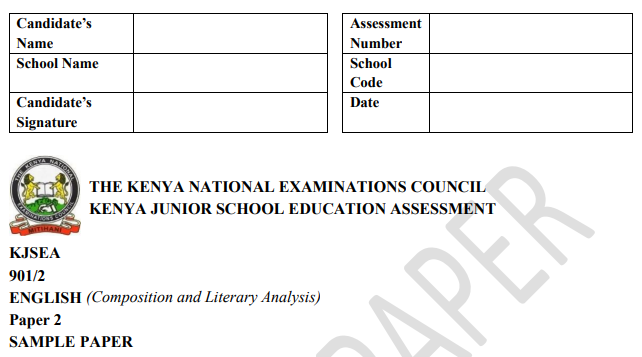
Explanation of KJSEA results and how to interpret JSS (Junior Secondary School) performance in Kenya
Explanation of KJSEA results and how to interpret JSS (Junior Secondary School) performance in Kenya:
📘 What is KJSEA?
KJSEA stands for Kenya Junior Secondary School Education Assessment. It’s the national assessment for Grade 9 learners under Kenya’s Competency-Based Curriculum (CBC). This exam marks the completion of junior secondary school and helps with placement into senior secondary pathways.
According to Kenya’s education guidelines, this assessment:
Measures how well learners have acquired the required competencies by the end of JSS.
Helps teachers, parents, and learners understand strengths and areas needing improvement.
Supports planning for secondary education and identifies learner support needs.
📊 How KJSEA Results are Structured
Unlike the old KCPE system (percentages and clear “grades”), KJSEA uses a performance-based system:
🔹 Performance Bands
Learners are placed into four main performance levels:
1. Exceeding Expectations
2. Meeting Expectations
3. Approaching Expectations
4. Below Expectations
Each level is further divided into two sub-levels, giving a total 8-point scale (1 to 8), where 8 = highest performance and 1 = lowest.
🔹 What the Points Mean Practically
Points correlate broadly with performance percentages (based on the assessment):
8 points — Exceeding Expectations strongly (≈90–100%)
7 points — Exceeding Expectations (≈75–89%)
6 points — Meeting Expectations well (≈58–74%)
5 points — Meeting Expectations (≈41–57%)
4 points — Approaching Expectations (≈31–40%)
3 points — Approaching Expectations (≈21–30%)
2 points — Below Expectations (≈11–20%)
1 point — Below Expectations (≈0–10%)
Instead of giving visible percentages, learners receive point scores and descriptive bands showing how well they met competency expectations.
🎯 What A Score Tells You
📌 Across Subjects
Each subject is graded on this 1–8 scale. When reading results:
Higher numbers (6–8) mean the learner is ready and performing well for senior secondary.
Mid numbers (4–5) show basic competency — learners can progress but may need support.
Lower numbers (1–3) suggest the learner struggled with the competency expectations in that subject.
📌 Overall Interpretation
Exceeding / Meeting Expectations: Indicates the learner is well-prepared and likely to fit into competitive pathways like STEM or Social Sciences.
Approaching Expectations: Learner has basic competency — progression is normal, but additional support may help.
Below Expectations: Signals the learner may need focused support in certain areas.
🧭 How Results Affect Placement
KJSEA results help determine which Senior School pathway a learner is placed into, based on strengths and interests (e.g., STEM, Arts & Sports, Social Sciences). Placement doesn’t depend on a single rank or percentage but on the competency levels demonstrated across subjects.
📄 How to Access KJSEA Results
You can check results in two main ways:
1. Online:
Visit the Ministry’s school-selection portal and enter the learner’s assessment number.
2. SMS:
Send the learner’s assessment number to 22263 (cost ~KSh30) to view their results and selected senior school details.
📌 Important Points
✔️ There are no traditional rankings or certificates issued for KJSEA — results show performance bands and points instead.
✔️ Learners’ final scores are a combination of primary assessment (20%), school-based assessments (20%), and the Grade 9 assessment (60%).
✔️ Results focus on competency and readiness, aiming to reduce unhealthy competition and support holistic growth.
Related Posts
-
 IEBC list of elected and gazetted MCAs 2022 per County (Siaya) plus votes garnered
-
 KENYA SECONDARY SCHOOL LEAVING FORM, FREE DOWNLOAD
-
 IEBC list of elected and gazetted MCAs 2022 per County (Nakuru) plus votes garnered
-
 Private schools plead with Government for support
-
 Grade 7 School Choices – List of schools selected to host Junior High School in Nyandarua County
-
 Ministry of Education issues warning over illegal promotion of grade 7 learners to class 8
About The Author
