Tag Archives: 2019 Census in Kenya

2019 Census Progress- Several in police custody, exercise to end on August 31, 2019

The government has adjusted operation mechanisms for the 2019 Kenya Population and Housing Census and put in place measures to ensure the enumeration pace picks up following a resolution by an inter-ministerial meeting convened earlier today.

The enumeration period in major urban centres (Nairobi, Mombasa, Nakuru, Eldoret, Kisumu, Kakamega, Nyeri, Kiambu, Thika, Machakos, and Kisii) will now run from census from 6am to 10pm while the schedule for other areas has been fixed at 6am to 6pm.

Providing these updates from the census communication centre at Teleposta Towers, Interior PS Dr. Karanja Kibicho said census personnel will be paid accordingly based on the working hours and directed all content supervisors to make reports in this regard.

The PS forewarned of severe action against individuals attempting to block the exercise and urged members of the public to report any anomalies through the toll free number (0800221020.
“It is every Kenyan’s constitutional right and responsibility to take part in matters of national interest, and census is one of them. The security of our census personnel and the members of the public remains our top priority, and we have gone out of our way to quell some minor provocations,” Dr. Kibicho said.

So far, several people, among them chiefs, elders, and enumerators, are in police custody awaiting arraignment in court to face various charges, including incitement to violence and attempting to sabotage a national exercise.

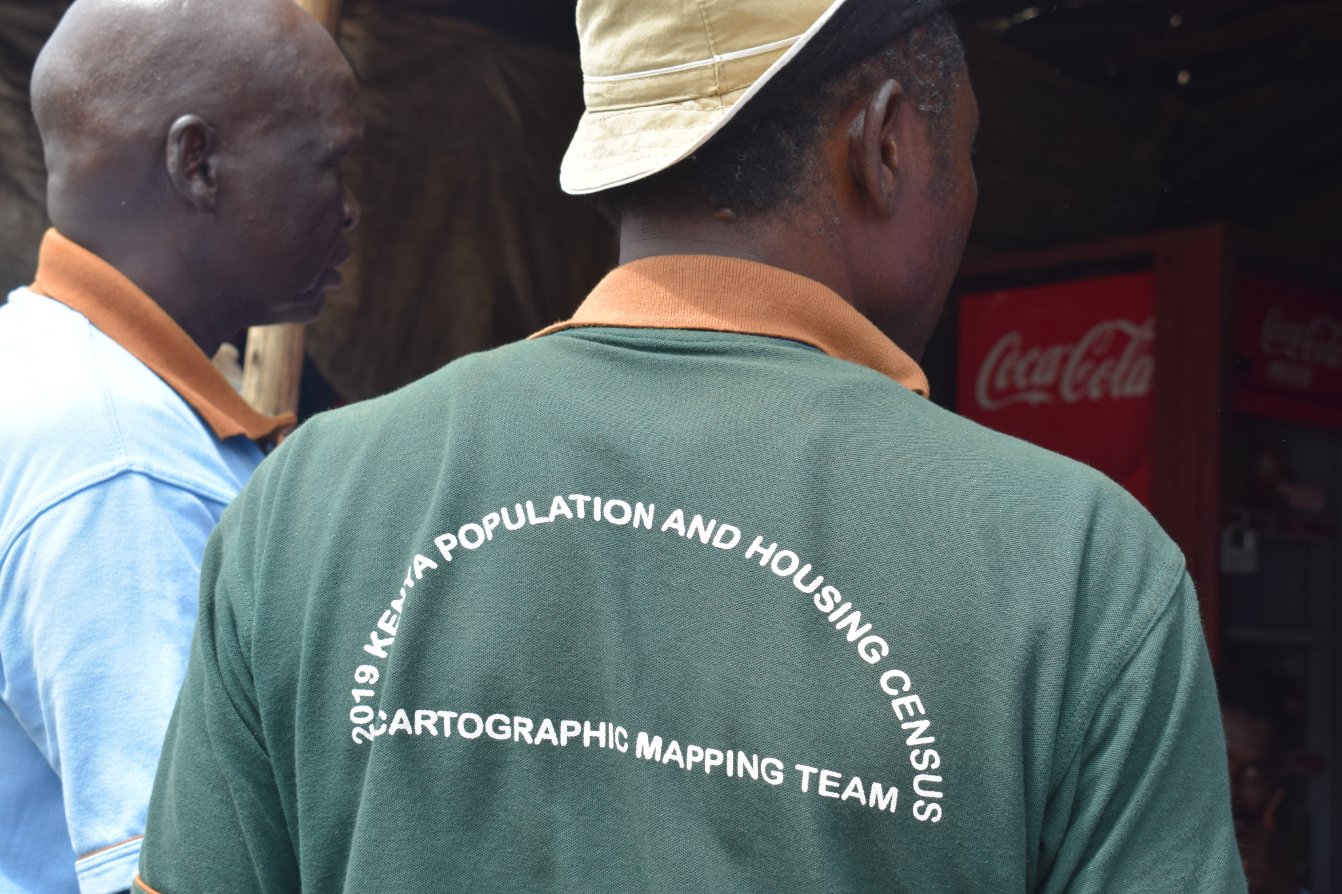
Dr. Kibicho also divulged that a group of individuals are on detectives’ radar for trying to cook figures and urged National Government Administration Officers and the census personnel to uphold the integrity of the whole process by ensuring the exercise is carried out based on the results of the cartographic mapping and the stated enumeration areas.

He said: “Our system is integrated and foolproof; we also have a reliable way of monitoring and verifying the data. All those inflating numbers will surely bear individual responsibility for the same.”

The PS also reassured Kenyans that more adjustments will be made progressively from both operational and administrative perspectives to ensure no one is left out. The exercise will run until the 31st of August 2019.

Get ready to be counted- Latest information on the 2019 Kenya Census exercise

Press Statement by the Acting Cabinet Secretary for National Treasury and Planning Hon. (Amb.) Ukur Yatani on the upcoming 2019 Kenya Population and Housing Census

Get ready to be counted

I wish to inform the public that plans for the 2019 Population and Housing Census which will start from night of 24/25th August 2019 and continue up to 31st August 2019 are complete. This will be the eighth Census since, 1948 and the sixth since independence. The Census is an important process to which the Government attaches great value, due to the need for evidence in planning. Evidence-based decision making is a universally recognized approach to the efficient management of countries.

The implementation of the Census is anchored on the United Nations Principles and Recommendations for Population and Housing Censuses and guidelines for conducting the 2020 round of censuses. These guide statistical agencies throughout the world, in planning and carrying out improved, internationally comparable and, cost-effective censuses.

It will be the first Census to be undertaken since the introduction of devolution in line with the Constitution of Kenya 2010. The census is implemented in three phases namely; Pre-enumeration, Enumeration and Post enumeration.

The Government through the Kenya National Bureau of Statistics (KNBS), has completed most of the pre-enumeration activities as follows:

• Cartographic Mapping of the whole country to establish enumeration areas (EAs). The mapping started in 2016 and was completed in May 2019. A total of 129,123 enumeration areas were established with each having an average of 100 households. Each EA will be served by one enumerator.
• Census Questionnaires. The census questionnaires were developed through a consultative process with the stakeholders. The key thematic areas covered include individual information regarding sex, age, religion, marital status, ethnicity/nationality and migration status, fertility levels of females aged 12 years and above, information regarding persons with disability, education attainment, labour force particulars, information regarding ICT, agriculture and household conditions and amenities.
• Data capture: For the first time, the census data will be captured electronically through a mobile device (tablet). The data capture application has been designed and has in-built checks to ensure data quality. This paperless process will further guarantee data security and timeliness of processing and release of results.
• A pilot census was undertaken in August 2018. It sought to test various aspects which include; logistics, accuracy of the maps, questionnaires, adequacy of personnel and data capture application.
• Recruitment of census personnel who include 2,467 ICT supervisors, 22,268 content supervisors and 138,572 enumerators has been undertaken through the County Census Committees.
• Mobile devices and other accessories to be used for data collection have been assembled locally by Moi University in Eldoret and Jomo Kenyatta University of Agriculture and Technology in Kiambu County. It is worth mentioning that the assembly process has indeed created employment opportunities for many young Kenyans while also promoting the “Buy Kenya Build Kenya initiative.” At the same time, the process resulted in acquisition and transfer of valuable knowledge and skills. All ICT infrastructure as well as security of equipment are in place thereby guaranteeing a smooth enumeration process.

I wish further to inform you that:

• The Training of the ICT supervisors was completed on 2nd August 2019, while the training of the content supervisors that started on 5th August 2019 will end on 11th August 2019. The final training of enumerators will commence on 14th August 2019 and be completed on 21st August 2019.
• On publicity and advocacy, which has been intensified from today, we are embarking on an intensive campaign with a view of creating the needed awareness of the exercise. The purpose of the campaign is to minimize mis-conception about the various pertinent concerns by the members of the public regarding census. I wish at this stage to appeal to our political leaders to take their respective roles in preparing their regions/ Counties to support the census process.
• I further confirm that all necessary security arrangements regarding census have been completed. I wish to assure Kenyans that the security of all persons who will be visited during the census enumeration and for the personnel who will be conducting enumeration is fully guaranteed by the government. In this regard, the census officers will be accompanied by the village elders or residents’ association leaders, known to the household members for purposes of comfort setting.

Assurance
The Government wishes to assure Kenyans that the utmost level of the confidentiality of the information that will be collected will be guaranteed in conformity with the UN fundamental Principles of Official Statistics and as stipulated in the Statistics Act, 2006.

I thank the Cabinet Secretary for Education for agreeing to our request for moving the opening of schools to 2nd September 2019 for purposes of the census.

We have also requested the Cabinet Secretary for the Ministry of Interior and Coordination of National Government to liaise with His Excellency the President to declare 26th August 2019 a public holiday to facilitate a smooth enumeration process.

All residents are encouraged to cooperate with the teams that will visit them for the census enumeration and provide accurate information. We are therefore saying to all Jitokeze Uhesabike!

The 2019 Census Exercise in Kenya- Frequently Asked Questions (FAQs)

Having any queries concerning the 2019 Census exercise to be conducted by the Kenya National Bureau of Statistics, KNBS? Get all your answers here;

  1. What is a population census?
    A population census is the total count of a population at a specified time within a country’s boundary or in a well delineated part of a country.
  2. How often is a Population and Housing Census undertaken in Kenya?
    Population and Housing Census is conducted every ten years in line with the international standards. Kenya has conducted seven censuses in 1948, 1962, 1969, 1979, 1989, 1999, 2009. Kenya has conducted censuses after every ten years since 1969.
  3. When will the next census be conducted?
    Kenya’s next census will be conducted in August 2019 from the night of 24th/25th to 31st August, 2019.
  4. Who will be counted?
    All persons who will be found within Kenya’s boundaries on the night of 24th/25th August, 2019 will be counted regardless of whether they are visitors or not.
  5. Who takes lead in implementation of Census in Kenya?
    Kenya National Bureau of Statistics, as part of its mandate, spearheads the undertaking of the Census on behalf of the government through, an Act of parliament and a gazetted legal notice. This is done in collaboration with different Ministries, Departments, Agencies, learning institutions private sector and development partners.
  6. Who is Kenya National Bureau of Statistics?
    Kenya National Bureau of Statistics (KNBS) is the principal Government agency responsible for collection, compilation, analysis, publication and dissemination of official statistical information and is the custodian of official statistical information.
  7. Why conduct a census?
    Census is the primary source of reliable and detailed data on the size, distribution and composition of the population in the country at a specified time. The information collected during census when analyzed gives an accurate picture of how many people are living in the country/county at every administrative level and their living conditions as well as access to basic services. This will inform planners on the social services people require such as education, healthcare, housing and transport. The data is also vital for monitoring internationally and locally agreed upon agenda such as Sustainable Development Goals (SDGs), Vision 2030, the Big Four Agenda etc.
  8. What is new about 2019 Census?
    The 2019 Census will be administered using computer aided personal interviewing (CAPI) technique. A tablet will be used to capture the information directly for better accuracy and faster processing of the data. The Bureau has adhered to international guidelines which advocate for the values of professionalism, transparency, accountability and integrity required of statistical systems in maintaining credibility and public confidence.
  9. Who will answer questions in the census questionnaire?
    The questions in the questionnaire will be answered by the household head or any other responsible member of the household who can provide the required information about all those who spent the night of 24th/25th August in the household at the time of the interview.
  10. Why do I have to participate in Census 2019?
    Census data is used for planning purposes. If you do not participate, the data collected will not be a true reflection of the Kenyan population. The Government as well as private sector needs accurate information for effective planning and policy formulation.
  11. How do I know that the person at my door is from KNBS?
    KNBS enumerators will be identified as follows:
    a) A branded reflector jacket with the Census and KNBS logos
    b) Identification documents provided by KNBS
    c) The enumerators will be accompanied by village elders or persons known by the residents who will introduce them to the household
  12. How will you make sure I am counted?
    The Kenya National Bureau of Statistics has been conducting cartographic mapping since 2016 where the whole country and existing homesteads and households in the villages are mapped. This will be used to create Enumeration Areas (EAs), each with its map for all villages in the entire country. Each enumerator will be assigned an EA with clear boundaries to guide him/her to ensure total coverage, with no omission or duplication. After your household has been visited a number will be written at a secure place in your household such as the top corner of the door to indicate that counting has taken place in the household.
  13. Whom do I contact in case my household is not covered?
    In case your household will not have been contacted by 31 August, a toll free number will be provided for you to contact KNBS to send an enumerator to enumerate your household.
  14. How will the information collected be treated?

The information that you will provide to the census personnel will be treated with strict confidentiality in accordance with the Statistics Act, 2006. According to the Act, anybody working with KNBS who discloses personal details of a respondent is liable to prosecution. Everyone who will be expected to have access to respondents’ personal details during the census, will take an oath of secrecy to ensure that they protect the privacy/confidentiality of those who provided the information.

  1. In which languages are the questionnaires available?
    The questionnaires will be in English and Kiswahili languages. The enumerators will also be able to speak in the local dialects since they will be recruited from the localities they reside in.
  2. How long does it take to fill in the questionnaire?
    The time taken in a household will depend on the number of persons who will be present in the household on the census night. However, on average, it will take between 35-45 minutes to complete enumeration of a household.
  3. What will show that a household has been enumerated?
    After enumeration, the officials will write a number on the door or any visible place on the structure to indicate that counting has been conducted in the household. PLEASE DO NOT ERASE THE NUMBER.
  4. Do I need to show any documents to the enumerator?
    The enumerator will take down all particulars as given by you. In case you are not sure of some information (e.g. age) you may check your documents to confirm and provide accurate information.
  5. Will I be enumerated if I am in a hotel or on transit on Census night?
    Yes, you will be enumerated irrespective of where you will be on the census night provided you are within the borders of Kenya. There are five different questionnaires that will be used during enumeration. One main questionnaire and four short ones. The main questionnaire will be used to enumerate persons in conventional households; the short questionnaires will be used to enumerate people who are on transit (e.g. at airports, bus stops, etc.), those in institutions (e.g. schools, prisons, hotels etc.), outdoor sleepers and emigrants.
  6. If on the night of the 24th/25th August, I am out of the country, will I be counted?
    No. KNBS conducts a de facto census, which means that people will be counted depending on where they will be on the night of 24th/25th August. Anyone who was in the country before midnight of 24th/25th August will be counted; anyone who enters the country after the 24/25th August 2019 will not.
    However, a short questionnaire on emigrants will be used to collect information in households that have had emigrants in the last 15 years. Their information will be provided by the head of the household and responsible member of the household.
  7. If I have visitors on the night of the 24th/25th August, should they be counted as part of my household?
    Anyone who will be present in your household on the night of 24th/25th August, 2019 will be counted together with your household. Everyone will be counted depending on where they will be on the night of 24th/25th August, 2019. Those who will be on duty working (e.g. a nurse) on that night will be counted with his/her household that he/she will return to the following day after work.
  8. Will refugees be counted?
    Everybody who will be within the Kenyan boundaries on census night (night of 24th/25th August 2019) will be counted including refugees.
  9. What questions will be asked?
    The census questionnaire that contains questions to be asked during the 2019 Census can be downloaded from www.knbs.or.ke.
  10. Why is the ethnic background asked about?
    Data on ethnicity is collected for its statistical value, not because of the numbers but in the label/attribute. The information has enormous socio-cultural value that is useful in planning and research. Ethnicity influences lifestyle, which determines certain demographic, social and economic characteristics that drive socio-economic development. All previous censuses conducted in Kenya have collected data on ethnicity, reflecting a long-standing and continuing demand for information about ethno-cultural characteristics of the Kenyan population. Kenyans are encouraged to use the information positively and responsibly.
  11. Why do you ask questions about the household assets I have in my house?
    The information collected gives the status of well-being for the household, and is used to generate economic and social indicators.
  12. Will the general public access the results?
    The general public will be able to access the census results once they have been launched. The census results will also be available to the public through the KNBS website and publications (inform of preliminary results, basic reports, detailed reports (monographs), maps etc.).
  13. Has KNBS advertised the census jobs for supervisors and enumerators?
    The job advertisements will only be done in the local national newspapers and the KNBS website (www.knbs.or.ke). The positions will be advertised from June 2019. For now no advertisement has been done and the public is advised not to fall prey to conmen who are out to swindle them of money. The Government does not ask for money from its citizens when they apply jobs.
  14. What are the security arrangements in place?
    The county census committees will be in charge of security arrangements in the respective counties. This will involve in part use of local administration and recruitment of enumeration personnel from the areas they reside. Each security team is expected to take measures according to the unique security concerns in their areas.

Should you have any further questions or comments about 2019 Census please contact us on Tel: 020 3317583/6/8, Hotline Numbers: 0701244533, 0735004401 or email us at [email protected]. Visit our website: https://www.knbs.or.ke

Related hot news;

https://newsblaze.co.ke/2019-census-jobs-shortlisting-and-interviews-guide-to-interview-questions-and-their-answers/amp/#referrer=https%3A%2F%2Fwww.google.com&amp_tf=From%20%251%24s

This is how the Kenyan Government intends to use the 2019 Census data

Uses of the census data

The data that was collected through the recent census exercise is the most comprehensive in the history of a country. Kenya is one of the few African countries that has consistently held censuses every ten years since independence. Furthermore, Kenya is among the first countries in the continent to undertake a digital census, where live data is received, and data quality is continuously monitored.

Why should the government invest in a census?

International obligations
Kenya is a signatory to the United Nations’ Agenda 2030, which has set for itself 17 Sustainable Development Goals (SDGs). The goals seek to ensure that no one is left behind as the world strives to eradicate poverty in all its forms globally.

The Continent has also set for itself the African Union Agenda 2063. One of the aspirations of this Agenda, is ‘An Africa, whose development is people-driven, relying on the potential of African people, especially its women and youth, and caring for children’. It is imperative, therefore, that African countries, Kenya included, understand the composition of their populations, through censuses in order to plan for them.

As a Government there is need to establish the size of the population, how many Kenyans are employed, those who have decent housing and the assets that Kenyans own. With this knowledge, it becomes possible to determine which section of the population requires additional support in order to alleviate poverty.

The Big Four Agenda

As the Government implements the Big Four Agenda, data collected through the census exercise is very important for evidence-based planning and will therefore play a key role in decision making process. The census outcome is expected to impact the four pillars of the Agenda in the following ways:

A. Food and nutrition security

Many people have been wondering why the Kenya National Bureau of Statistics included a comprehensive agriculture module, which features questions on whether households practice agriculture or own livestock. We all know that agriculture is the backbone of our economy. The sector is crucial in enabling the country to feed its people and therefore become food and nutrition secure. For these reasons, information provided in this module will enable us to determine our potential for food production.

B. Manufacturing

This census has relied very much on digital technology. The mobile devices and other accessories that are being used for data collection were assembled locally by Moi University in Eldoret and Jomo Kenyatta University of Agriculture and Technology in Kiambu County. The assembly process created employment opportunities for many young Kenyans while also promoting the “Buy Kenya Build Kenya” initiative. At the same time, the process resulted in acquisition and transfer of valuable knowledge and skills.

Further, cartographic mapping that was carried out in the pre-enumeration period provided valuable geospatial data on geographic locations of areas with high population density. Such information is important in informing decisions such as where to locate industries that can tap into our well- educated work force in order to boost manufacturing. The census data also provides details of the industries that engage our workforce.

C. Universal health

Planners also use census data to determine the best locations to put up public amenities including hospitals and health centres. The Government’s aspiration to provide universal health coverage can only be achieved if information on population distribution is readily available.

D. Affordable Housing

The census exercise also sought to get information on housing. In this regard, information collected includes the type and location (rural or urban) of the dwelling units, the number of habitable rooms, and the types of available facilities such as water, toilets, sewerage and the type of cooking and lighting fuels. Data on housing provides insights into the type and quality of housing that exists in rural and urban areas throughout the country.

The census data therefore, allows planners to assess changes in the quality of housing and related facilities and plan for future housing needs. This information will enable government to determine the gap in housing and plan better on how to fill the gap. This way, the affordable housing pillar of the Big Four agenda will be realized.

Government Designates August 26 As A Public Holiday To Facilitate National Census

The Government has designated August 26 as a public holiday to allow maximum enumeration of Kenyans during the national population census that begins next Saturday.

The announcement was made today by President Uhuru Kenyatta at the Kenyatta National Convention Centre (KICC) , Nairobi when he launched the countdown to the 2019 Kenya Population and Housing Census. “To ensure maximum enumeration during the first two days ( August 24 and 25) of the Census period, I have authorized Monday, 26th August 2019 to be a Public Holiday,” the President announced.

The Head of State assured Kenyans of their security during the census exercise saying necessary steps have been taken to ensure the activity takes place in a safe environment and with minimal disruption. “All enumerators will be accompanied by uniformed security officers, and may also be accompanied by community elders and leaders of residents’ associations, depending on the area,” he said.

To ensure that all Kenyans participate in the census, the President said special measures have been put in place to ensure pastoralists , staff in essential and emergency service sectors and persons who support international travel and airlines are enumerated.

The President who called on all Kenyans to support the process said government took the step to reschedule school opening dates so as to minimize movement of persons during the exercise. “It is therefore, the patriotic duty of each and every one of us to do all that is required to support the exercise,”the President said.

On the use of technology in the census, the President said he was proud that the mobile telephony devices and other accessories that will be used in the activity have all been locally assembled at Moi University and the Jomo Kenyatta University of Agriculture and Technology.

He said data captured during this year’s census will be more detailed than in previous similar exercises so as to take care of all aspects of national planning and resource utilization. “The census data will be utilised in planning to ensure that all Kenyans will access opportunities in an equitable manner,” President Kenyatta said.

A team of 2,467 technology supervisors, 22,268 content supervisors and 138,572 enumerators has been assembled and will be deployed across the country to carry out the census exercise.

KNBS- This is how we shall use the Census Data

The Kenya National Bureau of Statistics, knbs, is in the process of compiling the 2019 National Housing and Census Data. The Census exercise was completed in August 2019 with the reference enumeration data being the night of 24th August. Once compiled the Census data will be utilized as explained below;

USES OF THE CENSUS DATA 
Kenya is one of the few African countries that have held censuses every ten years since independence. In this area, Kenya is also unique in that the census is fully financed through taxpayers’ money, which underscores the importance that the Government accords this national exercise. Let me take this opportunity to share with you some of the uses that will be made of the data being collected through the census.

By Government
For the Government, census data is the most crucial ingredient for facilitating evidence-based planning processes. Given that the data is being collected from the lowest administrative level, it will help the country to ensure that non one is left behind as we progress in the middle income status in line with Vision 2030, the Big Four Agenda and the UN Sustainable Development Goals.

Another critical use of the data is in guiding the Government on the location of important public amenities. Planners will use the information on the number of people to forecast the demand for among others, schools, hospitals and administrative offices for the next ten years.

By businesses
One of the census questions on ICTs focuses on online transactions. This information will provide insights about the potential for e-
commerce in the country. The very high penetration of mobile phones in Kenya presents a huge opportunity for e-commerce.

Census information will also help in determining location of premises, social amenities, establishing the demand for goods and services as well as determining availability of human resources.

By Research and academic institutions
The data will provide research and academic institutions with an up- to-date reference point for interpretation of Kenya’s demographic reality.

By civil society
The civil -society sector will find the data critical for the design and implementation of social programmes.

For international relations
In the community of nations, countries know each other based on national data, particularly population. Kenya will stand tall and proud because it will not only be the most comprehensively done survey in the country’s history, it will also be the first paperless census for which the enumeration process will be fully digitised.