Tag Archives: CS Magoha

Education ministry circular on reopening of universities: See finer details

  The ministry of education has issued fresh guidelines on how universities shall be reopened following closure in March; to combat spread of covid 19. According to the latest guidelines, all universities are expected to resume operations in September this year. It is expected that by that time the rate of infections would have gone down.

  “The ministry of education in collaboration with other government agencies is working on the modalities of reopening all institutions of learning. Modelling projections by the ministry of health on when the peak of infections is projected to be in August/ September, and therefore, it is expected that fewer cases will be reported after September 2020.” reads a circular by the Principal Secretary for State Department for University Education Amb. Simon Nabukwesi and dated June 17, 2020.

  The PS has also directed universities to develop elaborate plans ahead of the reopening. In the plans, there should be measures to prevent spread of covid 19 transmissions. Top on the list of requirements is provision of clean running water and soap for hand washing and sanitizers for all students at all times.

  The universities should also ensure social distancing and that everybody should be compelled to wear masks.

   “Universities will ensure that all learners lecturers and non-teaching staff have masks. The universities may provide these at a subsidized rate to students and staff,” he adds.

   At all entry points to the universities, the ministry has directed that there be thermo guns for monitoring body temperature of all persons entering the the institutions.

Also read:

   Students and staff who may not be able to travel back to the universities should be accorded necessary support; including online learning for the students.

   “Universities are to ensure that contingency plans are provided for those students who might need assistance to get back to their institutions,” Nabukwesi directs.

   Further, universities shall now cease being used as isolation centres so as to sanitize/ fumigate them before operations resume.

   “Institutions whose facilities are still, currently, being used for isolation, quarantine or as treatment centres are supposed to liaise with ministry of health to cease any further admissions and to transfer the patients to MoH (Ministry of Health) facilities,” Says the PS.

   The institutions of higher learning are expected to have a crunch program to accommodate both the continuing students and first year year students.

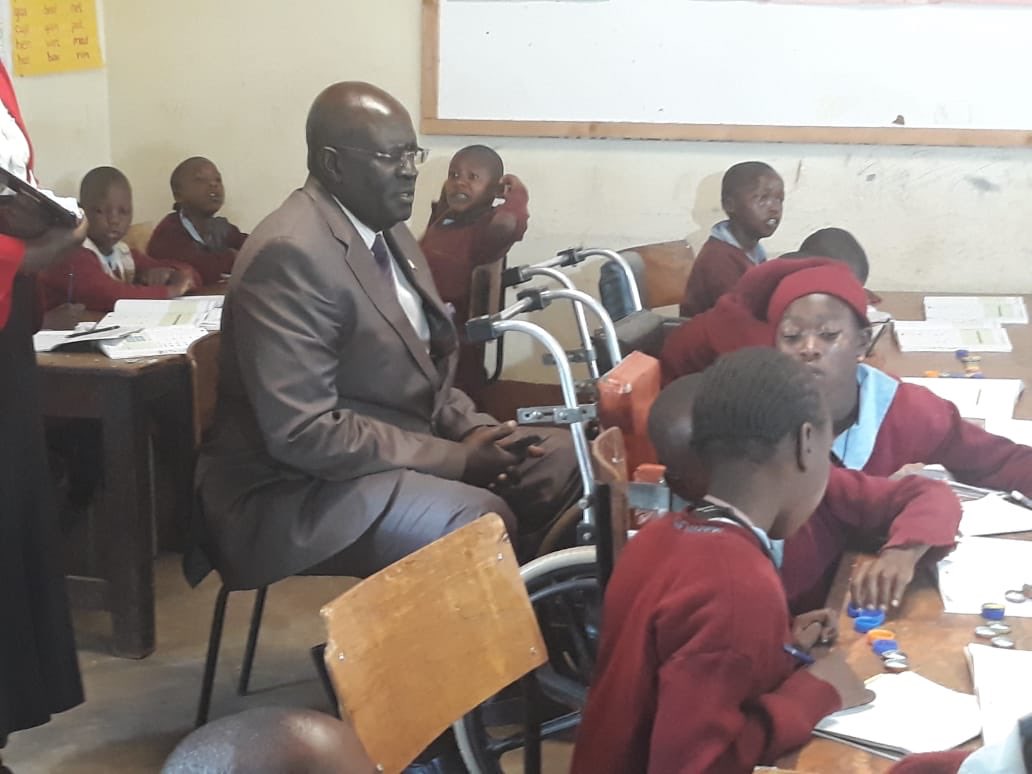
   Education Cabinet Secretary George Magoha has been traversing the country to see preparedness of schools ahead of the September reopening date. Top in his mission is to find out if schools have adequate supply of clean water.

See also;

E-learning is very new to me and you- Education CS Prof. Magoha tells MPS: Full account of his presentation in parliament

Emabakasi East Member of parliament, Hon. Babu Owino, has come under fire for ‘teaching’ with qualifications. The Law maker who has already run a mathematics lesson for KCSE students on his Facebook account has been warned that whatever he is doing is illegal.

The warning shot was issued by the education Principal Secretary Dr. Belio Kipsang when he met with the Departmental Committee on Education on Thursday morning.

“Anybody who is offering to teach students without being qualified is undertaking an illegality, and so is anyone circulating e-learning information that is not approved by KICD..All the content of learning delivered to students must be Approved by the KICD, whether for online learning or physical learning. And every teacher must be Qualified,” said Dr. Kipsang.

The flamboyant politician is offering more lessons in coming weeks.

One of Babu Owino's online lessons advertisement.
One of Babu Owino’s online lessons advertisement.

The Education Cabinet Secretary Prof. George Magoha was however in support of schools and teachers charging parents for online services rendered.

“When it comes to charging of Online lessons offered by teachers, let them engage the parents and agree on favorable terms. I think there is nothing wrong with charging for services delivered,” the CS explained.

Hot news:

Brookhouse international school has been on the limelight for forcing parents to pay full fees even when much of the physical learning time has been lost due to the current closure of learning institutions to prevent further spread of Covid-19 disease.

Related news
E-learning is very new to me and you; but very necessary now.

The CS noted that the current E-learning is very new to him just like it is to everybody else but he was quick to point out that it can not be used to replace physical teaching.

“E-learning is just as new to me as it is to all of you. The gov’t has been very clear that when schools re-open, we will take it from where we left,” said the CS.

An assurance that was further emphasized by PS Kipsang.

“We can assure you that nothing we are doing now will replace the inter-personal relationships of learners and teachers, and when physical learning resumes, every child will still have an equal opportunity… We are trying to mitigate the impacts of this pandemic, and to deal with the new normal that we find ourselves in. We already have an emergency plan set up to improve the coping mechanisms.” reassured the PS.

“We are trying to mitigate the impacts of this pandemic, and to deal with the new normal that we find ourselves in. We already have an Emergency plan set up to improve the coping mechanisms,” he added.

Magoha defended the online teaching saying it was the only feasible option if going by the current crisis created by the covid-19 pandemic is anything to go by. He turned down a request by Nyamira County Women Representative who wanted to know if it is possible for the government to stop all these Online learning programmes so that all our children are equal when they resume physical learning.

“We do not advocate for teacher-learner contact even from home, since we do not what to put anyone at risk of infecting the other with COVID-19…The government at this time, will not consider stopping e-learning. Our children who are able to access the virtual learning will continue to get, despite others not being able to.

Dr. Kipsang on his part noted that the current e-learning system has its own shortcomings, though.

“This pandemic came at a time that we may have not prepared for all eventualities, that is why some of our Special Needs children might not have sufficient E-learning materials,” the PS explained.

Committee chair, Hon Melly, was concerned about ‘a majority of the Kenyan children who are not getting these online learning materials, and they are the majority.

The International Commission of Jurists, ICJ, has urged the government to provide learners with electronic gadgets and internet services.

But CS Magoha thinks otherwise.

“If you go to any secondary school, you will be shocked. It is only that we do not allow them. If we allowed them to carry phones to school, you will realise that all the secondary school students have smart phones,” stated Magoha.

On the safety of learners and teachers once learning resumes, the CS said an elaborate plan is in place.

“We will be following the Outlined COVID-19 guidelines when schools resume. And there will be a whole budget line to cater for this,” reported the CS.

It remains to be seen the plans that the Ministry has come up with ahead of the announced reopening date in June. On his part, the CS was quick to rule out any hasty decision in reopening the schools any time soon.

“It is too early to give any specific dates. In the meantime, the calendar for the national exams remains. If the situation changes, we will reopen schools… Our children are alive and safe at home. It is not only in Kenya where this pandemic is happening. If it means they will be staying at home for one year, then so be it. Don’t create a metal pipe and force me into it asking me to give you dates,” Magoha outlined.

Education Cabinet Secretary George Magoha answers critics, defends his actions

Education Cabinet Secretary Professor George Magoha has defended his way of executing duties that have landed him in the hot soup, lately. The CS notes that the process of bringing reforms in the Education Sector is not easy as it may face unprecedented resistance. In his statement, he castigates his field officers for derailing the reforms.

This comes after the Public Service Commission trimmed his powers to manage workers in the Ministry.

Read the full statement from CS Magoha, below;

STATEMENT BY CS MAGOHA ON THE STATUS OF EDUCATION SECTOR

“Having accrued considerable experience in public service in numerous capacities, I strongly believe that for any meaningful, positive and measurable change to happen, things must be done differently. While I do concede that I am not perfect, in the process of reforms of the magnitude required to improve service delivery in the education sector, I also recognise that this process is bound to generate resistance if tangible results are to be achieved.

My management style which has proved successful over the years is walking about at the point of service delivery. I will qualify this position by citing a few examples:

1. Chronic Absenteeism from the workplace

When I was sworn in as Cabinet Secretary for Education on March 26, 2019 my first engagement at the Ministry of Education was to physically confirm whether Ministry employees report to work at the expected time. I immediately realised that more that 60% of the offices were empty and unattended by 11am.

I then sought to rally the staff and firmly impressed upon them the importance of reporting for duty on time. To monitor attendance of staff to their duties, I spearheaded the installation of CCTV and biometric devices in all entry and exit points for checking in and out all Ministry personnel. Though it was initially resisted, within a span of 6 months, cases of absenteeism had reduced to almost zero with nearly all top managers reporting for duty voluntarily by 6:30am, a situation which has remained the same to date.

2. Chronic Absenteeism by Field Officers

Chronic absenteeism in the field has persisted even though significant improvements have improved tremendously. A small number of field officers limit their work to their offices with little effort to physically monitor implementation of education programmes in the field unless a senior Ministry official from the Headquarters is present. This is however negated by a substantive number of dedicated field officers whose impact in the field is laudable.

During my numerous field visits, I have been able to identify competent officers such as Mr. Weru Machocho who I promoted and deployed as a Regional Director and he has demonstrated excellent results in a short span of a month especially through visiting more than 200 schools to physically inspect and ensure that Economic Stimulus Programme for desks are fabricated as per prototype specification and delivered to schools promptly.

For a measurable impact to be made, all government employees must work for the pay that they earn monthly. In my many field visits I have noted that chronic absenteeism is the single leading cause of poor quality assurance and oversight by the Ministry. On this concern, I wish to confirm that for as long as I remain at the helm of the Ministry, I shall continue to ensure that all Ministry employees deliver services to the public as per their job descriptions.

3. Field Visits

I wish to begin by thanking senior officers from the Head Quarters for their numerous and very effective visits to the field since these have strongly supported service delivery by the Ministry.

During my numerous field visits, I have observed and made public pronouncements many times that I have continuously found our teachers in class teaching diligently and demonstrating that they are hardworking, and committed in their teaching. However, there are a number of instances when our field officers do not provide the necessary support and superintendence required for effective service delivery.

The rights of learners, teachers, parents and the wider public who are directly and indirectly affected by the education sector must be safeguarded by all public officers in the education sector by being hands-on and diligent.

4. Misappropriation of Public Funds in the Ministry of Education

As public officers, we are duty bound to ensure that Kenyans their hard-earned taxes and other revenues from the public kitty is utilised prudently. This can only be achieved if we embrace hands-on management of these resources.

This management approach has been instrumental in identifying lapses within the Ministry where Public Funds have been misappropriated and measures to ensure that I effectively intervene have been deployed.

In order to ensure that proper planning and record keeping is maintained the CBC Taskforce undertook an exercise to collect data from all learning institutions and the learners in each institution. This can now be verified and is fully documented.

A key example among others of the significance of the Taskforce’s findings is in the primary school sector where due diligence identified an inflation of numbers of learners from 8.47 million to 9 million learners. The shortfall of 529,997 learners has led to the saving of Kshs. 752,594,740 annually.

5. The Government Stimulus programme for the delivery of desks worth Kshs.1.9 billion

The government allocated Kshs.1.9 billion under the Economic Stimulus Programme for the supply of desks to schools in order to enhance social distancing as a strategy of reducing Covid-19 transmission.

I tasked one of the units in the Ministry to develop and cost a prototype. When I did due diligence of establishing the market prices of the desks, I realised that the Unit at the Ministry had inflated the cost by Ksh 1,700, which means only 250,000 desks would have been supplied.  The Ministry set the prices at Ksh 2500 and Ksh 3800 for primary and secondary school desks respectively.

The government will now be able to supply 622,157 locally assembled desks to 5,136 public primary (359,450 desks) and 5,243 public secondary schools (262,707 desks, lockers and chairs). This programme seeks to ensure that local jua kali artisans and workshops at the sub-county level are supported to uplift thousands of livelihoods and support learners with desks that would mitigate the effects of social distancing in preventing the spread of the COVID-19 pandemic.

The process of fabricating and delivering the desks took off in earnest and when I demanded for a report from Sub-Counties which had delivered desks to schools I was taken aback when I sought to verify the reports by sampling and going to the field in person.

In Kakamega North where the schools identified were five (5), I only found delivery in 2 schools and the desks delivered in those schools were of poor quality, not varnished and did not meet the specifications of the prototype. The same was exemplified by Mumias East and numerous other sub-counties across the country.

I wish to thank all the field officers who are correcting such anomalies in an effort to fabricate and deliver the quality and standards of desks required as per the prototype.

6. 100% transition

The policy on 100% transition which was implemented from 2018 was only successful this year through mobilization of all education field officers and co-ordination with the Ministry of Interior and Co-ordination of National Government working as a team to mop up all children who had not reported to Form 1 at the expected time.

The operation was successful because I personally demanded that every education field officer must account for every child who had completed Class 8 and I visited all areas that had reported many cases of children who had not been admitted including those who were pregnant or from disadvantaged families.

In addition, the Ministry of Interior and Co-ordination of National Government through its Cabinet Secretary, Dr. Fred Matiangí ensured that all his field officers were fully engaged.

Conclusion

I thank all officers within the education sector for their diligence and continue to persuade the few who are left behind to join us in delivering for the Kenyan child as a team.

Unless otherwise directed by my appointing authority, I shall continue to perform ALL my duties and responsibilities with zeal and commitment and ensure that ALL officers in the Ministry of Education perform their duties for the benefit of the Kenyan Child, Parents and all education stakeholders.

Schools directed to purchase government rice; See prices

The Ministry of Education has ordered all schools to buy rice from the Kenya National Trading Corporation, KNTC. This is in line with a directive by President Uhuru Kenyatta on 14th January, 2020. In the directive the President ordered that the Kenya National Trading Corporation should purchase all the excess rice from Kano Plains and Mwea for onward selling to Disciplined forces, Prisons Services and public schools.

Via a circular dated 8 October, 2020, Principal Secretary Dr. Belio Kipsang says all schools should comply with the Government policy of Buy Kenya Build Kenya as provided for in Section 155 of the Public Procurement and Asset Disposal Act of 2015.

“In fulfillment of this Policy, it is brought to your attention that all public primary and secondary boarding schools are advised to comply with the Buy Kenya, Build Kenya as provided by Law by purchasing their rice for consumption from the Kenya National Trading Corporation,” says Dr. Kipsang.

Schools are set to reopen next week; after a long closure as a result of the outbreak of covid19 in the country. Most schools had to dispose their food stuffs to avert loses.

Kipsang says the quality of the rice is fit for consumption by learners.

“The Kenya National Trading Corporation has given its assurances that rice is available to Government procuring entities from KNTC Depots in Nairobi, Kisumu, Eldoret, Wote, Meru, Nakuru, Kitale and Karatina. Additionally, the Corporation is able to service several institutional orders as other orders are being processed.” He assures.

The price per a 50kg bag ranges between Sh5,200 to Sh8,250; depending on its quality.

HERE ARE THE RICE PRICES.

See also;

Several nabbed, mobile phones confiscated at the ongoing 2019 KCSE exams: CS Magoha says

Education Cabinet Secretary has said that over 50 mobile phones have been confiscated at the ongoing 2019 Kenya Certificate of Secondary Education, KCSE, exams centres. According top professor George Magoha, 60 people have also been nabbed for participating in alleged exam malpractices. A flurry of top level government officials have been crisscrossing the country to ensure no cheating in the exams. The KCSE exams enter week two on Monday; next week.

More details to follow……………..

Read also;

TSC asks teachers to answer to phone calls from the Commission

The Teachers Service Commission, TSC, has urged teachers to provide feedback on the Secondary Education Quality Improvement Programme (SEQIP). This is a programme that is run by TSC and the Ministry of Education (MOE) among other stakeholders.

SEQIP aims at improving the transition from primary to secondary school and also enhancing retention of learners in school. The School Based Teacher Support System (SBTSS) which improves teacher delivery capacity is a component of SEQIP that is run by TSC.

Now, TSC Head of Corporate Affairs Beatrice Wababu tells teachers that the phone calls are not from scammers.
“To get the feedback on SEQIP implementation, MOE has contracted a verification agency that is doing a survey on key stakeholders who include teachers through phone calls. Please cooperate with this agency by providing them with the information that they are seeking through their calls. These callers always introduce themselves adequately.” She says.
See also;
TSC is implementing part of the component 1 of the Secondary Education Quality Improvement Project (SEQIP) on ‘improving the quality of teaching in targeted areas’.
The Project Development Objective (PDO) is to improve student learning in secondary education and transition from primary to secondary in targeted areas.
The programme is being run in some parts of 30 selected counties.
Here is the full list of Counties and Sub- counties where the Project will be implemented; in Primary and Secondary schools (both Public and Private schools):
  • Baringo County (3 Sub- counties): Baringo North, East Pokot and Marigat.
  • Bomet County (2 Sub- counties): Chapalungu and Sotik
  • Bungoma County: Bungoma West, Cheptais and Mt. Elgon.
  • Busia County: Bunyala, Busia, Butula, Nambale, Samia, Teso North and Teso South.
  • Elgeyo Marakwet: Marakwet East and Marakwet West.
  • Garissa: Balambala, Dadaab, Fafi, Hulugho, ijara and Lagdera.
  • Homa Bay County: Suba.
  • Isiolo County: Garbatula, Isiolo and Merti.
  • Kajiado County: Kajiado Central and Loitokitok
  • Kakamega County: Butere, Kakamega South, Khwisero, Likuyani, Lugari and Navakholo.
  • Kilifi County: Ganze, Kaloleni, Magarini and Marindi.
  • Kisii County: Marani and Nyamache.
  • Kitui County: Ikutha, Kyuso, Mumoni, Mutito, Mutomo, Mwingi Central, Nzambani, Tseikuru and Mwingi East.
  • Kwale County: Kinango, Kwale and Msambweni.
  • Laikipia county: Laikipia North.
  • Machakos County: Masinga and Yatta.
  • Makueni County: Kathonzweni, Kibwezi, Makindu, Makueni and Nzaui.
  • Mandera County: Banisa, Lafey, Mandera Central, Mandera East, Mandera North and Mandera West.
  • Marsabit County: Chaibi, Horr North, Loiyangalani, Marsabit, Moyale, Sololo and Marsabit South.
  • Migori County: Kuria East, Kuria West and Uriri.
  • Murang’a County: Kandara, Kigumo and Murang’a East.
  • Nandi County: Tinderet.
  • Narok County: Trans Mara East.
  • Samburu County: Samburu Central, samburu East and Samburu North.
  • Taita Taveta County: Taveta.
  • Tharaka Nithi County: Tharaka North and and Tharaka South.
  • Tana River County: Bura (Tana North), Tana Delta and Tana River.
  • Turkana County: Kibish, Loima, Turkana Central, Turkana east, Turkana North, Turkana south and Turkana West.
  • Wajir County: Buna, Eldas, Habaswein, Tarbaj, wajir East, Wajir North, Wajir South and Wajir West.
  • Pokot County: Pokot Central, Pokot North, Pokot South and West Pokot.

Schools’ reopening: Present your opinion today

The National Covid-19 Education Response Committee is racing against time to come up with proposals on the Kenyan academic calendar and schools’ reopening. The committee’s chairperson Sarah Ruto has invited all stakeholders and the public to submit their views on the best possible practices in returning the education sector to normalcy.

The general public has up to May 22, 2020 to submit their proposals to the committee.

“Pursuant to article 10 (1) and (2) of the constitution and section 4(I) of the Basic Education Act, No. 14 of 2013, the committee now invites all stakeholders and the public to submit their views on the best possible national response (on how to address the current crisis created by the covid-19 pandemic),” says Dr Sara Ruto, the committee’s chairperson, via a memoranda.

The committee is seeking input on how to safely execute the reopening of Basic education institutions. These institutions, that were closed indefinitely in mid-March, include Pre-primary, primary, secondary schools and Teacher Training Colleges.

Also read;
How to submit your opinion.

The committee also expects submissions on how to reorganize the school calendar and give views on the fate of boarding schools. Input is also required on the possible health measures that should be put in place for the learners and teachers to curb spread of the virus in schools once they reopen.

The National COVID-19 Committee now invites all stakeholders and the public to submit their views on the best possible national response in line with the committee’s terms of reference for the basic education sub-sector

Wondering how to make your contribution? Kenyans wishing to make a contribution are at liberty to do so by sending a written memoranda to the Secretariat. This can be done via e-mail to [email protected] or through the postal office by using the address P.O. Box 30231-00100, Nairobi.

already some citizens have turned to social media platforms to air their views. But, this may not bear much fruits as the committee will only consider suggestions shared via the official email and postal addresses.

The Dr. Sara Ruto-led committee is faced with the daunting task of address such concerns as how social distancing would be achieved in the already overcrowded public schools.

Education CS Prof Magoha’s shocker for private schools’ parents

Education cabinet secretary Prof. George Magoha has put the record straight concerning school fees payments. The CS was responding to concerns over plea by parents with kids in public schools to reduce school fees once schools reopen. There have also been complains by parents in private schools after they were asked to pay full fees.

While appearing before the Parliamentary Committee on education, the CS said there is no need for parents with kids in public schools.

‘The government pays fees for Tuition and Examination for all Pupils and Students in Primary and Secondary schools, so there is nothing to waive,” the CS said.

Related news
Fees for private schools.

A request by the members of parliament for the ministry to extend free education fee waiver to private school was turned down by the CS.

“It is very difficult that the government still has to extend the money from the exchequer for tuition to private schools too, despite the parents’ choice to leave the free government schools for the private schools. we may need to reconsider this,” Magoha clarified.

Parents with children in an international private school in Nairobi are seeking the court’s intervention over what they term as exorbitant fee demands by private schools. It is Brookhouse school that has majorly faced the wrath of parents who saythey are being forced to meet the full cost of electricity, food, internet, printing assignments, teaching, and supervising children during the current closure as result of the covid-19 pandemic.

BrookHouse international School; one of the leading private school in the country.

The private schools have been running online tuition for learners and asking parents to meet the fee costs. But Education CS George Magoha restates that schools will remain closed till June 4 and that the Government will review the situation before advising the public of the next step regarding the start of second term.

School fees for public schools. Read details here:

School fee charged by Brookhouse school ranges between Sh150,000 and Sh1.5 million per term depending on the class of the learner.

“It is in order for private schools to negotiate with parents the percentage of fees to be paid, so that learning continues and the schools are still functional,” added the CS.

Join us on Facebook. Like our page https://web.facebook.com/educationnewshub.co.ke/

Education CS proposes conditions to met before reopening schools

Education cabinet secretary has lashed out at the Kenya National Union of Teachers, KNUT, for insisting that they ought to have been given a slot in the recently constituted national education covid-19 response committee. Knut’s secretary general Wilson Sossion has been vocal in the media over the exclusion. But prof. Magoha now says it is not feasible to have everybody in the committee and that the learners’ interests should supersede personal interests.

“We are very serious about thinking what we need to do with our children and it’s not about everybody being there. Is the union represented, yes . We have put one unionist who will coordinate all the others and then, let us move to where we are going,” said the CS.

The CS had initially sidelined all teachers’ unions only to appoint a representative from the Kenya Union of Post Primary Education Teachers – KUPPET . The committee is currently collecting views from Kenyans on how best to reopen schools.

But, knut would hear none of this, noting that the government should not rush into reopening of the schools.

Also read;
Reopening conditions

The CS noted that most schools lacked adequate infrastructure to ensure social distancing among learners; something that must be addressed urgently before schools are reopened.

“In case we are thing about reopening, we shall need a situation where there is flowing water in most schools. we must also think to keep the social distance of one metre. And, therefore having six double deckers (beds) in the cubicle is something that we shall have to reconsider,” Prof. Magoha said.

This, according to the CS, will reduce infection and ensure learners’ safety in schools.

Speaking in Kiambu while on an inspection tour of Ruiru girls high school, this past week, the CS said reopening of schools would entirely depend on a paradigm shift in Kenyan’s behaviour.

“If we are going to be bold enough to open schools, the public must agree to change their mindset and behave in a more civilized manner,” he said.

This means that the public should henceforth abide by the health ministry’s guidelines on social distancing, wearing face masks and maintaining high levels of hygiene.

Magoha watered down the World Health Organisation’s thought that the virus could move from pandemic which is easier to deal with to endemic.

“I don’t subscribe to that school of thought. We need to give the virus a few more months to see how it will pan our,” he said.

Ruiru Girls High School in Kiambu county. education CS prof George Magoha has said the school will be upgraded to be a centre of excellence.

MPs meet TSC boss Dr. Macharia, CS Magoha and Inspector of Police over teachers’ transfers

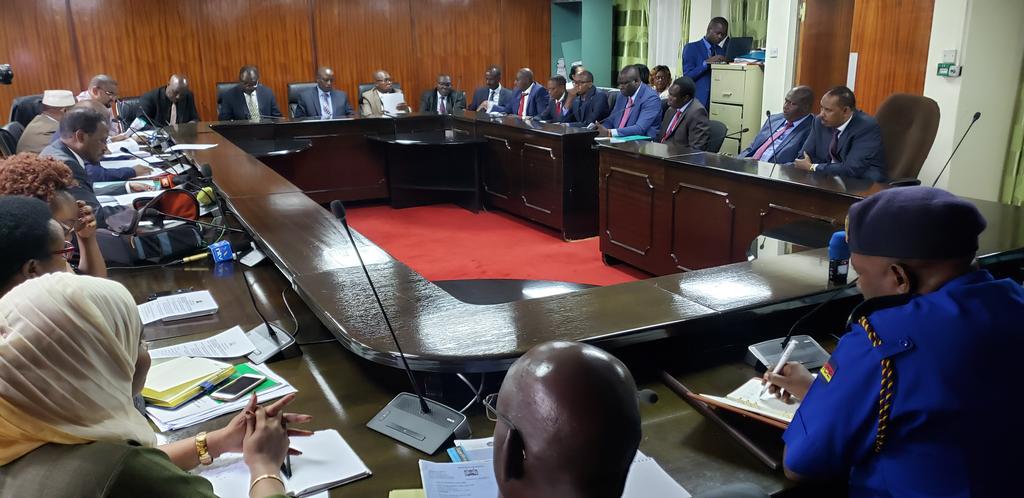
The National Assembly’s Committee on Education chaired by Tinderet MP Hon Melly is currently meeting with the Education CS Prof Magoha, the Inspector General of Police and the C.E.O of the TSC. The meeting is meant to discuss the recent Mass transfer of Teachers from the North Eastern region by the Commission.

The Teacher’s Service Commission is first to respond to the Questions raised by the Wajir West MP Hon Ahmed Kolosh, who last week; on the floor of the house, sought explanations why TSC has been transferring Teachers from the Region.

This is the response from TSC, so far;

“Even as we are accused of removing teachers from North Eastern, we did our best to ensure that they worked there, and even interdicted (and later rehired) some who were not in line with their employment terms”, Dr. Nancy Macharia (TSC C.E.O).

“Between 2018 and 2020, there have been sporadic attacks on Non-local teachers by some Locals in these regions, causing the instability of their stay there.”

“We have been portrayed as a heartless employer which has no regard for the wellbeing of our teachers in these regions, while in reality we have done our best to ensure their safety.”

“Since the beginning of attacks on teachers in North Eastern Region, the KNUT and KUPPET have piled pressure on us to transfer teachers from these regions,and even sponsored the teachers to file court cases against the Employer.”

More details to follow….

Get a copy of the 2020 KCSE Examination Time Table by clicking on the link below.

2020 KCSE Timetable, Fee PDF download

Here are links to the most important news portals:

CS Magoha gives reasons why schools may not reopen in January 2021

Schools may not be reopened in January, 2021, after all. According to the latest sentiments by Education Cabinet Secretary George Magoha, schools have not met the minimum reopening requirements.

Magoha says social distancing in schools, as one of the ways to curb spread of covid-19, would be a herculean task considering the fact that schools lack adequate infrastructure.

“It could have been expected that enough money should have been made available, right now, so that we improve on infrastructure,” the CS told Members of the Education Committee of Parliament during a virtual meeting on Thursday August 8, 2020.

Magoha remained non-committal on whether schools will definitely reopen in January and the exact dates.

He said the current spike in daily covid-19 numbers would push reopening of schools further. The lack of vaccine to put the virus at bay may also defer initial reopening plans.

Magoha told the Legislators that the Ministry will try to improve infrastructure in schools using the available funds.

“We are going to improve on the infrastructure according to the amount of money that is made available to us,” he added.

See also;

TOUGH REOPENING CONDITIONS.

Last month, CS Magoha released  a draft report titled “Guidelines on Health and Safety Protocols for Reopening of Basic Education Institutions Amid Covid-19 Pandemic”. The report listed a number of requirements all schools will be required to implement before resuming classes.

Some of those measures, as stipulated in the report, are: ensuring constant availability of liquid soap, hand washing facilities, disinfectants, thermo-guns and face masks and enforcing their utilization.

Schools will be, at the same time, to upgrade their buildings, improve or install age, disability and gender appropriate hygiene facilities such as toilets and bathrooms to ease congestion.

The Senate Committee on Education, last month, asked Magoha to adopt a phased reopening calendar for schools; effective September, 2020.

After meeting Stake-holders, a fortnight ago, the CS announced his and the Teachers Service Commission (TSC) will implement a community-based learning approach.

In the new model, teachers will be mapped with learners to offer learning at no cost. The TSC is expected to provide guidelines on the implementation of the programme; that is set to kick-off in September.

The CS has since postponed the reopening of TTCs, TVET and Universities for face to face sessions till January, 2020. The institutions were initially set for reopening in September.

ALSO READ;

CS Magoha’s circular to teachers on Community Based Learning (CBL)

The Ministry of education has today clarified on the teachers’ involvement in the Community Based Program, CBL. Through a presser on Sunday morning, the Cabinet Secretary in the Ministry of education said salaries of teachers who choose to keep off the exercise will not be withheld.

Magoha at the same time urged teachers to enlist for the programme that is expected to kick off in September, 2020. The CBL programme is an initiative by the government of Kenya to ensure learners are kept busy duing the current closure of schools as a result of the covid-19 pandemic.

Read all the latest education news here; Education portal.

Below is the presser by CS Magoha;

“TEACHERS’ INVOLVEMENT IN COMMUNITY BASED LEARNING

The Ministry of Education, in conjunction with the Teachers Service Commission and
Ministry of Interior and Coordination of National Government, plans to start mounting
the Community Based Learning programme in all parts of the country for primary and
secondary school learners.

So far, the TSC – the employer of all teaching staff – has mapped out teachers to be
involved under the programme.

The teachers’ participation in the Community Based Learning Programme is not tied
to the payment of their monthly salaries. The Ministry therefore wishes to clarify media
reports to the effect that teachers who have yet to enroll for the programme will be
denied their monthly salaries.

We therefore encourage all teachers that have yet to enroll to do so to facilitate the
running of the noble programme.”

PROF. GEORGE MAGOHA, CBS
CABINET SECRETARY,
MINISTRY OF EDUCATION

See also; CBL Resources for teachers.

CS Magoha speech during the release of the 2020/2021 KUCCPS placement results

Here is the full speech by Education CS George Magoha during the release of the 2020/2021 placement of Government-sponsored students to universities and colleges;

“PLACEMENT OF THE 2019 KENYA CERTIFICATE OF SECONDARY  EDUCATION (KCSE) CANDIDATES TO UNIVERSITIES AND COLLEGES FOR THE 2020/2021 ACADEMIC CALENDAR

The Ministry of Education, through the Kenya Universities and Colleges Central Placement Service (KUCCPS), has completed the placement exercise of the 2019 KCSE candidates to various courses in Universities and Colleges.

The placement of students to universities targeted the 2019 KCSE examination group, while the placement to TVET institutions targeted both the 2019 group and youth from previous examination years dating back to 1994.

In the 2019 KCSE examination, 689,007 Kenyan citizen candidates were successfully examined. Of these, 125,463 attained mean grades of C+ and above, hence were eligible for placement to university as Government-sponsored students. The remaining 563,544
were eligible for placement to TVET programmes at Diploma, Craft Certificate and Artisan Certificate levels.

SEE ALSO;

With regard to available capacities, universities declared 145,129 vacancies for Government-sponsored students, while TVET Institutions declared 276,163.

Following the successful completion of the placement process, 122,831 candidates have secured placement to degree courses in universities while 88,724 got placed in TVET
institutions. Of those placed in TVET, 53,726 will be admitted to Diploma; 29,112 to Craft
Certificate and 5,886 to Artisan Certificate courses.

The TVET number is expected to increase once the Ministry receives returns from institutions where students may have registered directly. It is also noted that the Placement Service undertakes continuous placement of students to TVET institutions, which will further grow the enrollment.

A gender analysis of the placement to Degree courses indicate that 70,050 (57.03%) are
male and 52,781 (42.97%) female. In TVET, the male students are 39,695 (44.74%) while
the female students are 49,029 (55.26%).

The Ministry is impressed to report that 2,632 candidates who scored C+ and above in the 2019 KCSE examination and qualified for placement to Degree programmes opted for Diploma courses in TVET institutions, and were placed appropriately. This number has been
growing over time. In 2019, the number was 1,269. The growing number of these “TVET
Champions” is a clear indication that concerted efforts to improve enrolment in TVET courses are yielding fruits.

Pursuant to the Universities Act, 2012 and the Placement Policy, the Placement Service applied Affirmative Action criteria for applicants living with disabilities, those from marginalized regions and for gender.

Three hundred and thirty one (331) applicants with disabilities have been given their top
priority courses for which they met the minimum admission requirements.
In addition, specific programmes cut-off points were lowered by two for applicants from marginalized regions, and 1,638 benefited. A similar concession benefited 679 applicants
under Gender Affirmative Action (624 female, 55 male). The total number of applicants who have benefited from Affirmative Action are therefore 2,648.

This year’s placement data indicates that of the 122,831 applicants placed to Degree courses, 66,661 (54.27%) will join Science, Technology, Engineering and Mathematics
(STEM) programmes, which are critical for producing skilled workforce required for the attainment of the “Big Four” Agenda. The remaining 56,170 (45.73%) have been placed to
Arts and Humanities.

Of the applicants placed to STEM, 42,267 (63.41%) are male while 24,394 (36.59%) are
female.
Some degree programmes in some universities did not attract applicants. The Ministry wishes to direct the Universities offering those programmes to establish why they are not
attractive and implement corrective measures.

Students as well as universities and colleges can access the placement details through their
respective portals on the Placement Service website. Applicants will also be notified individually through Short Text Messages.

The Placement Service will conduct the Inter-Institution Transfer process online following
the laid down procedures while ensuring adherence to timelines for students who may wish to change their programmes and institutions.

Universities and colleges have been asked to contact their respective students and give them joining instructions and fast-tract the start of their academic journey given that most universities have continued with online learning during this era of COVID-19 restrictions.”

Education CS launches committee to work on school reopening and calendar: Full report

Education Cabinet Secretary Prof. George Magoha has today appointed a team to look at safe ways of reopening schools and planning the education calendar. The Committee dubbed ‘Covid-19 national education response committee’ will be tasked with coming up with strategies of restoring normality in the education sector.

“The Ministry has appointed a nine member committee to take charge of the process of exploring the best possible strategies of restoring normalcy in the sub-sector education,” reads a presser by CS Magoha.

Schools were expected to reopen on May 4, 2020 for commencement of the second term, but the April holiday was extended by one month to allow the Ministry plan on how to safely reopen the schools. Term one was terminated prematurely as a result of the covid-19 outbreak in the country.

Related news:

The nine member committee, that kicks off its operations immediately, will be chaired by the Kenya Institute of Curriculum Development chairperson Dr. Sarah Ruto.

The ministry is grappling with a limited time ahead of this year’s Kenya Certificate of Secondary Education, KCSE, and Kenya Certificate of Primary Education, KCPE, examinations.

The Ministry insists the examinations will go on as planned.

While appearing before the Parliamentary Committee on Education last week CS Magoha said it was difficult to state the exact reopening date for schools; saying that the ministry values the safety of learners and other stakeholders.

Education Cabinet Secretary Prof. George Magoha has today appointed a team to look at safe ways of reopening schools and planning the education calendar. The Committee dubbed ‘Covid-19 national education response committee’ will be tasked with coming up with strategies of restoring normality in the education sector.

“The Ministry has appointed a nine member committee to take charge of the process of exploring the best possible strategies of restoring normalcy in the sub-sector education,” reads a presser by CS Magoha.

Schools were expected to reopen on May 4, 2020 for commencement of the second term, but the April holiday was extended by one month to allow the Ministry plan on how to safely reopen the schools. Term one was terminated prematurely as a result of the covid-19 outbreak in the country.

Related news:

The nine member committee, that kicks off its operations immediately, will be chaired by the Kenya Institute of Curriculum Development chairperson Dr. Sarah Ruto.

The ministry is grappling with a limited time ahead of this year’s Kenya Certificate of Secondary Education, KCSE, and Kenya Certificate of Primary Education, KCPE, examinations.

The Ministry insists the examinations will go on as planned.

While appearing before the Parliamentary Committee on Education last week CS Magoha said it was difficult to state the exact reopening date for schools; saying that the ministry values the safety of learners and other stakeholders.

Teachers’ unions sidelined

Learners are already receiving daily lesson broadcasts as one of the measures put up by the Ministry to try and recover lost time.

“The Ministry has come up with measures to mitigate the effects of Covid-19 in the education sector, including mounting of online learning and the drafting of a master plan to guide the response to covid-19 in the education sector,” adds the CS.

The other members to the committee have been drawn from various departments in the education sector. Stakeholders have also been brought on board. While parent and heads associations have been given slot in the committee, teachers’ unions have received a wide berth. Both the Kenya Union of Post Primary Education Teachers, KUPPET, and the Kenya National Union of Teachers (KNUT) will be observing from the sidelines.

KNUT Secretary General Wilson Sossion.

KNUT secretary general, Hon. Wilson Sossion, is rooting for phased reopening of schools; with candidates (class 8 and form four candidates) to be given first priority.

Table 1: Members to the Covid-19 national education response committee
S/N NAME INSTITUTION
1 Dr. Sarah Ruto Kenya Institute of Curriculum Development, KICD
2 Mr. Indimuli Kahi Chairman, Kenya Secondary Schools Heads Association, Kssha,
3 Mr. Nicholas Gathemia Chairman, Kenya Primary Schools Heads Association, Kpsha,
4 Mr. Peter Ndolo Chief Executive Officer, CEO, Kenya Private Schools Association (kpsa)
5 Mr. Nicholas Maiyo Chairman, Kenya Parents Association (kpa)
6 Mr. Augustine Muthigani Kenya Conference of Catholic Bishops
7 Ms. Jane Mwangi Kenya Association for for independ international schools
8 Dr. Nelson Makanda National Council of Churches of Kenya (NCCK)
9 Sheikh Munawar Khan Muslim Education Council
10 Mr. Peter Sitienei Chairman Kenya Special Schools Heads Association


Table 2: Ex-Officio Members

The Committee’s secretariat, that will be based at the KICD offices in Nairobi, will have the following ex-officio members:

S/N NAME INSTITUTION
1 Ms. Ruth Mugambi Kenya Institute of Curriculum Development
2 Mr. Ptrick Ochich Kenya National Examinations Council
3 Mr. Gabriel Mathenge Teachers Service Commission
4 Mr. Paul Kibet Director, Secondary Education; Ministry of Education
5 Ms. Anne Gachoya Directorate of policy, parternerships and EAC
6 Dr. Loice Ombajo Ministry of Health/ University of Nairobi


The Committee will work on the following areas.

  • Advise the Cabinet Secretary on the reopening of Basic Education institutions (Pre-Primary. Primary, Secondary Schools, Teacher Training Colleges and Adult Education Institutions.)
  • Review and reorganise the school calendar as part of the COVID-19 post- recovery strategy.
  • Advise the Cabinet Secretary on ways of on-boarding students/pupils when the schools re-open.
  • Document all COVID-19 related matters, lessons learnt and recommendations for future preparedness.
  • Advise the Cabinet Secretary on the impact of the COVID-19 pandemic on the demand for education by poor households and suggest mitigation measures.
  •  Advise the Cabinet Secretary on the Health and Safety measures to be put in place for the pupils/students, teachers and entire school community.
  • Identify institutions that may have been adversely affected by COVID-19 and advise on mitigation and recovery measures.
  • Submit regular reports to the Cabinet Secretary on the implementation progress of COVID-19 related programmes.
Teachers’ unions sidelined

Learners are already receiving daily lesson broadcasts as one of the measures put up by the Ministry to try and recover lost time.

“The Ministry has come up with measures to mitigate the effects of Covid-19 in the education sector, including mounting of online learning and the drafting of a master plan to guide the response to covid-19 in the education sector,” adds the CS.

The other members to the committee have been drawn from various departments in the education sector. Stakeholders have also been brought on board. While parent and heads associations have been given slot in the committee, teachers’ unions have received a wide berth. Both the Kenya Union of Post Primary Education Teachers, KUPPET, and the Kenya National Union of Teachers (KNUT) will be observing from the sidelines.

KNUT Secretary General Wilson Sossion.

KNUT secretary general, Hon. Wilson Sossion, is rooting for phased reopening of schools; with candidates (class 8 and form four candidates) to be given first priority.

Table 1: Members to the Covid-19 national education response committee
S/N NAME INSTITUTION
1 Dr. Sarah Ruto Kenya Institute of Curriculum Development, KICD
2 Mr. Indimuli Kahi Chairman, Kenya Secondary Schools Heads Association, Kssha,
3 Mr. Nicholas Gathemia Chairman, Kenya Primary Schools Heads Association, Kpsha,
4 Mr. Peter Ndolo Chief Executive Officer, CEO, Kenya Private Schools Association (kpsa)
5 Mr. Nicholas Maiyo Chairman, Kenya Parents Association (kpa)
6 Mr. Augustine Muthigani Kenya Conference of Catholic Bishops
7 Ms. Jane Mwangi Kenya Association for for independ international schools
8 Dr. Nelson Makanda National Council of Churches of Kenya (NCCK)
9 Sheikh Munawar Khan Muslim Education Council
10 Mr. Peter Sitienei Chairman Kenya Special Schools Heads Association


Table 2: Ex-Officio Members

The Committee’s secretariat, that will be based at the KICD offices in Nairobi, will have the following ex-officio members:

S/N NAME INSTITUTION
1 Ms. Ruth Mugambi Kenya Institute of Curriculum Development
2 Mr. Ptrick Ochich Kenya National Examinations Council
3 Mr. Gabriel Mathenge Teachers Service Commission
4 Mr. Paul Kibet Director, Secondary Education; Ministry of Education
5 Ms. Anne Gachoya Directorate of policy, parternerships and EAC
6 Dr. Loice Ombajo Ministry of Health/ University of Nairobi