Kericho TTC- Fees, Intakes, Location, Admission Letters, Courses and Requirements

Get all the details about Kericho Teachers Training College, TTC, including: Fees, Intakes, Location, Admission Letters, Courses and Requirements: Kericho TTC is one of the premier public national teacher training institutions in Kenya, located in Kericho County. It is fully registered and accredited by the Ministry of Education and functions as an official training and examination center under the Kenya National Examinations Council (KNEC).

Physical Location of Kericho TTC.

Kericho TTC is located along the Kericho–Nakuru Highway within the Kipchebor area, just a few minutes drive from Kericho Town. The institution boasts an expansive, scenic campus featuring mature trees and well-maintained facilities. Its infrastructure includes:

  • Modern lecture halls, science laboratories, and administrative offices.
  • Spacious, separate boarding hostels for male and female trainees.
  • A well-stocked library and an ICT integration learning center.
  • Extensive sports fields and facilities for co-curricular activities.

How to Contact Kericho TTC.

Official Name of Kericho TTC.

The College’s full Name is Kericho Teachers Training College.

How to apply for Admissions at Kericho TTC.

Use this link: https://portal.kerichottc.ac.ke/Account/StudentApplication?

Kericho TTC’s Student Portal.

Login to the Kericho TTC Student’s Portal at: https://portal.kerichottc.ac.ke/Home/Login?

 Brief History of Kericho TTC.

Established in 1965 shortly after Kenya’s independence, the college has a long history of training primary school teachers. Over the decades, it has established itself as a center of academic excellence and cultural heritage in the Rift Valley region.

In accordance with recent national educational reforms, the college phased out the older Primary Teacher Education certificate (P1) and fully transitioned to competency-based diploma programs to support the national rollout of the Competency-Based Curriculum (CBC).

  • Kericho Teachers Training College’s Motto: Elimu ni Mwanga (Education is Light)
  • Kericho Teachers Training College’s Vision: To be a center of excellence in teacher education and training.

Kericho TTC’s Full History

Kericho Teachers’ Training College started at Kabianga before it was moved to the present site in 1965.In its present site it mainly occupies buildings of the former European Primary School during colonial period located on Kericho-Nakuru Highway near Kericho Town.
Kericho Teachers’ Training College is a Centre of excellence in Primary Teacher Education and training in the Republic of Kenya.

It is one of the oldest Public Teachers’ Training College in the Republic of Kenya. It has the capacity to host over 1200 students.
Kericho Teachers’ Training College offers all opportunity to all qualified persons interested in training as primary school teachers in regular/School based DPTE/DECTE and UPTE/UDECTE programs.

Qualification is a mean grade of C (Plain) and above in Kenya Certificate of Secondary Education (KCSE) or P1 Certificate holder.

The College provides basic boarding and sport facilities and has been one of the Public Teachers’ Training College providing quality education and training, in line with the Kenyan Vision 2030.

The College has a pool of dedicated and competent members of staff of 50 teaching staff and 67 non-teaching staff. Kericho is adequately staff in all areas of learning and this has contributed to exceptional performance of the Kericho Teachers’ Training College.

Kericho Teachers’ Training College does not only pride herself its Academic achievements but it is also a powerhouse in co-curricular activities namely: Games, Sports, Athletics, Drama and Music. From the Performance in both academic and co-curricular, Kericho Teachers’ Training College is in the right direction towards achieving its mission of ‘‘A model institution in the training and development of competent and multi-skilled teachers ’’

Kericho Teachers’ Training College have produced highly trained Competency Based Curriculum (CBC) and teachers trainees are capable of handling grade 1, 2 and 3 classes.


Kericho Teachers’ Training College’s Academic Departments

Education Department

Education is the core subject for Teacher Trainees in the Primary Teacher Education Curriculum.

Intergrated Sciences Department

A flexible, highly interactive Department that stresses active learning, group discussion and collaborative research.

  • Sciences Sub-Department
  • Agriculture Sub-Department
  • Home Science Sub-Department
Language Department

English & Kiswahili as a language serves a pivotal and crucial role in the lives of students at whatever level of study.

  • English Sub-Department
  • Kiswahili Sub-Department
Mathematics Department

We strive to train graduates with practical mathematical computing skills beyond the classroom.

Creative Arts Department

The mission of the Creative Arts Department is to engage students with works of the creative imagination.

  • Art & Craft Sub-Department
  • P.E. Sub-Department
  • Music Sub-Department
Library Science Department

The Department of Library Science has a distinguished record of research, education and community outreach that spans many decades.

  • ICT Sub-Department


Frequently Asked Questions About Kericho TTC.

Who posts Tutors at Kericho TTC?

Tutors at this college are posted and paid by the Teachers Service Commission, TSC.

Is Kericho TTC A Public or Private Teachers’ Training College?

This is a public teacher training institution under the Ministry of Education. The good news is that this College is registered by the Kenya Universities and Colleges Central Placement Service (KUCCPS) to offer various teacher education programs. Placement at the College is mostly done via KUCCPS.

When does Kericho TTC Admit New Students?

The College admits new Students in September of every year.

Which Courses are offered at Kericho TTC,  plus their Requirements?

The Teachers Training Colleges Offers Diploma in Teacher Education (DPTE) and Diploma in Early Childhood Teacher Education (DECTE).

To join the Diploma in Teacher Education (DPTE) Course, a minimum of a C (plain) mean grade at the Kenya Certificate of Secondary Education (KCSE) Exams is required.

Meanwhile, the Minimu KCSE Mean Grade Requirement for the Diploma in Early Childhood Teacher Education (DECTE) is equally a C (Plain).

Full List of Courses offered by the Kericho TTC

The TTC offers the following Courses:

  1. Diploma in Primary Teacher Education {DPTE – 3years} {Kuccps Placement}: This is the standard training program for prospective primary school teachers.
  2. Diploma in Early Childhood Development Education {DECTE – 3 years} {Kuccps Placement}: Focused on early childhood development and early-grade instructional designs.
  3. Upgrade Diploma in Primary Teacher Education {UDPTE – 1 year} {Direct Placement By The TTC}. Upgrade Entry: Applicants must hold a valid, recognized P1 or ECDE Certificate from a registered institution.
  4. Upgrade Diploma in Early Childhood Development Education {UDECTE – 1 year}. {Direct Placement By The TTC}.

Units offered at the Diploma in Primary Teacher Education {DPTE} Course

This Course takes 3 years. The following 6 units are covered under the Diploma in Primary Teacher Education {DPTE} Course:

  1. EDUCATION/PROFESSIONAL STUDIES UNIT

This involves:

  •    Child Development and Psychology.
  •    Curriculum Studies.
  •    Educational Resources.
  •    ICT Integration in Education.
  •    Educational Assessment.
  •     Research skills.
  •    Inclusive Education.
  •    Education Leadership and Management
  •    Sociological and Philosophical Foundations  of  Education.
  •    Historical and Comparative Foundations of  Education.
  •    Micro Teaching.
  •    Practicum.

2. LANGUAGES UNIT

This covers:

  1. English
  2. Kiswahili
  3. Indigenous Languages
  4. Foreign Languages

3. Mathematics Unit

  • This unit covers  studies in Mathematics

4. Integrated Science Unit

Studies in this unit involves:

  1. Science and Technology
  2. Agriculture
  3. Home science

5. Creative Arts Unit

Covering:

  1. Art & Craft
  2. Music
  3. Physical Health Education.

6. Social Sciences

This unit involves:

  1. Christian Religious Education {CRE}
  2. Social studies
  3. Islamic Religious Education {IRE}

Diploma in Early Childhood Teacher Education (DECTE)’s Units

The 3 year Diploma in Early Childhood Teacher Education (DECTE) has the following 6 units:

  1. EDUCATION/PROFESSIONAL STUDIES UNIT

This unit involves the following learning areas:

  1. Child Development and Psychology
  2. Curriculum Studies
  3. Educational Resources
  4. ICT Integration in Education
  5. Educational Assessment
  6. Research skills
  7. Inclusive Education
  8. Education Leadership and Management
  9. Sociological and Philosophical Foundations of Education
  10. Historical and Comparative Foundations of Education
  11. Micro Teaching
  12. Practicum.

2. Languages Unit

It has these three (3) learning areas:

  1. English Language Activities
  2. Kiswahili Language Activities
  3. Foreign Languages
  4. Indigenous Languages

3. Mathematics Activities Unit

4. Integrated Science Unit

  1. Environmental Education
  2. Health & Nutrition

6. Creative Arts Unit

Covering:

  1. Art & Craft
  2. Music
  3. Physical Health Education.

7. Social Sciences.

Covers studies in:

  • Christian Religious Education {CRE}

Who regulates Kericho TTC?

The College is regulated by Ministry of Education (State Department for Higher Education and Research).

How Long does the Diploma in Teacher Education (DPTE) and Diploma in Early Childhood Teacher Education (DECTE) Courses Take?

The Diploma in Teacher Education (DPTE) and Diploma in Early Childhood Teacher Education (DECTE) courses take a duration of 2 years. This is both class work and attachment (Teaching Practice).

What is the Fees Structure at Kericho TTC?

The annual fees for the Courses is KSH 72,076. Remeber, this only Tuition Fees.

How Can I Apply For Placement at Kericho TTC?

To apply for placement at the TTC, use the KUCCPS Student Portal. This way, you will qualify for Government Funding through the Higher Education Funding (HEF) and Higher Education Loans Board (HELB).

How Do I Download the Kericho TTC Admission Letter?

To download your TTC Admission Letter, visit the KUCCPS Student Portal.


Does the Kericho TTC Offer Accomodation and Meals?

Yes. The Teachers Training College operates as a boarding institution providing a standard balanced diet to all trainees. Students are required to bring their own personal boarding items (such as a mattress, warm clothing due to the cold climate in the Aberdares/Nyahururu region, and personal hygiene effects).


Does the Kericho TTC Offer Medical Care?

Definately. Yes. The TTC has a health Facility within the College that handles minor ailments. Students are strongly encouraged to register for the Social Health Authority (SHA) cover to handle any external referrals or serious medical costs.


What are the Kericho TTC’s Admission Requirements & Joining Guidelines?

 Have you been placed at the TTC or are planning to apply for admission at the College? you will need to provide these specified documents during registration and admission.

  • The official KUCCPS/College Admission Letter (fully filled out).
  • Original and copies of your National ID Card.
  • Original K.C.S.E. Certificate and School Leaving Certificate.
  • Original Birth Certificate.
  • A recommendation letter from your area Assistant Chief or a local religious leader.
  • Two recent, certified color passport-sized photographs.

Does the Kericho TTC Offer Co-curricular Activities?

Yes. The College offers the following Inter-Colleges Co-curricular Activities:

  • Ball games like Soccer, Volleyball, Hanball, Netball, Basketball and Rugby
  • Goal ball
  • Athletics
  • Indoor games including: Badminton, Table Tennis and Lawn Tennis.
  • Hockey
  • Swimming

These events are called the Kenya Teachers Training Colleges (KTTC) National Sports & Ball Games Championship.

Who participates in the Kenya Teachers Training Colleges (KTTC) National Sports & Ball Games Championship?

Participants: Teams from all Teachers Training College regions across Kenya.


Where Can I Be Employed Upon Completing Diploma in Teacher Education (DPTE) and Diploma in Early Childhood Teacher Education (DECTE) courses?

Graduates in Diploma in Teacher Education (DPTE) and Diploma in Early Childhood Teacher Education (DECTE) courses are employed to Teach in both Public and Primary Schools.

More Details on TTCs in Kenya.

Kericho ttc fee structure 2026,
Kericho TTC contacts,
Kericho Teachers training college requirements,
Kericho ttc admission letters,
Kericho TTC fee structure,
Kericho ttc admission letters pdf,
Kericho Teachers training college Fees Structure,
Kericho teachers training college courses offered,

Kenyenya TTC- Fees, Intakes, Location, Admission Letters, Courses and Requirements

Get all the details about Kenyenya Teachers Training College, TTC, including: Fees, Intakes, Location, Admission Letters, Courses and Requirements: Kenyenya Teachers Training College is a public teacher training institution situated in Kisii County, Kenya. It is fully registered, accredited by the Ministry of Education, and operates as an authorized training and examination center under the Kenya National Examinations Council (KNEC). The Kenyenya Teachers Training College is a public entity under government colleges act. It was established back in the year 2012. Currently, with a population of students of over 1,200.

Physical Location of Kenyenya TTC.

The College is located in Kenyenya Sub-County, within Kisii County. It features an expanding campus infrastructure designed to foster both academic focus and personal growth. The college features:

  • Lecture rooms, science labs, and administrative centers.
  • On-campus residential hostels providing separate, secure accommodation for male and female students.
  • A resource library and dedicated ICT learning laboratories.

How to Contact Kenyenya TTC.

  • KENYENYA TRAINING COLLEGE P.OBOX 166-40211, KENYENYA

Official Name of Kenyenya TTC.

The College’s full Name is Kenyenya Teachers Training College.

 Brief History of Kenyenya TTC.

Established in 2012, Kenyenya TTC was founded to address the growing demand for qualified professional educators in the Nyanza region and across Kenya. Over the years, the institution has scaled up its facilities and capacity, currently supporting a student population of over 1,200 trainees. In line with national curriculum shifts, the college phased out the older certificate (P1) training models to focus entirely on modern, competency-based teacher education diploma programs.


Frequently Asked Questions About Kenyenya TTC.

Who posts Tutors at Kenyenya TTC?

Tutors at this college are posted and paid by the Teachers Service Commission, TSC.

Is Kenyenya TTC A Public or Private Teachers’ Training College?

This is a public teacher training institution under the Ministry of Education. The good news is that this College is registered by the Kenya Universities and Colleges Central Placement Service (KUCCPS) to offer various teacher education programs. Placement at the College is mostly done via KUCCPS.

When does Kenyenya TTC Admit New Students?

The College admits new Students in September of every year.

Which Courses are offered at Kenyenya TTC,  plus their Requirements?

The Teachers Training Colleges Offers Diploma in Teacher Education (DPTE) and Diploma in Early Childhood Teacher Education (DECTE).

To join the Diploma in Teacher Education (DPTE) Course, a minimum of a C (plain) mean grade at the Kenya Certificate of Secondary Education (KCSE) Exams is required.

Meanwhile, the Minimu KCSE Mean Grade Requirement for the Diploma in Early Childhood Teacher Education (DECTE) is equally a C (Plain).

Full List of Courses offered by the Kenyenya TTC

The TTC offers the following Courses:

  1. Diploma in Primary Teacher Education {DPTE – 3years} {Kuccps Placement}: This is the standard training program for prospective primary school teachers.
  2. Diploma in Early Childhood Development Education {DECTE – 3 years} {Kuccps Placement}: Focused on early childhood development and early-grade instructional designs.
  3. Upgrade Diploma in Primary Teacher Education {UDPTE – 1 year} {Direct Placement By The TTC}. Upgrade Entry: Applicants must hold a valid, recognized P1 or ECDE Certificate from a registered institution.
  4. Upgrade Diploma in Early Childhood Development Education {UDECTE – 1 year}. {Direct Placement By The TTC}.

Units offered at the Diploma in Primary Teacher Education {DPTE} Course

This Course takes 3 years. The following 6 units are covered under the Diploma in Primary Teacher Education {DPTE} Course:

  1. EDUCATION/PROFESSIONAL STUDIES UNIT

This involves:

  •    Child Development and Psychology.
  •    Curriculum Studies.
  •    Educational Resources.
  •    ICT Integration in Education.
  •    Educational Assessment.
  •     Research skills.
  •    Inclusive Education.
  •    Education Leadership and Management
  •    Sociological and Philosophical Foundations  of  Education.
  •    Historical and Comparative Foundations of  Education.
  •    Micro Teaching.
  •    Practicum.

2. LANGUAGES UNIT

This covers:

  1. English
  2. Kiswahili
  3. Indigenous Languages
  4. Foreign Languages

3. Mathematics Unit

  • This unit covers  studies in Mathematics

4. Integrated Science Unit

Studies in this unit involves:

  1. Science and Technology
  2. Agriculture
  3. Home science

5. Creative Arts Unit

Covering:

  1. Art & Craft
  2. Music
  3. Physical Health Education.

6. Social Sciences

This unit involves:

  1. Christian Religious Education {CRE}
  2. Social studies
  3. Islamic Religious Education {IRE}

Diploma in Early Childhood Teacher Education (DECTE)’s Units

The 3 year Diploma in Early Childhood Teacher Education (DECTE) has the following 6 units:

  1. EDUCATION/PROFESSIONAL STUDIES UNIT

This unit involves the following learning areas:

  1. Child Development and Psychology
  2. Curriculum Studies
  3. Educational Resources
  4. ICT Integration in Education
  5. Educational Assessment
  6. Research skills
  7. Inclusive Education
  8. Education Leadership and Management
  9. Sociological and Philosophical Foundations of Education
  10. Historical and Comparative Foundations of Education
  11. Micro Teaching
  12. Practicum.

2. Languages Unit

It has these three (3) learning areas:

  1. English Language Activities
  2. Kiswahili Language Activities
  3. Foreign Languages
  4. Indigenous Languages

3. Mathematics Activities Unit

4. Integrated Science Unit

  1. Environmental Education
  2. Health & Nutrition

6. Creative Arts Unit

Covering:

  1. Art & Craft
  2. Music
  3. Physical Health Education.

7. Social Sciences.

Covers studies in:

  • Christian Religious Education {CRE}

Who regulates Kenyenya TTC?

The College is regulated by Ministry of Education (State Department for Higher Education and Research).

How Long does the Diploma in Teacher Education (DPTE) and Diploma in Early Childhood Teacher Education (DECTE) Courses Take?

The Diploma in Teacher Education (DPTE) and Diploma in Early Childhood Teacher Education (DECTE) courses take a duration of 2 years. This is both class work and attachment (Teaching Practice).

What is the Fees Structure at Kenyenya TTC?

The annual fees for the Courses is KSH 72,076. Remeber, this only Tuition Fees.

How Can I Apply For Placement at Kenyenya TTC?

To apply for placement at the TTC, use the KUCCPS Student Portal. This way, you will qualify for Government Funding through the Higher Education Funding (HEF) and Higher Education Loans Board (HELB).

How Do I Download the Kenyenya TTC Admission Letter?

To download your TTC Admission Letter, visit the KUCCPS Student Portal.


Does the Kenyenya TTC Offer Accomodation and Meals?

Yes. The Teachers Training College operates as a boarding institution providing a standard balanced diet to all trainees. Students are required to bring their own personal boarding items (such as a mattress, warm clothing due to the cold climate in the Aberdares/Nyahururu region, and personal hygiene effects).


Does the Kenyenya TTC Offer Medical Care?

Definately. Yes. The TTC has a health Facility within the College that handles minor ailments. Students are strongly encouraged to register for the Social Health Authority (SHA) cover to handle any external referrals or serious medical costs.


What are the Kenyenya TTC’s Admission Requirements & Joining Guidelines?

 Have you been placed at the TTC or are planning to apply for admission at the College? you will need to provide these specified documents during registration and admission.

  • The official KUCCPS/College Admission Letter (fully filled out).
  • Original and copies of your National ID Card.
  • Original K.C.S.E. Certificate and School Leaving Certificate.
  • Original Birth Certificate.
  • A recommendation letter from your area Assistant Chief or a local religious leader.
  • Two recent, certified color passport-sized photographs.

Does the Kenyenya TTC Offer Co-curricular Activities?

Yes. The College offers the following Inter-Colleges Co-curricular Activities:

  • Ball games like Soccer, Volleyball, Hanball, Netball, Basketball and Rugby
  • Goal ball
  • Athletics
  • Indoor games including: Badminton, Table Tennis and Lawn Tennis.
  • Hockey
  • Swimming

These events are called the Kenya Teachers Training Colleges (KTTC) National Sports & Ball Games Championship.

Who participates in the Kenya Teachers Training Colleges (KTTC) National Sports & Ball Games Championship?

Participants: Teams from all Teachers Training College regions across Kenya.


Where Can I Be Employed Upon Completing Diploma in Teacher Education (DPTE) and Diploma in Early Childhood Teacher Education (DECTE) courses?

Graduates in Diploma in Teacher Education (DPTE) and Diploma in Early Childhood Teacher Education (DECTE) courses are employed to Teach in both Public and Primary Schools.

More Details on TTCs in Kenya.

Kenyenya ttc portal,
Kenyenya TTC fee structure,
Kenyenya TTC application Form,
Kenyenya TTC location,
Kenyenya TTC FEE structure PDF,
Kenyenya TEACHERS TRAINING COLLEGE photos,
Kenyenya TTC Contacts,
Kenyenya TTC admission letter,

Kamwenja TTC- Fees, Intakes, Location, Admission Letters, Courses and Requirements

Get all the details about Kamwenja Teachers Training College, TTC, including: Fees, Intakes, Location, Admission Letters, Courses and Requirements: Kamwenja TTC is a public national teacher training institution located in Nyeri County, Kenya. It is fully registered and accredited by the Ministry of Education and serves as an official training and examination center under the Kenya National Examinations Council (KNEC).

Physical Location of Kamwenja TTC.

Kamwenja Teachers Training College is physically located along the Nyeri–Nanyuki Road, within the Rware area, approximately 6 kilometers from Nyeri Town. The institution boasts an expansive, serene campus with a blend of historical and modern infrastructure. It includes:

  • Spacious lecture rooms and administrative blocks.
  • Separate, secure hostel boarding blocks for male and female trainees.
  • A well-equipped library and a modern ICT integration center.
  • Extensive sports fields and an agricultural demonstration farm.

How to Contact Kamwenja TTC.

Kamwenja TTC’s Admission Letter Download Link

Download your admission letter at: https://kamwenjattc.ac.ke/admissions-letters/

Official Name of Kamwenja TTC.

The College’s full Name is Kamwenja Teachers Training College.

 Brief History of Kamwenja TTC.

Kamwenja TTC is one of the oldest and most established public teacher training colleges in Kenya, originally founded in 1924 by the Consolata Missionaries. It was later handed over to the government to operate as a public national college. Over the decades, it has played a pivotal role in training primary school teachers, and in 2021, it fully transitioned from certificate (P1) training to competency-based diploma programs.

  • Kamwenja TTC’s Motto: Strive for Excellence

  • Kamwenja TTC’s Core Value: A commitment to academic discipline, environmental conservation, and modern pedagogical skills.


Kamwenja Teachers Training College’s Full History 

Kamwenja Teachers Training College (TTC), located 8km from Nyeri Town, is a premier Kenyan teacher education institution founded in 1924 by Bishop Perlo and the Consolata Missionary Society. Originally established as a missionary center, it has evolved into a nationally recognized co-educational college.

Kamwenja Teachers Training College’s History over the years:

  • 1924: Founded by Bishop Perlo, Vicar Apostolic of Nyeri, to train teachers for local mission schools.
  • 1938: Officially named Kamwenja Teachers’ College.
  • 1940: Established its first boarding facilities to accommodate a growing student body.
  • 1958: Management was taken over by the Christian Brothers, which significantly strengthened the institution’s academic and moral foundations.
  • 1970: Transitioned into a co-educational institution, creating greater opportunities for female educators.
  • 1977: Began hosting a special class for teachers undertaking the S1 course for hearing-impaired children (which was later transferred to KISE in 1996).
  • Present – Recognised nationally for producing all-round educators for both public and private institutions.


Frequently Asked Questions About Kamwenja TTC.

Who posts Tutors at Kamwenja TTC?

Tutors at this college are posted and paid by the Teachers Service Commission, TSC.

Is Kamwenja TTC A Public or Private Teachers’ Training College?

This is a public teacher training institution under the Ministry of Education. The good news is that this College is registered by the Kenya Universities and Colleges Central Placement Service (KUCCPS) to offer various teacher education programs. Placement at the College is mostly done via KUCCPS.

When does Kamwenja TTC Admit New Students?

The College admits new Students in September of every year.

Which Courses are offered at Kamwenja TTC,  plus their Requirements?

The Teachers Training Colleges Offers Diploma in Teacher Education (DPTE) and Diploma in Early Childhood Teacher Education (DECTE).

To join the Diploma in Teacher Education (DPTE) Course, a minimum of a C (plain) mean grade at the Kenya Certificate of Secondary Education (KCSE) Exams is required.

Meanwhile, the Minimu KCSE Mean Grade Requirement for the Diploma in Early Childhood Teacher Education (DECTE) is equally a C (Plain).

Full List of Courses offered by the Kamwenja TTC

The TTC offers the following Courses:

  1. Diploma in Primary Teacher Education {DPTE – 3years} {Kuccps Placement}: This is the standard training program for prospective primary school teachers.
  2. Diploma in Early Childhood Development Education {DECTE – 3 years} {Kuccps Placement}: Focused on early childhood development and early-grade instructional designs.
  3. Upgrade Diploma in Primary Teacher Education {UDPTE – 1 year} {Direct Placement By The TTC}. Upgrade Entry: Applicants must hold a valid, recognized P1 or ECDE Certificate from a registered institution.
  4. Upgrade Diploma in Early Childhood Development Education {UDECTE – 1 year}. {Direct Placement By The TTC}.

Units offered at the Diploma in Primary Teacher Education {DPTE} Course

This Course takes 3 years. The following 6 units are covered under the Diploma in Primary Teacher Education {DPTE} Course:

  1. EDUCATION/PROFESSIONAL STUDIES UNIT

This involves:

  •    Child Development and Psychology.
  •    Curriculum Studies.
  •    Educational Resources.
  •    ICT Integration in Education.
  •    Educational Assessment.
  •     Research skills.
  •    Inclusive Education.
  •    Education Leadership and Management
  •    Sociological and Philosophical Foundations  of  Education.
  •    Historical and Comparative Foundations of  Education.
  •    Micro Teaching.
  •    Practicum.

2. LANGUAGES UNIT

This covers:

  1. English
  2. Kiswahili
  3. Indigenous Languages
  4. Foreign Languages

3. Mathematics Unit

  • This unit covers  studies in Mathematics

4. Integrated Science Unit

Studies in this unit involves:

  1. Science and Technology
  2. Agriculture
  3. Home science

5. Creative Arts Unit

Covering:

  1. Art & Craft
  2. Music
  3. Physical Health Education.

6. Social Sciences

This unit involves:

  1. Christian Religious Education {CRE}
  2. Social studies
  3. Islamic Religious Education {IRE}

Diploma in Early Childhood Teacher Education (DECTE)’s Units

The 3 year Diploma in Early Childhood Teacher Education (DECTE) has the following 6 units:

  1. EDUCATION/PROFESSIONAL STUDIES UNIT

This unit involves the following learning areas:

  1. Child Development and Psychology
  2. Curriculum Studies
  3. Educational Resources
  4. ICT Integration in Education
  5. Educational Assessment
  6. Research skills
  7. Inclusive Education
  8. Education Leadership and Management
  9. Sociological and Philosophical Foundations of Education
  10. Historical and Comparative Foundations of Education
  11. Micro Teaching
  12. Practicum.

2. Languages Unit

It has these three (3) learning areas:

  1. English Language Activities
  2. Kiswahili Language Activities
  3. Foreign Languages
  4. Indigenous Languages

3. Mathematics Activities Unit

4. Integrated Science Unit

  1. Environmental Education
  2. Health & Nutrition

6. Creative Arts Unit

Covering:

  1. Art & Craft
  2. Music
  3. Physical Health Education.

7. Social Sciences.

Covers studies in:

  • Christian Religious Education {CRE}

Upgrade Diploma in Primary Teacher Education (UDPTE)

The Upgrade Diploma in Primary Teacher Education (UDPTE) is an advanced program for Primary School teachers seeking deeper knowledge and practical expertise in primary education. It emphasizes pedagogical mastery, leadership in schools, curriculum development, and inclusive teaching practices.

Key Features:

  • Advanced teaching methods and curriculum design
  • Special focus on learner assessment and evaluation
  • Inclusive education strategies for diverse learners
  • Leadership, mentorship, and school management skills
  • Teaching practice placements for real-world experience.

Admission Requirements at Kamwenja TTC

Documents Needed

Originals of the following documents for verification.

a) Admission letter duly completed.

b) National Identity Card

c) K. C. S. E. Certificate

d) K.C.P.E Certificate

e) K.C.S.E School Leaving Certificate

f) Birth Certificate

One clear photocopy of:-

a) National Identity Card

b) K. C. S. E. Certificate

c) K.C.P.E Certificate

d) K.C.S.E School Leaving Certificate

e) Birth Certificate

f) TWO certified colour passport size photograph taken within the last three

months, certified and stamped by your chief or Assistant chief.

iii. Other requirements

a) Duly filled Students Biodata form (Annex 2)

b) Duly filled Medical Certificate (Annex 3)

c) Duly signed Students’ Declaration form (Annex 4)

Who regulates Kamwenja TTC?

The College is regulated by Ministry of Education (State Department for Higher Education and Research).

How Long does the Diploma in Teacher Education (DPTE) and Diploma in Early Childhood Teacher Education (DECTE) Courses Take?

The Diploma in Teacher Education (DPTE) and Diploma in Early Childhood Teacher Education (DECTE) courses take a duration of 2 years. This is both class work and attachment (Teaching Practice).

What is the Fees Structure at Kamwenja TTC?

The annual fees for the Courses is KSH 72,076. Remeber, this only Tuition Fees.

Total Fees Payment for :

 First Term – Kshs. 54,000

Second Term Fees – Kshs. 34,276

Total Annual Fees – Ksh. 88,276

Term 1 Term 2 Total
42,500  28,576 71,076
Other Charges Term 1 Term 2 Total
Assessment Fees  10,000 5,700 15,700
Kuccps Placement Fee 1,500  – 1,500
GRAND TOTAL 54,000 34, 276 88,276


Bank & Paybill Details


All fees MUST be deposited in the college bank account indicated below OR Buy a Bankers

Cheque payable to KAMWENJA TEACHERS COLLEGE

  • Accounts Name:KAMWENJA TEACHERS’ COLLEGE
  • Account No:055000046887
  • Bank:Family Bank
  • Branch:Nyeri

How Can I Apply For Placement at Kamwenja TTC?

To apply for placement at the TTC, use the KUCCPS Student Portal. This way, you will qualify for Government Funding through the Higher Education Funding (HEF) and Higher Education Loans Board (HELB).

How Do I Download the Kamwenja TTC Admission Letter?

To download your TTC Admission Letter, visit the KUCCPS Student Portal.


Does the Kamwenja TTC Offer Accomodation and Meals?

Yes. The Teachers Training College operates as a boarding institution providing a standard balanced diet to all trainees. Students are required to bring their own personal boarding items (such as a mattress, warm clothing due to the cold climate in the Aberdares/Nyahururu region, and personal hygiene effects).


Does the Kamwenja TTC Offer Medical Care?

Definately. Yes. The TTC has a health Facility within the College that handles minor ailments. Students are strongly encouraged to register for the Social Health Authority (SHA) cover to handle any external referrals or serious medical costs.


What are the Kamwenja TTC’s Admission Requirements & Joining Guidelines?

 Have you been placed at the TTC or are planning to apply for admission at the College? you will need to provide these specified documents during registration and admission.

  • The official KUCCPS/College Admission Letter (fully filled out).
  • Original and copies of your National ID Card.
  • Original K.C.S.E. Certificate and School Leaving Certificate.
  • Original Birth Certificate.
  • A recommendation letter from your area Assistant Chief or a local religious leader.
  • Two recent, certified color passport-sized photographs.

Does the Kamwenja TTC Offer Co-curricular Activities?

Yes. The College offers the following Inter-Colleges Co-curricular Activities:

  • Ball games like Soccer, Volleyball, Hanball, Netball, Basketball and Rugby
  • Goal ball
  • Athletics
  • Indoor games including: Badminton, Table Tennis and Lawn Tennis.
  • Hockey
  • Swimming

These events are called the Kenya Teachers Training Colleges (KTTC) National Sports & Ball Games Championship.


Kamwenja TTC’s Administrative Departments

Here are the Departments found at Kamwenja TTC:

Academic Affairs

Curriculum development, examinations and teaching quality.

Finance and Accounts

Budgeting, fee collection and financial reporting.

Student Welfare

Accommodation, co-curricular activities and counseling.

Human Resources

Recruitment, staff development and performance management.

ICT and Library Services

Digital learning tools, network infrastructure, and library resources.


Who participates in the Kenya Teachers Training Colleges (KTTC) National Sports & Ball Games Championship?

Participants: Teams from all Teachers Training College regions across Kenya.


Where Can I Be Employed Upon Completing Diploma in Teacher Education (DPTE) and Diploma in Early Childhood Teacher Education (DECTE) courses?

Graduates in Diploma in Teacher Education (DPTE) and Diploma in Early Childhood Teacher Education (DECTE) courses are employed to Teach in both Public and Primary Schools.

More Details on TTCs in Kenya.

Kamwenja Teachers College fees Structure,
Kamwenja Teachers’ College admission Letter,
Kamwenja Teachers Training College photos,
Kamwenja Teachers Training College courses offered,
Kamwenja Teachers’ College intake,
Kamwenja Teachers College fees structure pdf,
Kamwenja Teachers College requirements,
Kamwenja Teachers training College portal login,

Kaimosi TTC- Fees, Intakes, Location, Admission Letters, Courses and Requirements

Get all the details about Kaimosi Teachers Training College, TTC including: Fees, Intakes, Location, Admission Letters, Courses and Requirements: Kaimosi TTC is a public teacher training institution located within the Kaimosi Complex in Vihiga County, Kenya. It is officially accredited by the Ministry of Education and functions as a registered examination center under the Kenya National Examinations Council (KNEC).

Physical Location of Kaimosi TTC.

The College is situated in Kaimosi Township, within the Hamisi Sub-County of Vihiga County, just off the Chavakali–Kapsabet Road.

How to Contact Kaimosi TTC.

  • Postal Address: P.O. Private Bag, Kaimosi, Kenya (or P.O. Box 262-50309, Kaimosi)
  • Primary Telephone: +254 56 41433 / +254 734 835 253
  • Alternative Contact: +254 722 959 351

Official Name of Kaimosi TTC.

The College’s full Name is Kaimosi Teachers Training College.

 Brief History of Kaimosi TTC.

As one of Kenya’s long-standing public teacher training institutions, the college has a deep history linked with the development of the region’s educational landscape. In 2014, the college’s original infrastructure was repurposed to establish Kaimosi Friends University College (which has since transitioned into the fully chartered Kaimosi Friends University). Following this, Kaimosi Teachers Training College relocated to a newly built, standalone campus site setup within the broader Kaimosi Complex to continue its independent educator-training mandate.

The modern College’s infrastructure features administrative complexes, modern lecture facilities, a comprehensive library, and dedicated residential hostel blocks supported in part by the Hamisi National Government Constituencies Development Fund (NG-CDF).


Frequently Asked Questions About Kaimosi TTC.

Who posts Tutors at Kaimosi TTC?

Tutors at this college are posted and paid by the Teachers Service Commission, TSC.

Is Kaimosi TTC A Public or Private Teachers’ Training College?

This is a public teacher training institution under the Ministry of Education. The good news is that this College is registered by the Kenya Universities and Colleges Central Placement Service (KUCCPS) to offer various teacher education programs. Placement at the College is mostly done via KUCCPS.

When does Kaimosi TTC Admit New Students?

The College admits new Students in September of every year.

Which Courses are offered at Kaimosi TTC,  plus their Requirements?

The Teachers Training Colleges Offers Diploma in Teacher Education (DPTE) and Diploma in Early Childhood Teacher Education (DECTE).

To join the Diploma in Teacher Education (DPTE) Course, a minimum of a C (plain) mean grade at the Kenya Certificate of Secondary Education (KCSE) Exams is required.

Meanwhile, the Minimu KCSE Mean Grade Requirement for the Diploma in Early Childhood Teacher Education (DECTE) is equally a C (Plain).

Full List of Courses offered by the Kaimosi TTC

The TTC offers the following Courses:

  1. Diploma in Primary Teacher Education {DPTE – 3years} {Kuccps Placement}: This is the standard training program for prospective primary school teachers.
  2. Diploma in Early Childhood Development Education {DECTE – 3 years} {Kuccps Placement}: Focused on early childhood development and early-grade instructional designs.
  3. Upgrade Diploma in Primary Teacher Education {UDPTE – 1 year} {Direct Placement By The TTC}. Upgrade Entry: Applicants must hold a valid, recognized P1 or ECDE Certificate from a registered institution.
  4. Upgrade Diploma in Early Childhood Development Education {UDECTE – 1 year}. {Direct Placement By The TTC}.

Units offered at the Diploma in Primary Teacher Education {DPTE} Course

This Course takes 3 years. The following 6 units are covered under the Diploma in Primary Teacher Education {DPTE} Course:

  1. EDUCATION/PROFESSIONAL STUDIES UNIT

This involves:

  •    Child Development and Psychology.
  •    Curriculum Studies.
  •    Educational Resources.
  •    ICT Integration in Education.
  •    Educational Assessment.
  •     Research skills.
  •    Inclusive Education.
  •    Education Leadership and Management
  •    Sociological and Philosophical Foundations  of  Education.
  •    Historical and Comparative Foundations of  Education.
  •    Micro Teaching.
  •    Practicum.

2. LANGUAGES UNIT

This covers:

  1. English
  2. Kiswahili
  3. Indigenous Languages
  4. Foreign Languages

3. Mathematics Unit

  • This unit covers  studies in Mathematics

4. Integrated Science Unit

Studies in this unit involves:

  1. Science and Technology
  2. Agriculture
  3. Home science

5. Creative Arts Unit

Covering:

  1. Art & Craft
  2. Music
  3. Physical Health Education.

6. Social Sciences

This unit involves:

  1. Christian Religious Education {CRE}
  2. Social studies
  3. Islamic Religious Education {IRE}

Diploma in Early Childhood Teacher Education (DECTE)’s Units

The 3 year Diploma in Early Childhood Teacher Education (DECTE) has the following 6 units:

  1. EDUCATION/PROFESSIONAL STUDIES UNIT

This unit involves the following learning areas:

  1. Child Development and Psychology
  2. Curriculum Studies
  3. Educational Resources
  4. ICT Integration in Education
  5. Educational Assessment
  6. Research skills
  7. Inclusive Education
  8. Education Leadership and Management
  9. Sociological and Philosophical Foundations of Education
  10. Historical and Comparative Foundations of Education
  11. Micro Teaching
  12. Practicum.

2. Languages Unit

It has these three (3) learning areas:

  1. English Language Activities
  2. Kiswahili Language Activities
  3. Foreign Languages
  4. Indigenous Languages

3. Mathematics Activities Unit

4. Integrated Science Unit

  1. Environmental Education
  2. Health & Nutrition

6. Creative Arts Unit

Covering:

  1. Art & Craft
  2. Music
  3. Physical Health Education.

7. Social Sciences.

Covers studies in:

  • Christian Religious Education {CRE}

Who regulates Kaimosi TTC?

The College is regulated by Ministry of Education (State Department for Higher Education and Research).

How Long does the Diploma in Teacher Education (DPTE) and Diploma in Early Childhood Teacher Education (DECTE) Courses Take?

The Diploma in Teacher Education (DPTE) and Diploma in Early Childhood Teacher Education (DECTE) courses take a duration of 2 years. This is both class work and attachment (Teaching Practice).

What is the Fees Structure at Kaimosi TTC?

The annual fees for the Courses is KSH 72,076. Remeber, this only Tuition Fees.

How Can I Apply For Placement at Kaimosi TTC?

To apply for placement at the TTC, use the KUCCPS Student Portal. This way, you will qualify for Government Funding through the Higher Education Funding (HEF) and Higher Education Loans Board (HELB).

How Do I Download the Kaimosi TTC Admission Letter?

To download your TTC Admission Letter, visit the KUCCPS Student Portal.


Does the Kaimosi TTC Offer Accomodation and Meals?

Yes. The Teachers Training College operates as a boarding institution providing a standard balanced diet to all trainees. Students are required to bring their own personal boarding items (such as a mattress, warm clothing due to the cold climate in the Aberdares/Nyahururu region, and personal hygiene effects).


Does the Kaimosi TTC Offer Medical Care?

Definately. Yes. The TTC has a health Facility within the College that handles minor ailments. Students are strongly encouraged to register for the Social Health Authority (SHA) cover to handle any external referrals or serious medical costs.


What are the Kaimosi TTC’s Admission Requirements & Joining Guidelines?

 Have you been placed at the TTC or are planning to apply for admission at the College? you will need to provide these specified documents during registration and admission.

  • The official KUCCPS/College Admission Letter (fully filled out).
  • Original and copies of your National ID Card.
  • Original K.C.S.E. Certificate and School Leaving Certificate.
  • Original Birth Certificate.
  • A recommendation letter from your area Assistant Chief or a local religious leader.
  • Two recent, certified color passport-sized photographs.

Does the Kaimosi TTC Offer Co-curricular Activities?

Yes. The College offers the following Inter-Colleges Co-curricular Activities:

  • Ball games like Soccer, Volleyball, Hanball, Netball, Basketball and Rugby
  • Goal ball
  • Athletics
  • Indoor games including: Badminton, Table Tennis and Lawn Tennis.
  • Hockey
  • Swimming

These events are called the Kenya Teachers Training Colleges (KTTC) National Sports & Ball Games Championship.

Who participates in the Kenya Teachers Training Colleges (KTTC) National Sports & Ball Games Championship?

Participants: Teams from all Teachers Training College regions across Kenya.


Where Can I Be Employed Upon Completing Diploma in Teacher Education (DPTE) and Diploma in Early Childhood Teacher Education (DECTE) courses?

Graduates in Diploma in Teacher Education (DPTE) and Diploma in Early Childhood Teacher Education (DECTE) courses are employed to Teach in both Public and Primary Schools.

More Details on TTCs in Kenya.

Kaimosi Teachers Training College fee structure 2026,
Kaimosi Teachers Training College application Form,
Kaimosi teachers Training college fee structure,
Kaimosi Teachers Training College qualifications,
Kaimosi Teachers Training college photos,
Kaimosi Teachers Training college Contacts,
Kaimosi teachers Training college qualifications pdf,
Kaimosi Teachers Training College courses offered,

Garissa TTC- Fees, Intakes, Location, Admission Letters, Courses and Requirements

Get all the details about Garissa Teachers Training College, TTC including: Fees, Intakes, Location, Admission Letters, Courses and Requirements: Garissa Teachers Training College is a prominent public teacher training institution located in Garissa County, Kenya. It serves as a vital educational hub for teacher preparation in the North Eastern region and is officially registered and accredited under the Ministry of Education.

Physical Location of Garissa TTC.

Garissa TTC is situated on a 60-acre piece of land within the Garissa Township, located approximately 2 kilometers from Garissa Town along the Garissa–Kismayu (Wajir) Road.

The campus environment includes lecture halls, administrative blocks, student boarding facilities, a library, and sports fields. Financial support from the local National Government Constituencies Development Fund (NG-CDF) has helped bolster infrastructure updates.

How to Contact Garissa TTC.

  • Postal Address: P.O. Box 496 – 70100, Garissa, Kenya
  • Primary Telephone: +254 725 718 234 / +254 714 101 413
  • Official Email: [email protected]

Official Name of Garissa TTC.

The College’s full Name is Garissa Teachers Training College.

 Brief History of Garissa TTC.

Founded by the Government of Kenya in 1992, the college officially opened its doors to its first cohort of students in September 1996. Its initial mandate was training primary school teachers for P1 and P2 certificates.

An important transition occurred in 2011 when the college’s original facilities were handed over to establish Garissa University College (now fully-fledged Garissa University). Garissa Teachers Training College subsequently relocated and established its new standalone campus infrastructure. To keep pace with national educational reforms, the college phased out certificate training in 2021 and shifted completely to competency-based diploma programs.

  • Garissa TTC’s Motto: Education for a better life

  • Garissa TTC’s Vision: A center of Excellence in the provision of quality teacher education training


Frequently Asked Questions About Garissa TTC.

Who posts Tutors at Garissa TTC?

Tutors at this college are posted and paid by the Teachers Service Commission, TSC.

Is Garissa TTC A Public or Private Teachers’ Training College?

This is a public teacher training institution under the Ministry of Education. The good news is that this College is registered by the Kenya Universities and Colleges Central Placement Service (KUCCPS) to offer various teacher education programs. Placement at the College is mostly done via KUCCPS.

When does Garissa TTC Admit New Students?

The College admits new Students in September of every year.

Which Courses are offered at Garissa TTC,  plus their Requirements?

The Teachers Training Colleges Offers Diploma in Teacher Education (DPTE) and Diploma in Early Childhood Teacher Education (DECTE).

To join the Diploma in Teacher Education (DPTE) Course, a minimum of a C (plain) mean grade at the Kenya Certificate of Secondary Education (KCSE) Exams is required.

Meanwhile, the Minimu KCSE Mean Grade Requirement for the Diploma in Early Childhood Teacher Education (DECTE) is equally a C (Plain).

Full List of Courses offered by the Garissa TTC

The TTC offers the following Courses:

  1. Diploma in Primary Teacher Education {DPTE – 3years} {Kuccps Placement}: This is the standard training program for prospective primary school teachers.
  2. Diploma in Early Childhood Development Education {DECTE – 3 years} {Kuccps Placement}: Focused on early childhood development and early-grade instructional designs.
  3. Upgrade Diploma in Primary Teacher Education {UDPTE – 1 year} {Direct Placement By The TTC}.
  4. Upgrade Diploma in Early Childhood Development Education {UDECTE – 1 year}. {Direct Placement By The TTC}.

N/B: Upgrade Entry’s Requirements: Applicants must hold a valid, recognized P1 or ECDE Certificate from a registered institution.


Units offered at the Diploma in Primary Teacher Education {DPTE} Course

This Course takes 3 years. The following 6 units are covered under the Diploma in Primary Teacher Education {DPTE} Course:

  1. EDUCATION/PROFESSIONAL STUDIES UNIT

This involves:

  •    Child Development and Psychology.
  •    Curriculum Studies.
  •    Educational Resources.
  •    ICT Integration in Education.
  •    Educational Assessment.
  •     Research skills.
  •    Inclusive Education.
  •    Education Leadership and Management
  •    Sociological and Philosophical Foundations  of  Education.
  •    Historical and Comparative Foundations of  Education.
  •    Micro Teaching.
  •    Practicum.

2. LANGUAGES UNIT

This covers:

  1. English
  2. Kiswahili
  3. Indigenous Languages
  4. Foreign Languages

3. Mathematics Unit

  • This unit covers  studies in Mathematics

4. Integrated Science Unit

Studies in this unit involves:

  1. Science and Technology
  2. Agriculture
  3. Home science

5. Creative Arts Unit

Covering:

  1. Art & Craft
  2. Music
  3. Physical Health Education.

6. Social Sciences

This unit involves:

  1. Christian Religious Education {CRE}
  2. Social studies
  3. Islamic Religious Education {IRE}

Diploma in Early Childhood Teacher Education (DECTE)’s Units

The 3 year Diploma in Early Childhood Teacher Education (DECTE) has the following 6 units:

  1. EDUCATION/PROFESSIONAL STUDIES UNIT

This unit involves the following learning areas:

  1. Child Development and Psychology
  2. Curriculum Studies
  3. Educational Resources
  4. ICT Integration in Education
  5. Educational Assessment
  6. Research skills
  7. Inclusive Education
  8. Education Leadership and Management
  9. Sociological and Philosophical Foundations of Education
  10. Historical and Comparative Foundations of Education
  11. Micro Teaching
  12. Practicum.

2. Languages Unit

It has these three (3) learning areas:

  1. English Language Activities
  2. Kiswahili Language Activities
  3. Foreign Languages
  4. Indigenous Languages

3. Mathematics Activities Unit

4. Integrated Science Unit

  1. Environmental Education
  2. Health & Nutrition

6. Creative Arts Unit

Covering:

  1. Art & Craft
  2. Music
  3. Physical Health Education.

7. Social Sciences.

Covers studies in:

  • Christian Religious Education {CRE}

Who regulates Garissa TTC?

The College is regulated by Ministry of Education (State Department for Higher Education and Research).

How Long does the Diploma in Teacher Education (DPTE) and Diploma in Early Childhood Teacher Education (DECTE) Courses Take?

The Diploma in Teacher Education (DPTE) and Diploma in Early Childhood Teacher Education (DECTE) courses take a duration of 2 years. This is both class work and attachment (Teaching Practice).

What is the Fees Structure at Garissa TTC?

The annual fees for the Courses is KSH 72,076. Remeber, this only Tuition Fees.

How Can I Apply For Placement at Garissa TTC?

To apply for placement at the TTC, use the KUCCPS Student Portal. This way, you will qualify for Government Funding through the Higher Education Funding (HEF) and Higher Education Loans Board (HELB).

How Do I Download the Garissa TTC Admission Letter?

To download your TTC Admission Letter, visit the KUCCPS Student Portal.


Does the Garissa TTC Offer Accomodation and Meals?

Yes. The Teachers Training College operates as a boarding institution providing a standard balanced diet to all trainees. Students are required to bring their own personal boarding items (such as a mattress, warm clothing due to the cold climate in the Aberdares/Nyahururu region, and personal hygiene effects).


Does the Garissa TTC Offer Medical Care?

Definately. Yes. The TTC has a health Facility within the College that handles minor ailments. Students are strongly encouraged to register for the Social Health Authority (SHA) cover to handle any external referrals or serious medical costs.


What are the Garissa TTC’s Admission Requirements & Joining Guidelines?

 Have you been placed at the TTC or are planning to apply for admission at the College? you will need to provide these specified documents during registration and admission.

  • The official KUCCPS/College Admission Letter (fully filled out).
  • Original and copies of your National ID Card.
  • Original K.C.S.E. Certificate and School Leaving Certificate.
  • Original Birth Certificate.
  • A recommendation letter from your area Assistant Chief or a local religious leader.
  • Two recent, certified color passport-sized photographs.

Does the Garissa TTC Offer Co-curricular Activities?

Yes. The College offers the following Inter-Colleges Co-curricular Activities:

  • Ball games like Soccer, Volleyball, Hanball, Netball, Basketball and Rugby
  • Goal ball
  • Athletics
  • Indoor games including: Badminton, Table Tennis and Lawn Tennis.
  • Hockey
  • Swimming

These events are called the Kenya Teachers Training Colleges (KTTC) National Sports & Ball Games Championship.

Who participates in the Kenya Teachers Training Colleges (KTTC) National Sports & Ball Games Championship?

Participants: Teams from all Teachers Training College regions across Kenya.


Where Can I Be Employed Upon Completing Diploma in Teacher Education (DPTE) and Diploma in Early Childhood Teacher Education (DECTE) courses?

Graduates in Diploma in Teacher Education (DPTE) and Diploma in Early Childhood Teacher Education (DECTE) courses are employed to Teach in both Public and Primary Schools.

More Details on TTCs in Kenya.

Garissa Teachers Training College courses offered,
Garissa teachers TRAINING COLLEGE Student Portal,
Garissa Teachers Training College requirements,
Garissa Teachers Training College fee Structure,
Garissa teachers training college contacts,
Garissa Teachers Training College intake,
Garissa teachers training college location,
Garissa Teachers Training College Address,

Galana TTC- Fees, Intakes, Location, Admission Letters, Courses and Requirements

Get all the details about Galana Teachers Training College, TTC including: Fees, Intakes, Location, Admission Letters, Courses and Requirements.

Physical Location of Galana TTC.

Galana Teachers Training College, TTC, is a public teacher training institution situated in Kilifi County, Kenya. It provides co-educational training to students from across the country, prioritizing modern pedagogy aligned with national curriculum updates.

The College is situated in Magarini Ward, Magarini Sub-County within Kilifi County. It is located approximately 19.1 kilometers northwest of Malindi town. The institution has separate hostel structures on campus, a local canteen, and a dedicated campus dispensary offering basic health and first aid services to the student body.

How to Contact Galana TTC.

Official Name of Galana TTC.

The College’s full Name is Galana Teachers Training College.


COURSES OFFERED AT GALANA TTC.

1. DIPLOMA IN PRIMARY TEACHER EDUCATION (DPTE)

The Trainees are required to cover the recommended hours for coursework, required hours for practicum and pass the assessments as directed by Kenya National Examination Council (KNEC). The Teacher Trainee also undertakes a three months micro-teaching course which is a prerequisite for teaching practice. Candidates are required to produce evidence of adherence to positive moral values and good behaviour such a School leaving certificate

DPTE COURSE REQUIREMENTS

The following are the minimum admission requirements for Diploma in Primary Teacher Education in Kenya.
  • KCSE Mean Grade of C (Plain) with a C (Plain) in the following subjects. English Kiswahili; Mathematics; Humanities (Any one subject); Sciences (Any one subject) in pure or technical and applied Sciences.
  • For candidates with disabilities the minimum entry grade is C- (Minus) and a C- (Minus) in the cluster of the subjects stated above.

The duration of the course shall be three (3) years in accordance with the approved Curriculum designs. The Trainees shall be required to cover the recommended hours for coursework, practicum and pass the assessments as directed by Kenya National Examination Council (KNEC).

The Teacher Trainee shall undertake three months micro-teaching course which is a pre-requisite for teaching practicum. The trainees shall be required to produce evidence of adherence to positive moral values and good behaviour such as School Leaving Certificate.

COURSE DURATION
The duration of the course is three (3) years in accordance with the approved Curriculum designs.


2. DIPLOMA IN EARLY CHILDHOOD TEACHER EDUCATION

DECTE seeks to develop an effective facilitator of the learning process and who considers the different abilities, learning styles and Special learning needs of individual learners. DECTE curriculum has been designed with an emphasis on experiential and reflective learning to develop appropriate pedagogical skills and Content. This is to ensure that the teacher trainee is adequately prepared to facilitate the learning of all the strands in all the learning areas as prescribed in the curriculum designs.

DECTE Course Requirements

The academic entry requirements for the Diploma in Early Childhood Teacher Education (DECTE) are as follows:
  • C Plain Mean Grade in KCSE or its equivalent (as equated by the Kenya National Examinations Council (KNEC).
  • Candidates with disabilities are admitted with C Minus (-) grade in KCSE or its equivalent.

Candidates are required to produce evidence of adherence to positive moral values and good behaviour such a School leaving certificate.

DECTE COURSE DURATION

The duration for the Diploma in Early Childhood Teacher Education (DECTE) is three (3) years. The trainees also undertake a Micro Teaching course of three (3 months) which is a pre-requisite for the Teaching Practicum of two school terms.

To be awarded the Diploma in Early Childhood Teacher Education (DECTE), the candidate must complete the required hours for coursework and pass the stipulated assessment as directed by the Kenya National Examinations Council (KNEC)


 Brief History of Galana TTC.

The college was originally established through community initiative in 2013 and received formal registration from the Ministry of Education on July 16, 2016. In its early years, it focused on certificate-level qualifications. To meet modern standards, the college was re-registered on March 9, 2021, shifting its scope entirely toward diploma-level educator programs. Its foundational leadership includes the first principal, Mr. Luke Lagat Chebet, and the first Board of Management (BOM) Chairman, Prof. Abdullah Naji Said.

Galana Teachers Training College, officially commissioned by H.E President William Samoei Ruto, PhD, CGH, on 20th August 2016, in Bomani, Magarini Constituency

Galana Teachers Training College’s Full History

Galana Teachers Training College is a Public Teacher Training College located in Kilifi County, Magarini Sub-County, Magarini ward. It is 19.1km Northwest of Malindi town. The College was established by the community in 2013 and was registered by the Ministry of Education to offer Primary Teacher Education Certificate (P1) and Early Childhood Development Education (ECDE) and diploma courses in on 16th July 2016.
On 9th March 2021 the College was re-registered to offer Diploma in Primary Teacher Education (DPTE) and Diploma in Early Childhood Teacher Education (DECTE).

The College also offers upgrade programs from P1 and ECDE Certificate to Diploma in Primary Teacher Education (UDPTE) and Diploma in Early Childhood Teacher Education (UDECTE)

The College was established to train both male and female teachers from all the counties in Kenya. The first principal was Mr. Luke Lagat Chebet. The first BOM Chairman was Prof. Abdullah Naji Said, PhD


Galana TTC’s Vision

A Center for Globally Competitive Teacher Education and Training

Galana TTC’s Mission

To provide quality Teacher Education that produces Patriotic, Competent, Innovative and Self-directed professionals


Why Do Students Prefer Galana Teachers Training College ?

Galana TTC focusses on teaching as a profession and you now have the opportunity to focus on becoming the greatest teacher the world can ever have. Post graduate studies and employment will be guaranteed if you complete the P1 course with outstanding performance.

Galana Teachers Training College (GTTC) has a great environment that encourages students to do their best. It has great facilities and a supportive environment. In addition, students from all over the county are studying at GTTC, which makes us a fun place to learn and exchange knowledge.

GTTC’s core values are academic excellence, inclusivity and social responsibility. Diversity and inclusivity are key to the college.

GTTC’s passion is helping you reach your goals. Classes are small and engaging, and our Tutors not only know their students by name, but personally prepare them for successful teaching career.

The College combines academic excellence with a friendly and helpful staff. It has a solid reputation for being a student-friendly institution, offering students high-quality and challenging education that will prepare them for teaching career.

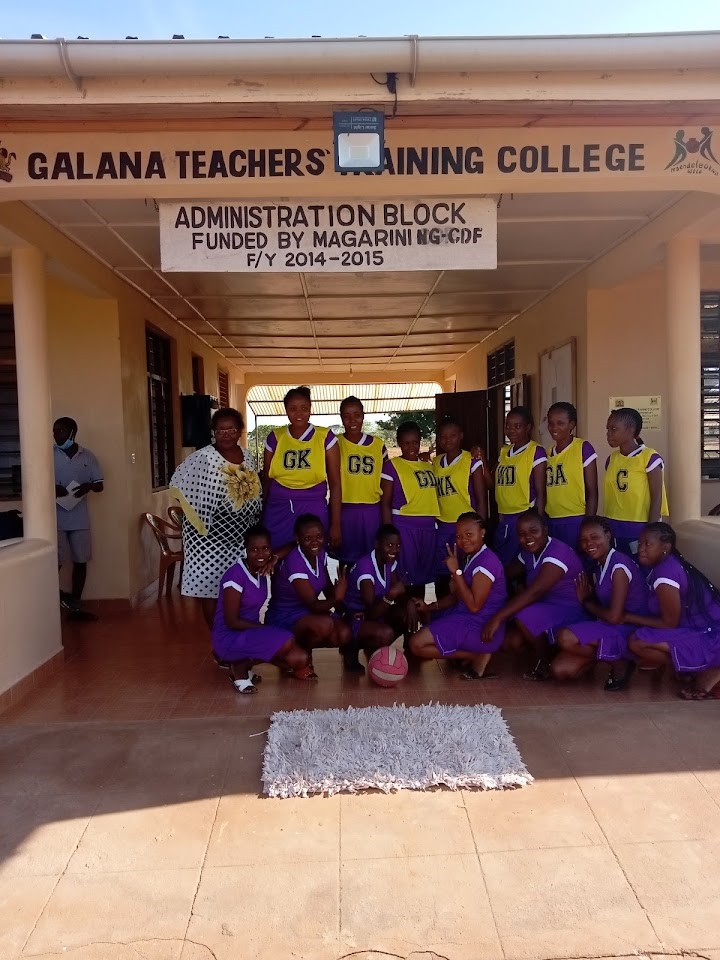
Galana TTC excels in both academic and co-curricular activities.

Galana Teachers Traning College's Netball Team preparing to participate at a past National Championship.
Galana Teachers Traning College’s Netball Team preparing to participate at a past National Championship.

How To Join Galana

You can join Galana TTC by applying directly to the College or via placement by Kuccps. An applicant selected to join Galana Teachers Training Colleg becomes a bona fide students through the process of registration.

The requirements for registration are as follows:-

• Letter of invitation (not a photocopy)
• Original National Identity Card
• Original academic certificates
• Full fees in BANKERS CHEQUE, MONEY ORDER or BANKING SLIP

A student who for any reason, fails to register at the college for admission on the officially specified date will not be readmitted but will be made to apply afresh through Ministry of Education Science and Technology.

A student selected to join a particular public Teacher Training College cannot transfer to another without the authority of the Ministry of Education. A student who is found with forged certificates will not be registered but will be handed over to the police.

How to Join Galana TTC directly

To directly apply to join Galana TTC, use these 3 simple steps:

Step 1: Register Online

Join our exciting community by creating an account with our online platform. Your email address, Mobile contacts and ID/Passport Number are needed for this process. Click on Register online

Step 2: Update Your Profile

After successfully creating your account, you will be prompted to login into your profile account. You need to update your personal and educational details accordingly

Step 3: Select Course

After submitting correct data about yourself and academic details, you can now select the appropriate course interested from our list of courses offered.


General Rules & Regulations For Galana TTC’s Students

People who are training to be teachers should be able to understand  the necessity of rules and regulations in any  organization.

Students are therefore, expected to co-operate. The following rules and regulations should be strictly observed by all the students.

  1. Courtesy

All the students should speak and behave respectfully at all times. They are therefore required to refrain from behaving in any  manner that is unbecoming of Machakos Teachers’ College  Community including abusing and/ or causing injury to others.

  1. Punctuality/ Time Management

All the students are expected to be punctual for classes, meals, meetings, games, sports, clubs, societies and any other scheduled college activity. Attendance and punctuality on flag hoisting days is a must; all students are expected to be in full college uniform during assembly days and any other college official functions.

  1. Assembly

Any assembly organized by students can only take place with the authority of the Principal or any staff acting on behalf of the Principal. Should students plan for farewell parties, the celebrations should end not later than 6.30 pm.

  1. Worship

Students worship services will be between 8.30 am and 10.30 am within the college. All denominations should respect each other and perform their prayers within scheduled times as per the College routine. Quiet prayers are preferred.

  1. Visitors

Students’ visitors are permitted only on Saturdays and Sundays between 8.00 am and 6.00 pm. For security reasons, visitors are not allowed to enter into the hostels at any time.

NB:  Ex-students are visitors and should not be entertained around the hostels without permission.

  1. Illness

Students are not allowed to be in their hostels during scheduled College activities without the knowledge of the Matron, Nurse and/ or Hostel Supervisor. The Hostel and class secretaries should report cases of sickness to the Nurse and/ or the Tutor on duty if the sick student is unable to report the same personally.

  1. Mobile Phones

Students are not allowed to use their mobile phones during class, in the library and during prep times. Kindly switch off the mobile phone during these times. Students are advised to take care of their phones while charging.

  1. Food

The College does not provide special diet. Any student on a special diet must make his / her own arrangements without involving the

college. All food should be taken in the Dining Hall. Meals should not be taken outside the dining hall or in the hostels.

  1. Smoking

Smoking is bad for your health. Consequently the College abhors the habit in its premises. PLEASE NOTE THAT MACHAKOS

TEACHERS’ COLLEGE IS A “NO SMOKING ZONE.” A student contravening this is liable to suspension / exclusion from the college.

  1. Hostels

The premises are strictly out of bounds to all students of the opposite sex and visitors at all times unless authorized by the Principal or a staff acting on behalf of the Principal. Culprits will be expelled.

  1. Lights

Lights must be put off by Class Secretaries in the study rooms by 10.30 pm and Hostel Secretaries by 11.00 pm. All lights not in use should be off at all times.

  1. Noise

Students should not annoy others by means of radios, TV’s, musical instruments or any other form of noise.

  1. Cleanliness

All students should make every effort to keep the college compound clean and tidy by putting litter in the dustbins. Students should keep to the paths when crossing the college compound. They should also perform duties assigned to them so as to keep the environment clean.

  1. College Dress Code

Personal hygiene; which includes grooming and decent dress is an important aspect of the teaching career. Please note that Jeans   trousers and other indecent attires such as “see-me-throughs” are not allowed to be worn by lady students. Bathroom slippers are not allowed to be worn outside the hostels. Such attires will be confiscated and the culprit punished. Please refer to the TSC code of dressing.

  1. College Property

All College Property should be used with care. Any loss, damage or misplacement should be reported immediately to the Principal’s

Office by those responsible. Switch off lights and turn off water taps when not in use. Establish the habit to assist the college save on

unnecessary wastage of electricity and water. Use of  water heaters, electrical cookers and radios is strongly prohibited. Students who damage the college fence will be penalized.

  1. Personal Property

All the students are expected and/ advised to take care of their personal property. No student may possess other students’

property without first obtaining permission from the owners of such property. However, students are hereby advised not to bring

expensive items to the College. Stolen phone cases will not be entertained.

  1. Alcohol and Drug Abuse

Ours beings an educational training institution, the consumption of alcohol and harmful drugs in and/ or out of college is prohibited.

Culprits of the same are liable to exclusion/ suspension from the College.

  1. Absence from College

All the students should not leave College without written permission. Leave of absence will be given out to students after Saturday General Cleaning and Inspection at around 11.00 am or so and on Sunday throughout the day when there are no scheduled college activities. However, no student should be out of the college compound after 6.00 pm on any given day. Any student who absents himself or herself from the college for 2 weeks, will be deemed to have  deserted the course and will automatically be discontinued.

  1. Staff Quarters

Staff quarters  are out of bounds to all students except on official business, for example reporting an illness to the nurse, the tutor on duty and/  the Principal. Students who are relatives to staff must obtain permission from the Dean of Students whenever they want to visit their staff relatives’ houses on the compound.

  1. Student’s Identity Card

It is advisable for each student to have a valid Students’ College Identity Card. The ID must be carried any time one goes outside the college compound.

  1. Electrical Gadgets / Appliances

Any unauthorized electrical gadgets are prohibited and shall be

confiscated if found and the owner punished by paying Kshs. 5000.00 Electricity Bill and/ one year leave.

  1. Tribal Groupings

Tribal groupings are not allowed in the college.

  1. Official Languages

The official languages in the college are Kiswahili and English. Avoid use of mother tongue as it does not add value to your core business in the college – ACADEMICS.

  1. Pornography

Access to pornography is a very serious offence and culprits will be expelled from the college.

  1. Abortion/ Sneaking/ Theft/ Threatening/ Fighting

These offenses are very serious and will attract a penalty/

punishment of one year leave.

  1. Bus Fare

Students should make arrangements to have their fare in good time. The college does not provide bus fare for any student.


Galana TTC’s Core Values

The Galana TTC’s Fact File

Galana Teachers Training College is a Public Teacher Training College located in Kilifi County, Magarini Sub-County, Magarini ward. It is 19.1km Northwest of Malindi town. The College was established by the community in 2013 and was registered by the Ministry of Education to offer Primary Teacher Education Certificate (P1) and Early Childhood Development Education (ECDE) and diploma courses in on 16th July 2016.


Galana TTC’s Core Functions

  1. To train Basic Education teachers.
  2. Develop in the teacher the ability to communicate and collaborate effectively.
  3. Offer Basic teacher education that prepares teachers who have the following competencies and values: –
    • Critical thinking and problem solving skills
    • Creativity and imagination
    • Communication skills
    • Citizenship
    • Digital literacy
    • Self-efficacy
    • Learning to learn
    • Moral and religious values
  4. Develop awareness of good human relationship and international consciousness.
  5. Foster in the teacher an appreciation and respect for our rich and varied cultural heritage.
  6. Develop  in  the  teacher  awareness  and  appreciation  for  good health and environmental conservation.


Frequently Asked Questions About Galana TTC.

Who posts Tutors at Galana TTC?

Tutors at this college are posted and paid by the Teachers Service Commission, TSC.

Is Galana TTC A Public or Private Teachers’ Training College?

This is a public teacher training institution under the Ministry of Education. The good news is that this College is registered by the Kenya Universities and Colleges Central Placement Service (KUCCPS) to offer various teacher education programs. Placement at the College is mostly done via KUCCPS.

When does Galana TTC Admit New Students?

The College admits new Students in September of every year.

Which Courses are offered at Galana TTC,  plus their Requirements?

The Teachers Training Colleges Offers Diploma in Teacher Education (DPTE) and Diploma in Early Childhood Teacher Education (DECTE).

To join the Diploma in Teacher Education (DPTE) Course, a minimum of a C (plain) mean grade at the Kenya Certificate of Secondary Education (KCSE) Exams is required.

Meanwhile, the Minimu KCSE Mean Grade Requirement for the Diploma in Early Childhood Teacher Education (DECTE) is equally a C (Plain).

Full List of Courses offered by the Galana TTC

The Galana TTC offers the following Courses:

  1. Diploma in Primary Teacher Education {DPTE – 3years} {Kuccps Placement}: This is the standard training program for prospective primary school teachers.
  2. Diploma in Early Childhood Development Education {DECTE – 3 years} {Kuccps Placement}: Focused on early childhood development and early-grade instructional designs.
  3. Upgrade Diploma in Primary Teacher Education {UDPTE – 1 year} {Direct Placement By The TTC}.
  4. Upgrade Diploma in Early Childhood Development Education {UDECTE – 1 year}. {Direct Placement By The TTC}.

Units offered at the Diploma in Primary Teacher Education {DPTE} Course

This Course takes 3 years. The following 6 units are covered under the Diploma in Primary Teacher Education {DPTE} Course:

  1. EDUCATION/PROFESSIONAL STUDIES UNIT

This involves:

  •    Child Development and Psychology.
  •    Curriculum Studies.
  •    Educational Resources.
  •    ICT Integration in Education.
  •    Educational Assessment.
  •     Research skills.
  •    Inclusive Education.
  •    Education Leadership and Management
  •    Sociological and Philosophical Foundations  of  Education.
  •    Historical and Comparative Foundations of  Education.
  •    Micro Teaching.
  •    Practicum.

2. LANGUAGES UNIT

This covers:

  1. English
  2. Kiswahili
  3. Indigenous Languages
  4. Foreign Languages

3. Mathematics Unit

  • This unit covers  studies in Mathematics

4. Integrated Science Unit

Studies in this unit involves:

  1. Science and Technology
  2. Agriculture
  3. Home science

5. Creative Arts Unit

Covering:

  1. Art & Craft
  2. Music
  3. Physical Health Education.

6. Social Sciences

This unit involves:

  1. Christian Religious Education {CRE}
  2. Social studies
  3. Islamic Religious Education {IRE}

Diploma in Early Childhood Teacher Education (DECTE)’s Units

The 3 year Diploma in Early Childhood Teacher Education (DECTE) has the following 6 units:

  1. EDUCATION/PROFESSIONAL STUDIES UNIT

This unit involves the following learning areas:

  1. Child Development and Psychology
  2. Curriculum Studies
  3. Educational Resources
  4. ICT Integration in Education
  5. Educational Assessment
  6. Research skills
  7. Inclusive Education
  8. Education Leadership and Management
  9. Sociological and Philosophical Foundations of Education
  10. Historical and Comparative Foundations of Education
  11. Micro Teaching
  12. Practicum.

2. Languages Unit

It has these three (3) learning areas:

  1. English Language Activities
  2. Kiswahili Language Activities
  3. Foreign Languages
  4. Indigenous Languages

3. Mathematics Activities Unit

4. Integrated Science Unit

  1. Environmental Education
  2. Health & Nutrition

6. Creative Arts Unit

Covering:

  1. Art & Craft
  2. Music
  3. Physical Health Education.

7. Social Sciences.

Covers studies in:

  • Christian Religious Education {CRE}

Who regulates Galana TTC?

The College is regulated by Ministry of Education (State Department for Higher Education and Research).

How Long does the Diploma in Teacher Education (DPTE) and Diploma in Early Childhood Teacher Education (DECTE) Courses Take?

The Diploma in Teacher Education (DPTE) and Diploma in Early Childhood Teacher Education (DECTE) courses take a duration of 2 years. This is both class work and attachment (Teaching Practice).

What is the Fees Structure at Galana TTC?

The annual fees for the Courses is KSH 72,076. Remeber, this only Tuition Fees.

How Can I Apply For Placement at Galana TTC?

To apply for placement at the TTC, use the KUCCPS Student Portal. This way, you will qualify for Government Funding through the Higher Education Funding (HEF) and Higher Education Loans Board (HELB).

How Do I Download the Galana TTC Admission Letter?

To download your TTC Admission Letter, visit the KUCCPS Student Portal.


Does the Galana TTC Offer Accomodation and Meals?

Yes. The Teachers Training College operates as a boarding institution providing a standard balanced diet to all trainees. Students are required to bring their own personal boarding items (such as a mattress, warm clothing due to the cold climate in the Aberdares/Nyahururu region, and personal hygiene effects).

Accommodation is provided on-site with strictly segregated facilities for male and female trainees.


Does the Galana TTC Offer Medical Care?

Definately. Yes. The TTC has a health Facility within the College that handles minor ailments. Students are strongly encouraged to register for the Social Health Authority (SHA) cover to handle any external referrals or serious medical costs.


What are the Galana TTC’s Admission Requirements & Joining Guidelines?

 Have you been placed at the TTC or are planning to apply for admission at the College? you will need to provide these specified documents during registration and admission.

  • The official KUCCPS/College Admission Letter (fully filled out).
  • Original and copies of your National ID Card.
  • Original K.C.S.E. Certificate and School Leaving Certificate.
  • Original Birth Certificate.
  • A recommendation letter from your area Assistant Chief or a local religious leader.
  • Two recent, certified color passport-sized photographs.

Does the Galana TTC Offer Co-curricular Activities?

Yes. The College offers the following Inter-Colleges Co-curricular Activities:

  • Ball games like Soccer, Volleyball, Hanball, Netball, Basketball and Rugby
  • Goal ball
  • Athletics
  • Indoor games including: Badminton, Table Tennis and Lawn Tennis.
  • Hockey
  • Swimming

These events are called the Kenya Teachers Training Colleges (KTTC) National Sports & Ball Games Championship.

Who participates in the Kenya Teachers Training Colleges (KTTC) National Sports & Ball Games Championship?

Participants: Teams from all Teachers Training College regions across Kenya.


Where Can I Be Employed Upon Completing Diploma in Teacher Education (DPTE) and Diploma in Early Childhood Teacher Education (DECTE) courses?

Graduates in Diploma in Teacher Education (DPTE) and Diploma in Early Childhood Teacher Education (DECTE) courses are employed to Teach in both Public and Primary Schools.

More Details on TTCs in Kenya.

Galana teachers training college Fees Structure pdf,
Galana Teachers Training College job vacancies,
Galana TTC admission requirements,
Galana TTC photos,
Talea Teachers Training College fee structure,
Galana Teachers Training College location,
Galana ttc fee structure,
Kwale Teachers Training college,

Egoji TTC- Fees, Intakes, Location, Admission Letters, Courses and Requirements

Get all the details about Egoji Teachers Training College, TTC including: Fees, Intakes, Location, Admission Letters, Courses and Requirements.

Physical Location of Egoji TTC.

St. Lawrence Egoji Teachers College is a prominent, public teacher training institution situated in Meru County, Kenya. It is accredited by the Ministry of Education and recognized nationwide for its history of training high-quality educators.

The campus is located in the Igoji area of Meru County, situated just off the Nkubu–Thuci Road. The campus features mature trees and an established infrastructure that includes extensive lecture halls, student hostels, an administrative block, and sports fields. Notably, the institution focuses on sustainability, having integrated modern institutional infrastructure such as dedicated biogas plants to manage resource efficiency.

How to Contact Egoji TTC.

  • Location: Off the Nkubu-Thuci Road, near Igoji Market in Meru County, Kenya.
  • Postal Address: Private Bag – 60402, Egoji, Kenya.
  • Phone: +254 713 221019 / +254 113 142675
  • Email: [email protected] / [email protected]

Official Name of Egoji TTC.

The College’s full Name is St. Lawrence Egoji Teachers College.

 Brief History of Egoji TTC.

Originally established as a Catholic-sponsored institution, the college operates as a public national teacher training college managed under the regulations of the Ministry of Education. It functions under the official name St. Lawrence Egoji Teachers College and has built a long-standing reputation for strict discipline and solid academic performance.


Frequently Asked Questions About Egoji TTC.

Who posts Tutors at Egoji TTC?

Tutors at this college are posted and paid by the Teachers Service Commission, TSC.

Is Egoji TTC A Public or Private Teachers’ Training College?

This is a public teacher training institution under the Ministry of Education. The good news is that this College is registered by the Kenya Universities and Colleges Central Placement Service (KUCCPS) to offer various teacher education programs. Placement at the College is mostly done via KUCCPS.

When does Egoji TTC Admit New Students?

The College admits new Students in September of every year.

Which Courses are offered at Egoji TTC,  plus their Requirements?

The Teachers Training Colleges Offers Diploma in Teacher Education (DPTE) and Diploma in Early Childhood Teacher Education (DECTE).

To join the Diploma in Teacher Education (DPTE) Course, a minimum of a C (plain) mean grade at the Kenya Certificate of Secondary Education (KCSE) Exams is required.

Meanwhile, the Minimu KCSE Mean Grade Requirement for the Diploma in Early Childhood Teacher Education (DECTE) is equally a C (Plain).

Full List of Courses offered by the Egoji TTC

The TTC offers the following Courses:

  1. Diploma in Primary Teacher Education {DPTE – 3years} {Kuccps Placement}: This is the standard training program for prospective primary school teachers.
  2. Diploma in Early Childhood Development Education {DECTE – 3 years} {Kuccps Placement}: Focused on early childhood development and early-grade instructional designs.
  3. Upgrade Diploma in Primary Teacher Education {UDPTE – 1 year} {Direct Placement By The TTC}.
  4. Upgrade Diploma in Early Childhood Development Education {UDECTE – 1 year}. {Direct Placement By The TTC}.

Units offered at the Diploma in Primary Teacher Education {DPTE} Course

This Course takes 3 years. The following 6 units are covered under the Diploma in Primary Teacher Education {DPTE} Course:

  1. EDUCATION/PROFESSIONAL STUDIES UNIT

This involves:

  •    Child Development and Psychology.
  •    Curriculum Studies.
  •    Educational Resources.
  •    ICT Integration in Education.
  •    Educational Assessment.
  •     Research skills.
  •    Inclusive Education.
  •    Education Leadership and Management
  •    Sociological and Philosophical Foundations  of  Education.
  •    Historical and Comparative Foundations of  Education.
  •    Micro Teaching.
  •    Practicum.

2. LANGUAGES UNIT

This covers:

  1. English
  2. Kiswahili
  3. Indigenous Languages
  4. Foreign Languages

3. Mathematics Unit

  • This unit covers  studies in Mathematics

4. Integrated Science Unit

Studies in this unit involves:

  1. Science and Technology
  2. Agriculture
  3. Home science

5. Creative Arts Unit

Covering:

  1. Art & Craft
  2. Music
  3. Physical Health Education.

6. Social Sciences

This unit involves:

  1. Christian Religious Education {CRE}
  2. Social studies
  3. Islamic Religious Education {IRE}

Diploma in Early Childhood Teacher Education (DECTE)’s Units

The 3 year Diploma in Early Childhood Teacher Education (DECTE) has the following 6 units:

  1. EDUCATION/PROFESSIONAL STUDIES UNIT

This unit involves the following learning areas:

  1. Child Development and Psychology
  2. Curriculum Studies
  3. Educational Resources
  4. ICT Integration in Education
  5. Educational Assessment
  6. Research skills
  7. Inclusive Education
  8. Education Leadership and Management
  9. Sociological and Philosophical Foundations of Education
  10. Historical and Comparative Foundations of Education
  11. Micro Teaching
  12. Practicum.

2. Languages Unit

It has these three (3) learning areas:

  1. English Language Activities
  2. Kiswahili Language Activities
  3. Foreign Languages
  4. Indigenous Languages

3. Mathematics Activities Unit

4. Integrated Science Unit

  1. Environmental Education
  2. Health & Nutrition

6. Creative Arts Unit

Covering:

  1. Art & Craft
  2. Music
  3. Physical Health Education.

7. Social Sciences.

Covers studies in:

  • Christian Religious Education {CRE}

Who regulates Egoji TTC?

The College is regulated by Ministry of Education (State Department for Higher Education and Research).

How Long does the Diploma in Teacher Education (DPTE) and Diploma in Early Childhood Teacher Education (DECTE) Courses Take?

The Diploma in Teacher Education (DPTE) and Diploma in Early Childhood Teacher Education (DECTE) courses take a duration of 2 years. This is both class work and attachment (Teaching Practice).

What is the Fees Structure at Egoji TTC?

The annual fees for the Courses is KSH 72,076. Remeber, this only Tuition Fees.

How Can I Apply For Placement at Egoji TTC?

To apply for placement at the TTC, use the KUCCPS Student Portal. This way, you will qualify for Government Funding through the Higher Education Funding (HEF) and Higher Education Loans Board (HELB).

How Do I Download the Egoji TTC Admission Letter?

To download your TTC Admission Letter, visit the KUCCPS Student Portal.


Does the Egoji TTC Offer Accomodation and Meals?

Yes. The Teachers Training College operates as a boarding institution providing a standard balanced diet to all trainees. Students are required to bring their own personal boarding items (such as a mattress, warm clothing due to the cold climate in the Aberdares/Nyahururu region, and personal hygiene effects).


Does the Egoji TTC Offer Medical Care?

Definately. Yes. The TTC has a health Facility within the College that handles minor ailments. Students are strongly encouraged to register for the Social Health Authority (SHA) cover to handle any external referrals or serious medical costs.


What are the Egoji TTC’s Admission Requirements & Joining Guidelines?

 Have you been placed at the TTC or are planning to apply for admission at the College? you will need to provide these specified documents during registration and admission.

  • The official KUCCPS/College Admission Letter (fully filled out).
  • Original and copies of your National ID Card.
  • Original K.C.S.E. Certificate and School Leaving Certificate.
  • Original Birth Certificate.
  • A recommendation letter from your area Assistant Chief or a local religious leader.
  • Two recent, certified color passport-sized photographs.

Does the Egoji TTC Offer Co-curricular Activities?

Yes. The College offers the following Inter-Colleges Co-curricular Activities:

  • Ball games like Soccer, Volleyball, Hanball, Netball, Basketball and Rugby
  • Goal ball
  • Athletics
  • Indoor games including: Badminton, Table Tennis and Lawn Tennis.
  • Hockey
  • Swimming

These events are called the Kenya Teachers Training Colleges (KTTC) National Sports & Ball Games Championship.

Who participates in the Kenya Teachers Training Colleges (KTTC) National Sports & Ball Games Championship?

Participants: Teams from all Teachers Training College regions across Kenya.


Where Can I Be Employed Upon Completing Diploma in Teacher Education (DPTE) and Diploma in Early Childhood Teacher Education (DECTE) courses?

Graduates in Diploma in Teacher Education (DPTE) and Diploma in Early Childhood Teacher Education (DECTE) courses are employed to Teach in both Public and Primary Schools.

More Details on TTCs in Kenya.

Egoji Teachers College Admission letter,
Egoji Teachers College fee Structure,
Egoji Teachers College Portal,
Egoji Teachers College fee Structure pdf,
Egoji Teachers College location,
Igoji Teachers Training College photos,
Egoji Teachers College Contacts,
Igoji Teachers College intake requirements,