Tag Archives: Reopening of schools

Education CS proposes conditions to met before reopening schools

Education cabinet secretary has lashed out at the Kenya National Union of Teachers, KNUT, for insisting that they ought to have been given a slot in the recently constituted national education covid-19 response committee. Knut’s secretary general Wilson Sossion has been vocal in the media over the exclusion. But prof. Magoha now says it is not feasible to have everybody in the committee and that the learners’ interests should supersede personal interests.

“We are very serious about thinking what we need to do with our children and it’s not about everybody being there. Is the union represented, yes . We have put one unionist who will coordinate all the others and then, let us move to where we are going,” said the CS.

The CS had initially sidelined all teachers’ unions only to appoint a representative from the Kenya Union of Post Primary Education Teachers – KUPPET . The committee is currently collecting views from Kenyans on how best to reopen schools.

But, knut would hear none of this, noting that the government should not rush into reopening of the schools.

Also read;
Reopening conditions

The CS noted that most schools lacked adequate infrastructure to ensure social distancing among learners; something that must be addressed urgently before schools are reopened.

“In case we are thing about reopening, we shall need a situation where there is flowing water in most schools. we must also think to keep the social distance of one metre. And, therefore having six double deckers (beds) in the cubicle is something that we shall have to reconsider,” Prof. Magoha said.

This, according to the CS, will reduce infection and ensure learners’ safety in schools.

Speaking in Kiambu while on an inspection tour of Ruiru girls high school, this past week, the CS said reopening of schools would entirely depend on a paradigm shift in Kenyan’s behaviour.

“If we are going to be bold enough to open schools, the public must agree to change their mindset and behave in a more civilized manner,” he said.

This means that the public should henceforth abide by the health ministry’s guidelines on social distancing, wearing face masks and maintaining high levels of hygiene.

Magoha watered down the World Health Organisation’s thought that the virus could move from pandemic which is easier to deal with to endemic.

“I don’t subscribe to that school of thought. We need to give the virus a few more months to see how it will pan our,” he said.

Ruiru Girls High School in Kiambu county. education CS prof George Magoha has said the school will be upgraded to be a centre of excellence.

CS Magoha gives reasons why schools may not reopen in January 2021

Schools may not be reopened in January, 2021, after all. According to the latest sentiments by Education Cabinet Secretary George Magoha, schools have not met the minimum reopening requirements.

Magoha says social distancing in schools, as one of the ways to curb spread of covid-19, would be a herculean task considering the fact that schools lack adequate infrastructure.

“It could have been expected that enough money should have been made available, right now, so that we improve on infrastructure,” the CS told Members of the Education Committee of Parliament during a virtual meeting on Thursday August 8, 2020.

Magoha remained non-committal on whether schools will definitely reopen in January and the exact dates.

He said the current spike in daily covid-19 numbers would push reopening of schools further. The lack of vaccine to put the virus at bay may also defer initial reopening plans.

Magoha told the Legislators that the Ministry will try to improve infrastructure in schools using the available funds.

“We are going to improve on the infrastructure according to the amount of money that is made available to us,” he added.

See also;

TOUGH REOPENING CONDITIONS.

Last month, CS Magoha released  a draft report titled “Guidelines on Health and Safety Protocols for Reopening of Basic Education Institutions Amid Covid-19 Pandemic”. The report listed a number of requirements all schools will be required to implement before resuming classes.

Some of those measures, as stipulated in the report, are: ensuring constant availability of liquid soap, hand washing facilities, disinfectants, thermo-guns and face masks and enforcing their utilization.

Schools will be, at the same time, to upgrade their buildings, improve or install age, disability and gender appropriate hygiene facilities such as toilets and bathrooms to ease congestion.

The Senate Committee on Education, last month, asked Magoha to adopt a phased reopening calendar for schools; effective September, 2020.

After meeting Stake-holders, a fortnight ago, the CS announced his and the Teachers Service Commission (TSC) will implement a community-based learning approach.

In the new model, teachers will be mapped with learners to offer learning at no cost. The TSC is expected to provide guidelines on the implementation of the programme; that is set to kick-off in September.

The CS has since postponed the reopening of TTCs, TVET and Universities for face to face sessions till January, 2020. The institutions were initially set for reopening in September.

ALSO READ;

Schools postal boxes risk closure- Education Ministry warns

The Ministry of Education has directed schools to clear monies owed to the Postal Corporation. The Ministry notes that most schools have not been paying for the postal boxes through which they receive mails and parcels. The Principal Secretary in the Ministry, Dr. Bellio Kipsang, says the non payment prompted the Postal Corporation to formally launch a complaint with the Ministry.

“The Ministry is in receipt of a letter from the Postal Corporation of Kenya in which it has emerged that many schools have not been paying for the postal boxes they have rented from the Kenya Postal Postal Corporation. Consequently, the schools have accumulated arrears totaling to KShs 185,639,304.” Says Dr. Kipsang via a circular sent to all County and Sub County Directors of Education.

The PS orders the field officers to ensure schools within their jurisdictions pay the arrears immediately.

“The Ministry notes with concern the non-payment of the rental boxes fee an direct you to ensure schools under your jurisdiction attend to this obligation,” adds Dr. Kipsang.

Non-payment of the postal charges has only but further complicated the financial status of the already struggling mail service provider. The emerging of internet has reduced the number of mails being sent through hard copies; with many preferring E-mails and other electronic modes.

See also;

Part of the fee capitation that schools receive from the government is to be spent for various vote heads; including operation costs.

kipsang says school heads should immediately visit the postal corporation offices where they have rented the postal boxes to check their balances and clear them.

Communication from the Teachers Service Commission, TSC, to schools is done via the Postal boxes.

Education Ministry releases latest circular on schools’ reopening, restricts Co-curricular activities and assemblies

The Ministry of education has released finer details on schools’ reopening. Through a circular released by Basic Education Principal Secretary, Dr. Belio Kipsang, the Ministry says Co-curricular activities and school assemblies should be restricted, taking into
account the social distancing protocols.

Here is the full presser;

RE: PHASED RESUMPTION OF FACE TO FACE LEARNING IN ALL SCHOOLS IN KENYA

The progressive re-opening of schools for face-to-face learning will commence with Grade 4 (Competency Based Curriculum Pioneer Class), Class 8 and Form 4 on Monday, 12th October, 2020. Learners from both public and private schools will reopen for Term 2 of the 2020 academic calendar.

The Ministry had earlier released health and safety protocols for implementation by all learning institutions in readiness for the resumption of face-to-face learning. These measures are in line with the guidelines from the Ministry of Health, and will be used as the basis for decision-making on COVID-19 containment.

At the same time, training manuals for school managers, teachers and learners have been prepared and released to schools in preparations for reopening. Although physical distancing will remain a challenge, it should not be used as a bottleneck to keep any child away from school.

Consequently, you are directed to ensure compliance with the following Revised Academic Calendar for Schools in 2020 as per the Cabinet Secretary’s directive. The 2021 Academic Calendar will be released at a later date.

Here is the revised 2020 school calendar;

S/N ACTIVITY GRADE/CLASS/FORM OPENING DATE CLOSING DATE DURATION
1 TERM 2 Grade 4, Class 8 and Form 4 12/10/2020 23/12/2020 11 weeks
2 TERM 2 HOLIDAY Grade 4, Class 8 and Form 4 24/12/2020 01/01/2021 1 week
3 TERM 3 Grade 4, Class 8 and Form 4 04/01/2021 19/03/2021 11 weeks
4 KCPE EXAMS Class 8 22/03/2021 24/03/2021 3 Days
5 KCSE EXAMS Form 4 25/03/2021 16/04/2021 3 weeks and 2 days
6 EXAM MARKING KCSE 19/04/2021 07/05/2021 3  weeks

N.B: Schools offering International Curriculum will also resume face-to-face learning on
12th October, 2020.

See also;

Schools should therefore note the following:

1. All Schools shall engage with students to build confidence about COVID-19 preventive and control measures to ensure health and safety of all persons in the school communities. The first few days should be spent orienting learners on COVID-19 protocols.

2. Schools shall ensure mandatory use of face masks, monitoring of body temperature for learners, staff and all other persons accessing the schools, hand-washing and observance of high levels of hygiene. Each learner will be expected to have at least two reusable face masks, preferably which can be washed, and that meet the Kenya Bureau of Standards (KEBS) requirements.

3. Schools shall maintain updated bio-data for all learners and staff and contacts of their parents/guardians for easy management of COVID-19 and other related emergencies.

4. All Schools shall provide adequate water, soap, cleaning detergents and disinfectants to ensure proper hygiene practices. Where water is not available, schools must make hand sanitizers available.

5. All schools shall ensure that school transportation comply with Legal Notice No.50 of 6th April, 2020, which require vehicles to carry not more than 50% of the capacity or as shall be advised by relevant authority from time to time.

6. All schools shall ensure daily cleaning and disinfection of surfaces and objects that are frequently touched by many people (stair railings, desk tops, knobs, light switches, walls, desks, door frames and window handles. Schools shall put up signs and posters that require and remind staff, students and visitors to maintain social distancing as well as hand washing and personal hygiene.

7. All Principals and Head teachers shall ensure proper use of facial masks or face shields that must be worn by all students, staff and any other person accessing the school.

8. All schools shall ensure availability of thermal guns for daily monitoring of body temperature for all students, staff and visitors.

9. Schools shall strengthen guidance and counselling services and provide psychosocial support, pastoral and spiritual care to learners and staff.

10. All unnecessary visits by outsiders shall be restricted. School functions like parents’ days and inter-schools’ activities are suspended for the time being.

11. All schools have been linked to the nearest public health facility prior to being re-opened. Telephone contacts of the institutions should be available to schools in case of emergencies.

12. Each school shall constitute a COVID-19 Response Commiitee and maintain strong networks with the nearest health facility, the County Rapid Response team, National Government Administrative Office and nearest Education Office to strengthen support mechanisms.

13.Co-curricular activities and school assemblies should be restricted, taking into account the social distancing protocols.

The Ministry of Education, in collaboration with the Ministry of Health, will continuously monitor adherence to “Guidelines on Health and Safety Protocols for Reopening of Basic Education Institutions amid COVID-19 Pandemic” in order to determine when to re-open for all other learners in primary and secondary schools.

It should be pointed out that the country is still recording new cases of COVID-19 hence the need for strict adherence to all Government mitigation protocols al all times.

Detailed guidelines and protocols for schools reopening and continued learning are accessible on the Ministry of Education website; http://www.education.go.ke or at the nearest Ministry of Education offices.

You are required to strictly adhere to all the reopening dates and protocols.

CS Magoha receives final schools’ reopening report

Education Cabinet Secretary George Magoha has said the Government will provide further direction this weekend regarding the extended closure of schools given that some of the Covid-19 measures are set to expire. The address by president Uhuru Kenyatta is expected on Saturday with curfew restrictions that have been in force for the last one month expiring.

The CS indicated that schools may be closed longer given that some of the institutions are being used as covid 19 isolation centres.

“It will look like an open secret (status of schools’ reopening). Because, as we speak 351 public schools are being used by the government… You have seen all over the world, nobody has opened any school when the pandemic is still spiking,” said CS Magoha when he received the final national covi 19 education response committee in Nairobi, today.

CS Magoha castigated parents who have been pushing for reopening of schools.

“If you have no time to look after you child, then perhaps you have no business creating a child. Spend time with your child.. Learning starts at home and starts with the family; so can we all go back to our families please and start teaching our children,” said the CS.

He said parents should protect their children from all forms of vices in the society. This comes as cases of offences against children continue to increase daily.

The DCI says offences against children are on the rise in the backdrop of the current covid 19 pandemic.


Magoha reported that the government in consultation with development partners is putting in place mitigation measures in all schools to prevent Covid-19 from penetration to learning institutions.

Earlier on in the day, Interior CS Fred Matiang’i, his Health counterpart Mutahi Kagwe and Prof. George Magoha held a consultative meeting with religious leaders from all faiths to consolidate their views regarding onsite worship and schooling in the face of COVID-19; ahead of the final pronouncement by President Kenyatta tomorrow.

The full report on reopening of schools will be made public after president Kenyatta has been briefed.

SEE ALSO;

Schools to be assessed before reopening and must meet these requirements- Education News

The Ministry of Education is priming itself for the imminent reopening of schools. Schools will have to meet minimum requirements to safeguard learners and teachers against spread of the deadly Corona virus disease.

A checklist for schools’ preparedness has since been dispatched to school heads to aid in the preparations.

“The purpose of this checklist is to assess the level of preparedness for reopening of schools after closure due to COVID-19 pandemic. The checklist will be used by the directorate to carry out assessment on institution preparedness for re-opening in order to minimize the risk of COVID-19 infection and spread among learners.” Reads the document from the Ministry, in part.

Number of available physical facilities, learners and teachers will be captured and sent to the Ministry. Schools will also be expected to have sufficient water for hand-washing.

Learners have been at home since March, when covid-19 broke out in the country.

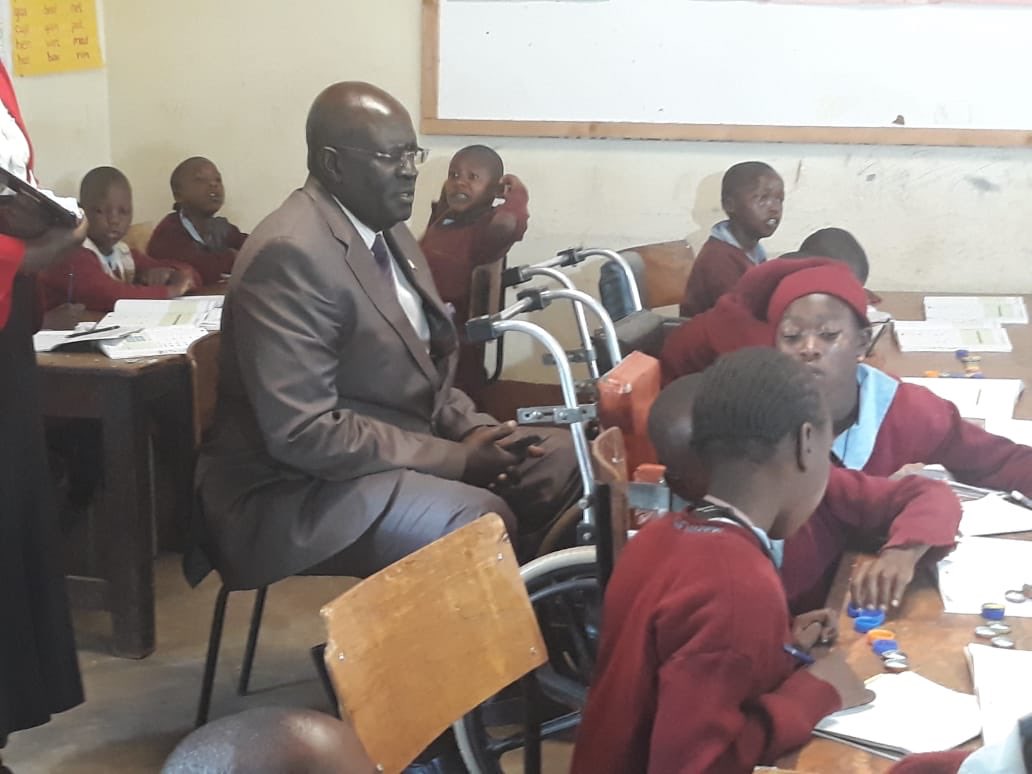
For disabled learners, there should be adequate tuition furniture which are disability friendly and arranged in a manner that ensures adherence to at least 1-meter social distance.

The detailed document also states that the school’s compound should be fenced with a manned gate.

REDUCED CASES OF NEW COVID-19 INFECTIONS

There has been a push by a section of parents and Legislators to have an earlier reopening of schools. But, Education Cabinet Secretary George Magoha says physical learning in schools can only resume when rate of infections drop.

The numbers of new covid-19 cases have taken a dip, lately. But, the Ministry of Health says we are not off the hook yet.

The Ministry says whereas Mombasa has seen decline of cases, the scenario is different in the counties of Nairobi and Kiambu; which are on a high trajectory.

A spot check in most schools shows that they will struggle to meet the minimum reopening requirements as provided by the Ministry. The high population of learners makes the situation even worse.

The Community Based Learning, CBL, program is is yet to kick off in most areas; as learners stay away from the proposed learning centres.

The Ministry has, at the same time, disbursed Sh15.4 Billion to schools. This will help the latter to prepare ahead of the anticipated reopening.

community based teaching in Kenya; Guidelines

Guidelines for the Establishment of Community Based Learning (CBL) Programme

Introduction

The Ministry of Education and TSC using a multi-agency approach and in collaboration with Ministry of Interior and Coordination National Government through the Nyumba Kumi initiative will implement the community based learning as from September 2020.

This is a follow up to extensive consultations with all stakeholders in the Education sector on community-based learning as a means of engaging learners during the current period of Covid 19 pandemic.

To enable smooth running of the programme, detailed Guidelines have been developed to facilitate the roll out of the programme.

The guidelines will cover establishment of Community Based learning committees, mapping of learners, mapping of teachers, identification of venues, content and assessment as well as supervision and monitoring.

Community based learning approach is where learners are meaningfully engaged to learn within their communities.

The purpose of establishing community based learning is to engage learners during the COVID – 19 schools’ closure.

 Composition of CBL Committees

The implementation of community based learning will be done by multispectral committees based at;

  • the County level,
  • Sub County level and
  • the Zone.

Read also; Schools to be assessed by ministry officials ahead of reopening; check details. 

THE COUNTY COMMITTEE

The committees will draw their membership from the following government agencies:

  • Ministry of Education
  • Teachers’ service commission
  • Ministry of Health
  • Ministry of Interior and Coordination of National Government
  • County Government

The county committee will consist of the following members

  • County Commissioner
  • Education CEC
  • County Director of Education
  • TSC County Director
  • County Quality Assurance Officer
  • County Ministry of Health Officer
  • Deputy County Commissioner
  • Sub County Director of Education
  • TSC Sub County Director
  • Sub County Quality Assurance Officer
  • Sub County Ministry of Health Officer
  • The county committee will be co-chaired by the County Director of Education and the TSC County Director.
The role of the County CBL committee
  • Monitor the implementation of CBL
  • Receive weekly reports on CBL from the sub county
  • Submit Weekly report to MOE

THE SUB COUNTY COMMITTEE

The Sub county committee will consist of the following members

  • Deputy County Commissioner
  • Sub County Director of Education
  • TSC Sub County Director
  • Sub County Quality Assurance Officer
  • Sub County Ministry of Health Officer

The Sub County Committee will be co-chaired by the Sub County Director of Education and TSC Sub-county.

The role of the Sub County CBL committee
  • Establishment of the zone committees.
  • Oversee mapping of teachers at the zone
  • Oversee mapping of learners at the zone
  • Oversee Identification of venues
  • Assess the suitability of identified venues
  • Monitor the implementation of CBL
  • Receive weekly reports on CBL from the Zone
  • Submit weekly reports to the County office

Zone CBL committee

The Zone committee will consist of the following members:

  • Curriculum support officer
  • Area Chief
  • Ministry of Health Officer
  • Nyumba kumi initiative leaders

The Zonal committee will be coordinated by the Ministry of Education and chaired by the CSO.

The role of the Zone CBL committee
  • Sensitize the parents and community on the CBL programme
  • Orient teachers on the programme
  • Identify the venues and assess their suitability for learning
  • Map learners in the Nyumba Kumi area within the zone
  • Allocate teachers to the learners in their respective Nyumba kumi area
  • Supervise the implementation of CBL at the zone
  • Submit weekly reports to the Sub County office

Mapping of Learners

The zonal implementation committee shall carry out the following:

  • Sensitize the parents within the Nyumba Kumi and the community
  • Allocate learners to identified venues.
  • Allocate teachers to venues.
  • Orient the teachers.
  • Supervise the implementation of CBL.

The chiefs will assist in making sure that all the learners within their areas of jurisdiction participate in the program.

Where there are already existing on line learning programs the CBL committees should take note and monitor learner engagement.

The committee will maintain the following:

  • An accurate record of all learners mapped
  • Record of activities planned for and implemented.
  • Records of teachers implementing the program.
Identification of Venues

The zonal CBL committee will identify the venues on the following parameters:

  • Identify venues and assess their suitability guided by the MOH protocols.
  • All venues should be public and free of charge for use.
  • Identification of venues should be in consultation with the relevant stake holders.
  • All the venues should be child friendly in terms of location and use (schools, churches, social halls, open spaces etc)
  • The venues should be within comfortable walking distance for the learners.
  • The venues should be spacious enough to allow for social distancing (1.5m space between learners)
  • The chief and local administrators should ensure security of learners to, within and from the venues.
  • Unauthorized persons should be kept away from the venues.

Mapping of Teachers

All teachers employed by the Commission are directed to register with the Curriculum Support Officers and Sub County Directors within Zones and Sub-County where they are currently staying in by 12th August 2020 with a view to undertaking community based learning which has been identified as a means of engaging learners during the current period when schools are closed as a result of the COVID 19 pandemic.

Teachers will play a pivotal role to ensure the success of the programme. In this respect, teachers will be expected to carry out the following activities:-

Activities teachers will carry out

  • Heads of institutions should be in school at least once per week to supervise and monitor the programme.
  • Utilize the Nyumba Kumi programme to ensure that all learners participate in the programme.
  • Set up a face to face programme of engaging not more than 15-20 learners while strictly observing the Ministry of Health Guidelines and protocols. This engagement should be at least 4 Hours a day at no charge.
  • Organize the learners as much as possible according to their classes and/or age groups to ensure that the themes under discussion are relevant, suitable and appropriate to the group.
  • Sensitize and educate the learners on the guidelines and protocols issued by the Ministry of Health towards the containment of the Covid-19 pandemic.
  • Conduct remote daily or weekly follow up with learners and parents.
  • Utilize local resources during learners’ engagement.
  • Offer guidance and counselling and psycho-social support to learners.
  • Monitor the progress and the status of learners and provide information to Curriculum Support Officers.
  • Code of regulations for teachers and Code of conduct and Ethics for Teachers shall prevail.

Enhancing Engagement in Online Teaching

In order to enhance engagement on online teaching teachers should carry out the following activities:

i.Make Learning as interactive as possible

ii.Communicating the learning expectations to learners

iii.Use peer-to-peer networks to your advantage

iv.Emphasize self-guided learning (particularly with less experienced students)

i. Make Learning as interactive as possible

Emphasis should be placed on modern pedagogical practices, like group work, peer feedback and blended or ‘blended’ learning. These activities can be conducted online and may help to extend students’ attention spans.

ii. Communicating the learning expectations  to learners

There is need to have learners understand the learning expectations as there are many factors that can affect engagement in teaching from home situations (learners may be living with family members who impact engagement) to technology problems (learners may have older technologies or slower internet speeds) to different learning styles.

Orientation and/or induction of CBL implementation committees will be carried out through a multi-agency approach (Ministry of Education, Ministry of Interior and Coordination of National Government, Ministry of Health and the Teachers Service Commission)

Briefing will entail the content and activity areas as detailed below;

Community Based Learning suggested  task based activities for engaging learners

The suggested learning activities are not meant to cover the curriculum designs or syllabuses but to engage learners to gain good personal habits, competencies, skills and values. The activities have been outlined for the teachers but it is imperative that they be creative and include other activities that will be fun and enjoyable for the learners. The activities should be varied to reduce monotony and keep the learners interested.

Suggested learning activities

The suggested activities should:

  • be non-contact
  • allow for social distancing
  • be interesting and engaging
  • comprise short interval lessons
  • require learners to do some practical work
  • allow for creativity, improvisation and use of locally available materials
  • allow learners to express themselves freely, for example develop showcase portfolios, display of talents, dramatize, draw, song and dance.

Primary School

The suggested learning activities will be based on the following themes:

1.Life skills and values;

2.Health and fitness;

3.Learning area activities;

4.Environment and sanitation.

Secondary School

The suggested learning activities will be based on the following themes:

  1. 1.Citizenship
  2. 2.Environment
  3. 3.Creative arts
  4. 4.Languages
  5. 5.Games and Fitness
  6. 6.Life skills
  7. 7.Home science
  8. 8.Mathematics and financial literacy

Suggested broad areas

Citizenship Environment Creative Arts Language
•Values Formation

•Social Responsibility

•Social Entrepreneurship

•Religious Activities

•Socio-cultural Activities.

•Personal Hygiene

•Hygiene and Conservation

•Careers in Science

•(Non)Communicable Diseases

•Body Systems

•Physical Exercise and Safety

•Home Remedies and Simple First Aid

•Environmental Conservation

•Business Resources

•Agribusiness

•Multi – media cards

•Draw and paint pictures

•Craft activities

•Music and dance

•Drama

•Videography and photography

•Language games

•Debates

•Public speaking

•Poetry

•Oral Literature

•Reading

•Writing

Games and fitness Life skills Home science Mathematics and Financial literacy
•Running games

•Dancing

•Athletics

•Aerobics

ensure social distancing

•Self-aware

•Stop Bullying and Violence

•Time Management

•Making decisions

•Leadership

•Communication

•Self-esteem

•Conflict resolution

•Choosing subjects and careers

•Study and organisational skills,

•Goal setting

•Daily Living Skills

•Personal hygiene

•Clothes

•Foods

•Care of the home and compound

•Consumer awareness

Mathematics

•Geometry shapes

•Math Brain Teasers

•Trick Questions

•Riddles

•Ratios and Proportions

•The Number System

•Expressions and Equations

Financial Education

•Self-assessment

•Self -discovery


Suggested Reference/Teaching and Learning Materials

1.Teachers should plan around learning activities that do not involve too much of text books. They therefore need to engage in hands – on experiences requiring the learners to perform certain tasks.

2.Old newspapers and magazines can be used. Take note that the materials should be not shared.

3.Guide learners on responsible use of tablets and other electronic devices.

4.Teachers can make prior arrangements to access books and other materials from the nearby schools provided there is a good issuance, maintenance and return procedures.

Supervision of CBL

  • In order to ensure successful engagement of learners in the CBL programme, the Zonal committees shall
  • Ensure the CBL programme runs from Monday to Friday from 9.00am to 1.00pm
  • Make visits to the CBL learning venues during the learning time to ensure its successful implementation areas of jurisdiction.
  • Support the teachers and demonstrate the suggested learning activities
  • Receive feedback reports from teachers on the implementation of the CBL
  • Compile weekly reports
  • Offer continuous support on any emerging issues and continuously liaise with Sub-County and County Committees.

Monitoring shall be conducted through multi-agency approach at all levels. This will be conducted regularly so as to offer support and provide timely solutions to any emerging issues that may hinder the implementation of the programme.

Monitoring Template

Administrative details

  • Centre name:
  • Zone:
  • Sub County:
  • County:
  • Name of teacher:
  • TSC no:
  • No of learners mapped for the centre
  • No of learners present
Monitoring Report Format
Area

(E.g. Venue, Activities, Attendance etc.)

Findings Challenges Recommendations /Mitigation measures Action by
 
  1. Name of the Monitoring Officers……………………..
  2. Designation………………………
  3. Signature…………………………
  4. Date …………………………..

The County CBL Committee shall prepare monthly reports which shall be forwarded through the Regional Directors to the Cabinet Secretary, Ministry of Education and The Secretary Teachers Service Commission not later than the fifth day of the subsequent month.

Title: Monitoring report on community service learning for …….region for the month of …

  • Preamble (include number of monitored centers and counties)
  • Attendance (leaners and teachers attendance trends)
  • Successes
  • Challenges
  • Conclusion and Recommendations

Reopening of schools: This is why the Kenyan government has been sued

The Kenyan government is finding itself in a tight spot over planned reopening of schools slated for this September. 8 petitioners have moved to the High court seeking answers on how the government is prepared ahead of schools’ reopening. Also of major concern, to the petitioners, is the unequal coverage and distribution of e-learning equipment countrywide.

The petitioners (Robert Olouch, Evans Odhiambo, Walter Akeyo, Michael Kojo, Millicent Adhiambo, Evance Atieno, Irene Adhiambo and Mary Omwanda) hold that government has not fully complied with the United Nations Educational, Scientific and Cultural Organization (UNESCO) guidelines on the reopening of schools. The latest guidelines require that once schools begin to reopen, priority should be on how to reintegrate learners into school settings safely and in ways that allow learning to pick up again, especially for those who suffered the biggest learning losses.

‘The new guidance offers helpful tips and checklists for parents and caregivers, as well as children and students. Actions include:

  • Monitoring children’s health and keeping them home from school if they are ill;
  • Encouraging children to ask questions and express their concerns; and
  • Coughing or sneezing into a tissue or your elbow and avoid touching your face, eyes, mouth and nose.’
SEE ALSO;
THE VIRTUAL LEARNING PROGRAMME IS DISCRIMINATING

The suit that was filed at the Kisii High Court on Thursday, May 28 the petitioners’ Lawyer Japhet Osoro Kaosa has listed Education, Science and Technology Cabinet Secretary, Ministry of Education Science and Technology, Kenya Institute of Curriculum Development and Attorney General were filed as the first, second, third and fourth respondents.

According to the petition papers parents who are registered as essential services providers such as health care workers have little time in guiding their children on e-learning which needs some form of supervision. They thus want the current lessons being streamed by the Kenya Institute of Curriculum Development (kicd) to be declared null and void.

In his latest address, president Uhuru Kenyatta directed the ministry of education to come up with an elaborate plan on how schools are to reopen. He at the same time asked the ministry to rework the school calendar that should be made public by mid August.

There are sharp divisions between stake holders with some supporting the plans to have partial reopening of schools, while others want the year written off and learning to resume in January, 2020.

Also read;

Nyabururu Girls High School; 2021 opening dates and fees structure

Nyabururu Girls High School has announced the opening dates and school fees for 2021. Form threes and fours will report first on Tuesday January 5, 2021 followed by form twos who shall report back on Wednesday January 6, 2021. Form ones are expected back on Thursday January 7, 2021.

NYABURURU GIRLS 2021 FORM 1-3 SCHOOL CALENDAR/FEES STRUCTURE.

Read the reopening instructions from the school;

[embeddoc url=”https://educationnewshub.co.ke/wp-content/uploads/2020/12/nyabururu-Document-from-Segera-Festus.pdf”]

ABOUT NYABURURU GIRLS HIGH SCHOOL.

Nyabururu Girls High School is a girls’ only secondary school located in the Kitutu Chache constituency, Central Kisii Subcounty within the Nyanza region of Kenya. This article provides complete information about this school. Get to know the school’s physical location, directions, contacts, history, Form one selection criteria and analysis of its performance in the Kenya Certificate of Secondary Education, KCSE, exams. Get to see a beautiful collation of images from the school’s scenery; including structures, signage, students, teachers and many more.

 For all details about other schools in Kenya, please visit the link below;

NYABURURU GIRLS HIGH SCHOOL’S PHYSICAL LOCATION

Nyabururu Girls High School is a girls’ only secondary school located in the Kitutu Chache constituency, Central Kisii Subcounty within the Nyanza region of Kenya.

NYABURURU GIRLS HIGH SCHOOL’S INFO AT A GLANCE
  • SCHOOL’S NAME: Nyabururu Girls High School
  • SCHOOL’S TYPE: Girls’ only boarding school
  • SCHOOL’S CATEGORY: National school.
  • SCHOOL’S LEVEL: Secondary
  • SCHOOL’S LOCATION: located in the Kitutu Chache constituency, Central Kisii Subcounty within the Nyanza region of Kenya.
  • SCHOOL’S KNEC CODE: 38600003
  • SCHOOL’S OWNERSHIP STATUS: Public/ Government owned
  • SCHOOL’S PHONE CONTACT: 0712001155 (Principal)
  • SCHOOL’S POSTAL ADDRESS:  P.O.Box 533,Kisii 40200
  • SCHOOL’S EMAIL ADDRESS: [email protected]
  • SCHOOL’S WEBSITE:

Here are links to the most important news portals:

NYABURURU GIRLS HIGH SCHOOL’S KCSE PERFORMANCE ANALYSIS

The school has maintained a good run in performance at the Kenya National Examinations Council, KNEC, exams. In the 2019 Kenya Certificate of Secondary Education, KCSE, exams the school posted good results to rank among the best schools in the County. This is after recording a mean score of 7.514.

NYABURURU GIRLS HIGH SCHOOL’S KCSE 2019 RESULTS ANALYSIS
​A1, A-24, B+54, B82, B-93, C+92, C79, C-43, D+30, D2, D-0, E0 X1
Mean Score – 7.514
Number of candidates – 346
University Qualifiers – 501
% of University Qualifiers – 69.06%

KUPPET supports move to postpone schools’ reopening

The Kenya Union of Post Primary Education Teachers – KUPPET has come out to support the move by President Uhuru Kenyatta to put on hold any plans to rush reopening of schools. On Monday September 28, 2020 the President announced that schools will only be reopened once the covid 19 curve flattens adding that the health of learners should be given priority.
KUPPET now tells Education Cabinet Secretary Professor George Magoha to ‘get his act in together’ and ensure schools are ready to receive learners.
Here is the full presser by KUPPET;
Education stakeholders fully support President Kenyatta’s statement to the nation yesterday (On Monday September 28, 2020). Whereas many Kenyans were expecting the President to announce a date for the re-opening of schools, his statement addressed the health concerns that all parents, teachers and learners have about the capacity of our schools to cope with COVID-19.
The import of the President’s statement was that schools would only re-open once the government enacts safeguards to protect learners and teachers from COVID-19. As a union, this is the position we support. Last week ago, after the Cabinet Secretary for Education, Prof. George Magoha, called teachers to their work stations, we urged the government to remit the capitation funds to schools for the development of infrastructure – including the improvement of classrooms, sanitation facilities, dormitories and creation of isolation rooms to manage emergencies, among others.
KUPPET believes that the Ministry of Education has the financial resources to enhance the safety in our schools. On the minimum, every school must have sufficient learning spaces allowing social distancing, water for sanitation, isolation wards for holding suspected cases pending medical examination, and counseling services. The government should also provide at least three re-usable facemasks to all learners.
In compliance with the President’s directive, we urge the Cabinet Secretary to immediately establish a criteria of assessing schools on readiness to re-open for learning under Ministry of Health protocols for the containment of COVID-19.

Schools’ reopening plans opposed as two activists file petition

Plans by Education Cabinet Secretary, Professor George Magoha, to reopen schools have been opposed in the corridors of justice. This is after two Homa Bay based activists moved to court on Wednesday to block the reopening of all public and private schools.

The activists, Evance Oloo and Michael Kojo, in their petition say many schools are ill prepared and the rushed reopening of schools will expose learners to the risk of contracting the deadly corona virus disease. They argue that the schools have not been primed for reopening since some were used as covid19 isolation centres.

“Opening schools now can expose pupils (learners) to unprecedented danger.. The Ministry of Education is acting against the Public Health Act by issuing health guidelines on school reopening instead of letting the Ministry of Health do so,” the two argue.

In the new calendar learners in Grade 4, Class 8 and Form Four will begin their 2020 second term on Monday, 12th October, 2020. The term will last for 11 weeks and the closing date has been set to be December 12, 2020. The term has been shortened from the previous (normal) duration of 14 weeks.

Term 3 will last for 11 weeks; starting on January 4, 2021 to March 19, 2021.

Half term break for second term has been scrapped off and just like it has been the norm in third term learners will stay in schools throughout. This is in a bid to recover lost time.

The Kenya Certificate of Primary Education, KCPE, examinations are set to start on March 22, 2021 and end on March 24, 2021; lasting for only 3 days. On its part, the Kenya Certificate of Secondary education, KCSE, examinations will commence on March 25, 2021 and end on April 16, 2021; taking 3 weeks and 2 days.

In the case that was filed before the Homa Bay based Senior Principal Magistrate Obutu Thomas, the two argue that the Cabinet Secretary has no powers in law to alter the schools’ calendar. It is the prerogative of the National Assembly to change the school calendar that usually starts in January of every year.  They now want schools to reopen in January next year, 2021.

“It is illegal (for CS Magoha) to change the academic calendar without legal backing. Any change of the academic calendar should be anchored in the law,” they added.

The case that has been certified as urgent will be heard on October, 21, 2020; which will be a over a week from the announced reopening date of October 12, 2020.

Related news;

STAKEHOLDERS DIVIDED.

Kenya National Union of Teachers, KNUT, Secretary General Wilson Sossion has supported the move by the CS to reopen schools; saying learners are more safe at schools than at homes.

“Children are safer in school than at home. We have seen this debate. And as a Union, we have agreed, children should go back to school as early as possible. Covid will not go away, it is here with us and we have known how to manage it. And teachers safety has not been clearly guaranteed by the government. So far, there’s no expressed assurance of teachers safety in school and how they will access free and affordable quality healthcare in an event  they are hit with the virus,” Said Sossion on Monday.

“The time to re-open schools is Monday, 12 October…. We can assure parents that the students will be safe as necessary preparations have been put in place…. Kenyans should not imagine that schools will be free from COVID-19. The disease might occur. Schools have been linked with a medical facility in case a situation arises Teachers must be trained on how to handle the disease and manage students,” he added.

But some parents remain pessimistic on the move by CS Magoha to reopen schools this year; arguing that they have been caught unawares and that they had prepared to take their kids back to schools in January next year.

CS MAGOHA RECEIVES NEW ORDERS.

In  rejoinder, the High Court in Nairobi, has ordered CS Magoha to urgently convene a stakeholders’ meeting to reach an agreement on a dispute concerning schools’ reopening. This follows a petition by a parent, Joseph Enock Aura, who challenged the government’s decision to close schools till January next year. Mr Aura wanted the court to compel the Education ministry to reopen in-person learning institutions and schools from September 1, 2020.

Justice J.A Makau on Wednesday directed CS Magoha to invite the parties in the petition and stakeholders within the shortest time possible to reach a settlement on the issue of reopening of schools, on what conditions and when and report to the Court on or by 14th October 2020.